




Law firm bookkeeping plays a critical role in keeping legal practices compliant, organized, and financially stable. As law firms grow, managing client funds, meeting trust account rules, and maintaining accurate records becomes more complex. Without proper bookkeeping systems, even well-run firms can face audit issues, ethical risks, and financial penalties.
This blog explains how law firm bookkeeping supports compliance and why growing attorneys must treat it as a priority from day one.
What You Will Learn From This Blog
- This blog explains how law firm bookkeeping supports compliance and financial accuracy.
- The content explains why understanding compliance rules is essential for growing law firms.
- Common bookkeeping mistakes are explained to show how law firms can avoid errors.
- Trust account management practices are explained to show why client funds require care.
- The blog explains how structured bookkeeping systems support controlled and sustainable growth.
- Reasons to seek professional bookkeeping support are explained as firms increase operations.
- The role of accurate financial records is explained in meeting ethical requirements.
Understanding Law Firm Bookkeeping And Why Compliance Matters
Understanding law firm bookkeeping is essential for maintaining compliance and financial integrity. Law firm bookkeeping involves tracking all income, expenses, and client funds accurately, while also maintaining detailed trust account records and performing regular reconciliations.
These processes ensure that every financial transaction is properly recorded, allowing attorneys to monitor the firm’s financial health and meet regulatory requirements consistently.
Compliance in law firm bookkeeping is non-negotiable, as financial mistakes can lead to disciplinary action, legal consequences, or reputational damage.
Most state bars enforce strict financial reporting standards, and failure to adhere to these rules can have serious repercussions. Maintaining accurate financial records not only protects the firm but also ensures that client funds are handled responsibly, building trust and confidence in the firm’s operations.
Proper law firm bookkeeping also reduces risk by identifying errors early and preventing potential violations or disputes. Clear and organized records provide transparency for audits, internal reviews, and ethical oversight.
By implementing strong bookkeeping practices, growing law firms can safeguard both their clients’ interests and their own long-term stability.
Common Bookkeeping Challenges Faced By Growing Law Firms
Mixing Business And Client Funds
Many firms struggle to separate operating money from client funds. This practice often creates serious compliance and ethical risks.
Incomplete Or Delayed Recordkeeping
Late financial entries make records inaccurate and unreliable quickly. Timely bookkeeping prevents confusion, errors, and compliance issues.
Manual Tracking Errors
Spreadsheets often result in mistakes and data inconsistencies. Manual systems do not provide proper financial controls.
Lack Of Trust Account Knowledge
Some firms misunderstand trust accounting rules and procedures. This lack of knowledge can lead to unintentional violations.
No Dedicated Bookkeeping Support
Without a bookkeeper for law firm finances, errors increase. Attorneys managing finances themselves often make avoidable mistakes.
Setting Up A Compliant Law Firm Bookkeeping System From Day One
Choosing The Right Chart Of Accounts
Accounts must clearly reflect all legal and firm operations. Trust and operating accounts should remain completely separate.
Creating Clear Financial Policies
Written policies guide staff in proper fund handling. Consistent policies help reduce errors and compliance issues.
Assigning Financial Responsibilities
Clear roles assign accountability for every financial task. Everyone knows exactly who handles each responsibility.
Maintaining Documentation Standards
Every transaction requires accurate and proper supporting documentation. Proper records protect the firm during audits or reviews.
Using Law-Specific Bookkeeping Practices
Bookkeeping methods must match legal industry requirements accurately. General business practices are not sufficient for law firms.
Regular Monitoring And Review
Bookkeeping processes require continuous monitoring and review for accuracy. Regular checks ensure compliance and prevent potential financial issues.
Managing Client Trust Accounts And IOLTA Requirements Accurately
Understanding Trust Account Purpose
Trust accounts securely hold all client funds separately from operations. These funds must never be used for firm expenses.
Following IOLTA Rules
Interest earned on trust accounts must be tracked correctly. Accurate tracking ensures full compliance with IOLTA regulations.
Recording Each Client Transaction
Every deposit and withdrawal must always be properly recorded. Detailed records are essential for audits and internal reviews.
Avoiding Negative Client Balances
No client balance should ever fall below zero at any time. Regular monitoring helps prevent violations and compliance issues.
Role Of Accurate Bookkeeping
Law firm bookkeeping keeps trust records organized and fully compliant. Accurate records protect both the firm and client interests.
Separating Operating Funds And Client Funds To Avoid Compliance Risks
Ethical rules require clear separation of firm and client funds, as mixing them is considered a serious violation. Maintaining separation protects client money while ensuring full regulatory compliance.
Setting Up Separate Bank Accounts
Operating and trust accounts must always remain fully distinct. Separate accounts simplify monitoring and reduce risk of errors.
Recording Expenses Correctly
Firm expenses must never come from client trust accounts. Proper bookkeeping controls prevent accidental misuse of client funds.
Monitoring Transfers Carefully
All transfers must be carefully documented and fully approved. Regular review of transfers avoids compliance violations and mistakes.
How Systems Support Separation
Proper law firm bookkeeping systems support accurate fund separation. Digital systems provide clear reporting and easy audit tracking.
Staff Training On Fund Management
Employees should understand fund rules and follow procedures accurately. Regular training reduces errors and strengthens internal financial controls.
Importance Of Timely Reconciliations In Law Firm Bookkeeping
Reconciliation compares records with bank statements to confirm accuracy. This ensures all accounts remain current and error-free.
Monthly Trust Account Reviews
Trust accounts should be reviewed every single month consistently. Early detection prevents mistakes from becoming larger compliance problems.
Identifying Discrepancies Quickly
Small errors can grow if ignored for too long. Timely checks help maintain accurate and reliable financial records.
Supporting Audit Readiness
Reconciled records simplify audits and demonstrate strong internal control. Accurate records improve confidence with regulators and clients.
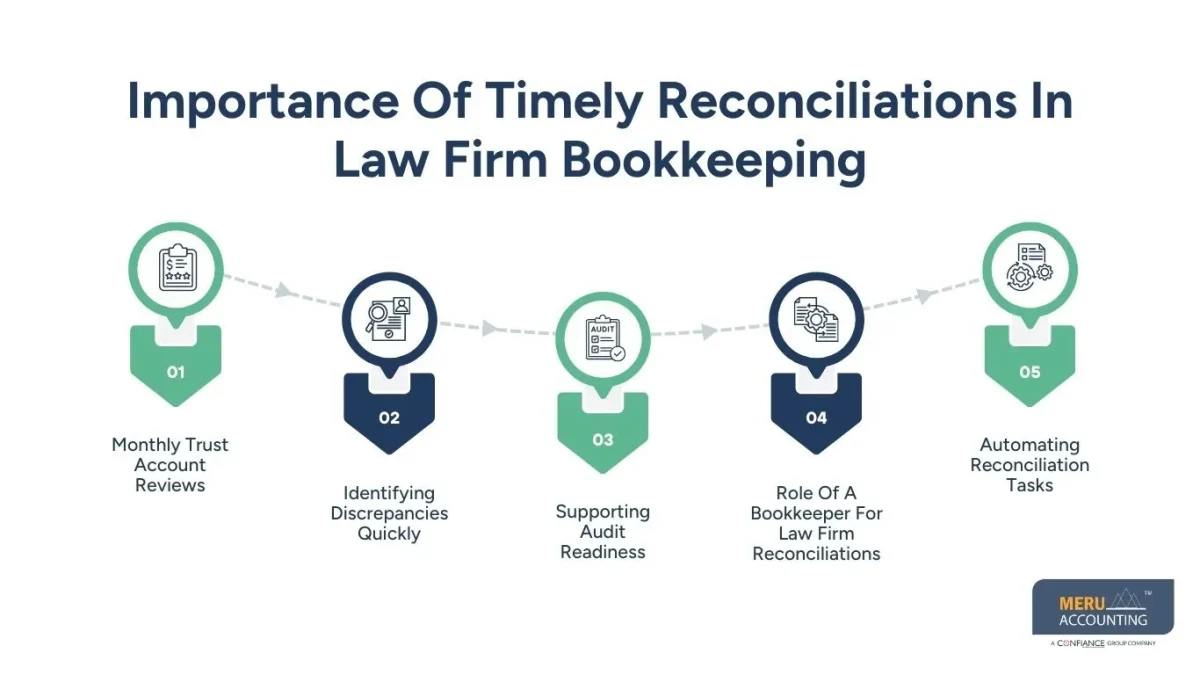
Role Of A Bookkeeper For Law Firm Reconciliations
A skilled bookkeeper ensures all reconciliations are performed correctly. Professional oversight reduces errors and supports compliance consistently.
Automating Reconciliation Tasks
Using software automation reduces manual errors and saves valuable time. Automated checks improve efficiency while maintaining audit readiness.
How Proper Bookkeeping Supports Ethical And Financial Transparency
Clear Financial Reporting
Transparent records show where money comes from and goes. Clear reporting ensures ethical standards are always maintained.
Protecting Client Interests
Clients trust firms with sensitive and confidential funds. Accurate bookkeeping safeguards their money and builds client confidence.
Supporting Attorney Accountability
Financial clarity helps attorneys meet all professional standards. Well-documented records demonstrate responsibility in every financial decision.
Reducing Internal Disputes
Clear records reduce misunderstandings among staff and partners. Accurate bookkeeping ensures decisions are based on reliable data.
Building Long-Term Trust
Strong law firm bookkeeping builds trust with clients consistently. Reliable records strengthen relationships with regulators and stakeholders.
Regular Financial Reviews
Frequent reviews identify potential issues before they become serious. Review meetings improve decision-making and enhance transparency.
Choosing The Right Accounting Software For Law Firm Operations
Law-Specific Accounting Features
Software must fully support trust accounting and legal requirements. Generic tools often fail to meet law firm needs.
Secure Access Controls
Only authorized personnel should access sensitive financial data. Strong access controls protect both client and firm information.
Integration With Billing Systems
Billing and bookkeeping systems should be fully aligned and integrated. Integration reduces errors and improves overall operational efficiency.
Reporting And Compliance Support
Reports help monitor compliance and identify areas needing attention. Software should generate timely and accurate compliance reports.
Supporting Professional Oversight
A bookkeeper works better when software provides accurate tools. Proper systems enhance monitoring, accountability, and record accuracy.
Role Of A Bookkeeper For Law Firm In Ensuring Ongoing Compliance
Managing Daily Financial Entries
Daily entries keep records current and accurate at all times. Consistency prevents errors and improves overall financial reliability.
Handling Trust Account Records
Trust accounting requires special care and precise documentation. A bookkeeper ensures compliance with client fund regulations.
Performing Regular Reconciliations
Reconciliations confirm accuracy and detect errors early. Regular reconciliations prevent long-term discrepancies and compliance issues.
Supporting Audit Preparation
Well-maintained records simplify audits and reduce stress significantly. Prepared records demonstrate professionalism to clients and regulators.
Providing Compliance Oversight
A dedicated bookkeeper ensures ongoing financial discipline and accuracy. Oversight prevents violations and maintains ethical standards consistently.
Continuous Staff Support And Training
Bookkeepers should train staff on compliance and bookkeeping procedures. Regular support improves accuracy and reduces errors across the firm.
Why Law Firms Rely on Meru Accounting for Accurate Bookkeeping
Experience With Legal Bookkeeping
Meru Accounting understands law firm bookkeeping requirements and compliance rules. Our experience ensures accurate financial records for legal operations consistently.
Dedicated Compliance-Focused Support
Our team ensures trust accounts and operating accounts remain accurate. We maintain compliance while reducing errors and financial risks effectively.
Skilled Bookkeeper For Law Firm Operations
We assign experienced professionals familiar with legal financial standards. Skilled bookkeepers manage records precisely and support regulatory requirements.
Reliable Reporting And Reconciliations
We provide timely reports and monthly reconciliations for clarity. Accurate reports improve transparency and simplify audits for the firm.
Scalable Support For Growing Firms
Meru Accounting supports firms at every growth stage consistently. Our services adapt to changing firm needs and operational expansion.
Key Takeaways
- Law firm bookkeeping must have strong systems to ensure compliance at all levels.
- Client funds require careful handling and accurate reporting to maintain trust.
- As law firms grow, bookkeeping becomes more complex and risk increases.
- Hiring a bookkeeper for law firm finances helps reduce errors and stress.
- Maintaining structured and accurate records protects attorneys, clients, and the firm’s reputation.
FAQs
Law firm bookkeeping tracks all financial transactions, including client funds and expenses. It ensures compliance and protects both the firm and its clients.
A bookkeeper for law firm manages trust accounts and reconciliations. This keeps client funds safe and ensures regulatory compliance.
Common mistakes include mixing client and operating funds or late entries. These errors can lead to audits and compliance issues.
Trust accounts should be reconciled at least monthly. Timely checks prevent errors and ensure client funds are handled correctly.
Firms should hire a bookkeeper for law firm operations as transactions grow. Professional support keeps records accurate and compliant.


