




If you are considering a career in law with a focus on finance and corporate compliance, becoming an accounting lawyer could be the path for you. Accounting law offers a unique combination of legal expertise and financial knowledge, allowing legal professionals to advise businesses, accountants, and organizations on complex financial regulations.
By specializing in this area, lawyers can unlock a highly rewarding career while standing out in the legal profession. This specialization not only opens doors to high-profile cases and corporate clients but also positions you as a trusted expert in both legal and financial matters, giving your career a significant competitive edge.
What You Will Learn From This Blog
- How law firm trust accounting works and why it is essential for handling client funds ethically and legally
- The core rules and regulatory requirements every law firm must follow for trust account compliance
- A step-by-step law firm trust accounting checklist to manage deposits, withdrawals, and reconciliations accurately
- Best practices for maintaining accurate records, proper documentation, and audit-ready trust accounts
- How to integrate trust accounting with law firm accounting and bookkeeping for better financial clarity
- Advanced trust accounting controls to prevent errors, fraud, and compliance risks
- The role of professional support, like Meru Accounting, in simplifying trust accounting and ensuring ongoing compliance
Understanding the Basics of Law Firm Trust Accounting
Definition of Trust Accounting
Law firm trust accounting is the practice of handling client funds in separate accounts. The goal is to keep client money distinct from the law firm’s operational funds, ensuring accurate management.
How Trust Accounts Work
Client funds are deposited into a dedicated trust account and can only be used for authorized purposes. Withdrawals are recorded and tracked carefully to maintain transparency and compliance.
Key Parties Involved
Trust accounting involves lawyers, accountants, and support staff. Each party has specific responsibilities to maintain accurate records and prevent mismanagement.
Common Transactions
Transactions include client deposits, withdrawals for expenses, payment to third parties, and interest allocation. Properly recording each transaction prevents errors and regulatory violations.
Basic Legal Requirements
Law firms must follow state or national bar regulations for trust accounts. Requirements often include monthly reconciliation, accurate record-keeping, and restricted access to client funds.
Typical Software Tools
Many law firms use accounting software to manage trust accounts. Software helps automate transaction recording, reconcile balances, and generate audit-ready reports.
Importance of Law Firm Trust Accounting
Client Trust and Confidence
Accurate law firm trust accounting builds client confidence by showing that their funds are handled responsibly and transparently. Clients are more likely to continue using a firm they trust financially.
Legal and Regulatory Compliance
Maintaining trust accounts correctly ensures the firm complies with bar association rules. Non-compliance can result in penalties, fines, or disciplinary action.
Financial Accuracy
Proper trust accounting ensures all transactions are tracked, reducing errors and discrepancies. Accurate records allow law firms to manage funds efficiently and plan effectively.
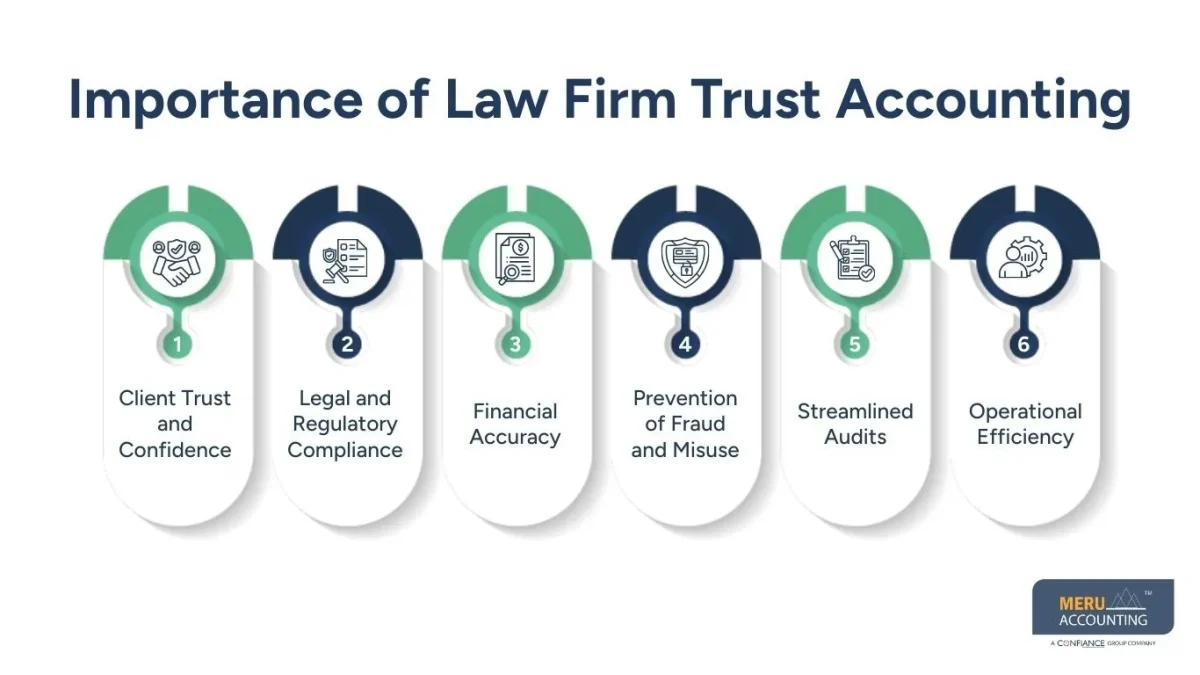
Prevention of Fraud and Misuse
Separate accounts and internal controls prevent unauthorized access to client funds. Trust accounting safeguards both the client and the law firm from potential misuse.
Streamlined Audits
With organized records maintained through law firm trust accounting, audits are simpler and faster. Being audit-ready reduces stress, saves time, and helps maintain a firm’s professional reputation.
Operational Efficiency
Understanding the importance of trust accounting ensures staff follow consistent procedures. Efficient processes reduce mistakes and save resources for the firm.
Law Firm Trust Accounting Essentials
Client Fund Segregation
Always keep client funds in a separate trust account. Mixing client money with firm funds can lead to legal penalties. Maintaining clear separation protects your clients and ensures proper tracking of funds for each matter.
Accurate Record-Keeping
Record all trust account transactions immediately. Accurate records help track deposits, withdrawals, and any earned interest. Proper record-keeping also makes audits easier and prevents mistakes that could affect client trust.
Reconciliation Practices
Reconcile trust accounts regularly, ideally weekly or at minimum monthly. Reconciliation identifies discrepancies early and helps prevent overdrafts or errors in client funds. Regular checks maintain trust and financial accuracy.
Compliance With Regulations
Follow state bar or regulatory rules for trust accounting. Every law firm must adhere to these regulations to avoid penalties, fines, or disciplinary action. Staying compliant also reinforces your professional credibility.
Documentation Retention
Maintain all trust-related documents to support audits and reviews under law firm trust accounting requirements. Keeping records organized ensures quick retrieval when needed.
Regular Audits
Schedule internal and external audits for trust accounts. Audits ensure accuracy, identify mistakes, and maintain compliance. Regular auditing also provides peace of mind to clients and law firm leadership.
Detailed Law Firm Trust Accounting Checklist
Initial Account Setup
Set up separate trust accounts for each client or matter. Clearly label accounts to avoid confusion. Using distinct accounts simplifies tracking and ensures funds are correctly allocated at all times.
Deposit Management
Deposit client funds immediately upon receipt. Delayed deposits can violate regulations and create unnecessary risk. Prompt deposits keep your accounting organized and show clients that their money is handled responsibly.
Transaction Recording
Log every deposit and withdrawal promptly to maintain transparency in law firm trust accounting. Track the purpose of each transaction to maintain transparency. Recording all activity reduces the risk of errors and ensures trust account integrity.
Payment Authorizations
Controlled payment approvals strengthen internal safeguards in law firm trust accounting. Implement dual approvals for significant transactions. Proper authorization prevents misuse and safeguards client funds from mistakes or fraud.
Interest Tracking
If trust accounts earn interest, track it according to regulations. Some jurisdictions require interest to be credited to the client or reported separately. Accurate interest tracking ensures full compliance and client transparency.
Monthly Reconciliation
Monthly reconciliation aligns internal records with bank statements in law firm trust accounting. Correct errors immediately to avoid discrepancies. Reconciliation ensures your records are always audit-ready and accurate.
Client Statements
Provide clients with regular trust account statements. Transparency builds client confidence and demonstrates that funds are handled ethically. Consistent statements can also prevent disputes over financial matters.
Adjustments and Corrections
Make corrections to trust accounts immediately if errors are found. Keeping timely adjustments helps maintain accuracy and compliance. Prompt action also reduces the risk of penalties or client dissatisfaction.
Documentation Maintenance
Organize all invoices, receipts, and transaction notes systematically. Proper documentation makes audits and reviews easier. A well-maintained filing system reduces stress during compliance checks.
Compliance Review
Regularly review trust accounting procedures to ensure they comply with local regulations. Stay informed about rule changes that could impact your trust accounting practices. This proactive approach keeps the firm ahead of regulatory challenges.
Law Firm Accounting And Bookkeeping Integration
Centralized Record-Keeping
Combine law firm trust accounting with your general accounting and bookkeeping system. Centralized records reduce errors and allow for easier reporting. Integration also improves decision-making for both operational and client funds.
Automated Software Tools
Modern software enhances law firm accounting and bookkeeping while supporting accurate trust account management. Automation simplifies recording, reconciliation, and reporting. Software tools also reduce manual errors and save valuable time for staff.
Expense Tracking
Track operational expenses separately within your law firm accounting and bookkeeping framework to maintain compliance. Clear separation ensures transparency and avoids regulatory violations. Accurate expense tracking also allows the firm to monitor profitability.
Financial Reporting
Generate comprehensive reports combining trust and operational account summaries. Detailed reporting helps management review cash flow and financial performance. Reports also help demonstrate accountability to clients and regulators.
Audit Preparation
Audit readiness improves when law firm trust accounting aligns seamlessly with law firm accounting and bookkeeping processes.
Organized records make audits smoother and reduce stress for staff. Audit preparation also prevents penalties and improves compliance.
Staff Training
Train employees on trust accounting and bookkeeping procedures. Educated staff are less likely to make errors and ensure consistent compliance. Regular training also keeps the team updated on changing regulations.
Advanced Law Firm Trust Accounting Practices
Implement Internal Controls
Develop internal controls such as dual approvals, regular account reviews, and restricted access. Internal controls prevent mistakes and protect client funds from unauthorized use.
Regular Risk Assessments
Conduct periodic risk assessments to identify weaknesses in trust accounting practices. Risk assessment helps prevent financial mismanagement and ensures that the firm remains compliant.
Client Communication Protocols
Establish clear communication protocols regarding client funds. Ensure clients receive statements and are informed of any unusual transactions. This transparency strengthens client trust.
Back-Up Systems
Maintain backups for all accounting and trust-related data. Backups protect against data loss due to technical issues or errors. Secure storage ensures records are always available when needed.
Segregation of Duties
Divide responsibilities among staff members for deposits, withdrawals, and reconciliation. Segregation reduces the chance of errors and discourages fraud. Proper duty allocation increases accountability.
Periodic Policy Review
Update your trust accounting policies regularly to reflect regulatory changes. Policy reviews ensure ongoing compliance and operational efficiency. Clear policies also help onboard new staff effectively.
How Meru Accounting Can Help Law Firms
Meru Accounting offers expert support to help law firms manage their trust accounts with accuracy and compliance. Our services ensure transparency, reduce errors, and simplify financial processes for smooth and efficient operations.
Expertise in Trust Accounting
Meru Accounting provides professional law firm trust accounting services. We ensure funds are managed correctly, reducing risk and maintaining compliance.
Customized Bookkeeping Solutions
Our law firm accounting and bookkeeping services are tailored to each firm’s needs. Personalized solutions guarantee accurate records and efficient processes.
Regular Reconciliation Support
We handle monthly and periodic reconciliations to maintain accurate trust accounts. Our reconciliation services reduce errors and simplify audits.
Compliance Guidance
Meru Accounting helps law firms understand and follow all trust accounting regulations. We keep your firm compliant and reduce potential legal risks.
Comprehensive Reporting
We provide detailed trust and operational account reports to support decision-making and client transparency. Reports help you track funds accurately and plan finances effectively.
Key Takeaways
- Always maintain separate trust accounts for client funds to avoid misuse, confusion, and compliance issues.
- Record every trust transaction on time to ensure transparency and accurate financial records.
- Reconcile trust accounts weekly or monthly to identify errors early and stay compliant.
- Integrate trust accounting with law firm accounting and bookkeeping to improve efficiency and financial clarity.
- Working with experienced professionals like Meru Accounting helps maintain compliance, accuracy, and peace of mind.
- Provide regular training to staff so trust accounting procedures remain accurate and consistent.
FAQs
Law firm trust accounting is the process of managing client funds in a separate trust account. It is required to protect client money and follow legal rules.
A law firm manages a trust account by recording every transaction, keeping client funds separate, and reconciling the account regularly.
Failure to follow trust accounting rules can lead to penalties, audits, or disciplinary action from regulatory authorities.
Law firm trust accounts should be reconciled monthly, and some firms choose weekly reviews to avoid errors.
yes, professional law firm accounting and bookkeeping services help maintain accurate records, ensure compliance, and reduce accounting errors.


