




Bookkeeping for real estate agents may seem hard at first. Agents handle many properties, client money, and business costs. Without clear records, tracking cash and payments is tough and stressful.
Real estate bookkeeping helps keep every transaction clear and easy. It ensures fees, commissions, and taxes are recorded the right way. With proper books, agents can focus on growing their work.
Many agents rely on sheets or notes, which may cause mistakes. Good bookkeeping cuts errors and saves valuable time. Accurate books also help agents plan and make smart choices.
What You Will Learn From This Blog
- Simple ways to keep your books correct and up to date.
- How to track money, including income, expenses, and client funds.
- Methods to organize papers, receipts, and financial documents clearly.
- Steps to follow for accurate real estate bookkeeping and reporting.
- Common challenges agents face and ways to avoid bookkeeping mistakes.
Bookkeeping for Real Estate Agents: Core Practices
1. Organize Financial Documents Well
Keeping papers in order is the first step to accuracy in bookkeeping for real estate agents. Invoices, receipts, and contracts should be stored safely and neatly. Separate personal and business accounts to avoid mix-ups.
Real estate bookkeeping often means tracking deposits, payments, and commissions. A clear system helps find needed papers fast. Digital tools can store files safely and cut physical clutter.
Tips to organize documents:
- Use folders for each property or client.
- Scan receipts right away to avoid loss.
- Check bank statements every month for easy matching.
2. Keep Transaction Records Consistent
Consistency is key in bookkeeping for real estate agents. Every payment, fee, or commission should be recorded on time. Late entries can cause wrong reports or missed deductions.
Using software makes real estate bookkeeping simple and steady. It can sort payments for office costs, utilities, or commissions. Consistent records make it easy to match accounts monthly or yearly.
Steps for consistent records:
- Update your real estate books every day or week.
- Check all bookkeeping entries monthly to find any missing items.
- Group all income and expenses clearly for accurate reports.
3. Track Commissions and Client Funds Separately
Agents must track deposits and commissions carefully in bookkeeping for real estate agents. Mixing these funds can lead to errors or law issues.
Real estate bookkeeping must keep trust money apart from business funds. Proper tracking ensures correct reporting to clients and authorities.
It also prevents problems when handling other people’s money. Use dedicated accounts for client deposits and payments.
Best practices:
- Check all client trust accounts carefully every single week.
- Record each earned commission immediately on the day it occurs.
- Use reliable software to monitor all client account balances.
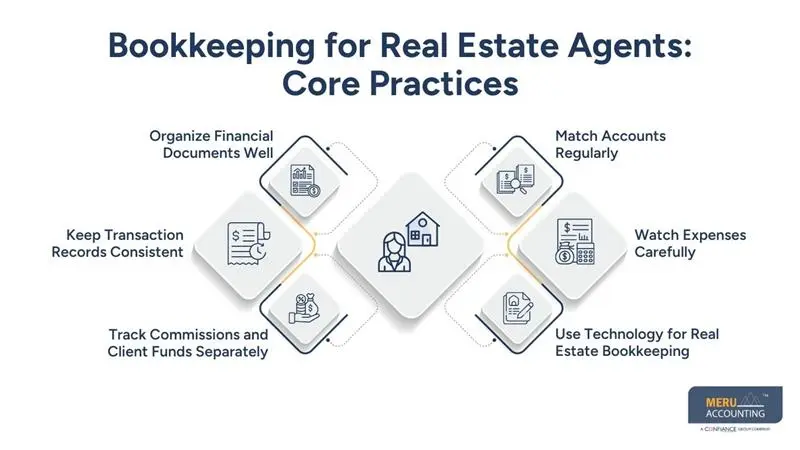
4. Match Accounts Regularly
Reconciliation means making sure books match bank statements. Without matching, mistakes may stay hidden for months. Bookkeeping for real estate agents needs regular cross-checks for accuracy.
Compare bank, credit card, and internal records every month. Fix mistakes right away to keep books clean. Software can flag mismatches for fast action.
How to match accounts:
- Check every transaction against the bank.
- Correct errors in amounts or dates.
- Keep notes for audits or future reference.
5. Watch Expenses Carefully
Small costs affect net profit and tax reports. Tracking expenses is key for agents with many properties. Real estate bookkeeping means noting office, marketing, and travel costs.
Digital tools make recording fast and simple. Keep receipts and sort costs for tax purposes. Watching expenses also helps cut waste and plan budgets.
Tips for expenses:
- Enter costs right after payment.
- Review monthly reports for odd items.
- Sort by property, client, or type of cost.
6. Use Technology for Real Estate Bookkeeping
Software and apps make bookkeeping for real estate agents easy. Automatic tracking cuts errors and saves hours of work. Many programs track commissions, invoices, and reports.
Cloud solutions let agents work from any device. They also keep logs to follow rules and avoid issues. Popular tools include QuickBooks, Xero, and Zoho Books.
Technology benefits:
- Auto-sorting transactions for easier tracking.
- Fast reports to help make decisions.
- Real-time view of cash flow, costs, and profits.
Benefits of Accurate Bookkeeping for Real Estate Agents
- Good bookkeeping helps real estate agents in many ways.
- Correct taxes, avoid fines and trouble with authorities.
- Clear books build trust with clients handling money.
- Accurate records help agents plan business growth well.
- Less manual work saves time and cuts mistakes.
- Money decisions can be made based on real facts.
Importance of Bookkeeping for Real Estate Agents
- Keeping books right is key in bookkeeping for real estate agents, for business and rules.
- Proper bookkeeping keeps all financial work organized and easy.
- Good records help agents report income and pay taxes correctly.
- Clear books show property performance and track earned commissions.
- Clean records help secure loans and boost investor confidence.
- Good bookkeeping builds a strong image and client trust.
- Correct records help plan growth and guide smart decisions.
- Proper bookkeeping stops mistakes and lowers the risk of loss.
Steps for Effective Real Estate Bookkeeping
Open Separate Accounts
Open separate accounts as part of bookkeeping for real estate agents. This keeps all funds safe and clear.
Record Payments and Receipts
Write down all payments and receipts in the software each day. This stops mistakes and keeps books correct.
Sort Income, Costs, and Commissions
Group income, costs, and earned commissions in clear order. This makes tracking money and profits simple.
Check Accounts Monthly
Monthly account checks are essential in bookkeeping for real estate agents to catch missing items and maintain accuracy.
Make Reports
Make reports to watch profits, costs, and client money. Reports help agents make smart money choices.
Keep Documents and Digital Copies
Save all papers and digital files for future use. Good storage keeps records ready for checks.
Common Challenges & How to Overcome Them
Missing Receipts or Papers
Scan or take a photo of each paper right away. This helps stop lost receipts and keeps all papers safe.
Late Data Entry
Update books each week to avoid a backlog of work. Regular checks keep all records correct and up to date.
Wrong Expense Grouping
Use software to group costs and avoid any errors. Clear groups make reports easy for agents to read.
Mixing Trust and Business Money
Keep client money in separate accounts from business funds. This prevents mix-ups and errors when handling different currencies.
Complex Commission Systems
Use software to track commissions for agents and listings. Automation helps make all calculations fast, simple, and correct.
Case Study: Real Estate Agent Using Proper Bookkeeping
A real estate agent handled over 50 deals each month. At first, the agent used simple spreadsheets, which caused many mistakes.
After switching to proper real estate bookkeeping software, errors decreased. Client money was tracked separately, accounts were checked weekly, and costs were monitored.
Cash flow improved, stress was reduced, and taxes became easier. Clients trusted the agent more, and the business grew steadily.
Real Estate Bookkeeping Services for Agents by Meru Accounting
Expert Bookkeeping for Real Estate Agents
Meru Accounting does bookkeeping for real estate agents. All money, costs, and commissions are tracked each month.
Clear Tracking of Payments and Commissions
All payments, client funds, and commissions are kept clear. This keeps books easy to read and check.
Client Money Management
Client money is kept in trust accounts, not mixed. This stops mistakes and keeps all funds safe.
Cost and Expense Tracking
All business costs and spending are written down each day. This helps agents see money use and plan budgets.
Real-Time Reports with Cloud Tools
Real-time reporting is a key feature of bookkeeping for real estate agents, allowing instant insight into money flows.
Reduce Errors and Follow Rules
Books are kept to cut mistakes and follow rules. Clear records save time and reduce money risks.
Key Takeaways
- Bookkeeping for real estate agents keeps income and costs correct.
- Separate accounts for client money to avoid mistakes and rule issues.
- Regular checks and expense tracking cut errors.
- Software can make real estate bookkeeping faster and simpler.
- Accurate books help smart decisions, save time, and grow trust.
FAQs
It tracks commissions, costs, and client money each month. Good bookkeeping helps agents make smart choices and avoid errors.
Books should be updated each week to avoid errors. Regular updates keep all records right and easy to check.
Software helps a lot, but humans still need to check. Individuals can find mistakes that software may not notice.
No, client money should stay in separate trust accounts. This stops mix-ups and avoids legal problems with clients.
Late entries, wrong cost grouping, and skipped account checks are common. Clear systems and regular checks help prevent these mistakes.


