


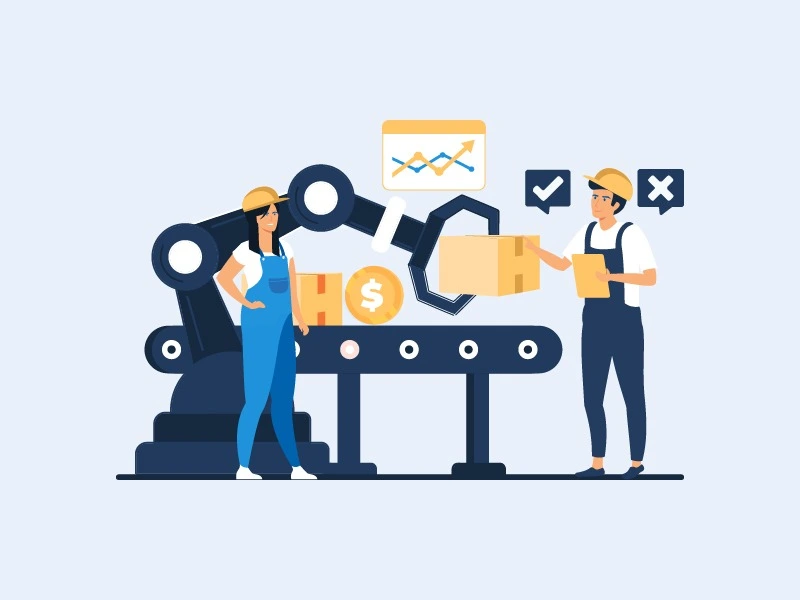
Manufacturing cost accounting plays a crucial role in helping production managers understand where money is spent and how production decisions affect overall business results. In manufacturing units, decisions related to raw materials, labor usage, machine time, and production volume directly influence profitability.
Without proper cost tracking, managers often rely on assumptions that lead to waste, pricing errors, and poor planning.
Manufacturing cost accounting provides structured cost data that allows managers to make informed production decisions with confidence. It also supports better control over accounting costs by offering accurate, timely, and reliable financial information that aligns production goals with financial outcomes.
What You Will Learn From This Blog
- Learn how manufacturing cost accounting tracks costs from raw materials to finished goods.
- Understand why accurate cost records matter and how accountant cost errors affect decisions.
- See how cost data helps plan production volume and scheduling with better clarity.
- Discover how manufacturing cost accounting links production costs directly with profit margins.
- Learn how managers use cost reports to control spending and improve accountability.
Understanding Manufacturing Cost Accounting
Manufacturing cost accounting is a structured system used to track and record all costs related to production activities. It focuses on identifying the true cost of manufacturing products by capturing expenses related to materials, labor, and overhead.
Unlike financial accounting, which looks at overall business performance, manufacturing cost accounting concentrates only on production expenses. This allows managers to study costs in greater detail and understand how each production activity affects total cost.
By classifying costs into materials, labor, and overhead, production cost accounting improves accuracy and supports better accounting-based cost analysis. Managers use this cost information daily to make decisions about material usage, labor allocation, and production planning, helping them avoid unnecessary spending.
Over time, consistent cost tracking also helps identify cost trends, which supports long-term production planning and improves overall cost control.
Why Manufacturing Cost Accounting Matters For Production Managers
Better Cost Control
Manufacturing cost accounting helps managers monitor expenses at every production stage. This allows quick action when costs increase unexpectedly and prevents small issues from becoming major problems.
Improved Decision Accuracy
Accurate cost data supports better decisions about production methods. It also reduces reliance on assumptions and helps managers compare alternatives with confidence.
Stronger Budget Discipline
Managers can prepare realistic production budgets using historical cost data. This improves financial discipline across operations and supports better resource planning.
Clear Accountability
Cost tracking assigns responsibility to departments and teams. This improves accountability for accountant cost control and encourages responsible cost behavior.
Reduced Financial Risk
Better cost awareness lowers the risk of losses caused by poor planning or waste. It also helps managers respond faster to cost-related challenges.
How Manufacturing Cost Accounting Supports Smarter Production Planning
Production Volume Planning
Manufacturing cost accounting helps managers decide how much to produce. Cost data shows the impact of volume changes on total cost.
Resource Allocation Decisions
Managers use cost data to allocate labor and materials efficiently. This reduces idle time and unnecessary expenses.
Scheduling Based On Cost Efficiency
Production schedules improve when cost-efficient processes are identified. This helps reduce overtime and machine misuse.
Forecasting Production Costs
Past cost data supports more accurate cost forecasting. This helps managers prepare for future production needs.
Reduced Guesswork In Planning
Accurate accounting cost data replaces assumptions with reliable information. This improves planning confidence.
Key Cost Elements Tracked In Manufacturing Cost Accounting
Direct Material Costs
These include raw materials used directly in production. Tracking them helps prevent material waste.
Direct Labor Costs
Labor costs are recorded for workers involved in production. This supports better workforce planning.
Manufacturing Overhead Costs
Overhead includes utilities, maintenance, and factory rent. Manufacturing cost accounting ensures these costs are allocated correctly.
Fixed And Variable Costs
Understanding cost behavior helps managers control expenses during production changes. This supports better decision-making.
Accuracy Of Accountant Cost Records
Accurate tracking of all elements improves accountant’s cost reliability. This leads to better cost analysis.
Role Of Manufacturing Cost Accounting In Pricing And Profitability Decisions
Product Cost Calculation
Production cost accounting calculates the full cost of each product. This forms the base for pricing decisions and avoids missing hidden production expenses. Accurate product costing helps managers maintain consistent pricing structures.
Preventing Underpricing
Accurate cost data helps avoid pricing products below cost. This protects profit margins and supports sustainable pricing practices. Managers gain confidence that prices cover all production expenses.
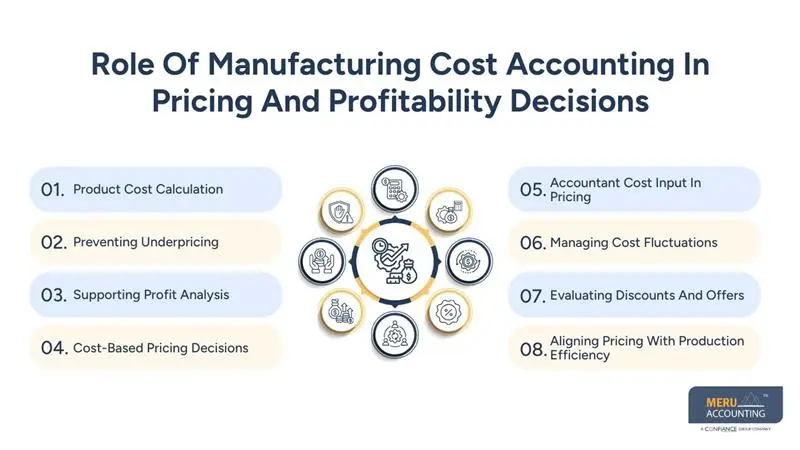
Supporting Profit Analysis
Managers use cost data to study profit by product line. This helps focus on profitable items and review low-performing products. Resources can be redirected toward stronger-performing products.
Cost-Based Pricing Decisions
Pricing decisions become more reliable when based on real costs. This improves financial stability and reduces pricing errors. Managers can justify pricing changes with accurate cost support.
Accountant Cost Input In Pricing
Accounting-based cost reports support pricing reviews. This ensures prices reflect true production costs and current cost conditions. Regular cost reviews help keep pricing aligned with expenses.
Managing Cost Fluctuations
Manufacturing cost accounting helps track changes in material and labor costs. This allows timely pricing adjustments when costs increase. Managers can respond faster to market and cost changes.
Evaluating Discounts And Offers
Cost data helps managers assess the impact of discounts on profit. This prevents offering prices that reduce margins. Discount decisions remain aligned with profitability goals.
Aligning Pricing With Production Efficiency
Efficient production processes lower unit costs over time. Manufacturing cost accounting helps reflect these savings in pricing decisions. Pricing can remain competitive without reducing profit margins.
How Manufacturing Cost Accounting Improves Cost Visibility
Clear Cost Breakdown
Manufacturing cost accounting shows exactly where production money is spent. This transparency helps managers understand cost distribution across operations.
Identifying Cost Issues Early
Managers quickly identify rising costs during different production stages. Early detection allows timely action before losses increase.
Comparing Planned And Actual Costs
Cost comparisons highlight gaps between expected and actual production spending. These insights help managers correct issues promptly.
Department-Level Cost Awareness
Cost visibility improves coordination between production and finance teams. Shared understanding reduces confusion and improves decision alignment.
Better Accountant Cost Reporting
Clear data improves accountant cost reports for management review. Reliable reports increase trust in financial information.
How Accurate Cost Data Reduces Dependency On Guesswork And Improves Accountant Cost Insights
Data-Driven Decisions
Manufacturing cost accounting provides real numbers for decision-making. Managers rely on facts instead of assumptions when planning production. This leads to more confident and timely production decisions.
Improved Efficiency
Managers adjust production methods based on cost performance. This helps reduce waste and improve overall operational efficiency. Resources are used more effectively across production activities.
Stronger Cost Control
Accurate data supports timely corrective actions. Managers can control spending before costs go out of control. This reduces unexpected financial pressure on operations.
Reliable Accountant Cost Evaluation
Accounting cost analysis becomes more dependable with accurate inputs. This improves reporting quality and builds trust in cost information. Managers can rely on reports for consistent cost reviews.
Long-Term Cost Improvement
Cost trends help managers plan cost reduction strategies. This supports steady improvement in production cost management. Long-term planning becomes more structured and reliable.
Reduced Planning Errors
Accurate cost data minimizes errors in production planning. Managers avoid costly mistakes caused by guesswork. Planning accuracy improves across production cycles.
Better Forecasting Accuracy
Reliable historical data improves future cost forecasts. This helps managers prepare for changes in production demand. Forecasts become more realistic and actionable.
Consistent Performance Monitoring
Ongoing cost tracking allows regular performance reviews. Managers can address cost issues before they become serious. This supports continuous monitoring and improvement.
How Meru Accounting Helps Manufacturers Improve Cost Control And Production Decisions
Meru Accounting supports manufacturers by strengthening manufacturing cost accounting through practical and industry-focused solutions. Our approach helps businesses gain accurate cost data, better accountant cost insights, and improved production control.
Manufacturing Industry Knowledge
Meru Accounting understands manufacturing processes and cost structures. This improves service quality and ensures accurate cost interpretation.
Accurate Cost Tracking Systems
We help implement systems that improve production cost accounting accuracy. This supports better decisions and consistent cost monitoring.
Detailed Accountant Cost Analysis
Our reports provide clear accounting-based cost insights. Managers can act with confidence using reliable cost data.
Support For Pricing And Cost Control
We assist in pricing reviews and cost control planning. This improves profitability and prevents cost-related pricing errors.
Scalable Accounting Support
Our services grow with your manufacturing business. This ensures long-term support as operations expand.
Key Takeaways
- Manufacturing cost accounting supports informed production decisions by providing accurate and reliable cost data.
- Clear cost tracking improves visibility and reduces financial risk by preventing unexpected cost issues.
- Reliable accountant cost data strengthens cost control and supports better production planning.
- Understanding production costs leads to more accurate pricing decisions and improved profitability.
- Professional accounting support improves cost accuracy and allows managers to focus on business growth.
FAQs
Manufacturing cost accounting shows the actual cost of materials, labor, and overhead. This helps production managers choose efficient methods and control manufacturing expenses.
It allows managers to plan production based on accurate cost data instead of estimates. This reduces waste, budget errors, and unplanned spending.
By tracking costs at each production stage, managers can identify overspending early. This supports timely corrective actions and better cost control.
Accountant cost data provides clear insights into production expenses. Managers use this information to improve efficiency and set realistic prices.
Yes, it helps identify inefficiencies and cost issues quickly. This allows managers to correct problems before losses increase.


