


New ESG Reporting for Australian SMEs
ESG reporting is becoming more important for small Australian businesses. Companies may soon need to share their environmental, social, and governance practices. These steps form a base for strong ESG Reporting for Australian SMEs. It can also guide businesses to act responsibly and stay competitive. SMEs can use ESG reporting to plan steady and sustainable growth.
The need for ESG reporting is rising as stakeholders want more transparency. Companies may track energy use, social effects, and governance rules. Regular reports can build trust with investors and clients. Clear ESG reports may improve a business’s image. SMEs can gain many benefits by following ESG reporting in Australia.
What is ESG Reporting?
This forms the base of ESG Reporting for Australian SMEs, as small firms aim to track key impacts in a clear way. Companies track energy use, staff mix, and management steps. Reports help managers see what works and what needs to change. ESG reporting may also attract investors who value good practices.
Components of ESG Reporting
Environmental measures may track energy, water, and waste. Social metrics check staff well-being, mix, and community work. Governance reports cover leaders, rules, and ethics. Strong ESG Reporting for Australian SMEs may help firms boost systems and daily work.
Why ESG Reporting is Emerging for SMEs
Stakeholder Expectations
Investors, clients, and regulators increasingly ask for ESG disclosure. Clear ESG Reporting for Australian SMEs may help build trust with key groups. Transparent reporting may build credibility and strong business ties.
Business Strategy Benefits
ESG reporting may help align strategies with sustainable goals. Companies may spot ways to improve operations and reduce risks. Such steps show why ESG Reporting for Australian SMEs is now a key part of smart plans.
Market Reputation
Effective ESG Reporting for Australian SMEs may lift brand image in the market. Businesses may show they act responsibly. Good ESG reporting may attract new clients and partners.
Key Components of ESG Reporting for Australian SMEs
Environmental Metrics
Energy Tracking
Track energy use each day to save waste and money.
Check energy patterns to find ways to cut usage fast.
Water Usage
Watch water use to avoid waste and save funds.
Use water well to help the firm look greener.
Waste Management
Record trash and recycling to cut landfill and harm.
SMEs can use better ways to deal with trash daily.
Carbon Footprint
Check carbon output to plan clear and real cuts.
Carbon checks are a core part of ESG Reporting for Australian SMEs.
Social Metrics
Employee Satisfaction
Ask staff about work to lift morale and joy.
Use surveys to find ways to help staff feel happy.
Diversity and Inclusion
Hire people from all groups to build fair teams.
Fair workplaces attract staff and grow team success fast.
Community Engagement
Join local groups to help towns and gain trust.
Good deeds may lift a firm’s image with the town.
Health and Safety
Keep staff safe with clear rules and checks daily.
Safe workspaces cut risks and lift staff mood quickly.
Governance Metrics
Leadership Structures
Give staff clear roles and tasks to guide work.
Good leaders help teams make right and fair choices.
Transparency Practices
Keep reports open to build trust with staff and clients.
Clear reports stop mix-ups and help teams work smooth.
Regulatory Compliance
Follow local laws to avoid fines and legal risk.
Law rules help firms run safe and avoid issues.
Internal Audits
Check systems often to find issues early and fix.
Audit results help teams improve work and avoid mistakes.
Steps SMEs Can Take for ESG Reporting
Step 1: Assess Current Practices
Environmental Assessment
Check current policies and green practices. Identify gaps to improve resource use.
Social Review
Look at employee programs and community work. Assess impact to boost workplace culture.
Governance Analysis
Review policies for gaps in rules and transparency. Strong governance improves trust with investors.
Overall Assessment
These checks guide strong ESG Reporting for Australian SMEs.
Step 2: Set Measurable Goals
Environmental Targets
Define clear goals for energy, water, and waste. Targets may help track progress.
Social Targets
Set measurable goals for staff and community impact. Clear goals improve engagement and reputation.
Governance Targets
Create goals for leadership and ethical rules. Targets reduce risk and boost confidence.
Strategic Alignment
Ensure ESG goals match business plans. Proper alignment saves resources and improves efficiency.
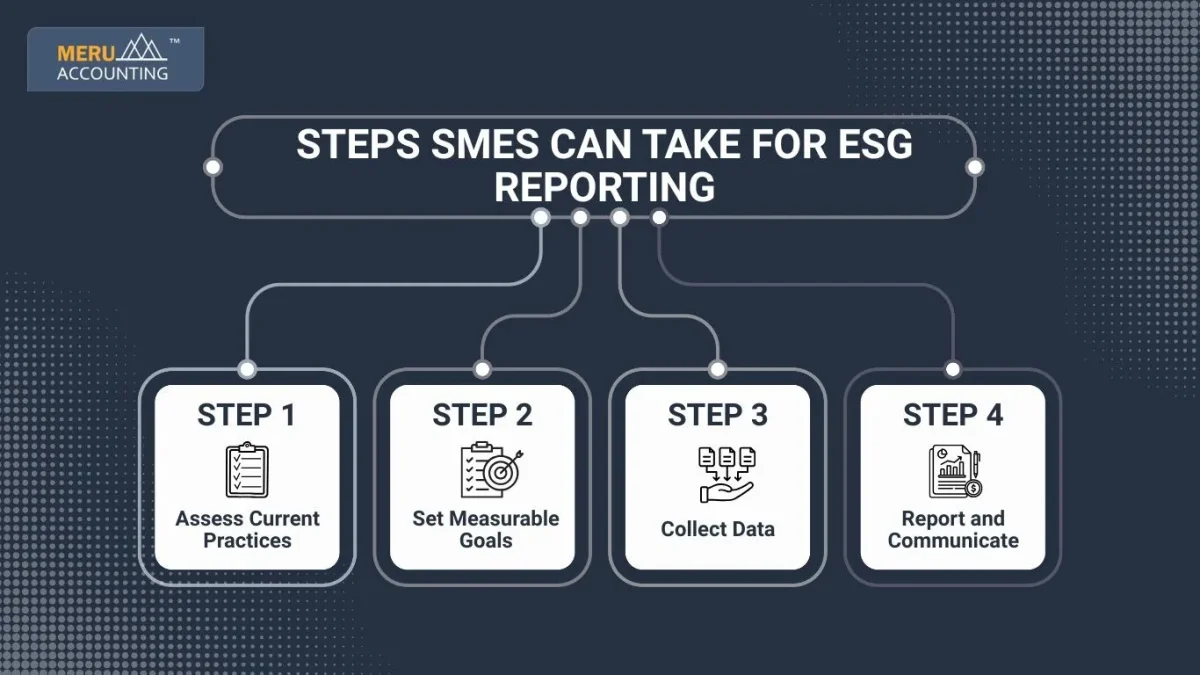
Step 3: Collect Data
Environmental Data
Track energy, water, and waste over time. Accurate records help measure progress.
Social Data
Collect info on employee satisfaction, diversity, and community programs. Data helps maintain transparency.
Governance Data
Gather audit, compliance, and policy records regularly. Data may show risks and gaps.
Data Accuracy
Ensure information is correct and verifiable. Accuracy builds trust and quality reports.
Step 4: Report and Communicate
Report Preparation
Create clear reports on ESG performance. A neat layout is key in ESG Reporting for Australian SMEs.
Stakeholder Communication
Share reports with clients, staff, and partners. Communication builds trust and relationships.
Continuous Improvement
Update reports based on feedback. Refine ESG strategies for better outcomes.
Transparency Focus
Highlight strengths and weaknesses honestly. Transparency shows ethical commitment.
Benefits of ESG Reporting for Australian SMEs
Investor Confidence
Clear ESG reports help build trust with investors. Simple and open data shows strong business habits.
Reputation Enhancement
Green steps help boost a brand’s public image. Good ESG work draws more buyers and new partners.
Operational Efficiency
Track the use of power, water, and goods to cut costs. Small firms can trim waste and run with more ease.
Risk Management
Good checks help avoid law and rule issues. ESG notes help spot risks fast and act in time.
Challenges SMEs May Face
Limited Resources
Small firms may not have much staff or cash. ESG work may need more time, tools, or help.
Data Collection
It can be hard to gather clean, true data. Simple software may help track key facts with ease.
Standards Understanding
ESG rules may look tough or unclear at first. Short staff training may make these steps more smooth.
Strategic Integration
It takes work to fit ESG into daily plans. Teams may need clear steps to guide each change.
Best Practices for ESG Reporting
Regular Monitoring
Check ESG results on a steady, clear schedule. This helps firms spot gaps and boost work speed.
Stakeholder Engagement
Talk with staff, clients, and investors on ESG. Their views can make reports strong and build trust.
Training and Awareness
Teach teams why ESG steps matter each day. Good staff input helps keep reports right and neat.
Continuous Improvement
Check your methods often and update when needed. Small firms stay strong and fair when they improve.
ESG reporting for Australian SMEs may bring many benefits. Reporting may improve trust, brand image, and efficiency. Businesses may spot risks and plan sustainable strategies. ESG reporting may support long-term growth and compliance.
Meru Accounting gives full ESG reporting services for SMEs. Our firm sets up clean and clear systems to track key ESG points. We make sure all reports stay in line with set rules and norms. Our certified experts add strong skill to keep each report true and neat. Partner with us to build a strong ESG base and raise your business growth.
FAQs
- Why may ESG Reporting for Australian SMEs gain more importance soon?
ESG Reporting for Australian SMEs may rise due to investor interest. Many clients may also prefer more clear sustainability reports. - How can ESG Reporting for Australian SMEs support business growth?
ESG Reporting for Australian SMEs may build trust with investors. It may also open paths to new funding options. - What areas may be included in ESG Reporting for Australian SMEs?
ESG Reporting for Australian SMEs may include environment, social, and governance. Each area may show how a business acts responsibly. - How can ESG Reporting for Australian SMEs improve investor confidence?
Clear ESG Reporting for Australian SMEs may help reduce doubts. Investors may see more value in transparent business data. - What challenges may occur in ESG Reporting for Australian SMEs?
SMEs may face issues with data and skills. Some firms may also lack enough staff for reporting. - How can SMEs start ESG Reporting for Australian SMEs with limited resources?
They may begin with simple tracking tools and clear goals. Small steps may help build a workable reporting plan. - Why may clients prefer firms with ESG Reporting for Australian SMEs?
Clients may trust firms that show clear social and green efforts. Reports may help prove responsible daily actions. - How can social data improve ESG Reporting for Australian SMEs?
Social data may show work culture trends and staff needs. It may also highlight community support actions. - Which environmental metrics may add value in ESG Reporting for Australian SMEs?
Energy use, water use, and waste trends may help a lot. These metrics may show real progress in daily work. - How can governance data shape ESG Reporting for Australian SMEs?
Good governance data may show strong rules and ethics. It may also highlight clear processes in decision tasks. - Why may banks assess ESG Reporting for Australian SMEs?
Banks may use ESG reports to judge long-term risk. Clear ESG data may help reduce that risk. - How can ESG Reporting for Australian SMEs support cost savings?
Tracking waste and energy may reveal hidden cost drains. Small changes may then reduce ongoing bills. - What tools may assist ESG reporting for Australian SMEs?
Simple digital tools may track energy and staff data. They may also help create reports with fewer errors. - How can staff training improve ESG Reporting for Australian SMEs?
Staff may learn new ways to track and report data. Training may also raise awareness of ESG goals. - Why may ESG Reporting for Australian SMEs help in tenders?
Some tenders may ask for clear ESG proof. Reports may show strong values and past actions. - How often may ESG Reporting for Australian SMEs be updated?
Most SMEs may update reports once each year. Some may revise data more often as needs change. - How can SMEs integrate goals into ESG Reporting for Australian SMEs?
Goals may be linked to simple daily tasks. Small steps may build stable long-term results. - How can ESG Reporting for Australian SMEs improve supply chain trust?
Suppliers may trust firms with clear ESG actions. Reports may show stable and fair business practices. - Can ESG Reporting for Australian SMEs reduce compliance risk?
Yes, ESG reporting may hint at gaps in rules. Fixing those gaps may reduce future risk. - Why may ESG Reporting for Australian SMEs matter for global buyers?
Global buyers may seek partners with clear ESG data. Good reports may open more export doors.
