




Outsourced law firm accounting has become a practical solution for legal practices that want stronger control over finances without adding internal pressure. Law firms manage client trust accounts, billing rules, and strict compliance standards, which makes financial management more complex than in many other industries. By choosing outsourced law firm accounting, firms can focus more on legal work while trained professionals handle numbers with accuracy and care.
This blog explains how outsourced law firm accounting supports better financial control and why many firms now prefer this model over traditional in-house setups.
What You Will Learn From This Blog
- A clear understanding of outsourced law firm accounting and how it supports daily financial operations and reporting.
- Insight into how virtual law firm accounting improves financial tracking, accuracy, and compliance.
- An explanation of the difference between law firm accounting and bookkeeping and why both are essential for law firms.
- Guidance on identifying the right time to adopt outsourced law firm accounting for better decision-making.
- An overview of the costs involved and the overall value of investing in outsourced law firm accounting.
What Is Outsourced Law Firm Accounting?
Outsourced law firm accounting refers to the practice of hiring an external team to manage a law firm’s financial tasks rather than handling them internally. This approach allows law firms to rely on professionals who understand legal accounting requirements while reducing the workload on in-house staff.
The focus remains on accurate financial management that supports daily operations and long-term planning. The scope of outsourced law firm accounting typically includes financial reporting, account reconciliations, compliance checks, and regular financial reviews.
Unlike general accounting services, this model is designed specifically for the legal industry, ensuring that all processes follow applicable rules and standards. Providers also use secure systems to safeguard both client and firm financial data.
Another important aspect of remote law firm accounting is ongoing support. It is not a one-time engagement but a continuous service that adapts to the firm’s needs over time. This long-term approach helps maintain consistency, accuracy, and reliable financial control as the firm grows.
The Role Of Outsourced Law Firm Accounting In Modern Legal Finance
Managing Trust Accounts
Outsourced law firm accounting ensures proper handling of client trust funds. Regular reconciliations help prevent errors and maintain full compliance with trust regulations.
Supporting Billing Accuracy
Accurate billing is maintained through structured reviews and controls. This helps reduce disputes, improve client confidence, and support steady cash flow.
Helping With Compliance
Legal accounting rules are followed carefully through regular checks. This reduces the risk of penalties, audits, and regulatory issues.
Reducing Internal Load
Staff can focus on legal tasks instead of financial administration. This improves productivity and allows attorneys to dedicate more time to clients.
Improving Financial Clarity
Outsourced law firm accounting provides clear and timely financial reports. Better visibility helps firm leaders make informed financial decisions.
Key Benefits Of Outsourced Law Firm Accounting
Better Financial Accuracy
Errors are reduced through expert handling and review processes. This leads to more reliable records and fewer correction efforts later.
Improved Compliance
Outsourced law firm accounting keeps firms aligned with legal regulations. Regular checks help avoid compliance gaps and reporting issues.
Cost Control
Firms avoid the expense of full-time internal accounting teams. This includes savings on salaries, training, and software costs.
Access To Skilled Experts
You gain professionals who specialize in law firm finances. Their experience helps address complex accounting needs with confidence.
Scalable Support
Remote law firm accounting grows with your firm’s needs. Services can expand or adjust as workloads change.
Understanding Law Firm Accounting And Bookkeeping Requirements
Trust Accounting Rules
Law firm accounting and bookkeeping must follow strict trust fund rules. Separate tracking of client funds helps maintain transparency and regulatory compliance.
Expense Tracking
Every cost must be recorded clearly and accurately. Proper tracking helps control spending and supports accurate financial reporting.
Revenue Recognition
Income is recorded based on legal billing standards. This ensures fees are recognized correctly and match client agreements.
Financial Reporting
Reports must be clear, timely, and compliant. Accurate reports help firm leaders review performance and plan next steps.
Record Retention
Law firm accounting and bookkeeping require proper document storage. Maintaining organized records supports audits and long-term compliance.
Outsourced Vs In-House Accounting: Which Model Works Best For Law Firms?
Aspect | Outsourced Law Firm Accounting | In-House Accounting |
Cost Comparison | Outsourced law firm accounting often costs less than maintaining full-time staff and related overheads. | Requires salaries, benefits, training, and ongoing employment costs. |
Skill Availability | External teams offer broader experience and specialized knowledge in legal accounting. | Skills depend on the expertise of one or two internal hires. |
Risk Management | Errors are less likely due to dedicated specialists and review processes. | Higher risk if internal staff lack legal accounting experience. |
Flexibility | Outsourced services adjust easily to workload changes and firm growth. | Scaling up or down can be slow and costly. |
Control And Oversight | Law firms retain full decision-making control while outsourcing execution. | Direct daily supervision but limited external support. |
How Outsourced Accounting Strengthens Financial Control In Law Firms
Regular Reconciliations
Accounts are reviewed often to catch issues early and accurately. This helps maintain correct balances and prevents small errors from growing.
Clear Reporting Structure
Remote law firm accounting delivers easy-to-read reports for firm leadership. Clear formats make it easier for partners to understand financial status.
Internal Checks
Multiple review steps help prevent mistakes and reduce financial risk. This added oversight improves reliability and accountability across processes.
Budget Monitoring
Spending is tracked against planned budgets on a regular basis. This supports cost control and helps avoid unnecessary overspending.
Financial Planning Support
Better data helps partners plan with confidence and clarity. Reliable figures support informed financial decisions for future growth.
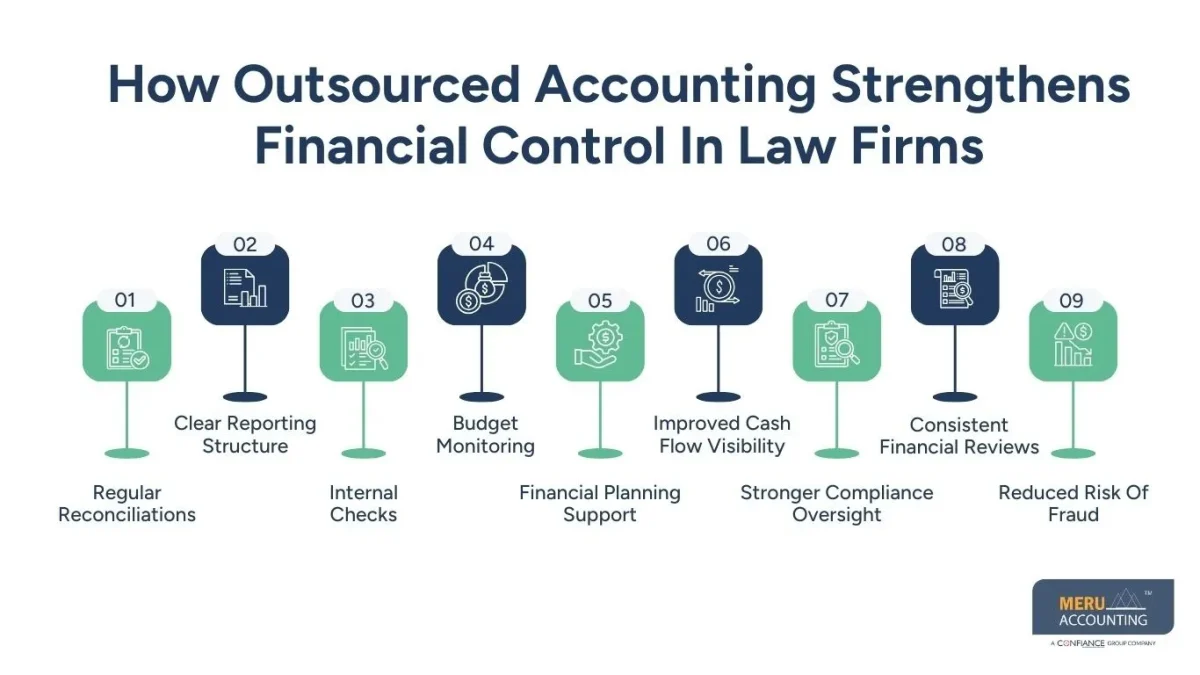
Improved Cash Flow Visibility
Outsourced law firm accounting provides a clear view of incoming and outgoing funds. This helps firms manage payments and collections more effectively.
Stronger Compliance Oversight
Ongoing monitoring ensures financial processes align with legal requirements. This reduces the risk of violations and penalties.
Consistent Financial Reviews
Regular financial reviews highlight trends and potential concerns. Early insights allow firms to address issues before they impact operations.
Reduced Risk Of Fraud
Independent oversight lowers the chance of unauthorized transactions. This added control strengthens trust and financial security.
Common Mistakes To Avoid In Law Firm Accounting And Bookkeeping
Mixing Trust And Operating Funds
This is a serious compliance risk for law firms. Proper separation is required to protect client funds and meet regulations.
Poor Record Keeping
Missing records create audit and legal issues over time. Consistent documentation supports transparency and long-term compliance.
Delayed Reconciliations
Late reviews increase error risks and reporting gaps. Regular reconciliations help identify problems at an early stage.
Lack Of Expertise
General accountants may miss legal rules and standards. Law firm accounting and bookkeeping require specialized industry knowledge.
Ignoring Financial Reports
Law firm accounting and bookkeeping require active review by partners. Regular review helps catch concerns and trends early.
When Is The Right Time To Outsource Law Firm Accounting And Bookkeeping?
Rapid Firm Growth
More clients mean more financial complexity and reporting needs. Outsourcing helps manage an increased workload effectively.
Frequent Errors
Mistakes signal the need for expert support and guidance. Professional oversight improves accuracy and internal control.
Compliance Concerns
Outsourced law firm accounting reduces regulatory risk significantly. Regular checks help maintain compliance with rules.
Limited Internal Skills
Not all firms can hire trained legal accountants easily. Outsourcing provides access to experienced professionals.
Time Pressure
Partners need more time for legal work and clients. Outsourcing reduces administrative and accounting burden.
Cost Considerations: Is Outsourced Law Firm Accounting Worth The Investment?
Lower Staffing Costs
No salaries, benefits, or training expenses are required. This reduces long-term overhead for law firms.
Predictable Pricing
Monthly fees are easier to manage and forecast. Firms can plan budgets with greater certainty.
Reduced Error Costs
Fewer mistakes mean fewer penalties and corrections. This protects firm finances and professional reputation.
Better Cash Flow
Accurate billing improves collections and payment timelines. Timely invoicing supports steady income.
Long-Term Value
Outsourced law firm accounting supports steady financial health. Consistent support helps firms grow with confidence.
Why Choose Meru Accounting For Outsourced Law Firm Accounting
Legal Industry Experience
We understand law firm accounting and bookkeeping requirements thoroughly. Our team applies proven practices aligned with legal industry standards.
Customized Service
Our services are tailored based on firm size and practice area. We adapt workflows to match each firm’s unique needs.
Strong Compliance Focus
All accounting processes follow applicable legal and trust regulations. Regular checks help support ongoing compliance and reduce risks.
Transparent Reporting
Clients receive clear, simple, and easy-to-review financial reports. Reports are presented in a way that supports informed decisions.
Reliable Support Team
A dedicated team provides consistent and responsive client support. We ensure timely communication for smooth handling of financial tasks.
Secure Data Handling
Advanced systems protect sensitive client and firm financial data. Strict controls safeguard confidential information and maintain trust.
Scalable Accounting Solutions
Our services adjust smoothly as law firms grow and expand. Meru Accounting scales support without disrupting existing financial processes.
Proven Track Record
We have successfully supported numerous law firms globally. Meru Accounting’s expertise ensures accurate and reliable financial management.
Key Takeaways
- Strong accounting practices help maintain overall firm stability and efficiency.
- Experienced specialists reduce errors, improve accuracy, and minimize financial risks.
- Delegating accounting tasks allows partners to focus more on legal work.
- Outsourced law firm accounting ensures adherence to all legal and trust regulations.
- Choosing the right provider delivers long-term value and consistent financial support.
FAQs
Outsourced law firm accounting is when a law firm hires an external team to manage its finances, including bookkeeping, trust accounts, and financial reporting.
It ensures all client funds, billing, and taxes follow legal and regulatory requirements, reducing the risk of errors or penalties.
Services include trust account management, expense tracking, invoice preparation, payroll, and monthly or quarterly financial reporting.
Firms often outsource when internal accounting is overloaded, errors are frequent, or they need expert guidance to handle complex trust and compliance rules.
Yes, it often costs less than hiring full-time staff while providing access to specialized experts and accurate financial control.


