


Running rental homes, shops, or offices can bring steady cash, but it is not always easy. One important part of its finance is property management accounts receivable. This is cash that tenants or clients owe you. It is money that should be in your bank, but has not yet arrived.Even if your property makes cash, late or missed rent can hurt cash flow.
When cash is stuck, bills may wait, repairs may stop, and new work may face delays. Also, your staff may not get paid on time. Even your vendors may get upset if they are paid late. Small gaps in cash can turn into big problems.
Many owners focus on rent but forget to track unpaid bills. Without proper tracking, you may not know how much cash is free. This can hurt planning and stop new projects. Knowing property management accounts receivable is key for growth and stability.
In this blog, we will show why property management accounts receivable matters. We will show how it affects cash flow, finances, and long-term growth. We will also share tips to manage receivables better and explain how outsourcing can help.
What You Will Learn From This Blog
By reading this post, you will know:
- What property management accounts receivable is and why it matters
- How it links to cash flow in your property business
- The risks of poor receivable management and what can go wrong
- Key numbers and reports to track regularly
- How good receivable work can help profits and growth
- How outsourcing receivable work can save time, reduce cost, and improve cash flow
This blog is useful for both small property owners and large property managers. You will see why even small delays in rent can have a big impact on your operations. By following these steps, you can reduce stress, improve planning, and grow your property business safely.
What is Property Management Accounts Receivable?
Property management accounts receivable is money owed to a property owner or manager by tenants or clients. It is money that is due but has not been paid yet.
It may include:
- Rent due each month from tenants
- Fees for repairs, cleaning, or extra services
- Utility bills that tenants must pay
- Late fees or penalties for missed rent
These amounts are part of property management accounting. They appear as assets in your books. Proper tracking helps you see how much cash is due and when.
Handling receivables well keeps cash flow smooth. You can pay staff, vendors, and bills on time. You can plan for repairs and upgrades. Ignoring receivables can cause big harm. You may miss bills or delay repairs. Even a property that makes profit can run into trouble if cash is tied up in unpaid rent.
For example, if three tenants out of ten pay late each month, you may not have enough to cover your staff salaries or fix a broken pipe. Tracking receivables lets you act fast. You can send reminders, apply late fees, or plan for short-term loans only if needed.
The Connection Between Property Management Accounts Receivable
Cash flow is the cash that moves in and out of your property business. It pays bills, staff, repairs, taxes, and other costs.
If property management accounts receivable is high or slow to collect, cash flow drops. This can create many problems:
Late rent: Even a few tenants paying late can create gaps in cash. You may not have enough to pay staff or vendors. Gaps can pile up over time.
Delayed work: Cash stuck in unpaid rent may delay needed repairs. Broken doors, leaks, or faulty AC units may go unfixed. This can hurt tenant satisfaction.
Lost growth: Without free cash, you cannot start new projects or buy new equipment. Growth may stall.
Extra loans: Owners may take short-term loans to cover gaps. Loans cost more money and increase stress.
Good receivable management keeps cash flow strong. It helps you handle bills on time, pay staff promptly, and repair properties quickly. It also builds trust with tenants, vendors, and lenders.
How Poor Accounts Receivable Management Affects Financial Health
Poor property management accounts receivable work can hurt finances in many ways:
Bad debt:
Cash may never come in. This lowers profit. If you write off unpaid rent, your income drops. Repeated late payments can affect your budget for months.
Wrong reports:
Late or missing payments make property management accounting wrong. Wrong info leads to poor choices. You may spend cash you do not have or delay a key repair.
Vendor issues:
Late payments to workers or vendors can stop work. Vendors may refuse to work with you in the future. This can raise costs if you need urgent repairs.
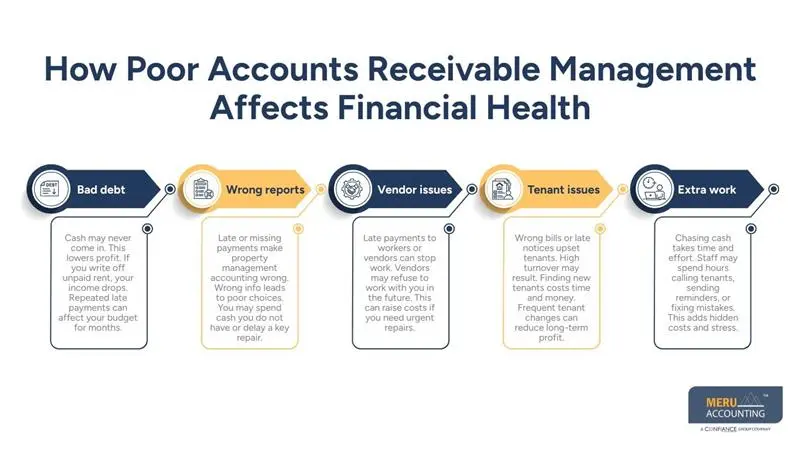
Tenant issues:
Wrong bills or late notices upset tenants. High turnover may result. Finding new tenants costs time and money. Frequent tenant changes can reduce long-term profit.
Extra work:
Chasing cash takes time and effort. Staff may spend hours calling tenants, sending reminders, or fixing mistakes. This adds hidden costs and stress.
Poor property management accounts receivable can hurt cash today and block growth tomorrow. It can also harm your reputation with lenders, vendors, and tenants.
Key Metrics to Monitor in Property Management Accounts Receivable
Tracking the right numbers in property management accounts receivable keeps cash safe. Key numbers include:
- Days Sales Outstanding (DSO): Average days to collect rent. Lower DSO means faster cash. High DSO shows slow collection and potential cash problems.
- Collection rate: Share of cash collected on time. Higher rates show tenants pay on schedule. Low rates show delays that need action.
- Aging report: Shows cash due by how long it is past due (30, 60, 90+ days). Helps focus on late payers. You can send reminders or apply penalties quickly.
- Bad debt rate: Part of cash that may never come in. Lower rates show strong collections. Higher rates indicate weak collection or problem tenants.
- Cash flow ratio: Shows how receivable cash affects cash on hand. Lets you see if cash is enough for bills, salaries, and repairs.
Watching these numbers helps act fast, prevent cash gaps, and plan for growth. They also improve property management accounting accuracy and provide insight for smart choices.
How Efficient Accounts Receivable Strengthens Long-Term Financial Performance
Good property management accounts receivable work helps now and later.
- Steady cash: Timely collection keeps cash ready for bills, staff, and repairs. You can plan for upgrades or maintenance without worry.
- Higher profit: Less bad debt and less chasing cash = more money in your pocket. You spend less time and get more cash.
- Better choices: Shows cash ready for new projects. You can invest in growth, marketing, or repairs.
- Strong credit: Banks and lenders like owners with steady cash flow. This helps if you want a loan to expand or buy more property.
- Smooth work: Less chasing = more time for repairs, care, and tenant support. Staff can focus on work that matters.
- Happy tenants: Clear bills and reminders build trust. Tenants are more likely to stay. Long-term tenants reduce vacancy costs.
Good receivable work raises property value. It helps your property attract investors and maintain steady growth.
Outsourced Accounts Receivable by Meru Accounting
In-house receivable work can be slow, full of mistakes, and take a lot of time. Meru Accounting helps with outsourced property management accounts receivable services.
Property Management Accounts Receivable Services We Offer:
- Invoice Generation and Billing: We make correct bills for rent, fees, and utilities. Tenants get clear bills on time. This cuts disputes and confusion.
- Payment Tracking: We track each payment and due date. All cash is recorded so you know what is expected.
- Reminders and Follow-Ups: We send reminders for due or late payments via email, text, or call. This helps get cash faster.
- Reconciliation and Reporting: We check payments against bank deposits. We make reports to keep property management accounting accurate.
- Late Fee Management: We add and track late fees for missed payments. This encourages tenants to pay on time.
- Aging Analysis: We give reports that show overdue accounts in 30, 60, 90+ day groups. You know who to follow up with.
- Dispute Support: We help handle tenant payment issues politely. This keeps tenants happy and protects your cash.
- Software Integration: We work with property tools like Yardi, AppFolio, and Buildium. Your records stay correct and up-to-date within these tools.
Outsourcing your property management accounts receivable to Meru Accounting ensures smooth cash flow. You save time, reduce stress, and focus on growth and tenant care.
Key Takeaways
- Property management accounts receivable is key to cash flow and financial health.
- Poor receivable work = late rent, bad debt, more work, unhappy tenants, and slow growth.
- Track numbers like DSO, collection rate, aging report, bad debt, and cash ratio.
- Good receivable work = more profit, better decisions, strong growth, and happy tenants.
- Outsourcing to Meru Accounting saves time, reduces cost, improves cash flow, and ensures smooth property operations.
FAQs
Receivable = cash tenants owe you. Payable = cash you owe vendors or staff.
Check each month. Spot late payments early. Weekly checks are good for large properties.
Yes. Clear bills, timely reminders, and correct reports make tenants happy and reduce disputes.
Yardi, AppFolio, Buildium, and similar tools track cash and make reports fast.
Good receivable work shows steady cash flow. Such properties are valued higher by investors and banks.


