



Property management bookkeeping plays a direct role in how smoothly a property management business runs. It is not limited to recording rent or paying bills. When done correctly, property management accounting helps property managers control cash flow, avoid payment delays, and maintain clear financial communication with tenants.
Poor bookkeeping often leads to confusion, missed income, and tenant complaints. For property managers handling multiple units, accurate property management bookkeeping ensures that every rent payment, maintenance cost, and operating expense is recorded properly.
This clarity supports better financial planning and stronger tenant trust. In this blog, we explain how bookkeeping for property management supports daily operations, improves cash flow, and builds better tenant relationships.
What You Will Learn From This Blog
In this blog, you will learn:
- Why property management bookkeeping is essential for stable cash flow
- How bookkeeping for property management improves tenant communication
- The connection between accurate records and fewer disputes
- Key features of a reliable bookkeeping system for property managers
- How outsourcing bookkeeping for property management can reduce errors
- Common bookkeeping mistakes and how to avoid them
Understanding Property Management Bookkeeping
Property management bookkeeping is the process of recording, organizing, and reviewing all financial transactions related to managed properties. This includes rent collections, security deposits, vendor payments, repairs, utilities, taxes, and management fees.
Bookkeeping for property management differs from general business bookkeeping because each property, unit, and tenant must be tracked separately. A single mistake can affect owner reports, tenant balances, or cash flow forecasts.
Proper property management bookkeeping ensures that records are clear, consistent, and easy to review at any time. Accurate property management accounting also helps property managers meet compliance requirements and prepare financial reports for property owners. Without organized bookkeeping, even profitable properties can face financial stress.
The Role of Bookkeeping for Property Management in Cash Flow Management
Cash flow is the movement of money in and out of your property management business. Rent delays, unrecorded expenses, or incorrect balances can create cash shortages.
Property management accounting helps track income and expenses in real time so property managers always know their financial position.
How Property Management Bookkeeping Supports Cash Flow
Property management accounting ensures that:
- Rent is recorded correctly and on time
- Late payments are identified quickly
- Operating expenses are tracked accurately
- Vendor payments are scheduled properly
With structured property management accounting, property managers can forecast future cash needs and avoid sudden shortfalls. Clear records also help identify units with frequent delays or higher maintenance costs.
Preventing Cash Flow Gaps
Without proper property management bookkeeping, unpaid rent or duplicate expenses often go unnoticed. Regular reconciliation through bookkeeping for property management ensures that bank balances match recorded transactions, preventing cash flow gaps.
Improving Tenant Relations Through Property Management Bookkeeping
Clear Billing and Rent Records
Tenants expect clear and accurate rent statements. Property management accounting ensures rent charges, late fees, and credits are recorded correctly, reducing confusion and disputes.
Consistent property management accounting builds trust by giving tenants a clear view of every charge.
Faster Issue Resolution
Accurate property management accounting allows property managers to quickly respond to tenant questions about payments or balances.
Instead of searching through scattered records, all information is readily available.
Better Maintenance Tracking
Bookkeeping for property management also tracks maintenance expenses.
When tenants report issues, managers can refer to past repair records and respond more efficiently. This shows tenants that their concerns are taken seriously.
Tracking Every Property, Unit, and Tenant Separately
Accurate property management bookkeeping requires separate records for each property and tenant to avoid confusion and reporting errors.
Staying Compliant and Audit-Ready
Proper property management accounting helps maintain organized records that support compliance and smooth financial reviews.
Preventing Financial Stress Through Accurate Records
Well-maintained property management accounting ensures cash flow issues are identified early and managed effectively.
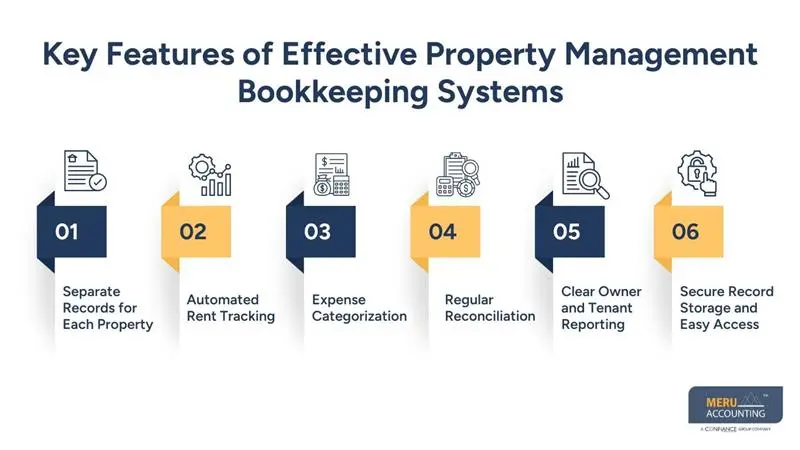
Key Features of Effective Property Management Bookkeeping Systems
Separate Records for Each Property
A strong property management accounting system maintains separate ledgers for each property and unit. This prevents confusion and supports accurate reporting.
Automated Rent Tracking
Automation helps record rent payments consistently. Bookkeeping for property management systems with automated entries reduces manual errors and missed income.
Expense Categorization
Proper property management bookkeeping categorizes expenses such as repairs, utilities, insurance, and taxes. This helps property managers analyze costs and plan budgets.
Regular Reconciliation
Monthly reconciliation ensures recorded data matches the bank statements. Property management bookkeeping relies on reconciliation to maintain accuracy.
Clear Owner and Tenant Reporting
Effective property management accounting systems generate clear reports for property owners and tenants, ensuring transparency and easy financial review.
Secure Record Storage and Easy Access
Organized property management accounting includes secure storage of financial records with easy access when needed for reviews or audits.
How Outsourcing Property Management Bookkeeping Can Benefit You
Reduced Errors and Workload
Outsourcing property management and bookkeeping reduces the burden on internal staff. Experienced professionals manage daily entries, reconciliations, and reports with accuracy.
Consistent Financial Reporting
Bookkeeping for property management handled by experts ensures timely and reliable reports for property owners, improving clarity and trust.
Cost Control and Planning
With outsourced property management bookkeeping, managers gain clear insights into income and expenses, supporting better budgeting and planning.
More Time to Focus on Property Operations
By outsourcing property management bookkeeping, property managers can spend more time on tenant needs and property maintenance instead of paperwork.
Scalable Support as Your Portfolio Grows
Outsourced property management accounting easily adapts as the number of properties increases, without the need to hire additional internal staff.
Tips to Optimize Cash Flow with Bookkeeping for Property Management
Record Transactions Daily
Daily updates prevent backlog and reduce errors. Consistent property management bookkeeping ensures real-time visibility.
Monitor Rent Aging Reports
Aging reports highlight overdue rent. Bookkeeping for property management makes it easier to follow up on delayed payments.
Track Maintenance Costs Carefully
Maintenance can impact cash flow. Property financial accounting helps identify recurring repair costs and plan better.
Review Financial Reports Monthly
Regular reviews help property managers understand trends. Bookkeeping for property management supports smarter decisions.
Common Mistakes in Property Management Bookkeeping and How to Avoid Them
Mixing Property and Business Funds
Combining accounts creates confusion and makes tracking difficult. Property management bookkeeping requires a clear separation of property funds and business funds.
Ignoring Reconciliation
Skipping reconciliation leads to hidden errors and unmatched balances. Property management accounting should include regular monthly checks.
Poor Documentation
Missing invoices or receipts weaken financial records. Accurate property financial accounting depends on keeping proper and complete documentation.
Delayed Record Updates
Late entries result in inaccurate reports and cash flow issues. Bookkeeping for property management works best when records are updated on time.
Lack of Standard Bookkeeping Processes
Without a set process, errors become frequent. Property management accounting improves when consistent procedures are followed for every transaction.
Not Reviewing Financial Reports Regularly
Failing to review reports can hide issues. Property management accounting should include regular financial reviews to catch problems early.
Why Choose Meru Accounting for Property Management Bookkeeping
At Meru Accounting, we specialize in property management bookkeeping services designed for property managers, landlords, and real estate firms.
Our team understands the complexity of bookkeeping for property management, including multi-unit tracking, rent reconciliation, and owner reporting.
What We Offer
- Accurate daily property management bookkeeping
- Rent, expense, and vendor payment tracking
- Monthly reconciliation and reporting
- Support with accounting software like QuickBooks, Xero, and Odoo
- Customized bookkeeping for property management based on your portfolio size
- Clear financial reports for property owners and stakeholders
- Secure record management and organized documentation
- Timely support to address bookkeeping issues and queries
With Meru Accounting, property managers gain clear financial records, improved cash flow visibility, and reliable support that helps strengthen tenant relationships.
Key Takeaways
- Property management bookkeeping is essential for stable cash flow
- Bookkeeping for property management improves tenant trust and communication
- Accurate records reduce disputes and payment delays
- Outsourcing bookkeeping saves time and reduces errors
- Meru Accounting provides reliable bookkeeping solutions for property managers
FAQs
Property management accounting includes tracking rent, expenses, security deposits, and vendor payments for each property and tenant.
Property management accounting helps record rent on time, track late payments, and control expenses to avoid cash shortages.
Bookkeeping for property management ensures accurate rent statements, fewer billing errors, and quicker issue resolution.
Poor property management accounting can lead to missed rent, incorrect balances, cash flow issues, and tenant disputes.
Outsourcing property management accounting saves time, reduces errors, and keeps financial records accurate and organized.


