



If you own rental properties, you know that managing income and expenses is not just about staying organized, it’s about understanding whether your investment is actually making money. Property management bookkeeping is the key tool that helps landlords and property managers track the financial performance of rental properties.
With clear records, you can calculate ROI, make better decisions, and avoid surprises at tax time. In this blog, we will explain how property management bookkeeping works, how it helps track ROI, and why outsourced property management is a smart option for many landlords.
What You Will Learn From This Blog
By the end of this blog, you will learn:
- What property management bookkeeping is
- Why ROI tracking is important for rental properties
- How bookkeeping helps you track ROI
- The key metrics you should monitor
- How outsourced property management improves bookkeeping accuracy
- Best practices for rental property bookkeeping
- How bookkeeping data helps you make better investment decisions
- How outsourced property management can save you time and money
- A real case study showing ROI tracking with professional bookkeeping
Understanding Property Management Bookkeeping
Property management bookkeeping is the process of recording all financial transactions related to rental properties. This includes rent income, maintenance costs, property taxes, insurance, utilities, and any other property-related expenses. It’s not just about tracking numbers, but it’s about creating a clear financial picture of how your property is performing.
Good bookkeeping gives you:
- A clear record of income and expenses
- Accurate financial reports
- Easy tax filing
- Better decision-making power
When you know exactly where money is coming from and where it is going, you can make smarter choices for your rental business.
Importance of ROI Tracking For Rental Properties
ROI (Return on Investment) is the most important measure for rental property owners. ROI shows whether your property is earning more than it costs. Without tracking ROI, you may not know if your investment is truly profitable.
Here’s why ROI tracking is essential:
Shows Real Profit
Many landlords think they are making money because rent is coming in. But if expenses are high, the property may not be profitable. ROI helps you see the true profit when your property management bookkeeping is accurate.
Helps Compare Properties
If you own multiple rentals, ROI helps you compare which properties are performing better.
Supports Future Planning
When you know ROI, you can decide whether to renovate, raise rent, sell, or buy more properties.
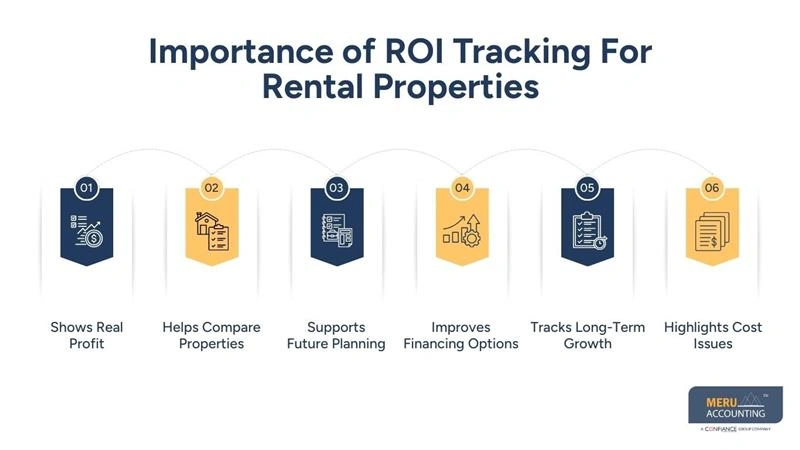
Improves Financing Options
Banks and lenders often want to see clear financial records. A good ROI report helps with loans and refinancing.
Tracks Long-Term Growth
ROI tracking helps you monitor how your investment is growing over time, allowing you to make smarter long-term decisions.
Highlights Cost Issues
ROI tracking helps you identify high expenses or unexpected costs so you can take action and protect your profit.
How Bookkeeping Helps Track Rental Property ROI
Property management bookkeeping is the foundation of ROI tracking for rental properties. Without accurate bookkeeping, ROI numbers will be wrong.
Here’s how bookkeeping supports ROI tracking:
Accurate Income Tracking
Bookkeeping records rent payments, late fees, and other income sources. If income is not recorded correctly, ROI will be wrong.
Clear Expense Tracking
Expenses include maintenance, repairs, property taxes, insurance, utilities, and more. Bookkeeping helps you track each expense correctly and assign it to the right property.
Tracking Repairs and Maintenance
Maintenance costs can add up quickly. Bookkeeping helps you track repair costs by category, making it easier to see which properties need more spending.
Tracking Vacancy and Turnover Costs
Vacancy periods reduce income. Bookkeeping helps you record vacancy periods and turnover costs so ROI reflects real performance.
Detailed Reports for Analysis
Property management bookkeeping provides monthly and yearly financial reports. These reports show whether your property is profitable and how ROI is changing over time.
Key ROI Metrics Property Managers Should Monitor
To track ROI effectively, property managers should monitor these key metrics:
Net Operating Income (NOI)
NOI = Rental Income – Operating Expenses
This shows how much money your property makes after operating costs.
Cash Flow
Cash Flow = NOI – Mortgage Payment
Cash flow shows how much money is left after paying the mortgage.
Capitalization Rate (Cap Rate)
Cap Rate = NOI ÷ Property Value
Cap rate shows the rate of return based on property value.
Cash-on-Cash Return
Cash-on-Cash = Annual Cash Flow ÷ Total Cash Invested
This metric shows the return based on the cash you invested.
Expense Ratio
Expense Ratio = Operating Expenses ÷ Rental Income
This shows how much of your income is going toward expenses.
Occupancy Rate
Occupancy Rate = Occupied Units ÷ Total Units
This shows how well your property is rented.
How Outsourced Property Management Improves Bookkeeping Accuracy
When you hire outsourced property management, you get a professional team that handles bookkeeping and financial reporting for you. This improves accuracy and helps you track ROI more effectively.
Here’s how outsourced property management helps:
Professional Bookkeeping Expertise
Outsourced teams are trained in property accounting and understand what expenses to track and how to categorize them.
Timely and Accurate Financial Reports
You receive monthly property management bookkeeping reports that show income, expenses, and ROI. This helps you make quick decisions.
Reduced Human Errors
Manual property management bookkeeping often has mistakes. Outsourced teams use tools and checks to reduce errors.
Better Tax Preparation
Proper bookkeeping ensures you have all records ready for tax filing. This reduces audit risk and saves time.
Clear Tracking of Each Property
If you own multiple properties, outsourced teams can track each property separately, helping you compare ROI across your portfolio.
Best Practices for Rental Property Bookkeeping
Here are some best practices that can help you improve bookkeeping accuracy and track ROI better:
Separate Personal and Business Accounts
Keep rental income and expenses separate from personal finances. This reduces confusion and simplifies bookkeeping.
Track Every Expense
Record every repair, maintenance, utility bill, and property tax. Small expenses add up and affect ROI.
Use Property Management Software
Software helps automate rent tracking, expenses, and reporting.
Reconcile Bank Accounts Monthly
Reconciliation ensures that your records match bank statements.
Keep Clear Records of Deposits and Refunds
Security deposits must be tracked separately and handled carefully.
Review Reports Monthly
Monthly reviews help you catch issues early and improve ROI.
How Bookkeeping Data Helps You Make Better Investment Decisions
Bookkeeping data is not only useful for tracking ROI, but it also helps you make better investment decisions.
Here’s how:
Identifying Underperforming Properties
If a property has low ROI, property management bookkeeping data helps you identify why. Maybe expenses are high, or rent is too low.
Planning Renovations
Bookkeeping helps you see if renovations are improving ROI or increasing expenses too much.
Choosing New Properties
Bookkeeping data helps you evaluate new investments based on real ROI metrics.
Managing Cash Flow
Bookkeeping shows when cash flow is tight and helps you plan for expenses.
Setting Rent Prices
When you know your expenses and ROI, you can set rent prices that maximize profit.
How Outsourced Property Management Can Save You Time & Money
Outsourced property management can help landlords save time and money in many ways:
Saves Time on Bookkeeping
Instead of spending hours recording transactions, you can focus on managing your property.
Reduces Errors
Professional property management bookkeeping teams reduce mistakes, which can save money and avoid tax issues.
Helps Avoid Unnecessary Expenses
Outsourced teams can identify wasteful spending and suggest cost-saving measures.
Improves Tenant Management
A good outsourced team also handles rent collection and tenant communication, improving occupancy and income.
Provides Clear Financial Visibility
You get monthly reports that show ROI, cash flow, and expenses clearly.
Case Study: Tracking ROI with Professional Bookkeeping
Let’s look at a simple case study to show how bookkeeping helps track ROI.
Property: 3-Bedroom Rental
- Purchase price: $250,000
- Monthly rent: $1,800
- Monthly expenses: $800
- Mortgage payment: $1,000
Step 1: Calculate NOI
NOI = Rental Income – Operating Expenses
NOI = $1,800 – $800 = $1,000
Step 2: Calculate Cash Flow
Cash Flow = NOI – Mortgage Payment
Cash Flow = $1,000 – $1,000 = $0
Step 3: Track ROI
With property management bookkeeping, you can see that the property is breaking even.
If expenses rise or vacancy increases, you will see the impact immediately.
With outsourced property management, the bookkeeping team can help you:
- Track every expense
- Compare ROI month by month
- Identify opportunities to increase rent or reduce costs
- Improve overall profit
Why Choose Meru Accounting for Property Management Bookkeeping?
At Meru Accounting, we help property owners and managers track ROI with accurate bookkeeping and clear financial reports. Our team has experience in property accounting and provides tailored solutions based on your needs.
Accurate Bookkeeping for Single and Multi-Property Portfolios’
We maintain clean and organized property management bookkeeping records for each property, helping you track income and expenses clearly.
Monthly Financial Reports and ROI Tracking
You receive monthly reports that show your property’s performance, helping you track ROI and understand profitability.
Rent Tracking and Expense Management
We track rent collection and all property-related expenses, ensuring nothing is missed and every transaction is recorded correctly.
Tax-Ready Bookkeeping and Audit Support
Our property management bookkeeping is prepared for tax filing, reducing errors and making audits easier if needed.
Dedicated Support Team
Our team is always available to answer your questions and provide guidance whenever you need it.
Key Takeaways
- Property management bookkeeping is essential for tracking ROI on rental properties.
- Accurate bookkeeping helps track income, expenses, and key ROI metrics.
- Key ROI metrics include NOI, cash flow, cap rate, and expense ratio.
- Outsourced property management improves bookkeeping accuracy and saves time.
- Bookkeeping data helps landlords make better investment decisions.
- Meru Accounting provides professional bookkeeping services to help you track ROI clearly and accurately.
FAQs
Property management bookkeeping is recording all financial transactions related to rental properties, including rent, expenses, and repairs.
ROI tracking helps you know if your rental property is making money after all expenses and mortgage payments.
Bookkeeping tracks income and expenses, which allows you to calculate NOI, cash flow, and ROI accurately.
Outsourced property management is hiring a professional team to handle property tasks like bookkeeping, rent collection, and tenant communication.
Yes. Bookkeeping data helps you see which properties are performing well and where you can reduce costs or increase rent.


