



Running a property management business is not only about collecting rent and handling tenants. It also involves managing money, following laws, and keeping records clear and correct. This is where property management company accounting plays a major role.
Without proper accounting, property managers can face legal trouble, poor reports, and loss of profit. Many property management companies struggle with rules, tax filings, owner reporting, and trust account management.
These problems grow when records are not updated or systems are outdated. Using strong accounting practices along with real estate compliance software helps property managers stay organized and avoid costly mistakes.
In this blog, we will explain how property management company accounting affects compliance, financial reporting, and profitability in simple terms.
What You Will Learn From This Blog
By reading this blog, you will understand:
- What property management company accounting really means
- Why accounting is important for legal compliance
- Common compliance problems property managers face
- How real estate compliance software helps manage accounting
- How better accounting improves financial reports
- Which financial reports are most important
- How accounting directly impacts profits
- Pros ad cons of outsourcing accounting work
- How Meru Accounting supports property management companies
Understanding Property Management Company Accounting
Property management company accounting is the process of tracking, recording, and managing all financial activities related to managed properties. This includes rent collection, expenses, owner payments, taxes, and trust accounts.
Unlike regular business accounting, property management company accounting deals with multiple properties, multiple owners, and tenant funds. Each property must be tracked separately while still showing clear totals for the business.
Key areas of property management company accounting include:
- Rent income tracking
- Maintenance and repair expenses
- Owner distributions
- Trust and escrow accounts
- Security deposits
- Vendor payments
- Tax reporting
When accounting is done correctly, property managers can easily explain financial results to owners and meet legal requirements.
The Role of Property Management Company Accounting in Regulatory Compliance
Compliance means following rules set by local, state, and federal authorities. Property management company accounting is closely linked to compliance because money handling is strictly regulated.
Some compliance areas include:
- Trust account rules require tenant and owner funds to be kept separate from business income.
- Security deposit handling ensures deposits are properly recorded, held, and returned according to legal requirements.
- Sales tax or GST reporting, where applicable, must be completed accurately and on time to meet local tax rules.
- Income tax filings require the correct tracking of rental income and allowable expenses.
- Owner fund separation ensures that each property owner’s money is clearly identified and reported.
- Audit readiness is maintained by keeping clear, complete, and well-organized financial records that are easy to review.
If records are unclear or mixed, property managers may face fines or license issues. This is why accurate accounting for property management companies is essential.
Using real estate compliance software helps track funds properly and ensures records are stored correctly. It also reduces the risk of missing deadlines or making errors.
Common Compliance Challenges Faced by Property Management Companies
Many property management companies face similar accounting and compliance problems, such as:
1. Mixing Owner and Business Funds
One of the most common issues is mixing business money with owner funds. This violates trust account rules and can lead to penalties.
2. Poor Record Keeping
Missing invoices, unclear rent records, or untracked expenses make compliance difficult.
3. Late Tax Filings
Without proper property management company accounting, tax deadlines are often missed.
4. Manual Errors
Spreadsheets and manual systems increase the chance of mistakes.
5. Lack of Audit Readiness
When audits happen, companies struggle to provide clean and complete records.
Many of these issues can be reduced by strong accounting systems and real estate compliance software.
How Real Estate Compliance Software Supports Property Management Company Accounting
Separates Owner and Tenant Funds
Property compliance software helps keep owner funds, tenant payments, and business income separate.
This supports accurate property management company accounting and helps meet legal trust account rules. It also reduces the risk of fund mixing.
Automates Rent, Expense, and Deposit Tracking
The software automatically records rent income, expenses, and security deposits. This reduces manual work and improves accuracy in property management company accounting. It also makes daily financial tracking easier.
Centralizes Document Storage
All financial documents, such as invoices, receipts, and agreements, are stored in one place. This makes it easier to find records when needed and supports an organized accounting for property management companies.
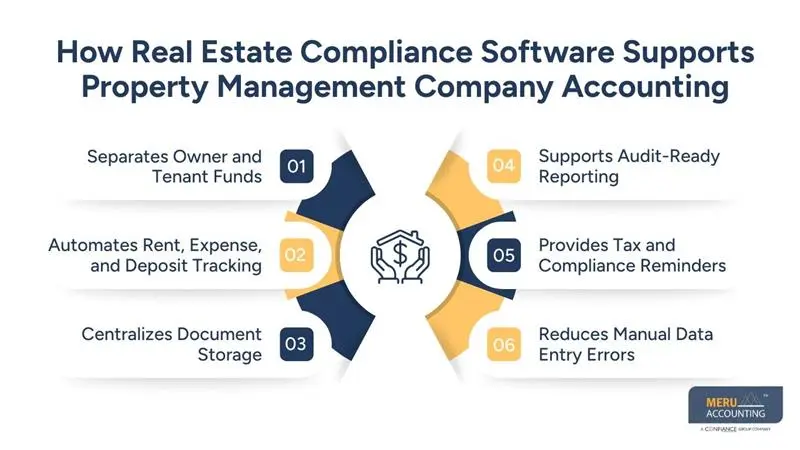
Supports Audit-Ready Reporting
Real estate compliance software helps prepare clear and complete reports for audits. With proper accounting for property management companies, financial data is always ready for review, reducing stress during inspections.
Provides Tax and Compliance Reminders
The software sends reminders for tax filings and compliance deadlines. This helps property managers stay on schedule and avoid late penalties through better property management company accounting.
Reduces Manual Data Entry Errors
By limiting manual data entry, the software lowers the chance of mistakes. This leads to more reliable property management company accounting and better confidence in financial records.
When property management company accounting is supported by real estate compliance software, errors are reduced, records stay organized, and overall confidence in financial management increases.
Improving Financial Reporting Through Property Management Company Accounting
Good reporting depends on accurate accounting. Accounting for property management companies ensures that financial reports are clear, timely, and easy to understand.
Strong accounting helps with:
- Clear income and expense reports
- Accurate owner statements
- Better budget tracking
- Simple tax summaries
Owners want to know how their property is performing. Clean reports build trust and reduce questions.
With the help of real estate compliance software, reports can be generated faster and with fewer mistakes.
Key Financial Reports Every Property Management Company Should Maintain
Every property management company should maintain the following reports through proper property management company accounting:
1. Income Statement
Shows rental income, expenses, and overall profit or loss. It helps property managers understand how well the properties are performing over a specific period.
2. Balance Sheet
Displays assets, liabilities, and equity of the business. This report gives a clear picture of the company’s financial position at a given time.
3. Cash Flow Report
Tracks money coming in and going out of the business. It helps ensure there is enough cash available to cover daily operations and expenses.
4. Owner Statements
Shows income and expenses for each property owner in a clear format. These statements help build trust and keep owners informed about their property performance.
5. Trust Account Report
Ensures tenant and owner funds are handled correctly and kept separate from business funds. This report is important for meeting legal and compliance requirements.
Using real estate compliance software makes these reports easier to prepare, more accurate, and simpler to store for future reference.
Link Between Property Management Company Accounting and Profitability
Profitability depends on knowing where money is earned and where it is lost. Property management company accounting gives clear answers and helps property managers make informed decisions.
Good accounting helps property managers:
- Identify repairs that are costing too much and find ways to reduce them. This ensures properties remain profitable without overspending.
- Control unnecessary expenses to keep overall costs lower. Proper tracking allows managers to redirect funds to more important areas.
- Set management fees at the right level for each property. Correct fees help cover costs and generate consistent revenue.
- Improve rent collection by tracking payments accurately. Timely collection prevents cash flow problems and late payment issues.
- Plan future budgets based on real financial data. Accurate budgeting helps with growth and long-term financial stability.
When accounting is weak, profits shrink without notice. When accounting is strong, decisions are based on real numbers.
Adding real estate compliance software improves accuracy, saves time, and helps lower costs while making accounting tasks easier to manage.
Outsourcing Property Management Company Accounting: Pros and Cons
Many companies choose to outsource property management company accounting. Here are the main pros and cons:
Pros
- Outsourcing provides access to trained accounting experts with experience in property management company accounting.
- It offers better compliance support by ensuring financial records follow legal and regulatory rules.
- Staffing costs are reduced since there is no need to hire, train, or manage an in-house accounting team.
- Financial reports are more accurate and delivered on time.
- Internal teams have less workload and can focus on core property management tasks.
Cons
- There may be less direct control over daily accounting activities.
- Data sharing with an external provider is required, which needs proper security and coordination.
- The company becomes dependent on the service provider for timely updates and support.
For many property managers, outsourcing with the right partner brings more benefits than risks.
How Professional Accounting Services Enhance Compliance and Profitability
Professional accounting services understand both property management company accounting and compliance needs.
They help by:
- Setting up correct accounting systems
- Managing trust accounts properly
- Preparing clean financial reports
- Supporting tax filings
- Using property compliance software efficiently
This support helps property managers avoid errors and focus on growth.
How Meru Accounting Supports Property Management Companies
Meru Accounting provides accounting and bookkeeping services tailored specifically for property management companies of all sizes.
We understand the daily challenges property managers face with compliance, financial reporting, and maintaining healthy profits, and we offer structured support to help manage these responsibilities efficiently
Our services include:
- End-to-end property management company accounting that ensures accurate tracking of income, expenses, and funds.
- Trust account setup and ongoing monitoring to keep owner and tenant funds properly separated.
- Clear and detailed owner and tenant reporting to improve transparency and communication.
- Compliance-ready financial records that support legal and regulatory requirements.
- Support with real estate compliance software to improve accuracy and organization.
- Tax-ready reports and audit support to help prepare for filings and financial reviews.
We help property management companies stay compliant, organized, and profitable without stress.
Key Takeaways
- Property management company accounting is critical for compliance and profit
- Poor accounting leads to fines, errors, and loss of trust
- Real estate compliance software helps manage rules and records
- Strong accounting improves financial reporting
- Clear reports support better business decisions
- Outsourcing accounting can save time and money
- Meru Accounting provides reliable support for property managers
FAQs
It tracks all property-related income and expenses. It helps stay compliant and make profitable decisions.
It ensures trust accounts, taxes, and security deposits are handled correctly. This avoids fines and legal issues.
Income statements, balance sheets, cash flow, owner statements, and trust account reports are essential.
Yes, it automates records, tracks rent and expenses, and ensures compliance with accounting rules.
Outsourcing provides expert support, accurate reports, and ensures compliance without extra staff burden.


