



Owning real estate can generate you a good income. But, it also brings managing several tasks along. These tasks include tracking rent, paying bills, handling taxes, and managing staff. All these tasks need your time and skill. Any mistakes in these tasks can cost you time and money. Many property owners now use real estate accounting outsourcing as a solution.
This means letting experts handle your books, reports, and taxes. Outsourcing saves time, cuts errors, and gives you insights about your property portfolio. It frees up your time and lets you focus on growing your portfolio.
By letting experts handle your accounting, you get peace of mind. You can focus on other property deals, tenant care, and business growth. Outsourcing also helps prevent mistakes that may cost money. It gives a clear picture of your finances at all times. This blog will cover when and why outsourcing makes sense, the benefits, and how it can help your properties thrive.
What You Will Learn From This Blog
By reading this blog, you will learn:
- What real estate accounting outsourcing is and how it works for property owners
- Common financial problems that make property management hard
- When it is the right time to outsource real estate accounting
- Why many businesses choose accounting outsourcing
- How outsourcing saves time and reduces mistakes
- How outsourcing gives clear financial insight for better decisions
- How these insights help you plan better and manage your portfolio with ease
What Is Real Estate Accounting Outsourcing?
Real estate accounting outsourcing means hiring an outside team to handle your accounting work. They manage your books, reports, payroll, and taxes for your properties.
This can include:
- Paying bills and tracking payments
- Bank reconciliation to make sure accounts match
- Payroll for staff and contractors
- Reports to see how properties perform
- Budgets to plan ahead
- Tax filing and checks
When you outsource real estate accounting, you get experts who know the rules. They handle rent, depreciation, and leases. Your books stay correct and follow the law. You can focus on growth, knowing your finances are safe.
Outsourcing also gives access to tools and software that make tracking easy. Experts can generate reports faster than a small in-house team. They can spot problems early, like late payments or mistakes. This helps you make decisions without worry.
Common Financial Challenges in Managing Real Estate
Owning many properties at a time can be hard. Common financial challenges in managing real estate include:
Complex Transactions
Multiple rents and fees are hard to track. Some tenants pay late or only part of the rent. Keeping records correct is tricky.
Cash Flow Problems
Late rent hurts your cash. Without steady cash, you may struggle to pay bills, staff, or repairs. Poor cash flow can slow growth.
Time-Consuming Work
Bookkeeping takes hours each week. As properties grow, it takes more time. Manual entry adds risk of mistakes.
Tax Compliance
Rules are hard. Mistakes in filing cost money and may lead to fines. Each property may have its own rules. Staying up-to-date is tough.
Lack of Insights
Without reports, it is hard to see which properties earn money or cost too much. You may miss ways to cut costs or grow income.
Staff Issues
Hiring trained accountants costs money and time. Turnover adds more work. Training new staff repeatedly can slow your work.
These issues make real estate accounting outsourcing helpful. Outsourcing reduces errors and gives owners more time to focus on growth. It also ensures accounting is done right and consistent.
When to Choose Real Estate Accounting Outsourcing
You should outsource real estate accounting when your workload grows or your staff cannot keep up. Key signs that you must outsource real estate accounting are:
Your Portfolio Grows
More properties mean more work. Experts help avoid mistakes and record every transaction. Reports for each property help in planning.
Your Team Is Busy
If staff cannot handle payroll, bills, or reports, outsourcing keeps records correct. It lets your team focus on tenants and property care.
You Need Reports
Outsourced teams give clear reports for smart decisions. They show income, costs, and ROI for each property. Reports make it easy to compare performance.
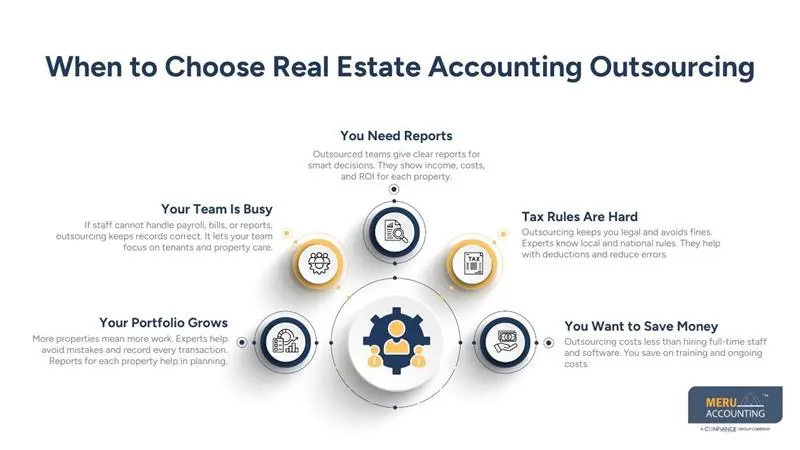
Tax Rules Are Hard
Outsourcing keeps you legal and avoids fines. Experts know local and national rules. They help with deductions and reduce errors.
You Want to Save Money
Outsourcing costs less than hiring full-time staff and software. You save on training and ongoing costs.
When you outsource real estate accounting at the right time, it prevents mistakes, reduces stress, and keeps your business running smooth. It also helps you plan for the future with confidence.
Why Businesses Choose to Outsource Real Estate Accounting
Property owners use real estate accounting outsourcing for many reasons:
Expert Knowledge
Outsourced teams know real estate rules. They understand rent, leases, and taxes. This level of experience reduces mistakes and keeps records correct.
Accuracy
Experts reduce mistakes. Your records stay right, which reduces stress and risk. Accurate records help with loans or financing.
Time Savings
Free your team to manage properties and tenants, not sit at desks. You spend time on growth and strategy instead of manual work.
Scalable Support
Outsourced support can grow with your portfolio. They can handle more properties as you expand. You can scale up or down as needed.
Better Tools
When you outsource real estate accounting, it gives access to good software and reporting tools. It improves tracking and makes reports easy to understand.
Lower Costs
When you outsource real estate accounting, it costs less than full-time staff. You pay for what you need, which is cheaper and predictable.
Outsourcing also gives peace of mind. You can focus on growth while knowing finances are safe. It reduces stress and keeps the portfolio in a better shape.
Key Benefits of Real Estate Accounting Outsourcing
Here are some key benefits of real estate accounting outsourcing:
1. Accurate Records
Experts follow best practices. Your books stay correct. This reduces mistakes and ensures you can trust your numbers. Consistent bookkeeping keeps finances organized and ready for checks.
2. Cash Flow Management
They track payments and late rent to keep cash flow smooth. You always know how much money is coming in. Good cash flow helps pay staff, vendors, and repairs on time.
3. Clear Reports
Get reports on income, costs, and profit. Know which properties earn the most. Reports help with loans, taxes, and growth plans. They also show trends and areas to improve.
4. Time Savings
Save hours for growth, tenant care, and property deals. You don’t spend time on numbers you don’t like. You can focus on planning, marketing, and tenant service.
5. Tax Compliance
Experts file taxes correctly and claim all deductions. This avoids fines and helps profits. They stay updated on rules, lowering your risk.
6. Lower Costs
No need for full-time staff or software. Real Estate accounting outsourcing cuts overhead and saves money. You also save on hiring and training.
7. Scalability
Outsourced teams adapt to your needs. Few or many properties, they handle work fast. You can grow your portfolio without adding staff.
Meru Accounting’s Real Estate Accounting Services
Meru Accounting offers expert real estate accounting outsourcing. We help property owners save time, stay legal, and see clear numbers.
Our services include:
Accounts Payable & Receivable
- Track all bills, invoices, and payments
- Record rent collections from tenants
- Monitor late payments and follow up
- Manage vendor payments and contracts
- Ensure all transactions are recorded accurately
Bank Reconciliation
- Match bank statements with accounting records
- Detect discrepancies, errors, or missed entries
- Ensure cash balances are accurate and up-to-date
Financial Reporting & Analysis
- Prepare monthly, quarterly, and yearly financial reports
- Income statements, balance sheets, and cash flow reports
- Track revenue, expenses, and profitability per property
- Analyze performance trends and highlight areas for improvement
Budgeting & Forecasting
- Develop property-specific budgets
- Forecast income and expenses for future planning
- Track budget vs actuals to control costs
- Help plan for growth, repairs, and upgrades
Tax Compliance & Support
- Prepare and review tax records
- File property taxes, sales taxes, and other applicable taxes
- Ensure compliance with local and national tax laws
- Identify eligible deductions to reduce tax liability
Payroll Management
- Handle payroll for property staff and contractors
- Calculate wages, deductions, and benefits
- Ensure timely salary disbursements
- Maintain payroll records for audits and reporting
Lease & Tenant Accounting
- Track lease agreements, deposits, and rent escalations
- Record tenant payments and adjustments
- Prepare tenant statements and summaries
Audit Preparation & Support
- Maintain accurate books ready for audits
- Support internal or external auditors
- Provide documentation and reconciliation for compliance
Property-Level Accounting
- Maintain separate records for each property
- Track revenue and expenses per property
- Evaluate property-level profitability and cash flow
With Meru Accounting’s real estate accounting services, you can focus on growing your portfolio. We handle all accounting tasks for your portfolio. This makes property management less stressful and more profitable. Our team gives regular updates and reports so you can see progress and act fast.
Key Takeaways
- Real estate accounting outsourcing saves time and cuts mistakes.
- Outsourcing solves cash flow, tax, and bookkeeping problems.
- The right time to outsource is when your portfolio grows or your team is busy.
- Benefits include accuracy, cash flow, reports, time savings, cost cuts, and scalability.
FAQs
It is hiring experts to manage accounting, reports, payroll, and taxes for your properties.
If your portfolio grows, your team is busy, or reports are late, outsourcing helps.
Yes. It avoids full-time salaries, training, and software costs.
Yes. Experts ensure compliance and claim deductions.
Better accuracy, cash flow, reports, time savings, cost cuts, and scalable support.


