Meru Accounting

How Real Estate Accounting Can Simplify Property Management with Rental Accounting Software

Contents
Want to learn more?
Subscribe for business tips, tax updates, financial fundamental and more


    How Real Estate Accounting Can Simplify Property Management with Rental Accounting Software

    Managing rental properties is complex, requiring tracking of rent, expenses, tenants, and compliance. Manual bookkeeping is error-prone and inefficient, making real estate accounting essential. It helps property managers stay organized, save time, and maximize profitability.

    By combining professional accounting practices with modern rental accounting software, property managers can streamline their operations, reduce errors, and make informed financial decisions.

    In this blog, we will explore how real estate accounting can simplify property management, the role of rental accounting software, and practical steps for implementing these solutions in your business.

    What You Will Learn From This Blog

    • What real estate accounting is
    • The role of real estate accounting in property management
    • Common property management challenges solved by real estate accounting
    • How rental accounting software enhances Real estate bookkeeping
    • Benefits of using real estate bookkeeping with property accounting software
    • Real-world examples of property managers using property accounting software
    • Tips for implementing Real estate bookkeeping and property accounting software

    What is Real Estate Accounting?

    Real estate accounting is a specialized branch of accounting focused on tracking, managing, and reporting financial transactions for property investments and rental operations. Unlike standard business accounting, it deals specifically with the nuances of property management, including:

    • Rent collection and tenant billing
    • Property expenses and maintenance tracking
    • Lease and contract management
    • Tax compliance for real estate income
    • Asset valuation and depreciation

    The goal of Real estate bookkeeping is to provide property managers and owners with accurate financial data that helps them make informed decisions, maximize profits, and stay compliant with local regulations.

    In essence, Real estate bookkeeping transforms property management from a reactive process into a proactive, well-organized system.

    The Role of Real Estate Accounting in Property Management

    Property management is more than just collecting rent. Managers must handle multiple properties, tenants, and contracts, while ensuring that expenses do not exceed income. Real estate accounting plays a critical role by:

    Providing Financial Clarity

    Accurate books allow managers to track income and expenses for each property, ensuring that cash flow is healthy.

    Ensuring Compliance 

    Real estate accounting helps maintain compliance with tax laws and reporting requirements, reducing the risk of fines or audits.

    Supporting Decision-Making 

    Detailed financial records enable managers to make informed decisions, such as when to raise rents or invest in property improvements.

    Simplifying Audits

     Well-organized accounting records make financial audits easier and faster.

    Without proper accounting, property managers risk making poor decisions, overpaying taxes, or missing opportunities to improve profitability.

    Common Property Management Challenges Solved by Real Estate Accounting

    Many property managers struggle with challenges that directly impact their financial performance. Real estate accounting, especially when paired with rental accounting software, can solve these issues:

    Tracking Rent and Payments

    Manual tracking of rent payments can lead to errors, missed payments, and disputes with tenants. Property accounting software automates invoicing and payment tracking, reducing errors and ensuring that payments are recorded in real time.

    Managing Expenses

    Property management involves various expenses, including maintenance, utilities, insurance, and property taxes. Real estate bookkeeping allows managers to categorize expenses properly, track budgets, and identify cost-saving opportunities.

    Handling Multiple Properties

    Managing several properties manually is time-consuming and prone to errors. Rental accounting software consolidates data from all properties in one platform, making reporting and analysis simpler and faster.

    Ensuring Tax Compliance

    Real estate income is subject to complex tax laws. Real estate accounting ensures that all income and expenses are accurately reported, deductions are claimed correctly, and taxes are filed on time.

    Reducing Errors and Fraud

    Manual systems or spreadsheets are prone to mistakes and may not detect fraudulent activities. Automated accounting systems with built-in controls help minimize errors and prevent unauthorized transactions.

    By addressing these challenges, Real estate bookkeeping reduces stress, improves accuracy, and allows property managers to focus on strategic decisions rather than administrative tasks.

    How Rental Accounting Software Enhances Real Estate Accounting

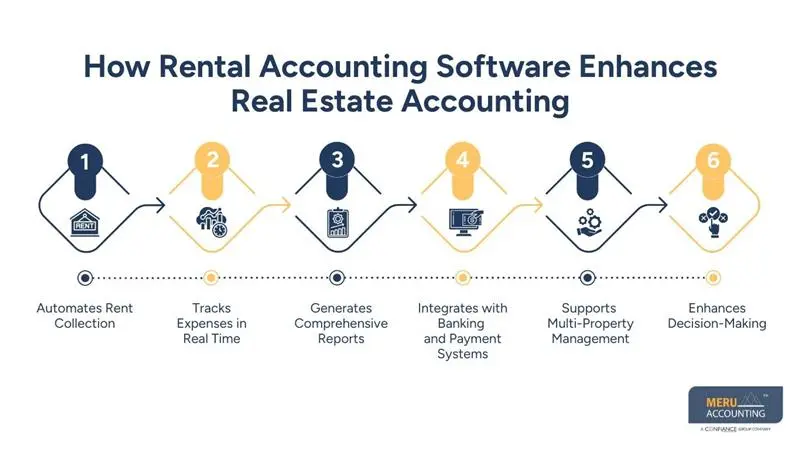
    While Real estate bookkeeping provides the framework for managing finances, rental accounting software brings automation, speed, and intelligence to the process. Here’s how:

    Automates Rent Collection

    Property accounting software can automatically generate invoices, send reminders to tenants, and record payments as soon as they are received. This reduces manual effort and ensures timely cash flow.

    Tracks Expenses in Real Time

    From maintenance costs to utility bills, property accounting software allows managers to record and categorize expenses instantly. This makes it easier to generate accurate financial reports and compare actual spending against budgeted amounts.
    How Rental Accounting Software Enhances Real Estate Accounting

    Generates Comprehensive Reports

    Property managers can generate detailed financial reports with a few clicks. These reports include income statements, balance sheets, cash flow statements, and tenant-specific reports, giving a complete picture of property performance.

    Integrates with Banking and Payment Systems

    Modern rental accounting software integrates with bank accounts, payment gateways, and online transfer systems. This ensures that transactions are recorded automatically, reducing reconciliation time and improving accuracy.

    Supports Multi-Property Management

    For managers with multiple properties, the software consolidates all financial data into one system. Managers can compare performance across properties, track occupancy rates, and identify which assets are most profitable.

    Enhances Decision-Making

    By providing real-time data and analysis, property accounting software empowers managers to make proactive decisions. This could include scheduling maintenance, adjusting rent, or investing in property upgrades for higher ROI.

    Benefits of Using Real Estate Accounting with Rental Accounting Software

    Combining real estate accounting with rental accounting software offers numerous benefits for property managers and owners:

    Time Savings

    Automating routine tasks such as rent collection, invoicing, and expense tracking saves hours of manual work each week.

    Increased Accuracy

    Automation reduces errors that are common in manual bookkeeping, ensuring that financial data is reliable and up to date.

    Better Cash Flow Management

    With real-time tracking of income and expenses, managers can maintain healthy cash flow and make informed decisions about spending and investments.

    Compliance and Audit Readiness

    Property accounting software helps maintain detailed records, making audits easier and ensuring compliance with tax regulations.

    Improved Tenant Relationships

    Timely invoicing and clear payment tracking enhance transparency and trust with tenants, leading to better retention rates.

    Data-Driven Insights

    Advanced reporting and analytics tools provide insights into property performance, enabling managers to optimize operations and increase profitability.

    Examples of Property Managers Using Rental Accounting Software

    Many property managers have already seen significant improvements after adopting rental accounting software in their real estate accounting processes:

    Apartment Complex Managers 

    Automating rent collection and maintenance requests reduced manual work by 40%, allowing staff to focus on tenant satisfaction.

    Vacation Rental Managers 

    Real-time tracking of bookings and expenses improved cash flow management and simplified tax preparation.

    Commercial Property Managers

    Integrating rental accounting software with lease management systems enabled accurate reporting for multiple tenants and properties simultaneously.

    Single-Family Rental Investors 

    Automated reminders for rent payments and expense tracking minimized late payments and improved overall profitability.

    These examples show that Real estate bookkeeping combined with modern software can revolutionize property management operations.

    Tips for Implementing Real Estate Accounting and Rental Accounting Software

    To get the most out of your real estate accounting and rental accounting software, consider the following tips:

    Choose the Right Software

    Select a solution that fits your property portfolio, supports multi-property management, and integrates with your existing systems.

    Train Your Team

    Even intuitive software requires proper training to ensure accurate data entry and reporting.

    Maintain Accurate Records

    Enter all income, expenses, and tenant details promptly to keep financial data up to date.

    Automate Repetitive Tasks

    Use automation features for invoicing, reminders, and recurring expenses to save time.

    Review Reports Regularly

    Schedule regular reviews of income statements, balance sheets, and cash flow reports to identify trends and issues early.

    Integrate with Other Tools

    Connect your software with banking, payment gateways, and tax tools for seamless operations.

    Plan for Compliance

    Ensure that your accounting processes align with local tax laws and reporting requirements.

    Why Choose Meru Accounting?

    At Meru Accounting, we understand the unique challenges property managers face. Our team provides expert real estate accounting services tailored to your portfolio.

    We help property management firms by:

    • Handling accurate financial record-keeping for rental properties
    • Managing tenant payments, maintenance expenses, and leases
    • Preparing reports for financial analysis and tax compliance
    • Assisting with software selection and integration strategies

    With our guidance, property managers can focus on growing their business while we ensure the financial records are accurate, compliant, and optimized.

    Key Takeaways

    • Real estate accounting is essential for accurate financial management in property management.
    • Combining real estate bookkeeping with rental accounting software improves accuracy, efficiency, and profitability.
    • Common property management challenges, such as rent tracking, expense management, and compliance, are easily handled with automated systems.
    • Real-time reporting, automation, and integration empower property managers to make data-driven decisions.
    • Meru Accounting offers expert support to simplify real estate accounting for any property portfolio.

    FAQs

    Real estate accounting manages property-specific finances like rent, leases, and taxes. Regular accounting handles general business finances without focusing on property complexities.

    Yes, modern rental accounting software manages several properties, tenants, and contracts from a single platform. This makes multi-property management simple and organized.

    It automates invoicing, payment tracking, and expense categorization. This reduces errors common in manual bookkeeping processes.

    Yes, even small owners benefit from tracking income, expenses, and taxes accurately. It ensures compliance and helps maximize profits.

    Meru Accounting handles bookkeeping, tenant billing, expenses, reporting, and tax compliance. We simplify accounting and optimize property performance for owners and managers.