



Real estate development accounting is an essential part of managing large-scale infrastructure projects. Proper accounting ensures that every financial transaction is recorded accurately, costs are monitored closely, and the project stays within budget. Real estate accounting provides project managers, investors, and stakeholders with clear insights into the financial health of a development project. In large-scale projects, even small accounting errors can lead to significant losses or delays.
This blog will provide detailed tips and guidance on real estate development accounting to help professionals manage finances efficiently, track profitability, and make informed decisions.
What You Will Learn From This Blog
In this blog, you will learn how real estate development accounting can improve the management of infrastructure projects. We will cover:
- The importance of real estate accounting in construction and development.
- Key principles and strategies for accurate project accounting.
- How to plan budgets and monitor expenses effectively.
- Best practices for tracking profits and return on investment ROI.
- Ways to integrate ERP and accounting software for better financial control.
Importance Of Real Estate Accounting For Infrastructure Projects
Real estate accounting plays a crucial role in infrastructure projects. Infrastructure projects are complex, involving multiple contractors, suppliers, and regulatory requirements. Without proper accounting, it is easy to lose track of expenses, miss payments, or make poor investment decisions.
Accurate Cost Management
Keeping track of all project costs prevents overspending and ensures the project remains profitable.
Regulatory Compliance
Infrastructure projects often involve government approvals, permits, and taxes. Proper accounting ensures compliance with all financial regulations.
Investor Confidence
Transparent accounting builds trust with investors and stakeholders by showing how funds are used.
Decision Making
Financial data from accounting helps project managers make informed decisions on resource allocation and scheduling.
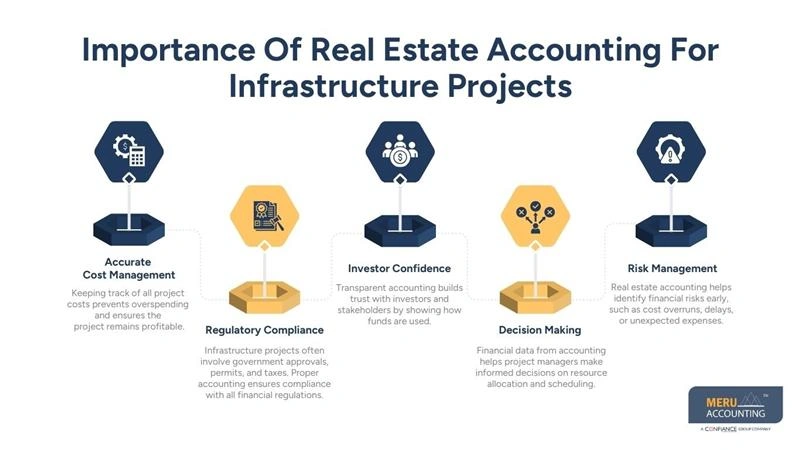
Risk Management
Real estate accounting helps identify financial risks early, such as cost overruns, delays, or unexpected expenses. By tracking all transactions and project budgets carefully, companies can take corrective actions on time and reduce potential losses.
Real estate development accounting allows companies to track project performance from start to finish, making it easier to manage both small and large-scale projects effectively.
Key Principles Of Real Estate Development Accounting
Understanding the key principles of real estate development accounting is essential for managing large infrastructure projects. These principles provide a strong foundation for accurate financial management.
Consistency In Accounting Methods
Use consistent accounting methods throughout the project to ensure accuracy and comparability.
Separate Project Accounts
Each project should have its own accounts to avoid mixing expenses and revenues from multiple projects.
Accrual Accounting
Record revenue and expenses when they occur rather than when cash changes hands. This provides a true picture of project profitability.
Detailed Record Keeping
Keep detailed records of all transactions, including invoices, receipts, and contracts.
Regular Financial Reporting
Prepare regular financial reports to monitor project performance and identify issues early.
By following these principles, real estate accounting can be managed more effectively, minimizing financial risks and ensuring project success.
Budgeting And Financial Planning For Infrastructure Projects
Budgeting is one of the most critical aspects of real estate development accounting. Large-scale infrastructure projects require careful financial planning to avoid cost overruns and delays.
Estimate Costs Accurately
Calculate all direct and indirect costs, including construction materials, labor, permits, and contingency expenses.
Set Clear Financial Goals
Define profit targets and funding requirements for each phase of the project.
Create A Cash Flow Plan
Forecast cash inflows and outflows to ensure the project can meet its financial obligations.
Monitor Budget Variances
Compare actual expenses with budgeted amounts regularly to identify discrepancies and take corrective action.
Adjust Budgets As Needed
Infrastructure projects often face unexpected changes. Update the budget when necessary to reflect new costs or delays.
Proper budgeting allows project managers to plan effectively and avoid financial surprises that can affect project completion.
Best Practices For Real Estate Development Accounting
Following best practices in real estate development accounting helps maintain accurate financial records and ensures efficient management of large infrastructure projects.
Use Project Accounting Software
Implement software that tracks project-specific income and expenses to reduce errors and save time. This also allows managers to generate detailed reports quickly for better decision-making.
Regular Audits
Conduct internal and external audits to verify financial accuracy. Audits help identify discrepancies early and maintain stakeholder confidence.
Track Subcontractor Payments
Keep detailed records of payments to subcontractors and suppliers. Tracking payments ensures timely settlements and avoids disputes or project delays.
Document All Transactions
Ensure every transaction is supported with invoices, receipts, or contracts. Proper documentation makes compliance easier and simplifies future audits.
Train Accounting Staff
Ensure accounting teams are knowledgeable about real estate development accounting principles. Well-trained staff can manage complex projects more efficiently and reduce the risk of errors.
By following these best practices, real estate accounting becomes more organized, transparent, and reliable, providing confidence to investors and stakeholders.
Tracking ROI And Profitability For Each Project
Measuring return on investment ROI and profitability is essential for large-scale infrastructure projects. Real estate development accounting allows you to assess whether the project is financially successful and identify areas for improvement.
Calculate Project Costs
Include all costs from land acquisition to construction and operational expenses. Be sure to account for unexpected costs to get a true picture of total investment.
Monitor Revenue Streams
Track sales, leases, or rental income generated by the project. This also helps identify which revenue sources are performing best.
Compare Costs And Revenue
Regularly compare total costs against income to measure profitability. Use this comparison to spot inefficiencies or areas where savings can be made.
Adjust Project Plans
Use ROI data to adjust timelines, resource allocation, or marketing strategies. Making timely adjustments can prevent losses and improve overall project outcomes.
Report To Stakeholders
Share financial reports with investors to demonstrate performance and build confidence. Clear reporting ensures stakeholders understand the project’s financial position and progress.
Consistent tracking of ROI helps real estate companies make informed decisions for future infrastructure projects.
Integrating ERP And Accounting Software For Real Estate
Integrating ERP Enterprise Resource Planning systems with accounting software simplifies real estate development accounting for large projects. These systems provide a centralized platform to manage finances, operations, and reporting.
Real Time Financial Data
Access up-to-date financial information for better decision-making. This allows project managers to respond quickly to cost changes or delays.
Simplified Reporting
Generate detailed project reports for stakeholders easily. Reports can be customized to show project-specific income, expenses, and progress.
Automated Transactions
Reduce manual errors by automating invoice processing, payroll, and payments. Automation also saves time and improves overall efficiency.
Improved Budget Control
Monitor budget variances and take corrective action quickly. This helps prevent overspending and ensures projects stay financially on track.
Enhanced Collaboration
Accounting, project management, and procurement teams can work together efficiently. Teams can share data in real time for better coordination and decision-making.
Using integrated software improves accuracy, efficiency, and transparency in real estate accounting.
How Meru Accounting Supports Real Estate Development Accounting
At Meru Accounting, we specialize in real estate development accounting for large-scale infrastructure projects. Our certified experts provide comprehensive accounting and bookkeeping services tailored to your project needs.
Our services include:
Project Specific Accounting
Track income, expenses, and profitability for each infrastructure project. This allows you to see exactly how each project contributes to overall financial performance.
Budgeting And Forecasting
Create accurate budgets and monitor cash flows to avoid overruns. We also provide insights to adjust spending and improve financial planning.
ERP And Software Integration
Implement and manage accounting software for efficient financial control. Integration ensures all project data is centralized and easy to access.
Compliance And Reporting
Ensure regulatory compliance with accurate financial reports. Regular reports also help stakeholders understand project status clearly.
ROI And Profitability Analysis
Evaluate each project’s performance to maximize returns. This helps identify profitable areas and opportunities for cost savings.
Key Takeaways
- Real estate development accounting is essential for managing large infrastructure projects efficiently.
- Accurate real estate accounting helps in budgeting, tracking costs, and ensuring compliance.
- Following key principles and best practices reduces financial risks and improves project performance.
- Monitoring ROI and profitability allows informed decision-making for future projects.
- Integrating ERP and accounting software simplifies financial management and reporting.
- Partnering with certified experts, like Meru Accounting, ensures your project finances are handled professionally.
FAQs
Real estate development accounting is the process of managing all financial transactions and records related to property development projects.
It helps track costs, manage budgets, ensure compliance, and measure project profitability.
Compare total project costs with revenue from sales or rentals, and monitor profit regularly.
Yes, software simplifies tracking expenses, generating reports, and automating transactions for better accuracy.
Track all costs, including land, materials, labor, permits, subcontractor fees, and unexpected expenses, to avoid overspending.


