



Profit in real estate does not grow by chance. It grows when investors, owners, and managers track numbers with care and make choices based on real data. This is why more investors now rely on real estate property accounting software. The change is strong because real estate deals move fast, and costs rise without warning. When you work with many units, vendors, and tenants, the room for error grows. Simple spreadsheets break down. Manual work slows your team. Mistakes then cost you real profit.
In the last few years, accounting for real estate development has also become more complex. Land cost, building cost, tax rules, loan terms, and compliance make the work tough. This is where smart tools help. Software built for real estate makes it easy to track each part of your project and see the true value of your portfolio. When you use systems that automate work, your time frees up. Your books stay clean, cash flow stays stable, and your profit grows.
This blog walks you through how this software helps, why more investors trust it, and how firms like Meru Accounting can support you.
What Is Real Estate Property Accounting Software?
Real Estate property accounting software is a digital system that helps you track your income, expenses, cash flow, assets, taxes, and project reports in one place. It is built only for real estate, which means it knows how to handle rent, deposits, maintenance, vendor bills, loan payments, and long project cycles.
While basic tools handle simple books, this software goes deeper. It works with lease terms, unit-level income, project phases, inventory, construction cost, and payment schedules. It also helps with accounting for real estate development, where each project has many layers and tasks.
The main parts of good Real Estate property accounting software include:
- A full chart of accounts made for real estate
- Rent tracking
- Lease management
- Automated reminders
- Vendor management
- Multi project reporting
- Tax-ready statements
- Bank feed sync
- Forecasting tools
- Profit and loss for each unit or each project
These tools reduce time spent on manual work and improve the accuracy of your financial data.
How Real Estate Accounting Software Boosts Profitability
Profit grows when three things happen: waste goes down, efficiency goes up, and decisions improve. Real Estate property accounting software helps with all three.
1. Lower Errors and Higher Accuracy
Manual accounting invites errors. Even a small mistake in rent records, vendor bills, or project cost can distort your numbers. Software tracks each entry with care, reducing risk. Clean and correct books mean you know your real profit with clarity.
2. Faster Billing and Better Cash Flow
Late rent collection hurts profit. With this software, invoices and rent reminders go out on time. Auto follow ups help you get paid faster. Smooth cash flow means you pay vendors, plan purchases, and manage loans with ease.
3. Better Control Over Costs
For those who work with accounting for real estate development, cost control is key. Development projects move through many stages. Each stage has a cost that must be tracked so you do not overspend. The software tracks bills, labor cost, material cost, and contractors. When you see the cost early, you act early.
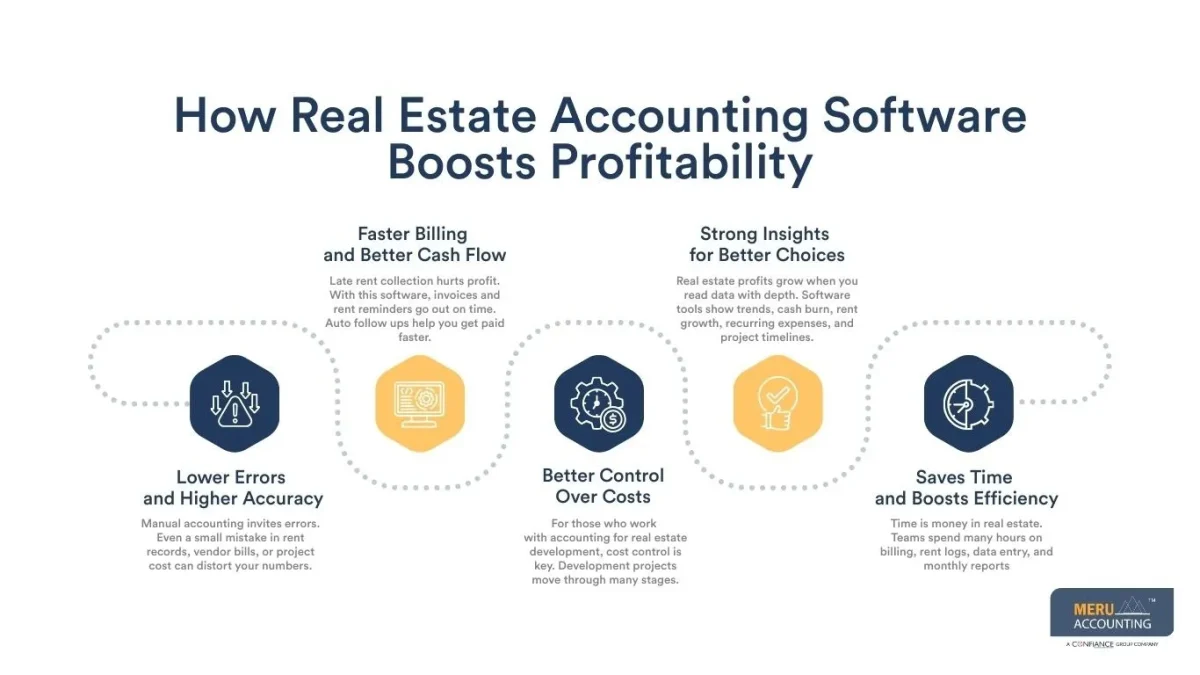
4. Strong Insights for Better Choices
Real estate profits grow when you read data with depth. Software tools show trends, cash burn, rent growth, recurring expenses, and project timelines. This helps you choose when to buy, sell, build, or hold.
5. Saves Time and Boosts Efficiency
Time is money in real estate. Teams spend many hours on billing, rent logs, data entry, and monthly reports. When the system does it for you, your team can focus on growth, not manual work.
Property and Tenant Management Integration
Good Real Estate property accounting software does not stop at accounting. It blends with property management tools so that all work stays in one place.
Here is how this integration helps:
A. Smooth Tenant Tracking
The system stores lease details, rent cycles, contact data, and payment history. You see who paid, who missed, and who needs follow up. This reduces stress and cuts the effort you put into tracking each tenant.
B. Maintenance and Work Order Logs
A unit with problems loses value. When maintenance is slow, tenants leave. The system logs issues, assigns tasks, and tracks progress. You know what work is pending and what cost is due.
C. Central Data Management
Property and tenant data work with your accounting data. There is no need to move files or match numbers. Everything stays synced, which helps with accounting for real estate development as well.
D. Clear Cash Flow from Rent
Since rent is the main income for most real estate owners, clear rent tracking helps forecast future income. This lets you plan project work, loan payment, and upgrades.
Maximizing ROI with Advanced Analytics
Profit grows when you use data the right way. Modern Real Estate property accounting software gives you powerful analytics that help you see where money flows in and where it flows out.
Revenue Trends
You can track rent by unit, by building, or by region. This helps you understand which asset performs well and which does not.
Expense Trends
When you study your cost pattern, you find leaks. Maybe one property spends more on repairs than others. Maybe a vendor charges more. Data shows what you must fix.
Project Performance Reports
In accounting for real estate development, project insights matter a lot. Software tools show budget vs actuals, timeline delays, cost spikes, labor issues, and return projections. These insights help you pick better projects in the future.
Investment Scenario Planning
Good tools also allow scenario tests. For example, “What if rent rises by five percent?”, “What if material cost rises?”, “What if I refinance the loan?”. These views help you make safer choices.
Real-Time Dashboards
Dashboards show live data. You do not wait for month-end reports. You see trends the moment they form, and this makes your response fast.
Case Studies: Real Estate Investors Who Boosted Profits with Accounting Software
Case Study 1: A Small Landlord with 22 Units
A landlord managed twenty two units that relied on manual books. Rent delays, missed bills, and tax mistakes made the work hard. After moving to Real Estate property accounting software, the owner cut rent delays by thirty percent. The dashboard made it easy to track cash flow, and profit rose by twelve percent in one year.
Case Study 2: A Mid-Sized Developer
A developer who handled housing projects had trouble with cost control. Bills piled up. Reports came late. By accounting for real estate development using a dedicated software, the team tracked supplier bills, contractor cost, and stage-wise project work. Budget leaks reduced, and the firm saved enough to raise its net profit by almost fifteen percent.
Case Study 3: A Commercial Property Owner
This investor managed office spaces across three cities. With many tenants, rent checks were messy. After adopting Real Estate property accounting software, collections improved, and rental income rose by eight percent due to fewer defaults and faster reminders.
Why Choose Meru Accounting for Real Estate Accounting?
At Meru Accounting, we help real estate owners, investors, and developers gain full control of their books. Our team understands how tough accounting for real estate development can be, where every cost must be tracked with care.
When you work with us, you get:
- Clean and accurate books
- Full setup of Real Estate Property Accounting Software
- Rent tracking support
- Lease management support
- Vendor payment management
- Project cost tracking
- Monthly financial reports
- Tax-ready statements
- Expert guidance from a team that works with real estate day after day
Our goal is to help your portfolio grow with deals, tenants, and development.
Key Takeaways
- Real Estate property accounting software helps you track income, expenses, and projects with more clarity.
- Automation cuts errors and speeds up billing, improving your cash flow.
- When accounting links with property and tenant management, your work becomes smooth.
- Advanced analytics help you make choices that raise profit.
- Good software is vital for accounting for real estate development, where cost grows fast.
- Tools and expert help from firms like Meru Accounting can boost growth.


