



Guide to Tax on UK Property for Landlords and Investors
Property investment in the UK has been growing steadily over the years. Many people are considering property as a stable and long-term way to build wealth. But, at the same time, they have to deal with different tax rules that define how much money they keep from their rental income and property gains. When you understand how tax on UK property works, you can make clear plans, avoid surprises, and build a stronger base for your future.
This blog gives you insight into each major part of UK property tax so you can handle your responsibilities with ease. By knowing how the rules apply at each stage of your journey, you get better control of your cash flow, better clarity on your returns, and a fair chance to protect the value you create over time.
What Is Tax on UK Property
Tax on UK property covers many duties that apply when you earn income, buy homes, sell homes, or pass them to others. These rules exist to keep the wider system fair, but they can feel heavy if you try to manage them without clear knowledge. UK property tax aims to place each type of activity into its own category.
Some taxes are ongoing and repeat each year, while others only apply at the moment you buy or sell. When you break them down, they become far easier to understand. By knowing which rule applies at each step, landlords can plan purchases, sales, and rental decisions with more confidence and less stress.
For landlords and investors, the most important UK property tax categories include:
Income Tax from rental income
When you rent out a house or a flat, the money that comes in is treated as part of your total income. This means HMRC looks at all the money you earn from work and property and then applies the right tax band. You can reduce your income tax by claiming expenses that are directly linked to running the property. These can include repair work, letting agent fees, safety checks, service charges, and more. Many landlords forget to claim smaller costs, but they make a real difference across the year.
Stamp Duty Land Tax called SDLT
SDLT is a major cost when buying a property. This is a one time tax paid at the moment of purchase. The rate depends on the value of the home and whether it is your first home, your second home, or a rental investment. Since there is an extra surcharge for second homes, landlords often face a higher bill. Planning early for SDLT helps you understand the true cost of buying a property and prevents any shock at the time of completion.
Capital Gains Tax when selling property
If you sell a property that is not your main residence, you may pay Capital Gains Tax on the profit you make. The amount of CGT depends on the income band you fall into during the tax year. Basic rate taxpayers pay a lower rate than higher or additional rate taxpayers. The timing of the sale can affect how much tax you owe, which makes planning a very useful tool for reducing costs.
Council Tax or Business Rates
Most residential homes fall under council tax, which is paid to your local authority. However, if your property is used for short term lets or as a serviced rental, it may be classified as a business. In that case, business rates apply instead of council tax. Each system has its own rules and reliefs, so landlords must be aware of how the property is used during the year.
Inheritance Tax for property passed on
Inheritance tax applies if a property is passed on to family members as part of an estate. Property is often one of the largest assets a person owns, so it can push the value of the estate above the tax threshold. There are extra allowances for homes passed to direct descendants, but planning is still needed to manage the long term impact on the next generation.
Tax Reliefs and Allowances for Landlords
There are many reliefs and allowances that help reduce the tax on UK property. Landlords can claim expenses that are essential to running and maintaining a property. These include building insurance, repair jobs, cleaning, letting agent fees, legal costs, and replacements of worn out furniture. The tax rules also let you carry forward property losses from past years to offset future rental profits. For individuals, mortgage interest gives only a basic rate credit, but landlords who use a company can claim full mortgage interest as an expense. Since rules can shift from year to year, staying updated is key to staying compliant and saving tax at the same time.
Strategies to Reduce Tax on UK Property
Here are practical ways landlords and investors can minimize tax on UK property in a simple and effective manner:
1. Form a Property Ltd Company
Setting up a company is one of the most common strategies used by modern landlords. A company can pay lower corporation tax compared to higher rate income tax, and it can also claim full mortgage interest relief. This makes the structure ideal for long term investment, especially for those planning to buy multiple homes. A company also offers more freedom around ownership, shares, and future planning.
2. Claim All Allowable Expenses
Many landlords pay more tax simply because they forget to claim small but valid expenses. Tiny costs, when added up across a full year, create a noticeable reduction in your tax bill. Good record keeping is a key habit for anyone dealing with uk property tax. When every repair, fee, and service is captured, the final taxable amount becomes far lower and more manageable.
3. Time Property Sales Strategically
A well timed sale can save a large amount of tax. Since CGT is linked to your income band, selling during a year where your income is lower can drop you into a smaller tax band. This reduces the tax on the gain you make. Planning ahead gives you room to choose the right moment to sell instead of rushing during a high income year.
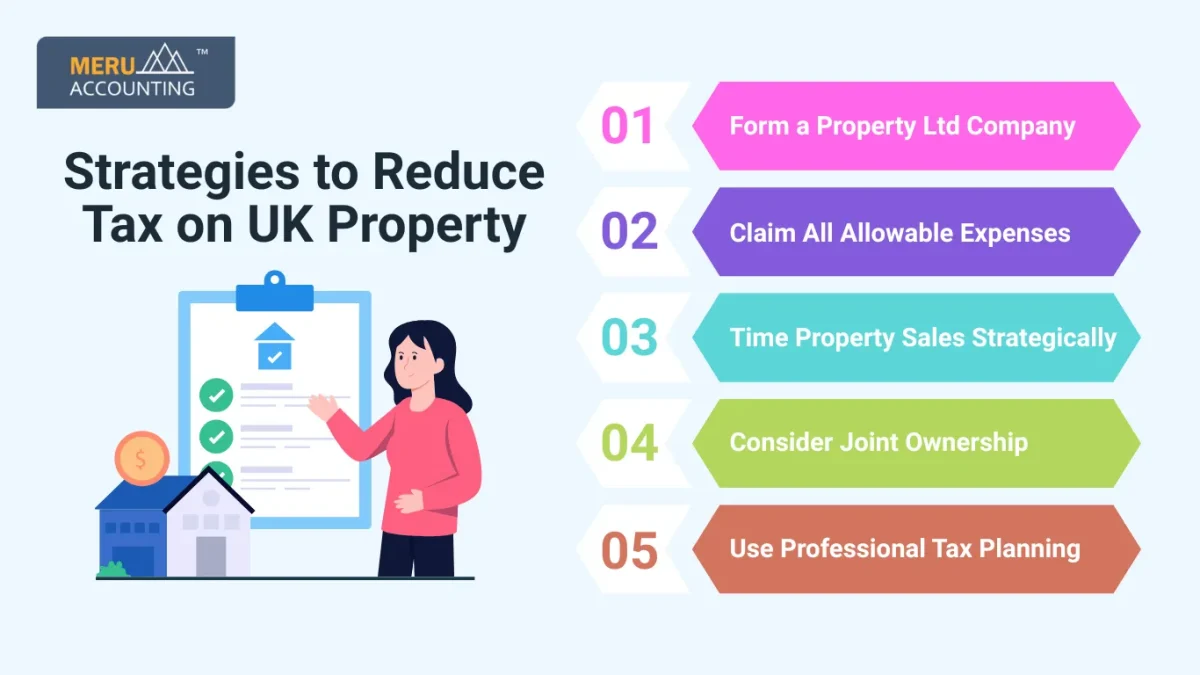
4. Consider Joint Ownership
Joint ownership is a simple and effective way to lower tax. If you share a property with a partner who earns less money, you can split your rental income in a way that uses the lower tax band. This keeps more profit in your hands and less going out as tax. Couples and long term partners use this method often to create smoother and more balanced rental income.
5. Use Professional Tax Planning
Tax planning is not just about saving money. It also ensures that all compliance duties are met without stress. UK property tax rules change quite often, and a good accountant helps you claim every relief that applies to your case. Skilled advice also helps you avoid costly errors that may lead to HMRC enquiries or penalties. With the right guidance, landlords gain clarity and peace of mind.
Meru Accounting supports landlords and investors by managing tax on UK property. Whether you need help with rental income tax, Capital Gains Tax planning, company setup for property, or long term compliance, our team provides clear, structured, and reliable support. We bring experience and detailed tax knowledge, helping you reduce your tax bill while staying fully aligned with HMRC rules. Need someone to manage your tax on UK property? Contact us now to get started with our remote tax services.
FAQs
1. What taxes do landlords pay on UK property
Landlords usually pay income tax on rental income, SDLT when buying, CGT when selling, and council tax or business rates depending on how the home is used.
2. How can I reduce tax on UK property
You can reduce tax by using a property company, claiming every valid expense, planning sales at the right time, and sharing ownership with a lower earning partner.
3. Do I pay Capital Gains Tax on every property sale
You pay CGT on the sale of investment homes or second homes. Your main residence can be exempt if it qualifies for private residence relief.
4. Is rent from property always taxable
Yes, rental income is taxable, but approved expenses can reduce how much you pay. Keeping proper records helps you claim the full amount.
5. How Much Is Income Tax in England for landlords
The rate depends on your tax band. Rental income is added to your total income for the year and is taxed at the rate that applies to your band.
