


Understanding How Taxation in London Works
Taxation in London may look complex because the city follows both national rules and local rules. You deal with HMRC for most taxes and with local borough councils for certain charges. When you understand how each tax works, you can make smart plans, avoid surprise bills, and stay compliant without stress. In this blog, we will have a look at the main types of taxes and key reliefs available in London.
HMRC and Its Role
What HMRC Does
- Collects national taxes across the United Kingdom
- Manages income tax, NICs, VAT, CGT, and corporation tax
- Reviews tax returns and handles refunds
- Conducts checks and audits when needed
Every employee, landlord, investor, or business in London interacts with HMRC. Even though London is a large city with unique financial activity, the rules are still set at the national level. Since HMRC oversees most parts of taxation in London, staying updated with its rules helps you avoid errors.
National vs Local Taxes in London
National Taxes
National rules form the backbone of how taxation in London works for both individuals and businesses. National taxes apply to all UK residents and businesses. These include:
- Income tax
- National Insurance
- VAT
- CGT
- Corporation tax
- Stamp Duty Land Tax
Local Taxes
Local taxes apply only to the borough where you live.
- Council Tax
- Certain local charges and levies
London has thirty two boroughs, so council tax rates can change from one area to another. Council tax is a major part of taxation in London, and understanding borough differences helps you budget better.
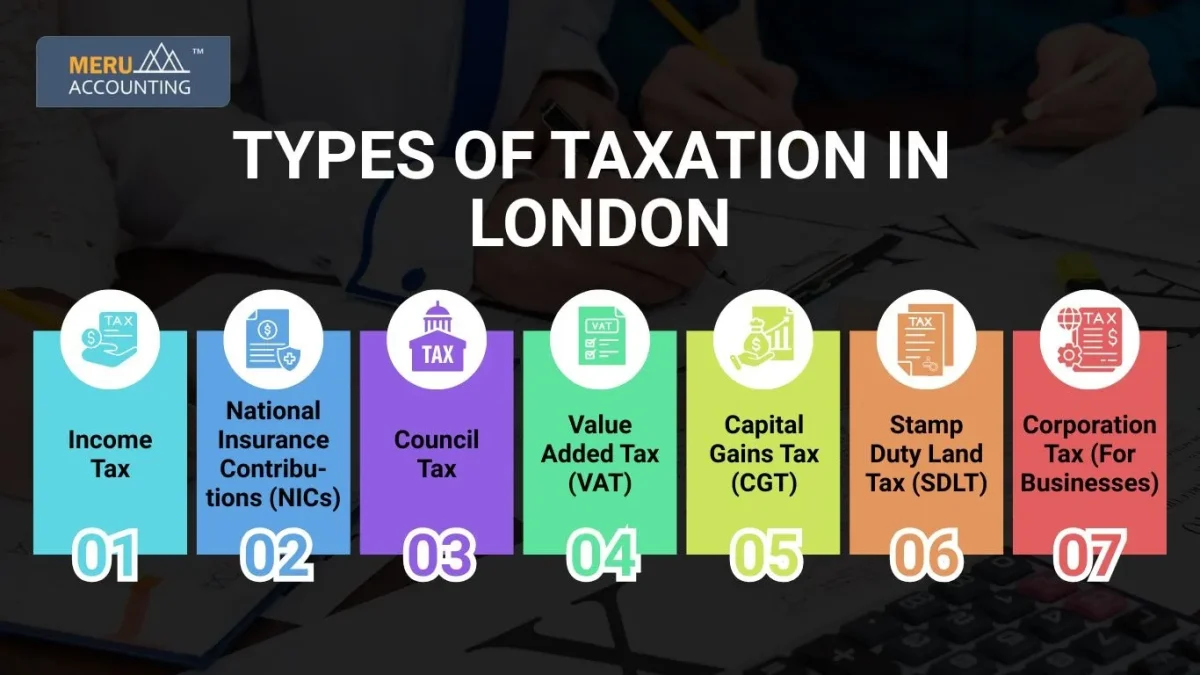
Types of Taxation in London
Below are the main types of taxation in London that people and businesses face:
1. Income Tax
Who Pays It
- Employees
- Self employed individuals
- Landlords
- Investors with interest or dividend income
How It Works
- Employers deduct income tax through PAYE
- Freelancers and landlords file Self Assessment returns
- Tax depends on income bands and allowances
2. National Insurance Contributions (NICs)
Purpose of NICs
NICs support state benefits such as:
- State pension
- Maternity benefits
- Certain social support programs
Who Pays
- Employees
- Employers
- Self employed workers
3. Council Tax
Who Pays Council Tax
People living in residential properties within London.
What Affects Your Bill
- Borough council rates
- Property valuation band
- Discounts for students, single occupants, and low income families
4. Value Added Tax (VAT)
Where You See VAT
- Retail stores
- Restaurants
- Online shops
- Professional services
Businesses and VAT
Businesses that cross the VAT threshold must:
- Register with HMRC
- Charge VAT
- File VAT returns
- Reclaim eligible VAT
5. Capital Gains Tax (CGT)
When CGT Applies
When you sell or dispose of:
- Second homes or rental properties
- Shares
- Business assets
- High value investments
CGT and London
Because London property prices grow faster, many sellers face CGT on sales of second homes or investment properties. Because of this, CGT has become one of the most important factors in taxation in London for property owners.
6. Stamp Duty Land Tax (SDLT)
Who Pays
People who buy residential or commercial property.
Why It Is Higher in London
London’s property prices often fall into higher SDLT bands. This makes SDLT a significant element of taxation in London, especially for buyers entering the market.
Special Cases
- First time buyer relief
- Higher rate for second homes
- Additional charges for overseas buyers
7. Corporation Tax (For Businesses)
What It Applies To
- Trading profits
- Investment income
- Capital gains of limited companies
London Businesses and Corporation Tax
Start ups, professional firms, tech companies, and global offices all follow the same national rate. Good planning helps reduce the final bill.
Common Tax Mistakes to Avoid in London
Even though London follows national UK rules, many people still make simple mistakes that lead to penalties, higher bills, or HMRC checks. Most of these mistakes happen because people misunderstand how taxation in London works in practice. Knowing these errors helps you stay ahead and avoid stress.
1. Missing Self Assessment Deadlines
Many self employed people, freelancers, or landlords forget that the tax year ends in April but the filing deadline is in January. Late filing can lead to instant penalties, even if you owe no tax.
2. Not Reporting Rental Income
London has a large rental market, and HMRC monitors it closely. Failing to declare rent, short term lettings, or Airbnb income can trigger inquiries and backdated tax charges.
3. Mixing Personal and Business Expenses
Many new business owners in London make the mistake of mixing expenses. HMRC may reject claims if records are unclear, so it is vital to keep clean books and separate accounts.
4. Ignoring Capital Gains on Property Sales
London property values rise fast. People often forget that selling a second home, inherited house, or investment flat can trigger CGT. Not planning ahead can lead to a large unexpected bill.
5. Overlooking VAT Registration
A lot of London start ups hit the VAT threshold but fail to register on time. This can cause backdated VAT charges and penalties.
6. Claiming Wrong Deductions
Claiming expenses that are not allowable, or forgetting to claim real valid deductions, both affect your tax bill. London professionals often miss out on relief they are entitled to.
7. Not Updating HMRC About Income Changes
HMRC must be informed if your income changes, especially if you rely on PAYE, rental income, or business profits. Keeping your record updated avoids miscalculations and future tax demands.
8. Poor Record Keeping
Many individuals and businesses keep incomplete documents or rely on assumptions. London’s tax environment moves fast, and poor records can delay filings and invite HMRC reviews.
Choosing the correct London tax services can help you overcome all the above-mentioned challenges.
Tax Reliefs and Allowances You Should Know
Tax reliefs are essential for keeping taxation in London manageable for workers, landlords, and businesses. Here are some tax reliefs and allowances you should know for London:
1. Personal Allowance
Most people enjoy a tax free personal allowance each year before earning becomes taxable. High earners may see this allowance reduced.
2. Property Reliefs
Common Reliefs
- Private Residence Relief
- Letting Relief
- Replacement of domestic items
- Certain landlord expense deductions
These help reduce taxes on rental income or capital gains.
3. Business Reliefs
Useful Reliefs for London Businesses
- Annual Investment Allowance
- Research and Development (R&D) Relief
- Business rates relief
- Allowable operating expenses
- Loss relief
These reliefs lower tax bills and boost cash flow.
4. Investment Related Tax Breaks
Popular Options
- Enterprise Investment Scheme (EIS)
- Seed Enterprise Investment Scheme (SEIS)
- Venture Capital Trusts (VCTs)
- Pension contributions
These help investors reduce tax while supporting business growth.
When to Seek Professional Tax Advice in London
Here’s when you should consider consulting professional tax support in London:
- You own multiple properties
- You run a business or partnership
- You invest in foreign assets
- You earn income from abroad
- You plan to sell a high value property
- HMRC contacts you for checks or reviews
- You want to legally reduce your tax bill
Professional tax support helps avoid errors, manage deadlines, and use correct reliefs. Need professional London tax services?
At Meru Accounting, we offer outsourced London tax services. With years of experience in managing taxation for UK businesses, we stand out as one of the best choices.
At Meru Accounting, we make taxation in London simple for individuals, landlords, and businesses. Our team handles income tax, self assessment, capital gains calculations, VAT, payroll, corporation tax, property tax planning, and more. We help you stay compliant, reduce risk, claim the right reliefs, and plan with clarity.
We have helped businesses across the UK with their taxes. Our expertise and experience allow us to offer you the best London tax services for your business. If you need smooth, reliable, and expert London tax services, contact us now.
FAQs
- What taxes do people in London pay?
Income tax, NICs, VAT, council tax, CGT, SDLT, and sometimes corporation tax.
- Does London have its own local income tax?
No. Income tax is national in London.
- Do I need to file a Self Assessment in London?
Yes, if you are self employed, a landlord, or earn untaxed income, you need to file a self assessment.
- Are VAT rules different in London?
No. VAT applies the same way across the UK.
- How does SDLT affect London buyers?
Higher property prices often place buyers into higher SDLT bands.
- What relief can landlords claim?
They can claim domestic item replacement, allowable expenses, and CGT reliefs.
- Do businesses in London pay more tax?
No. Corporation tax is the same everywhere in the UK.
- When does CGT apply?
When you sell assets such as properties, shares, or business assets.
- What is the personal allowance?
It is the amount you can earn before paying income tax.
- Do foreign workers pay tax in London?
Yes, based on UK residency and income rules.
- Do students pay council tax?
Full time students usually get an exemption.
- What happens if I ignore HMRC letters?
You may face penalties, checks, or legal action.
- Can I reclaim VAT as a business?
Yes, if you are VAT registered and the expenses are eligible.
