
Running a restaurant involves more than serving good food and keeping guests happy. Every month, owners also need a clear picture of sales, costs, cash, bills, and profit. Without updated financial records, it can be hard to know whether the business is making money or where costs are rising. That is why monthly restaurant accounting should be a regular part of restaurant management. A proper monthly review brings together the financial data from daily operations and turns it into reports that support better business decisions.
Restaurant owners do not need to review every number with the same level of detail. However, key records should be complete, accurate, and current. Sales should match point-of-sale activity, bank accounts should be reconciled, expenses should be recorded, and major reports should be reviewed before moving into the next month. For restaurants with limited in-house accounting support, professional restaurant accounting services can also help keep this process on track. The right process can reduce errors, improve reporting, and give owners a better understanding of the business.
What You Will Learn From This Blog
In this blog, you will learn:
- What does monthly restaurant accounting include
- Why monthly accounting reviews matter for restaurant owners
- Which financial records should be updated each month
- The core accounting services restaurants need
- Which restaurant metrics should be tracked regularly
- What financial reports should owners review every month
- How to build a more organized monthly accounting process
- When professional restaurant accounting services may help
What Is Monthly Restaurant Accounting?
Monthly restaurant accounting is the process of recording, reviewing, reconciling, and reporting a restaurant’s financial activity for a specific month.
The process brings together information from different parts of the business, including:
- Daily sales
- Food and beverage purchases
- Payroll and labor costs
- Operating expenses
- Vendor bills
- Inventory activity
- Bank and credit card transactions
- Taxes and other financial obligations
The goal is not simply to close the books. Monthly accounting should give owners a reliable view of what happened financially during the month.
For example, total sales alone do not show whether the restaurant performed well. Sales may increase while food costs, labor costs, or other expenses rise even faster. Monthly accounting helps connect these numbers and shows how they affect profit.
When records are updated on a regular schedule, restaurant owners can also identify changes before they become larger financial problems.
Why Monthly Restaurant Accounting Is Important for Restaurant Owners
Restaurant operations move quickly. Sales happen every day, staff hours change, inventory is purchased often, and vendor bills may arrive throughout the month. If these records are left untouched until the end of the year, errors and missing information can become harder to fix.
A regular monthly restaurant accounting process helps owners stay closer to the financial side of the business.
It can help with:
Better Cost Control
Monthly reviews can show whether food, labor, or other operating costs are moving in the wrong direction. Owners can then look into the cause before the issue affects several more months.
More Accurate Financial Reports
Reports are only useful when the underlying records are current. Recording and reconciling transactions each month helps improve the accuracy of profit and loss reports and balance sheets.
Improved Cash Planning
Restaurants may have strong sales and still face cash pressure. Monthly accounting helps owners review cash coming in, bills coming due, and other financial needs.
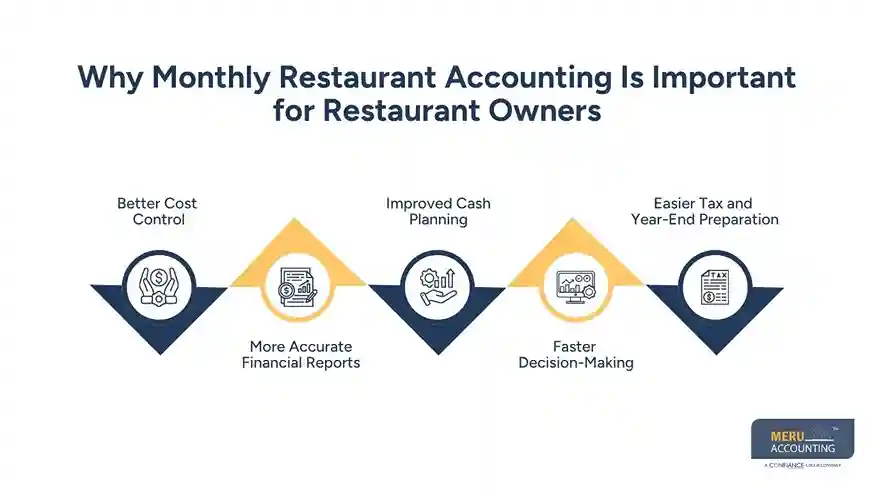
Faster Decision-Making
Owners can make better choices when they have current numbers. This may include decisions about menu pricing, staffing, purchasing, expansion, or cost reductions.
Easier Tax and Year-End Preparation
When financial records are updated throughout the year, there is less cleanup work when tax filing and year-end reporting deadlines approach.
optional anymore
on running the business
What Should Be Included in Monthly Restaurant Accounting?
A complete monthly process should cover more than basic bookkeeping. The records should give owners a full view of financial activity during the month.
Daily Sales and Revenue Records
Sales data should be recorded and reviewed for accuracy. This may include dine-in sales, takeout orders, delivery sales, catering income, and other revenue sources.
Payment methods should also be reviewed, including:
- Cash
- Credit and debit cards
- Online payments
- Gift cards
- Third-party delivery platforms
The accounting records should match the sales information reported by the restaurant’s point-of-sale system.
Food and Beverage Costs
Food and beverage costs are major parts of restaurant expenses. Monthly records should include purchases from vendors and the cost of inventory used during the period.
A large change in food cost may point to:
- Higher supplier prices
- Waste
- Theft
- Portion issues
- Incorrect menu pricing
Tracking these costs helps owners understand whether sales are producing enough gross profit.
Labor and Payroll Expenses
Monthly records should include wages, salaries, payroll taxes, employee benefits, and other labor-related costs. Labor should also be reviewed in relation to sales. A restaurant may need to study staffing levels when labor costs increase without a similar rise in revenue.
Operating Expenses
Restaurants have many costs outside of food and payroll. These may include:
- Rent
- Utilities
- Insurance
- Repairs
- Cleaning supplies
- Software subscriptions
- Marketing
- Licenses and permits
Recording these expenses correctly helps owners see where money is being spent each month.
Accounts Payable and Vendor Bills
All vendor bills should be entered and reviewed. Owners should know what has been paid and what remains due. A current accounts payable balance can help the restaurant plan future cash needs and avoid late payments.
Inventory and Cost of Goods Sold
Inventory plays an important role in accurate monthly restaurant accounting. The business should review beginning inventory, purchases, ending inventory, and the resulting cost of goods sold. Without accurate inventory records, food costs and profit reports may not reflect actual operations.
Bank and Credit Card Reconciliation
Bank and credit card accounts should be reconciled each month. This means comparing the restaurant’s accounting records with bank and card statements to identify missing, duplicate, or incorrect transactions. Reconciliation is one of the most important steps for maintaining reliable financial records.
Sales Tax and Other Tax Records
Restaurants should maintain records related to sales tax and other applicable tax obligations. The amount collected should be reviewed and tracked properly. Since tax rules can differ by state and local area, restaurants should also make sure their process matches the requirements that apply to their business.
Accounts Receivable and Outstanding Payments
Restaurants that offer catering, private events, corporate billing, or other invoiced services may have outstanding customer payments.
These balances should be reviewed each month. Old unpaid invoices can affect cash flow and may require follow-up.
Core Accounting Services Restaurants Need
The accounting needs of each restaurant can vary based on its size, number of locations, and type of operation. Still, most businesses need a core set of financial processes.
These often include:
- Bookkeeping
- Bank reconciliation
- Credit card reconciliation
- Accounts payable tracking
- Payroll support
- Inventory accounting
- Sales recording
- Expense management
- Financial reporting
- Sales tax support
- Cash flow tracking
Professional restaurant accounting services can bring these tasks into one organized process. This can be especially useful for owners who do not have the time or internal staff to manage financial records consistently.
The goal should not be to create more reports than the owner needs. Instead, the accounting process should produce accurate information that supports daily and long-term decisions.
Restaurant Accounting Metrics Every Owner Should Track
Financial statements provide a broad view of the business, but key metrics can make it easier to spot changes.
Restaurant owners should regularly monitor:
Prime Cost
Prime cost combines major food, beverage, and labor costs. It is one of the key measures for understanding the main costs of restaurant operations.
Food Cost Percentage
This metric compares food costs with food sales. A rising percentage may show higher purchase costs, waste, or pricing problems.
Labor Cost Percentage
Labor cost percentage compares total labor expenses with sales. It can help owners review whether staffing costs are aligned with business activity.
Gross Profit
Gross profit shows what remains after direct costs are deducted from revenue. It can help owners understand the financial impact of menu pricing and purchasing costs.
Net Profit Margin
Net profit margin shows how much profit remains after all business expenses are considered.
Sales Trends
Monthly sales should be compared with previous periods. Owners should consider seasonal changes and major events that may affect restaurant traffic.
These metrics should be reviewed as part of monthly restaurant accounting, not only when annual reports are prepared.
Key Financial Reports to Review Every Month
Several reports are important for understanding restaurant performance.
Profit and Loss Statement
The profit and loss statement shows revenue, costs, expenses, and profit for the month. Owners can use this report to identify changes in sales, food costs, labor, and other expenses.
Balance Sheet
The balance sheet shows what the restaurant owns, what it owes, and the owner’s equity at a specific point in time. It can help track cash, inventory, debt, unpaid bills, and other financial balances.
Cash Flow Report
A cash flow report helps explain how cash is moving through the business. This is important because profit does not always equal available cash.
Accounts Payable Report
This report shows outstanding vendor bills and payment due dates.
Accounts Receivable Report
For restaurants that invoice customers, this report shows unpaid balances and aging invoices.
A Step-by-Step Monthly Restaurant Accounting Process
A consistent process can make the monthly close easier and more accurate.
Step 1: Gather Financial Records
Collect sales reports, bank statements, vendor bills, payroll records, receipts, and other financial documents.
Step 2: Record and Review Transactions
Make sure income and expenses are entered in the correct accounts.
Step 3: Reconcile Financial Accounts
Reconcile bank accounts, credit cards, and other payment accounts.
Step 4: Review Inventory
Update inventory records and calculate the related cost of goods sold.
Step 5: Review Payables and Receivables
Check unpaid vendor bills and outstanding customer balances.
Step 6: Record Payroll and Related Costs
Confirm that wages, payroll taxes, and other labor costs are recorded correctly.
Step 7: Prepare Financial Reports
Prepare the profit and loss statement, balance sheet, cash flow information, and other reports needed for management review.
Step 8: Review Results and Investigate Changes
Look for unusual changes in sales, costs, margins, or cash balances.
The final review is what makes monthly restaurant accounting useful as a management process rather than a simple recordkeeping task.
How Meru Accounting Supports Restaurant Accounting Needs
Restaurant owners need financial records that keep pace with a fast-moving business. At Meru Accounting, we provide restaurant accounting services designed to help restaurants maintain organized books and gain a clearer view of financial performance.
Our support can include:
- Restaurant bookkeeping
- Bank and credit card reconciliation
- Accounts payable management
- Accounts receivable tracking
- Payroll accounting support
- Financial reporting
- Inventory-related accounting support
- Expense tracking
- Cash flow reporting
- Monthly financial review
We work to create a consistent process for monthly restaurant accounting so restaurant owners can spend less time dealing with incomplete records and more time reviewing meaningful financial information.
Whether a restaurant needs support with regular bookkeeping or a broader accounting process, the focus should remain on accuracy, timely reporting, and records that support better decisions.
Our Expert Insight
The most useful monthly accounting process is one that helps restaurant owners notice changes early. A small increase in food cost, labor cost, or unpaid bills may not seem important when viewed alone. However, these changes can have a greater impact when they continue for several months.
Strong monthly restaurant accounting helps turn financial records into an early warning system. The goal is not just to know what happened last month, but to use that information to decide what needs attention next.
Key Takeaways
- Monthly restaurant accounting helps owners maintain current and reliable financial records.
- Sales, food costs, labor, expenses, inventory, and outstanding balances should be reviewed regularly.
- Bank and credit card reconciliation is essential for accurate financial reporting.
- Key reports include the profit and loss statement, balance sheet, and cash flow report.
- Restaurant owners should track key metrics such as food cost, labor cost, prime cost, and profit margins.
- A consistent monthly process can make financial reviews faster and more useful.
- Professional restaurant accounting services can help businesses maintain organized books and timely reports.
FAQs
Monthly restaurant accounting usually includes sales records, food and beverage costs, labor expenses, operating expenses, inventory, vendor bills, bank reconciliations, taxes, and financial reports. The exact process may vary based on the restaurant’s operations.
Restaurants should monitor key financial activity regularly and complete a formal accounting review each month. Monthly reviews provide a more complete view of sales, costs, cash flow, and profitability.
Inventory affects the cost of goods sold and the accuracy of food cost reporting. Regular inventory reviews can also help identify waste, purchasing issues, or other changes that may affect profit.
The profit and loss statement is often one of the most important reports because it shows revenue, costs, expenses, and profit. However, owners should also review the balance sheet and cash flow information for a complete financial picture.
Yes. Restaurant accounting services can help manage bookkeeping, reconciliations, expense records, payables, payroll-related accounting, and monthly financial reports. This can help owners maintain a more consistent accounting process and review current financial information.
optional anymore
on running the business