QuickBooks for healthcare gives medical practices a clearer view of payments, unpaid claims, and daily costs when billing data matches accounting records. A clinic may treat patients all day, submit insurance claims, and still struggle to tell how much money it has received.
QuickBooks for healthcare makes collection tracking more useful when staff can link each payment to the right claim and explain every difference. An insurer may pay several claims in one transfer, a patient may clear only part of a bill, and a bank deposit may not match the billing report.
Billing integration connects selected data from medical billing software to accounting records, while reconciliation checks whether the figures agree. With QuickBooks for healthcare, clinic owners can review open balances, find payment gaps, and make better cash flow decisions without mistaking billed revenue for cash already received.
What You Will Learn From This Blog
- How QuickBooks for healthcare records income, expenses, and unpaid balances.
- Why insurance payments and accounting records may not match.
- How billing integration connects claim data with accounting entries.
- How to reconcile insurer payments, patient receipts, and adjustments.
- Which collection metrics reveal delays and unpaid balances.
How Healthcare Providers Use QuickBooks to Track Collections and Manage Finances
QuickBooks for healthcare gives clinics a central place to record patient receipts, insurance payments, and operating expenses. With accurate entries and regular reconciliation, QuickBooks healthcare accounting provides a clearer picture of collected revenue, unpaid balances, and cash flow.
Record Income From Different Payers
A clinic may receive money from insurers, patients, and other sources. Separate income accounts and clear payment references show where funds came from and make monthly collection reviews easier. QuickBooks for healthcare gives owners a clearer view when each receipt is posted to the right account.
Track Patient Payments and Balances
A patient may pay a bill in full, make a partial payment, or owe an amount after insurance review. QuickBooks healthcare accounting records should link each receipt to the correct patient or payer account, so staff can see what has been paid and what remains due.
Review Daily Costs and Cash Flow
Rent, staff pay, medical supplies, equipment, and software fees all draw on the same pool of cash. QuickBooks for healthcare brings these costs into financial reports alongside recorded income, giving owners a clearer view of upcoming bills and available funds.
Compare Results Across Clinic Locations
Healthcare groups can use a consistent chart of accounts and available location tracking to compare income and expenses across clinics. This approach keeps each site’s financial results distinct and makes performance comparisons more reliable.
Separate Accounting From Medical Billing
QuickBooks records financial activity, but it does not replace a medical billing or practice management system. The billing platform tracks claims and payer responses, while accounting records capture financial transactions and approved adjustments. This division keeps claim details separate from the entries used for financial reporting.
optional anymore
on running the business
Common Collection Tracking Challenges in Healthcare Billing
QuickBooks for healthcare collection tracking becomes difficult when billing reports, bank deposits, and payment entries show different figures. Accurate QuickBooks healthcare accounting records make it easier to separate unpaid claims from valid adjustments, but staff still need source documents to explain each gap.
Payments Cover Several Claims
An insurer may send one transfer for dozens of claims. If staff record only the total deposit, individual claims may remain open even though the insurer has paid them. Claim-level payment details are needed to trace the full amount and prevent incorrect collection reports.
Insurers Pay Less Than the Billed Amount
A payer may reduce a claim under contract terms or assign part of the cost to the patient. Staff must review the remittance advice to identify the reason instead of treating every difference as missing cash. The adjustment should be recorded under the right category.
Patient and Insurance Balances Get Mixed Up
After insurance review, an amount may belong to the patient, require a contractual adjustment, or remain under dispute. Incorrect entries can lead to bills being sent to the wrong party or invalid balances staying open. QuickBooks for healthcare users should keep patient balances, insurer payments, and adjustments separate for accurate collection reports.
Manual Entries Create Errors
Entering the same payment twice can inflate recorded income, while a wrong invoice reference can leave a paid claim looking overdue. Regular checks of imported records and bank activity can catch these errors before month-end and keep QuickBooks healthcare accounting data reliable.
Old Claims Remain Unchecked
An open claim may be waiting for documents, a corrected submission, or a payer response. Without a dated follow-up list, staff may focus on new claims while older balances remain unresolved. QuickBooks for healthcare can show outstanding balances, while billing staff investigates the reasons for each delay.
How Billing Integration Improves Collection Tracking in QuickBooks for Healthcare
Billing integration makes QuickBooks for healthcare more useful by linking selected billing data with accounting entries and payment records. The results depend on the connector, the fields transferred, and the rules used to prevent duplicate records. A suitable setup can reduce repeated entry and make collection reviews clearer.
Send Approved Billing Data to Accounting
A connector can transfer invoices, payments, and approved adjustments from billing software to accounting records. Clear transfer rules prevent draft claims and unapproved charges from appearing as final transactions, keeping financial reports accurate.
Match Deposits With Payment Records
Payment details can be compared with bank deposits and the claims they cover. QuickBooks for healthcare becomes more useful when a single insurer transfer can be traced to each related claim, rather than recorded as one unexplained receipt.
Record Adjustments With Clear Reasons
Use suitable accounts for contractual adjustments, refunds, patient responsibility, and write-offs. Clear entries explain why the billed amount differs from the amount received and make later reviews easier. Accounting reports can then distinguish approved adjustments from balances that still require follow-up.
Reduce Duplicate Entries
Decide which system creates invoices and records payments. If both systems import the same transaction, the accounts may show income twice even though the bank received the money only once. Clear transfer rules keep QuickBooks for healthcare records accurate.
Protect Patient Data During Transfer
Transfer only the information needed for accounting and collection review. Review vendor access, security settings, and privacy terms before linking systems. US providers subject to HIPAA must also assess applicable privacy and security duties when sharing protected health information. QuickBooks healthcare accounting workflows should follow the practice’s approved data access rules.
Step-by-Step Process to Reconcile Healthcare Billing and Payments
Healthcare providers using QuickBooks for healthcare should compare billing reports, insurer remittance details, bank receipts, and accounting entries. Accurate QuickBooks healthcare accounting records should reflect verified payments and adjustments before month-end close. The aim is to explain every difference, not force totals to agree.
Gather the Required Records
Collect the billing report, payment details, electronic remittance advice (ERA), bank statement, patient receipts, and general ledger for the same period. Check that the reports cover matching dates and transactions before starting the reconciliation.
Match Payments to Claims
Compare each insurer’s remittance details with claims listed in the billing system. The ERA shows payment amounts and adjustment reasons, helping staff separate paid claims from amounts needing review. Record verified payment details in QuickBooks for healthcare to keep collection records accurate.
Match Bank Deposits to Receipts
Compare each deposit with its related payment records. Account for payment batches, processing fees, refunds, and deposits that cross month-end. A suitable clearing account may be used when the deposit date and payment date differ, keeping QuickBooks healthcare accounting records clear.
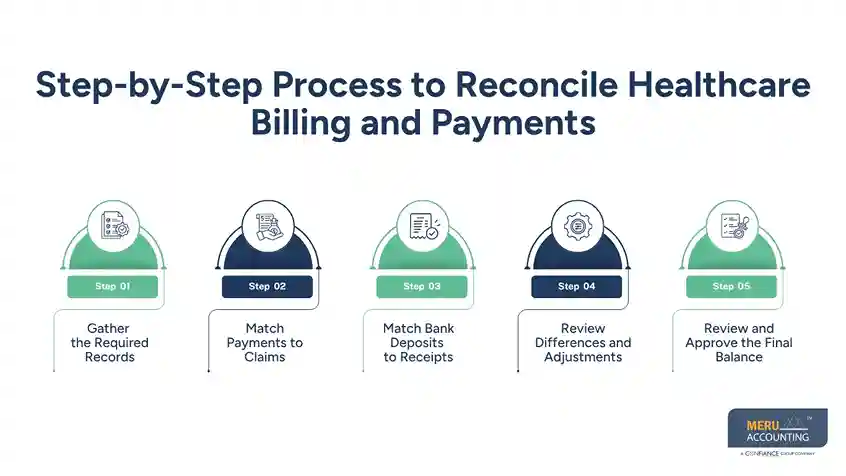
Review Differences and Adjustments
Check unmatched payments, short payments, duplicate entries, refunds, and open balances. Record changes only when source documents explain them, and send unresolved claim issues to the billing team for follow-up. QuickBooks for healthcare should show verified entries rather than unexplained adjustments.
Review and Approve the Final Balance
Compare billing totals, bank activity, and the general ledger. List each open difference with its amount, reason, assigned staff member, and next action. An authorised reviewer should approve the final reconciliation before the period is closed.
Practical Example: Improving Collection Visibility Through Billing Reconciliation
Consider a clinic that submits $20,000 in insurance claims during one month and receives a $12,000 insurer payment. The remittance advice shows $5,000 in contractual adjustments and $3,000 assigned to patient responsibility. Staff verify that these amounts total $20,000, check the payment against the bank statement, and record the receipt, adjustments, and patient balances separately in the accounting system.
The clinic then checks whether the $3,000 patient balance has been billed and whether payment is due. Any unpaid amount is flagged for follow-up under the clinic’s billing policy, while approved adjustments are recorded with clear reasons. This reconciliation gives staff an accurate view of cash received, contractual adjustments, and outstanding balances without treating every difference as missing cash
Key Collection Metrics Healthcare Providers Should Monitor
QuickBooks for healthcare reports become more useful when clinic owners review accounts receivable, collection rates, and insurance payment delays together. The billing system adds claim details, while QuickBooks healthcare accounting records show the financial result. Reviewing both gives owners a clearer view of collection performance.
Accounts Receivable Aging
Accounts receivable (A/R) aging groups unpaid balances by age, such as 0–30, 31–60, 61–90, and over 90 days. Review older balances by payer and patient to set follow-up priorities. QuickBooks for healthcare reports can show which amounts need closer review.
Days in Accounts Receivable (A/R)
This measure estimates how long revenue remains unpaid. A common formula is average A/R divided by average daily net patient service revenue. Use the same method and period when comparing results, and check the figures against billing reports.
Collection Rate and Outstanding Patient Balances
A collection rate compares payments received with the amount expected to be collected under a defined method. Review patient balances separately and keep contractual adjustments out of the calculation when the chosen formula requires it. QuickBooks healthcare accounting reports are more useful when the calculation method stays consistent.
Insurance Reimbursement Delays
Track the time between claim submission and payment, along with denied claims and claims awaiting a response. Reviewing delays by payer can show where staff needs to check claim status or submit missing information. QuickBooks for healthcare records shows the financial side, while the billing platform explains claim status.
Billing Adjustments and Write-Off Trends
Review adjustments, refunds, and write-offs by reason and month. An increase may indicate billing errors, contract changes, or recurring claim issues that require investigation. Consistent accounting entries make these trends easier to track and compare over time.
Meru Accounting’s Healthcare Accounting and Reconciliation Services
Meru Accounting provides accounting and bookkeeping services for healthcare businesses that require accurate financial records, reconciliations, and regular reporting. Our services cover the accounting side of healthcare collections, with responsibilities and deliverables defined according to each client’s requirements.
Healthcare Revenue and Payment Records
We record healthcare income and payments under suitable account categories, giving clinic owners a clear view of cash received and balances requiring review. Accurate entries also simplify month-end checks and keep QuickBooks healthcare accounting reports organised for financial review.
Billing and Bank Reconciliation
Meru Accounting reconciles bank transactions with accounting entries and available billing reports to identify payment differences. We flag unmatched items for review rather than closing them without evidence, keeping financial records accurate for healthcare providers using QuickBooks.
Accounts Receivable Reporting
Our team prepares accounts receivable reports showing unpaid balances, aging trends, and collection patterns. These reports give practice managers a clear basis for reviewing outstanding amounts with billing staff, identifying delayed collections, and prioritising accounts that require further investigation.
Month-End Financial Reporting
Our accounting services cover account reviews, expense records, reconciliations, and month-end financial reporting. Regular checks provide clinic owners with an updated view of recorded income, operating costs, and outstanding balances. These reports form part of the monthly financial review.
QuickBooks Accounting and Bookkeeping Services
Meru Accounting provides bookkeeping services using QuickBooks and other accounting platforms according to business requirements. Our agreed scope defines available records, reporting schedules, and responsibility for claim follow-up. QuickBooks healthcare accounting services can include bookkeeping, reconciliation, and financial reporting.
Our Expert Perspective
The most useful collection report is not the one with the largest number of figures; it is the one that tells staff what needs action next. QuickBooks for healthcare can show a balance, but the billing record must explain whether that balance is awaiting insurance payment, assigned to a patient, or due for review.
We recommend a fixed reconciliation schedule, clear ownership of open differences, and a monthly review of collection trends. Accounting staff should record verified transactions, while qualified billing staff handles claim corrections and payer follow-up. Consistent QuickBooks healthcare accounting records give clinic owners a clearer basis for reviewing collection trends without treating every unpaid amount as a bookkeeping error.
Key Takeaways
- QuickBooks records healthcare income and expenses, while medical billing software manages claims, insurer responses, and patient billing.
- Billing integration can reduce repeated entry when the connector and transfer rules are set correctly.
- Reconciliation links insurer payments, patient receipts, adjustments, and bank deposits.
- A/R aging and payment delays show which balances need review.
- Clear adjustment and write-off records reduce confusion over unpaid claims.
- Regular QuickBooks healthcare accounting reports give owners a sounder basis for cash flow decisions.
- Meru Accounting provides bookkeeping and reconciliation services for businesses that need clear financial records.
FAQs
QuickBooks for healthcare records insurance receipts and accounting balances, while billing integration links payments to the related claims.
QuickBooks for healthcare can connect with compatible medical billing software through available integrations or third-party connectors.
Healthcare providers compare billing reports, insurer remittance advice, bank deposits, patient receipts, and QuickBooks entries to find and correct differences.
Healthcare providers should track accounts receivable aging, days in A/R, collection rates, unpaid patient balances, insurance payment delays, and write-offs.
QuickBooks healthcare accounting gives clinics a clearer view of recorded payments, outstanding balances, billing adjustments, and cash flow when records are reconciled regularly.
optional anymore
on running the business