A real estate brokerage can close dozens of deals in a month, but keeping track of what each agent earns isn’t always easy. One agent may work on a commission split, another may have a bonus deal, while office staff and property managers receive regular paychecks. Real estate payroll has to account for all these arrangements without leaving room for missed payments or mix-ups.
The challenge gets bigger when a company takes on more agents, manages more properties, or opens new offices. Commission terms change, new hires join, and payroll records pile up. For growing firms, a reliable way to manage payroll for real estate businesses is essential to keeping pay accurate and tax records in order.
In this blog, we’ll cover how real estate payroll works, the common issues firms face, key tax rules, and when outsourcing payroll makes sense.
What You Will Learn From This Blog
- How real estate payroll works for agents, brokers, and support staff.
- Common pay and record issues faced by growing real estate firms.
- Key payroll tax rules and worker status needs.
- When to outsource payroll for real estate businesses.
- How to avoid common payroll errors and keep pay records in good shape.
What Is Real Estate Payroll and How Does It Work?
Real estate payroll is the process of paying staff, agents, and other workers based on their pay terms and work status. It covers pay runs, tax withholdings, payroll taxes, pay slips, and year-end tax forms. The exact steps depend on how a firm pays its team and how each worker is classed.
Unlike many firms that pay most staff by the hour or month, real estate firms may use a mix of pay plans. For example, a broker may earn a set salary, an agent may earn a share of a deal, and a site worker may be paid by the hour. A firm must track each type of pay with care.
Here are the main parts of the process:
- Set pay terms for each worker: Start by listing each worker’s role, pay rate, pay cycle, and work status. This may include full-time staff, part-time staff, agents, and contractors.
- Track wages and commissions: Record hours worked, sales closed, lease deals, bonuses, and any other pay due. For agents, the firm must check the deal terms and split before it pays the commission.
- Work out taxes and deductions: For employees, this may include federal income tax, Social Security, Medicare, and state or local taxes. The rules vary by worker status and location.
- Review and run payroll: Check pay rates, hours, deductions, tax data, and approved changes before each pay run. Then send payments and share pay records.
- Keep records and file reports: Save payroll data, tax forms, and payment records. File the right tax returns and share year-end forms, such as W-2s or 1099s, as required.
A sound process helps firms pay the right amount, meet tax duties, and keep clear records as the team grows.
Key Payroll Challenges for Growing Real Estate Brokerages and Property Management Companies
As a firm adds more agents, staff, and sites, its payroll needs can change fast. A process that once worked with a small team may not be enough to handle more pay plans and records.
1. Managing Agent Commissions
Commissions are a key part of pay at many real estate firms. An agent’s pay may depend on the sale price, deal terms, broker split, and any team or referral fees. These amounts can vary from one deal to the next.
For example, if an agent earns a 60% share of a $12,000 commission pool, the agent’s gross share is $7,200 before any valid fees or other terms are applied. The firm must check the deal close date, signed pay terms, and split before it sends the funds.
A clear record of each deal helps avoid errors, late pay, and disputes.
2. Handling Different Worker Types
A real estate firm may have W-2 staff and 1099 workers. These groups do not have the same tax rules or pay needs. For example, a salaried office manager may be an employee, while a licensed agent may qualify as a statutory nonemployee under federal tax rules if the legal tests are met.
Firms should not rely on job titles or contract labels alone to set worker status. A wrong choice can lead to unpaid payroll taxes, tax bills, and fines.
3. Tracking Hours, Overtime, and Paid Leave
Property management firms may hire staff for site work, repairs, leasing, and tenant support. Some roles need shift work or work beyond set hours. Firms must track hours and check which staff qualify for overtime under federal and state law.
Paid leave rules may also vary by state or city. Good time records help firms work out pay and meet local rules.
4. Managing Payroll Across Multiple Sites
Growing firms may have staff across cities or states. Each site may have its own tax rates, pay rules, and local filing needs. This can make payroll hard to manage if data is kept in separate files or systems.
A shared payroll process helps keep worker data, pay rates, and tax records in one place.
5. Dealing With Changes in Pay
Real estate pay can change with new deals, rent targets, bonuses, and team plans. If these changes are not sent to payroll on time, staff may get the wrong pay. Firms need a set process to approve and record all pay changes before each pay run.
Essential Payroll Tax and Compliance Requirements for Real Estate Businesses
Payroll compliance is an important part of running a real estate firm. Business owners must know how federal, state, and local rules apply to their workers. The rules may differ based on worker status, pay type, and work location.
Here are some key areas to review:
1. Federal and State Payroll Taxes
Employers must withhold and pay the right taxes for their employees. These may include:
- Federal income tax based on each employee’s Form W-4.
- Social Security and Medicare taxes under FICA.
- Federal Unemployment Tax Act (FUTA) tax, where it applies.
- State income tax and state unemployment tax, where required.
- Local payroll taxes in areas that have them.
Employers must also file the right tax returns and pay taxes by the set due dates. Late payments or missed filings can lead to fines and interest.
2. Employee and Independent Contractor Classification
Worker status is one of the most important parts of real estate payroll. A worker’s status affects tax withholding, benefit rights, and employer duties.
Many real estate agents may qualify as statutory nonemployees for federal tax purposes if they hold the right license, earn pay based on sales or output rather than hours, and meet the other legal tests. This rule does not apply to every worker at a brokerage.
Property managers, office staff, and maintenance teams may have a different status based on their work and the facts of the role. Firms should review each case before deciding how to pay and report a worker.
3. Overtime and Minimum Wage Rules
Not all real estate workers are exempt from overtime rules. Office staff, leasing teams, and property support workers may need overtime pay if they meet the legal tests for nonexempt employees.
Under federal law, covered nonexempt workers must get at least 1.5 times their regular rate for hours worked over 40 in a workweek. Some states have stricter rules. Firms should track hours and review job duties before treating a worker as exempt.
4. Payroll Records and Tax Forms
Real estate firms should keep clear records of wages, hours, tax withholdings, commissions, and payments. They must also file and share the right forms.
Common forms include:
- Form W-2: For employees, showing wages and taxes withheld.
- Form 1099-NEC: For reportable payments to nonemployees.
- Form 941: For many employers to report federal income tax withheld and Social Security and Medicare taxes.
- Form 940: To report FUTA tax, when required.
The right form depends on the worker’s status and the type of payment. Firms should also keep records for the time set by tax and labor laws.
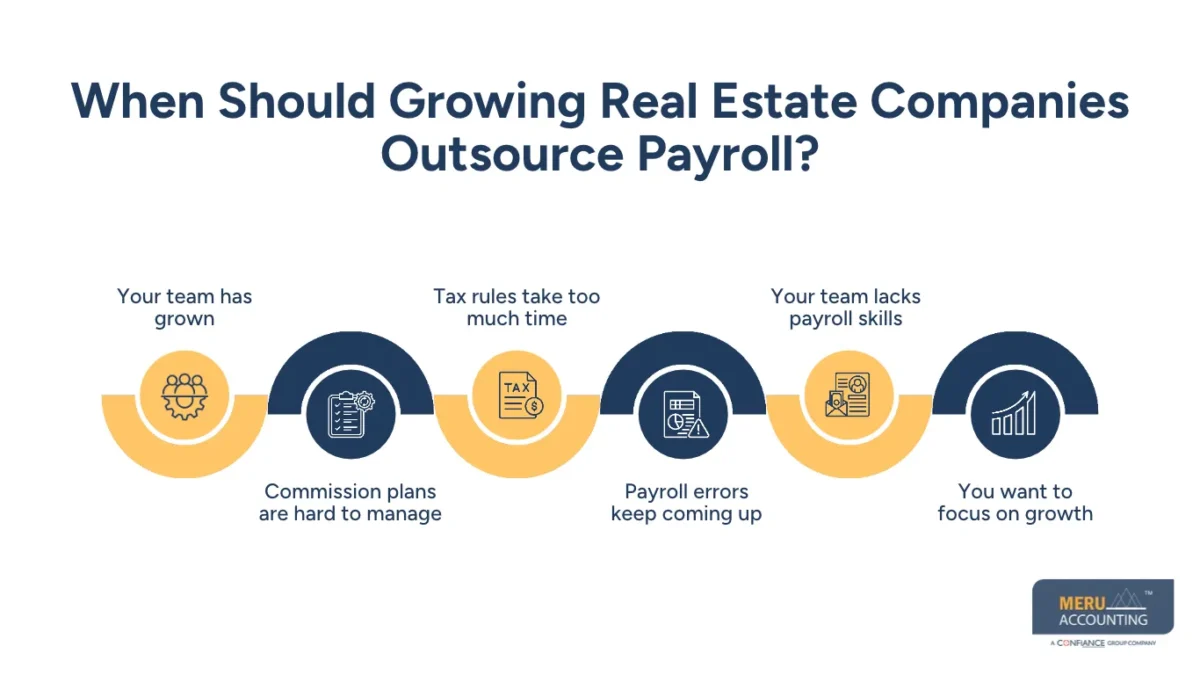
When Should Growing Real Estate Companies Outsource Payroll?
Many small firms start by running payroll in-house. This may work when the team is small and pay plans are easy to track. But as the firm grows, payroll can take more time and need more checks.
Outsourcing may be worth a look when:
- Your team has grown: More staff, agents, and sites mean more pay data to track.
- Commission plans are hard to manage: Each deal may have a new split, fee, or bonus.
- Tax rules take too much time: Your team may need help with tax filings, withholdings, and year-end forms.
- Payroll errors keep coming up: Wrong pay, late runs, or poor records can hurt staff trust.
- Your team lacks payroll skills: You may not have staff who know the rules and tools needed to run payroll well.
- You want to focus on growth: Owners and managers can spend less time on admin and more time on deals and clients.
When looking at payroll for real estate businesses, compare the cost of an outside team with the time and risk of doing it in-house. Check the scope of work, review steps, data safety, and support before you choose a provider.
optional anymore
on running the business
Common Real Estate Payroll Mistakes and How to Avoid Them
Even firms with a good team can make payroll errors. Many of these issues stem from poor records, late updates, or a lack of clear pay rules.
Common mistake | How to avoid it |
Using the wrong worker status | Review each role under the right tax and labor tests. |
Paying the wrong commission | Check signed deal terms, splits, and fees before each payment. |
Missing overtime hours | Use clear time records and review hours each pay cycle. |
Applying the wrong tax rate | Keep tax data up to date for each work location. |
Missing tax filing dates | Use a tax calendar and assign clear duties. |
Keeping poor pay records | Save pay data, approvals, and tax forms in a secure system. |
Making late pay changes | Set a cut-off date for new rates, bonuses, and other changes. |
A set review process can help catch errors before payments go out. Firms should also check payroll reports on a regular basis and fix gaps as soon as they find them.
Real Estate Payroll Services by Meru Accounting
A brokerage may have 20 agents with different commission plans, while its office staff receives fixed salaries and its property management team works on hourly pay. Each group needs a different set of payroll records and checks. Meru Accounting helps real estate firms manage these pay structures through dedicated payroll support backed by trained accounting professionals and review processes.
Our real estate payroll services cover the tasks that keep agent payments, staff wages, and payroll records in order:
- Agent Commission Processing: Calculate agent commissions based on approved deal terms, broker splits, referral fees, and bonus plans.
- Employee Payroll Processing: Manage regular wages, hourly pay, overtime data, approved bonuses, and payroll deductions.
- Payroll Tax Support: Assist with payroll tax calculations, withholding records, tax reports, and filing support.
- Contractor Payment Records: Maintain payment details and records for eligible independent contractors.
- Multi-Location Payroll Support: Help organize payroll data for brokerages and property management firms with teams across different locations.
- Payroll Reconciliation and Cleanup: Review payroll entries, identify discrepancies, and help correct gaps in past payroll records.
- Payroll Reporting: Prepare reports that help owners review wage costs, commission payouts, payroll liabilities, and other pay-related expenses.
Whether you run a growing brokerage or manage a large property portfolio, Meru Accounting can provide dedicated payroll support that works with your existing processes. You get access to an experienced accounting team without the expense of building a full in-house payroll department.
Our Expert Insight
One area that deserves more attention in real estate payroll is how commission advances are handled. Some brokerages pay agents before a deal closes or before the full commission reaches the firm. If the deal falls through, the brokerage may need to recover the advance or adjust future payments.
We recommend setting clear rules for commission advances, including approval limits, repayment terms, and how unpaid balances will be tracked. These rules should be part of the agent’s written compensation agreement. It also helps to review outstanding advances each month so they don’t turn into long-term payment issues.
For brokerages with a growing sales team, this small control can prevent disputes and keep agent accounts accurate.
Key Takeaways
- Real estate payroll can involve salaries, hourly wages, commissions, bonuses, and contractor payments.
- Each worker’s tax status must be checked under the rules that apply to their role.
- Clear deal records help firms work out agent commissions and avoid pay disputes.
- Growing brokerages and property management companies need set payroll steps and regular reviews.
- Outsourcing payroll can save time and give firms access to trained payroll support.
- Good records and timely tax filings help lower the risk of errors and fines.
FAQs
Real estate agents are often paid through commissions based on closed deals. Their pay depends on the agreed commission split, broker fees, and any bonuses. Some agents may receive a salary or a mix of salary and commission.
Many licensed agents qualify as independent contractors for federal tax purposes if they meet specific IRS requirements. However, some agents and other real estate staff may be employees, depending on their work and pay arrangements.
Employers may need to pay Social Security, Medicare, FUTA, and state unemployment taxes. They must also handle income tax withholding and any applicable state or local payroll taxes for employees.
Common pay schedules include weekly, biweekly, semimonthly, and monthly. Companies must follow state pay frequency laws and set clear terms for commission payments.
Outsourcing can help brokerages manage agent commissions, employee pay, tax records, and payroll reports. It is worth considering when payroll becomes too time-consuming for the in-house team.
optional anymore
on running the business