

A law firm’s financial health isn’t measured by the number of cases it handles or the fees it bills. It’s also shaped by how well partners manage the money behind the practice. Should the firm bring on another attorney? Can it afford a new office? How much should partners take home without leaving the firm short on cash? These are the kinds of decisions where a law firm CFO brings real value.
Unlike routine accounting, CFO-level planning looks at how each financial decision affects the firm’s future. It connects revenue, spending, cash reserves, and partner payouts so that growth doesn’t come at the cost of financial stability. In this blog, we’ll look at practical ways law firms can manage these areas and how an outsourced CFO for law firms can help partners make better financial decisions without adding a full-time executive to the payroll.
What You Will Learn From This Blog
- What a law firm CFO does and how they guide key money choices.
- Why law firms face unique cash flow issues.
- How to improve fee billing, cash flow, and client collections.
- How to set budgets and track costs across the firm.
- How to plan partner draws and profit shares without hurting cash flow.
- Which financial KPIs help law firms track their health.
- How outsourced CFO services can support law firm growth.
What Does a Law Firm CFO Do?
A law firm CFO leads the firm’s finance plan and helps its owners make sound money choices. Their role goes beyond books and reports. They study firm data, spot risks, and help partners plan for both short-term needs and long-term goals.
Here are some key duties of a law firm CFO:
1. Financial Planning and Forecasting
A CFO reviews past income, costs, and cash trends to plan for future needs. They help partners set clear goals, plan for slow months, and decide when the firm can afford to hire staff or open a new office.
2. Cash Flow Management
They track when client fees are due, when cash is likely to come in, and when bills must be paid. This helps the firm avoid cash gaps and keep enough funds for daily needs.
3. Budgeting and Cost Control
A CFO helps set budgets for payroll, rent, legal tools, case costs, and other needs. They also review actual costs against the plan and flag areas where the firm may be spending too much.
4. Partner Pay and Profit Review
They help set clear rules for partner draws, bonuses, and profit shares. They also review each partner’s work, fees, and costs to support fair and sound pay plans.
5. Financial Reports and Risk Review
A law firm CFO turns raw data into clear reports. These reports help partners track profit, cash, debt, and costs. They can also flag risks such as high unpaid fees or rising overhead.
Why Cash Flow Management Is Different for Law Firms
Law firms do not always get paid when they do the work. A lawyer may spend weeks on a case, log many billable hours, and send an invoice, but the client may take weeks or months to pay it. This gap can put stress on cash flow.
A few factors make cash flow hard to manage in law firms.
Delayed Client Payments: Some clients may not pay on time due to slow billing, fee disputes, or cash issues. Late payments can leave the firm short of cash even when its books show strong revenue.
Unbilled Work: Time spent on a case may not be billed at once. If lawyers wait too long to enter time or send bills, the firm delays its chance to collect fees.
Uneven Case Revenue: Some firms earn fees at set stages, while others may get paid when a case ends. This can lead to months with high income and months with low cash inflows.
High Fixed Costs: Payroll, rent, legal tools, insurance, and other costs must be paid on time, even when client fees are late.
Trust Account Rules: Client funds held in trust must stay apart from the firm’s own funds. These funds cannot be used to pay office bills or cover a cash gap. Firms must follow the trust account rules that apply in their state.
A law firm CFO must account for these issues when making cash plans. The goal is not just to raise revenue but to make sure the firm has enough usable cash to meet its needs.
optional anymore
on running the business
Law Firm CFO Strategies for Better Cash Flow Management
Good cash flow starts with clear data and sound daily habits. A law firm CFO can help set up a plan that links billable work, client fees, and cash needs.
1. Improve Billing and Collection Times
Set clear rules for time entry, bill review, and invoice dates. Lawyers should log their work on time, and bills should go out soon after the work is done. Send payment reminders at set times and follow up on overdue bills.
2. Track Work in Progress and Accounts Receivable
Work in progress (WIP) is work done but not yet billed. Accounts receivable (AR) is the amount clients owe after bills are sent. A law firm CFO should review both on a set schedule.
High WIP may point to slow time entry or bill review. High AR may point to late payments or poor follow-up. By tracking these figures, firms can spot cash risks before they grow.
3. Use a Rolling Cash Flow Forecast
A rolling forecast helps firms plan cash needs for the next 13 weeks or more. It should show likely client payments, payroll, rent, tax bills, and other costs.
Update the forecast as new bills go out and payments come in. This gives partners time to act if cash is likely to fall below a safe level.
4. Set a Cash Reserve Target
Law firms should keep enough cash to cover key costs during slow months. The right amount will depend on the firm’s size, cost base, fee model, and risk level.
A law firm CFO can help set a reserve target and build it over time. This helps the firm deal with late fees, new costs, or a drop in casework.
5. Review Fee Terms and Payment Options
Clear fee terms can help reduce payment delays. Firms should explain when fees are due, how costs are billed, and what payment methods they accept. Any fee plan must follow the rules that apply to the firm’s work and location.
How to Build an Effective Budget for a Law Firm
A budget helps partners plan how much the firm can spend and what income it needs to meet its goals. It also gives them a way to check if costs are in line with the plan.
Here are key steps a law firm CFO can use to build a sound budget.
1. Set Realistic Revenue Goals
Review past fees, case volume, billable hours, and collection rates. Do not base the budget on billings alone. The firm must also look at how much of that income it can collect and when the cash is likely to arrive.
2. Group Costs by Type
Split costs into clear groups, such as payroll, rent, legal tools, insurance, marketing, travel, and office costs. This makes it easier to see where most of the firm’s money goes.
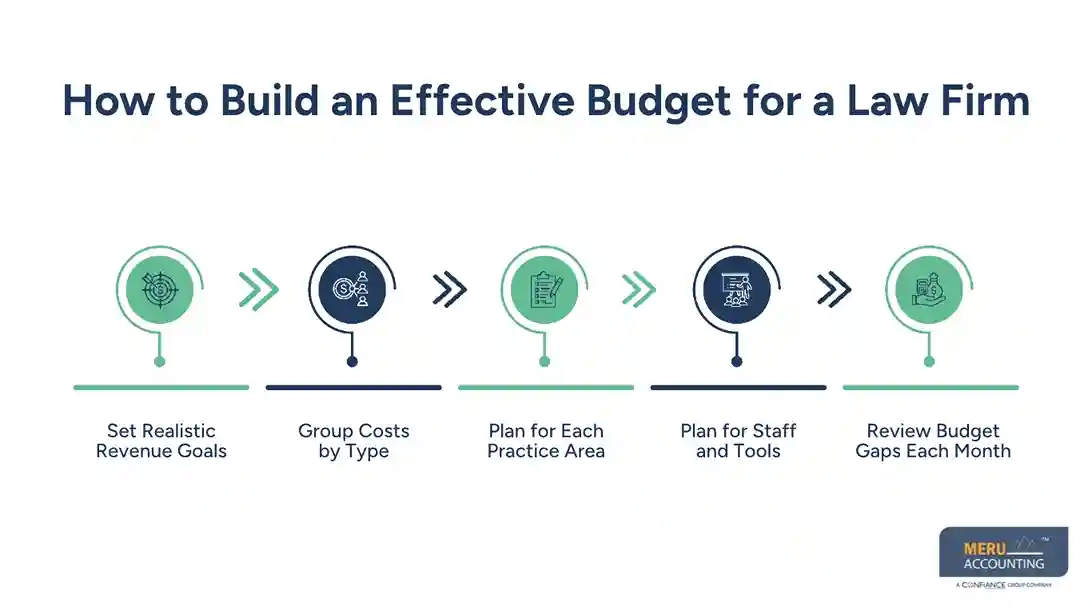
3. Plan for Each Practice Area
Different legal teams may have different income and cost needs. A firm can review each area to see which ones bring in steady fees and which need more time or funds to grow.
4. Plan for Staff and Tools
Hiring, training, legal software, and data security can add to costs. A budget should include both current needs and planned changes. This helps partners avoid rushed hires or tool costs that the firm cannot support.
5. Review Budget Gaps Each Month
Compare actual income and costs with the budget. If costs rise or fees fall below the plan, find the cause and adjust. A law firm CFO should share clear reports so partners can act early rather than wait until year-end.
Managing Partner Distributions Without Affecting Firm Cash Flow
Partner pay can be a key source of stress in a law firm. Partners may want regular draws, while the firm needs cash to pay staff, cover bills, and fund growth. A clear plan can help balance these needs.
1. Set a Clear Partner Pay Plan
The firm should set out how partner draws, bonuses, and profit shares work. The rules may be based on each partner’s role, fees brought in, work done, or share in the firm. The plan should follow the partnership agreement.
2. Know the Difference Between Draws and Profit Shares
A partner draw is often an advance against a partner’s share of income. A profit share is based on the firm’s profit under its agreed pay plan. These terms can vary by firm, so the partners should set clear rules for each.
3. Work Out How Much Cash Is Safe to Share
Do not base partner payouts on bank cash alone. First, account for unpaid bills, payroll, taxes, debt, and planned costs. Also, keep client trust funds out of this review. Only funds that the firm can use should be part of its cash plan.
4. Set a Reserve Before Making Payouts
The firm should keep enough cash for daily costs and known future needs before it pays out extra profit. A law firm CFO can use cash forecasts to help set a safe payout level.
5. Review the Plan With All Partners
Share clear reports on income, costs, cash, and profit. This helps partners see how payouts are set and why the firm may need to hold back cash in some months. Any change to the pay plan should be approved in line with the firm’s legal and tax advice.
Financial KPIs Every Law Firm CFO Should Monitor
KPIs help law firms track their money and spot trends. A law firm CFO should review these figures on a set schedule:
- Realization Rate: The share of billed or worked fees that the firm can earn after write-downs and fee cuts, based on the method used.
- Collection Rate: The share of billed fees that the firm has collected.
- Days Sales Outstanding (DSO): The average time it takes to collect client bills.
- Work in Progress (WIP): The value of work done but not yet billed.
- Revenue per Attorney: The fees earned for each lawyer over a set period.
- Profit per Partner: The profit share linked to each partner under the firm’s pay plan.
- Operating Cost Ratio: The share of revenue used to cover daily costs.
- Cash Reserve: The funds the firm has set aside for future needs.
These KPIs should be read as a group. For example, high revenue with a low collection rate may point to a cash issue. Strong profit with high WIP may mean that the firm has earned fees on paper but has not billed them yet.
Outsourced CFO for Law Firms: How Meru Accounting Can Help
A law firm’s financial decisions are closely linked. A delay in client collections can affect its monthly budget, while an unplanned partner payout can leave less cash for payroll, rent, and other costs.
Our outsourced CFO for law firms support can help partners get a clearer view of their firm’s finances through:
- Cash Flow Forecasting: Track expected client collections, unpaid invoices, upcoming bills, and cash reserves to plan for future needs.
- Budget Preparation and Review: Build budgets for payroll, attorney costs, office expenses, technology, and other operating needs. Compare actual spending with planned costs to spot gaps early.
- Partner Distribution Planning: Review firm earnings, operating costs, cash needs, and financial reports to help partners make informed decisions about draws and profit distributions.
- Financial Reporting and Analysis: Prepare income statements, balance sheets, cash flow reports, and management reports that help partners assess the firm’s financial position.
- Bookkeeping and Accounting Support: Maintain accurate financial records, reconcile accounts, track expenses, and keep financial data ready for timely review.
Our accounting professionals work with structured review processes to help maintain accurate books and reliable financial reports. Whether your firm needs better control over collections, a more realistic annual budget, or clearer insight into partner payouts, Meru Accounting can help bring the numbers together. This gives managing partners a stronger basis for financial decisions without the expense of maintaining a full-time in-house finance team.
Our Expert Insight
One mistake law firms can make is judging a practice area’s success by the revenue it brings in. High revenue does not always mean high profit. A practice area may generate substantial fees but also require more attorney hours, support staff, outside counsel, and case-related costs.
We recommend reviewing profitability by practice area and comparing it with the resources each one consumes. This gives partners a better basis for decisions about staffing, pricing, and future investment. It can also reveal which areas have room to grow and which may need a closer look.
Key Takeaways
- A law firm CFO helps manage cash, budgets, partner pay, and long-term plans.
- Law firms must plan for late client fees, unbilled work, and uneven income.
- Fast billing and regular follow-up can help improve cash flow.
- Budgets should reflect real fee collections and planned costs.
- Partner draws and profit shares should follow clear rules and cash needs.
- Firms should track KPIs such as collection rate, WIP, DSO, and profit per partner.
- An outsourced CFO for law firms can give small and mid-sized firms access to expert finance support without the cost of a full-time hire.
FAQs
A law firm should consider hiring a CFO when it needs better financial planning, has multiple partners, plans to expand, or struggles to track its financial performance.
A law firm CFO should review income statements, balance sheets, cash flow statements, accounts receivable aging reports, and WIP reports to assess the firm’s financial health.
Most firms should aim to keep enough cash to cover a few months of essential operating expenses. The right amount depends on the firm’s costs and payment patterns.
A firm can compare each attorney’s collected fees with their salary, benefits, support costs, and other related expenses to assess their contribution to firm profit.
Costs depend on the firm’s size, financial needs, and level of support. Monthly services are often more affordable than hiring a full-time CFO.
optional anymore
on running the business