Understanding C corporation tax rates is important for every US business owner who wants to manage company profits and meet annual tax duties. Tax planning is not limited to filing season. Business expenses, employee pay, asset purchases, and dividend payments can all affect the final tax bill. Knowing the applicable C corporation tax rates early gives companies more time to review their finances and plan expenses.
Most C corporations pay federal income tax at a flat rate of 21% on taxable income. However, state taxes, deductions, and tax credits can change the total amount. Business owners often ask, how much tax does a C corporation pay when the company earns a profit? The answer depends on taxable income and the deductions the company can claim.
This blog explains C corporation tax rates, how to calculate tax liability, and which planning steps can reduce avoidable costs. It also covers filing duties, payment dates, and professional tax services.
What You Will Learn From This Blog
- How C corporation tax rates apply to taxable business income.
- How much tax does a C corporation pay after deductions and credits?
- How to calculate federal corporate income tax.
- Which expenses and investments can affect the tax bill.
- When to file Form 1120 and make estimated payments.
- How a CPA can review corporate tax duties.
What is a C Corporation and How is it Taxed?
A C corporation is a separate legal entity formed under state law. It can own assets, hire employees, sign contracts, and earn income in its own name. Shareholders own the company through shares.
Federal Corporate Income Tax
Most C corporations pay federal income tax at 21% of taxable income. These c corporation tax rates apply after eligible deductions and adjustments. Unlike individual tax brackets, the federal corporate rate does not increase as profits rise.
Tax on Profits and Dividends
A corporation pays tax on its taxable profits. If it distributes dividends, shareholders may also owe personal income tax. This double taxation is an important factor when reviewing C corporation tax rates and planning owner payments.
Revenue and Taxable Income
Revenue is the total income earned before expenses. Taxable income is calculated after allowed deductions and adjustments. For example, a company earning $800,000 may have much lower taxable income after deducting eligible operating costs.
Federal and State Tax Duties
Federal income tax is only one part of the total tax cost. A corporation may also owe state income tax, franchise tax, or other business taxes. Its location and business activity determine the applicable state rules.
How to Calculate C Corporation Income Tax Liability
Calculate Total Business Revenue
Add sales, service income, interest, and other taxable income for the year. Review invoices, bank statements, and sales reports to confirm that all income is recorded correctly.
Subtract Eligible Business Expenses
Deduct eligible costs such as rent, employee wages, insurance, supplies, and business travel from gross income. These deductions reduce taxable income, which determines how much tax a C corporation pays under the applicable C corporation tax rates.
Review Tax Adjustments and Deductions
Book income and taxable income may differ because tax rules treat some costs differently. Review depreciation, interest, meals, and other adjustments before working out the tax amount.
Apply the Federal Tax Rate
Apply the 21% federal rate to taxable income. For example, a corporation with $400,000 in taxable income would owe $84,000 in basic federal tax before credits. This calculation shows how C corporation tax rates affect company profits.
Subtract Tax Credits and Estimated Payments
Subtract eligible tax credits and estimated payments from the calculated tax. The remaining balance shows what the company must pay. This is the basic method for finding how much tax a C corporation pays before state taxes and special rules.
How Changes in C Corporation Tax Rates Influence Business Investment Decisions
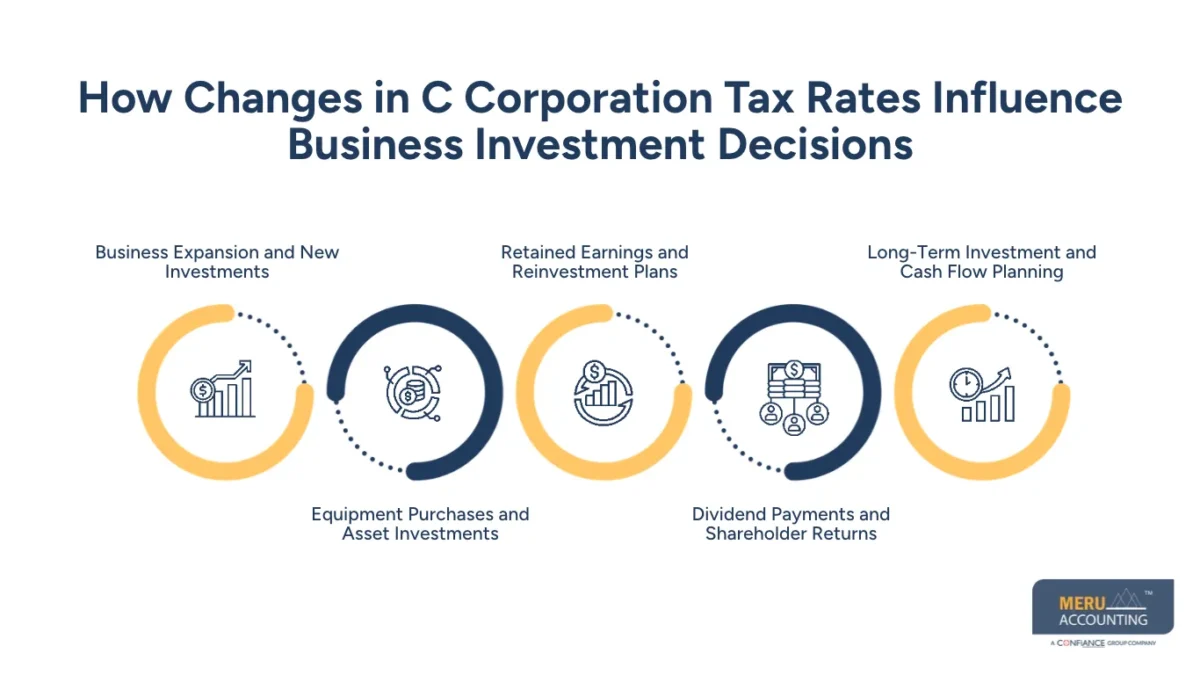
Changes in C corporation tax rates can affect how companies plan investments, manage profits, and allocate funds. A change in the federal or state tax burden may influence the timing of asset purchases, business expansion, and dividend payments.
Business Expansion and New Investments
Changes in C corporation tax rates can affect the funds available for business growth. Companies should review expected tax costs before opening new offices, hiring staff, or entering new markets.
Equipment Purchases and Asset Investments
A change in tax deductions or depreciation rules can affect the cost of buying machinery, vehicles, and other assets. Companies should compare the purchase cost, expected tax savings, and long-term business value.
Retained Earnings and Reinvestment Plans
When corporate taxes change, the amount of profit left after tax may also change. Companies should review how much profit to retain for new projects, daily expenses, and future growth.
Dividend Payments and Shareholder Returns
Changes in C corporation tax rates may affect the funds available for dividend distributions. Business owners should review corporate tax and shareholder tax costs before deciding how much profit to distribute.
Long-Term Investment and Cash Flow Planning
Companies should include possible tax changes in their annual budgets and investment plans. Reviewing how much tax does a C corporation pay under different financial conditions gives owners a clearer view of future cash needs.
Year-Round Tax Planning Strategies for C Corporations
Plan Business Expenses and Tax-Deductible Purchases
Review planned costs before each quarter begins. Purchase equipment and supplies based on business needs and cash flow. A deduction should not be the only reason for spending money, as the tax savings may be lower than the purchase cost.
Optimize Employee Benefits and Compensation
Review salaries, bonuses, health plans, and other employee benefits. Eligible staff costs may qualify as business deductions when they meet IRS rules. These deductions can affect taxable income and the final amount under C corporation tax rates.
Review Depreciation and Section 179 Deductions
Check the tax treatment of computers, vehicles, machinery, and other assets. Section 179 may allow eligible property costs to be deducted in the year an asset is placed in service, subject to annual limits and other rules.
Manage Retained Earnings and Dividend Distributions
Decide how much profit the company should retain and how much it can distribute. Review the effect of double taxation before paying dividends. This decision also affects how much tax does a C corporation pays at the corporate and shareholder levels.
Evaluate Tax Credits and Available Incentives
Review eligibility for research, clean energy, and other business tax credits. Each credit has its own rules and proof requirements. Eligible credits can reduce the final liability calculated under C corporation tax rates.
Review Income and Tax Estimates Every Quarter
Compare actual income with budget estimates at the end of each quarter. Update expected payments when sales, costs, or profits change. Regular reviews give companies a clearer estimate of how much tax does a C corporation pays during the year.
Review Related-Party Payments
Check salaries, loans, rent, and service fees paid to owners or related businesses. Each payment should have a clear business purpose and fair value. Keep agreements and transaction records for tax review.
Check Changes in Tax Rules
Review federal and state tax updates before making major financial decisions. Changes in deduction limits, credits, or filing rules can affect the company’s tax plan and the application of C corporation tax rates.
optional anymore
on running the business
C Corporation Tax Compliance: Important Deadlines and Filing Requirements
Form 1120: Federal Corporate Income Tax Return
Most domestic C corporations must file Form 1120 to report income, deductions, credits, and federal tax. Calendar-year companies generally file by April 15 of the following year. Form 7004 extends the filing period, not the payment deadline.
Quarterly Estimated Tax Payment Deadlines
Corporations generally make estimated payments when they expect to owe at least $500 in federal tax for the year. Calendar-year payment dates are April 15, June 15, September 15, and December 15. Timely payments keep the company’s tax account in order.
Payroll Tax and Employment Tax Responsibilities
Companies with employees must withhold federal income tax, Social Security, and Medicare taxes from wages. They must also pay their share of employment taxes and meet deposit and reporting duties.
State Corporate Tax Filing and Reporting Requirements
State tax duties depend on where a company conducts business. Some states charge corporate income tax, while others impose franchise or gross receipts taxes. These costs must be considered when estimating how much tax does a C corporation pay.
Recordkeeping and Financial Documentation Requirements
Keep invoices, bank statements, payroll reports, asset records, loan papers, and filed returns. Organized records make it easier to check deductions, calculate taxable income, and confirm the correct C corporation tax rates.
When to Hire a CPA for C Corporation Tax Planning and Compliance
Complex Corporate Tax Calculations and Reporting
A CPA can review taxable income, deductions, credits, and unusual transactions. Professional review is useful when asset sales or complex expenses affect C corporation tax rates and the final tax bill.
Multi-State Tax Obligations
Companies with offices, staff, property, or sales in several states may face different filing rules. A CPA can review state tax duties and identify the returns the company must file.
Tax Planning for Business Expansion and Investments
Opening an office, buying equipment, or acquiring another business can change tax costs. A CPA can review the financial effect and estimate how much tax does a C corporation pay after the planned investment.
Ongoing Tax Compliance and Financial Reporting
A CPA can review estimated payments, payroll filings, financial reports, and year-end records. Regular checks are useful for companies without an in-house tax team.
IRS Notices and Ownership Changes
Seek professional advice when the IRS questions a return or the company plans an ownership change. A CPA can review records, explain tax duties, and identify the next steps.
Why Choose Meru Accounting for C Corporation Accounting and Tax Services?
Managing C corporation tax rates requires accurate financial records throughout the year. Meru Accounting provides accounting, bookkeeping, payroll, tax-related, and financial reporting services for US businesses. Our services focus on clear records and regular financial reviews.
Corporate Tax Record Preparation
Our team maintains income and expense records used for tax preparation and calculations based on applicable C corporation tax rates. Organized records give tax professionals a clear base for reviewing deductions and taxable income.
Bookkeeping and Financial Reporting
Meru Accounting provides bookkeeping and financial reporting services to record business transactions. Regular reports show sales, expenses, cash flow, and company profits.
Payroll and Employee Tax Records
Our payroll services cover payroll processing and related records. Clear wage reports, deductions, and payment details give companies a better view of staff costs and employment tax duties.
Accounts Payable and Receivable Records
Our accounts payable and receivable services track vendor bills, customer payments, and open balances. These records give finance teams a clear view of unpaid costs and expected income.
Ongoing Financial Review
Our financial reporting and virtual CFO services provide regular business reports. Companies can review spending, plan cash needs, and discuss applicable C corporation tax rates with their CPA.
Our Expert Perspective
One issue that often goes unnoticed is the gap between closing accounts and preparing records for tax review. A company may finish its reports but still have missing invoices, open payroll entries, or unclear owner payments.
We recommend setting an internal closing date four to six weeks before the filing deadline. This gives the finance team time to check bank entries, vendor bills, payroll reports, and missing documents. Quarterly reviews also give owners a better estimate of how much tax does a C corporation pays before the final return is ready.
Key Takeaways
- C corporation tax rates are generally set at 21% of federal taxable income.
- The final tax bill depends on deductions, credits, and state tax rules.
- Review expenses, staff benefits, and asset purchases throughout the year.
- Make estimated payments by the correct dates.
- File Form 1120 on time and keep clear financial records.
- Hire a CPA for complex calculations and multi-state tax duties.
- Review how much tax does a C corporation pays before major business decisions.
FAQs
The federal corporate income tax rate for most C corporations is 21% of taxable income. State income taxes and other business taxes may increase the total tax bill.
A C corporation with $100,000 in taxable income generally owes $21,000 in federal income tax. The final amount may change after eligible tax credits, payments, and state taxes.
C corporations may deduct eligible costs such as employee wages, rent, insurance, business supplies, and depreciation. Each deduction must meet IRS rules and have proper financial records.
Most calendar-year C corporations must file Form 1120 by April 15 of the following year. Companies with a fiscal tax year generally file by the 15th day of the fourth month after year-end.
A C corporation can review eligible business expenses, depreciation deductions, employee benefits, and available tax credits. Regular tax planning and CPA reviews can also reduce filing errors and avoidable tax costs.
optional anymore
on running the business