An HOA board approves a budget, collects monthly dues, and pays for everything from lawn care to roof repairs. But where does the money actually go? Are vendor costs eating into the budget? Are enough funds being set aside for major repairs? Without clear financial records, even a well-funded association can struggle to make the right spending decisions. HOA outsource accounting gives associations the accounting support they need to track these costs and keep their budgets on course.
Instead of spending hours reviewing bills, updating records, and sorting out payment issues, board members can rely on an outside accounting team to handle these tasks. This gives them more time to focus on community needs while having clear financial reports to guide budget decisions.
What You Will Learn From This Blog
- What HOA outsource accounting means and how it works.
- Why sound budgets and clear expense records matter to an HOA.
- How outside accounting support helps track dues, bills, and reserve funds.
- Which financial tasks an HOA can hand over to an accounting provider.
- What affects the cost of outsourcing HOA accounting.
- How to choose an accounting partner for your community.
What Is HOA Outsource Accounting?
HOA outsource accounting is the practice of hiring an outside accounting team to handle some or all of an association’s financial work. Rather than hiring a full-time bookkeeper or asking board members to manage the books, an HOA can use trained staff to track income, record costs, pay bills, and prepare reports.
The work may cover monthly bookkeeping, bank checks, accounts payable, accounts receivable, budget support, and financial reports. The exact scope depends on the size of the community and the needs of its board.
For example, an HOA with 80 homes may need help with dues, utility bills, and basic monthly reports. A larger community with shared spaces, staff, pools, and many vendors may need more support with cost tracking, reserve funds, and cash flow.
Outsourcing does not mean giving up control of the HOA’s money. The board still sets the budget, approves major costs, and makes key financial choices. The accounting team keeps the records clear and gives the board the data it needs to make those choices.
optional anymore
on running the business
Why Accurate Budgeting and Expense Management Matter for HOAs
An HOA collects dues from homeowners to pay for shared costs and keep the community in good shape. These funds may cover landscaping, road care, pool upkeep, insurance, utilities, cleaning, repairs, and other shared needs.
A clear budget helps the board plan how much money it needs and how those funds should be used. Without one, an HOA may face cash shortfalls, delayed repairs, or sudden fee hikes.
Accurate expense records also help the board see if costs are in line with the plan. For instance, if lawn care costs rise by 15% over the year, the board can review the vendor terms, service level, or budget before the next cycle.
Good budget control also helps an HOA:
- Plan for future costs: Set funds aside for roof work, road repairs, and other major needs.
- Keep dues fair: Base dues on real costs rather than guesswork.
- Avoid late fees: Track bill due dates and pay vendors on time.
- Build trust: Give homeowners clear and timely reports on how funds are used.
- Spot waste: Find repeat charges, price hikes, or costs that do not match the budget.
A well-kept set of books gives the board a sound base for each of these tasks.
How HOA Outsource Accounting Helps Manage Budgets and Expenses
Outside accounting support can help an HOA move from basic recordkeeping to better cost control. Here are the main ways it can help.
1. Preparing Realistic Annual HOA Budgets
A sound budget starts with past costs, current needs, and plans for the year ahead. An accounting team can review past bills, dues, vendor costs, and repair records to help the board build a budget based on real data.
For example, if the cost of pool care has gone up each year, the next budget should reflect that trend. The board can also review planned work, such as roof repairs or new security systems, before setting dues.
The accounting team can group costs by type and show how much the HOA spent in each area. This helps the board set clear limits and avoid leaving out key costs.
2. Tracking Monthly Expenses and Operating Costs
A budget only works when the HOA checks actual costs against the plan. An outsourced team can record each bill, assign it to the right cost group, and track spending through the month.
This makes it easier to see if costs for power, water, waste pickup, or repairs are higher than planned. The board can then review the cause and take action before the gap grows.
Regular expense tracking also helps spot repeat bills, wrong charges, and costs that need board review.
3. Monitoring HOA Dues and Assessments
Monthly dues are a key source of income for most HOAs. If payments are missed or not recorded on time, the board may not have a clear view of the funds it can use.
An outside accounting team can track dues, record payments, update homeowner balances, and prepare reports on past-due accounts. It can also help the board see how much income is due and how much has been paid.
This gives the HOA a better view of cash flow and helps it plan for bills and other costs. Any steps to collect late dues should still follow the HOA’s rules and legal duties.
4. Managing Vendor Payments and Maintenance Expenses
HOAs often work with vendors for lawn care, cleaning, repairs, pool care, and other shared services. These bills need to be checked, coded, approved, and paid on time.
An outsourced team can log bills, check them against the records given by the HOA, track due dates, and prepare payment reports. This helps reduce missed bills and gives the board a clear record of vendor costs.
It also helps the board compare costs over time. If a repair bill keeps rising, the board can review the work, seek new bids, or check the terms of the vendor contract.
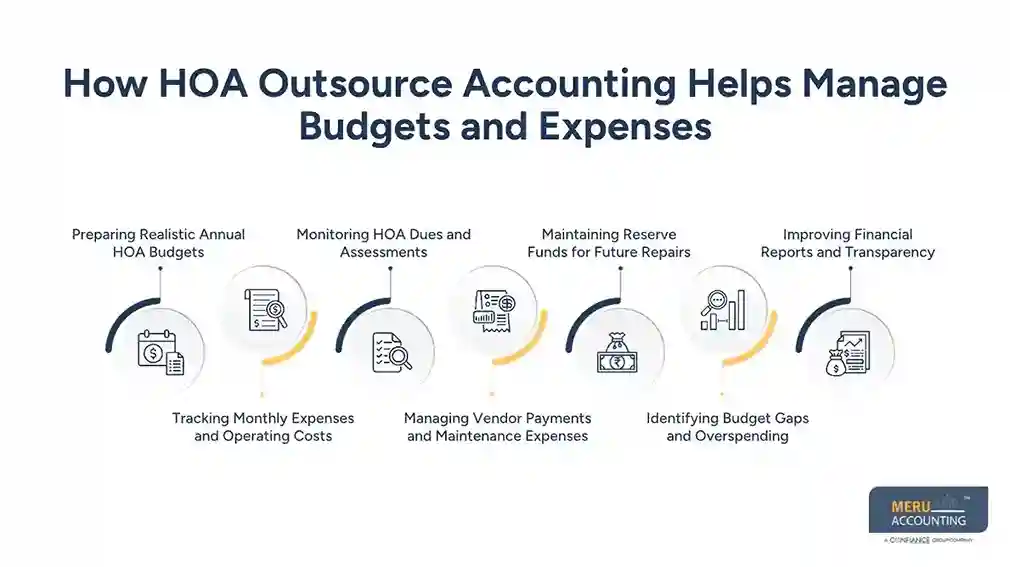
5. Maintaining Reserve Funds for Future Repairs
Reserve funds help an HOA pay for major work that does not occur each month. These costs may include roof work, road repairs, gate systems, or pool upgrades.
An accounting team can track reserve fund balances and report any transfers or use of funds. It can also keep reserve activity separate from day-to-day operating costs.
The board can use these records with a reserve study to plan future work and set aside funds over time. Accounting staff can track the numbers, but the board remains in charge of reserve use and funding choices.
6. Identifying Budget Gaps and Overspending
A monthly budget-to-actual report shows the difference between planned costs and real spending. An outsourced accounting team can prepare these reports and flag large gaps for the board to review.
For example, if the HOA sets aside $4,000 for repairs but spends $6,500, the report can show the $2,500 gap. The board can then check if the extra cost came from urgent work, a price rise, or poor cost planning.
This helps the HOA act early rather than wait until year-end to find that it has spent more than planned.
7. Improving Financial Reports and Transparency
HOA board members need clear reports to make sound choices. These may include income and expense reports, balance sheets, cash flow reports, bank reconciliation reports, and past-due dues reports.
An outside accounting team can prepare these reports on a set schedule and keep the books up to date. This gives board members a clear view of income, costs, cash on hand, and unpaid dues.
Clear reports also help the board answer homeowner questions and show how dues are being used. This can build trust and make budget talks more open.
What Financial Tasks Can HOAs Outsource to an Accounting Provider?
The services an HOA needs will depend on its size, budget, and current team. Some may need help with basic bookkeeping, while others may need full accounting support.
Common tasks include:
- HOA bookkeeping: Recording income, costs, dues, and other transactions in the books.
- Accounts payable: Logging vendor bills, tracking due dates, and preparing payment records.
- Accounts receivable: Tracking homeowner dues, payments, and past-due balances.
- Bank reconciliation: Matching bank records with the books to find errors or missing entries.
- Budget support: Reviewing past costs and helping prepare annual budgets.
- Financial reports: Preparing monthly income and expense reports, balance sheets, and cash flow records.
- Reserve fund tracking: Keeping records of reserve balances and approved use of funds.
- Year-end support: Organizing records for tax filing, audits, or financial reviews.
An HOA should set clear rules for who can approve bills, move funds, and access bank accounts. Outsourcing the books should not remove the checks and controls needed to protect community funds.
HOA Outsource Accounting Services by Meru Accounting
A landscaping contract may fit this year’s budget, but what happens when the vendor raises its rates next year? A planned roof repair may also affect how much an HOA needs to keep in its reserve fund. These decisions depend on accurate financial records and a clear view of both current and future costs.
At Meru Accounting, we provide accounting support that helps homeowners associations maintain better control over these financial areas. Our team works with HOA financial records to track spending, review budget activity, reconcile accounts, and prepare reports that give board members a clear view of the association’s finances.
Our HOA accounting services include:
- HOA Budget Preparation and Tracking: Review past spending, organize budget items, and track actual expenses against approved budgets.
- HOA Bookkeeping: Record dues, assessments, vendor costs, maintenance expenses, and other financial transactions.
- Accounts Payable Management: Process vendor bills, track payment due dates, and maintain records of approved expenses.
- Accounts Receivable Management: Track homeowner assessments, payments, outstanding dues, and delinquent balances.
- Bank and Reserve Fund Reconciliation: Match bank activity with accounting records and keep operating and reserve fund balances properly tracked.
- HOA Financial Reporting: Prepare income and expense statements, balance sheets, cash flow reports, and budget variance reports.
Our team understands that HOA accounting requires more than recording payments and expenses. Each transaction must be assigned to the right account, reserve activity must be properly tracked, and financial reports must give the board a reliable basis for its decisions. We help maintain that level of financial detail so your association can plan expenses, review budget performance, and keep its records in order.
Our Expert Insight
One issue we often see in community accounting is that HOA boards focus on the total amount collected in dues without looking closely at the cost of maintaining each shared asset. A pool, clubhouse, private road, or gated entrance can have very different upkeep costs and replacement timelines. Treating all maintenance as one broad expense category can make it harder to spot which parts of the community are driving costs.
We recommend reviewing major assets separately when assessing an HOA’s financial performance. For instance, tracking pool repairs, equipment servicing, and routine cleaning as distinct cost items can help the board assess whether its current service contracts are cost-effective or whether maintenance needs are becoming more frequent. This level of detail makes future budget planning more useful and helps boards base spending decisions on actual community needs rather than broad estimates.
Key Takeaways
- HOA outsource accounting helps associations manage bookkeeping, dues, vendor bills, and financial reports.
- Accurate budgets help HOAs plan for daily costs and future repairs.
- Monthly budget-to-actual reports help boards spot overspending early.
- Reserve funds should be tracked separately from operating funds.
- The cost of outsourcing HOA accounting depends on the number of homes, transaction volume, and services required.
- Outsourcing accounting does not remove the board’s duty to review reports and approve key financial decisions.
- A qualified accounting provider can help improve recordkeeping and reduce the workload on HOA board members.
FAQs
The cost depends on the number of units, transaction volume, and services required. Basic bookkeeping generally costs less than full-service HOA accounting.
Common services include bookkeeping, bank reconciliation, accounts payable, dues tracking, budget reporting, and financial statement preparation.
Yes. Small HOAs can access professional accounting support without the expense of hiring a full-time accountant.
Yes. An HOA can hire a separate accounting provider while keeping its existing property management company. Both can coordinate their work.
Yes. The board retains control over budgets, spending approvals, and financial decisions. The accounting provider handles the agreed accounting tasks.
optional anymore
on running the business