An accountant for small business plays a critical role in helping owners manage finances, meet tax rules, and avoid costly errors. Whether you run a startup or a growing company, having the right financial expert ensures that your records stay accurate and your compliance remains strong.
Many businesses today also rely on outsourced accounting for small business to manage costs while maintaining quality support.
Running a small business comes with many responsibilities, and financial management is one of the most important. An accountant for small business helps track income, manage expenses, and ensure all tax rules are followed properly.
Without proper accounting support, small businesses may face penalties, missed deadlines, or incorrect reporting. That is why many business owners now turn to outsourced accounting for small business as a flexible and cost-effective option.
What You Will Learn From This Blog
- Importance of hiring an accountant for small business
- Key duties handled by accounting professionals
- How tax compliance works for small businesses
- Common tax mistakes and ways to avoid them
- Benefits of outsourced accounting for small business
- How outsourcing works in real business scenarios
- Industry-specific accounting and compliance insights
Why Every Small Business Needs an Accountant for Small Business
Financial Record Management
An accountant for small business ensures all financial records are updated and accurate. This includes tracking income, expenses, and bank transactions. Accurate records help in better decision-making and reduce the risk of errors.
Tax Compliance Support
Tax rules can be complex and change often. An accountant for small business helps businesses stay updated and compliant. They ensure timely filing and correct tax calculations.
Cost Control And Budgeting
Managing expenses is key to business growth. An accountant helps set budgets and monitor spending. This allows business owners to control costs effectively.
Business Growth Planning
An accountant provides insights into profit trends and financial health. This helps in planning expansion and making informed decisions.
Risk Reduction
Errors in financial reporting can lead to penalties. An accountant for small business reduces such risks by maintaining accuracy and compliance.
Key Roles and Responsibilities of an Accountant for Small Business
Bookkeeping And Record Keeping
An accountant for small business maintains daily financial records. This includes invoices, receipts, and bank reconciliations.
Financial Reporting
They prepare reports such as profit and loss statements and balance sheets. These reports help in understanding business performance.
Tax Preparation And Filing
Tax returns must be filed correctly and on time. An accountant ensures all documents are prepared and submitted properly.
Payroll Management
Handling employee salaries and tax deductions is another key role. This ensures employees are paid correctly and on time.
Compliance Monitoring
An accountant tracks all compliance requirements. This helps avoid penalties and legal issues.
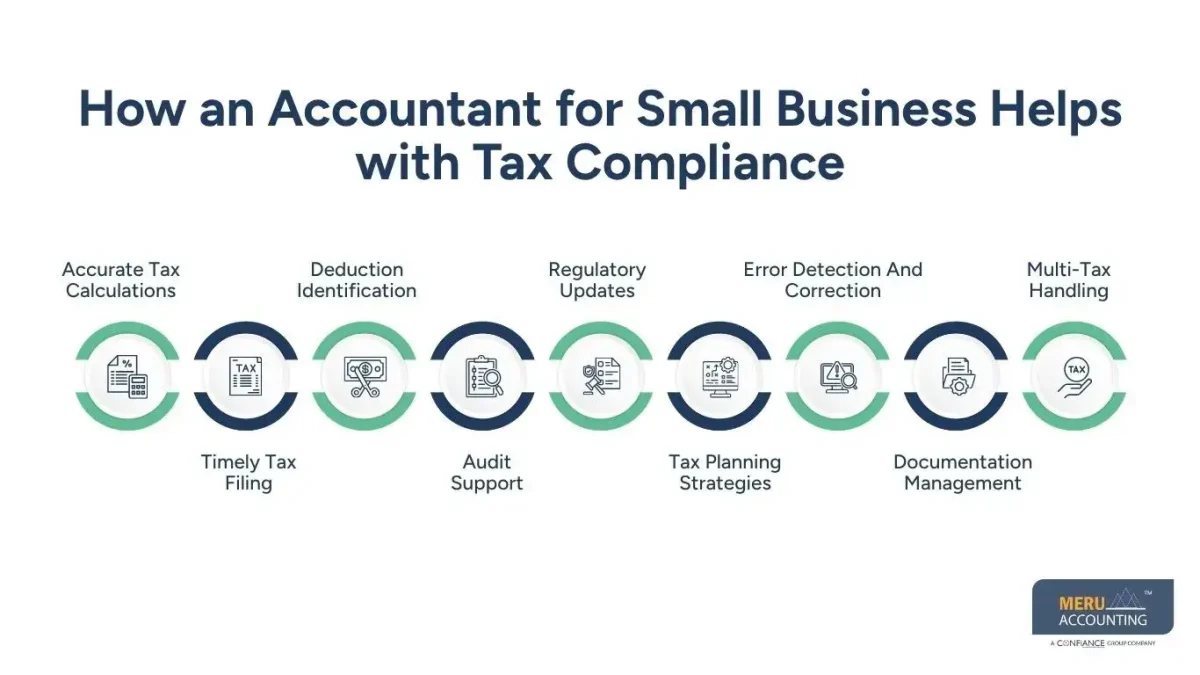
How an Accountant for Small Business Helps with Tax Compliance
Accurate Tax Calculations
An accountant for small business calculates taxes based on current laws and updated regulations. This reduces the chance of underpayment or overpayment and avoids costly financial penalties.
Timely Tax Filing
Missing deadlines can lead to penalties and unwanted legal complications. Accountants ensure all filings are completed on time with proper documentation and review.
Deduction Identification
Many businesses miss out on valid deductions due to lack of awareness. An accountant identifies eligible deductions to reduce tax liability and improve savings.
Audit Support
In case of audits, proper records and documentation are essential for smooth handling. An accountant provides support, prepares reports, and submits required documentation confidently.
Regulatory Updates
Tax laws change frequently and may impact business compliance requirements. An accountant for small business keeps businesses updated with the latest rules and changes.
Tax Planning Strategies
Proper tax planning helps reduce future tax burden and improves financial stability. An accountant creates structured plans to optimize tax outcomes within legal limits.
Error Detection And Correction
Mistakes in financial data can lead to incorrect tax filings and compliance issues. An accountant reviews records carefully and corrects errors before submission deadlines.
Documentation Management
Maintaining proper tax records is important for compliance and future reference. An accountant organizes and stores all financial documents in a structured manner.
Multi-Tax Handling
Businesses may deal with different types of taxes like income, sales, and payroll. An accountant manages multiple tax requirements efficiently without confusion or delay.
Understanding Tax Filing and Regulatory Requirements for Small Businesses
Federal Tax Requirements
Small businesses must file federal income tax returns accurately and on time. The type of return depends on the business structure and IRS classification rules.
State And Local Taxes
Businesses may need to pay state and local taxes based on location. These include sales tax, property tax, and other applicable regional taxes.
Employment Taxes
If a business has employees, payroll taxes must be managed carefully and consistently. This includes Social Security and Medicare taxes along with federal withholding requirements.
Sales Tax Compliance
Businesses selling goods must collect and remit sales tax as required by law. Proper tracking is essential to avoid issues and maintain accurate reporting records.
Licensing And Permits
Certain businesses require licenses and permits before starting operations legally. An accountant ensures all compliance requirements are met and properly documented.
Common Tax Mistakes Small Businesses Make and How to Avoid Them
Poor Record Keeping
Incomplete records lead to errors in tax filing and financial reporting issues. An accountant for small business ensures proper documentation and organized record maintenance.
Missing Deadlines
Late filing results in penalties and unnecessary financial stress for business owners. Using reminders and professional help avoids this issue and ensures timely submissions.
Incorrect Expense Classification
Misclassifying expenses can affect tax calculations and overall financial accuracy. Accountants ensure correct categorization based on updated accounting standards and rules.
Ignoring Deductions
Many businesses fail to claim valid deductions due to lack of proper knowledge. An accountant helps identify all eligible deductions and maximize tax-saving opportunities.
Mixing Personal And Business Finances
This creates confusion and errors in tracking income and expenses clearly. Keeping separate accounts is essential for accurate reporting and smooth compliance processes.
Benefits of Outsourced Accounting for Small Business
Cost Savings
Hiring full-time staff can be expensive and increase overall operational costs. Outsourced accounting for small business offers a more affordable solution with flexible pricing options.
Access To Experts
Businesses gain access to skilled professionals with strong accounting and tax knowledge. This improves the quality of financial management and reduces the chances of costly mistakes.
Flexibility In Services
Services can be adjusted based on business needs and changing requirements. This is useful for growing businesses that need scalable and adaptable support.
Focus On Core Activities
Outsourcing allows business owners to focus on operations and growth strategies. Accounting tasks are handled by experts, saving time and improving productivity.
Use Of Modern Tools
Outsourced providers use updated software and secure accounting systems. This improves accuracy, data security, and overall reporting efficiency.
How Outsourced Accounting for Small Business Works in Practice
Initial Setup And Assessment
The process starts with understanding business needs and current financial structure. Financial data is reviewed, analyzed, and organized for accurate accounting setup.
Data Migration And Integration
Existing records are moved to secure systems with proper checks and validation. This ensures smooth operations and seamless integration with accounting platforms.
Regular Bookkeeping And Reporting
Outsourced accounting for small business includes ongoing bookkeeping and transaction tracking. Reports are shared regularly for review with clear insights and performance summaries.
Communication And Support
Businesses receive regular updates and dedicated support from accounting professionals. Queries are addressed promptly with clear explanations and timely responses.
Compliance And Filing
Outsourced teams handle tax filing and compliance tasks with proper accuracy. This ensures deadlines are met without errors and avoids penalties or legal issues.
Industry-Specific Tax and Compliance Support for Small Businesses
Retail Businesses
Retailers must manage inventory levels and sales tax obligations accurately.
An accountant ensures proper tracking, reporting, and compliance with tax regulations.
Service-Based Businesses
Service providers focus on income tracking and expense control for better financial clarity.
Tax compliance is managed based on service type and applicable legal requirements.
Real Estate Businesses
Real estate firms deal with property taxes, depreciation, and rental income reporting.
An accountant ensures correct calculations and proper financial record maintenance.
Healthcare Practices
Healthcare providers must follow strict compliance rules and regulatory guidelines.
Accounting support ensures proper documentation, billing accuracy, and tax compliance.
Technology Startups
Startups need help with funding, budgeting, and long-term financial planning strategies.
An accountant for small business provides necessary guidance and compliance support.
How Meru Accounting Supports Small Businesses
Customized Accounting Services
Meru Accounting offers tailored solutions for different industries and business models. Services are designed based on specific business needs and financial requirements.
Expert Tax Compliance Support
The team ensures accurate tax filing and full compliance with applicable regulations. This helps businesses avoid penalties and maintain smooth financial operations.
Use Of Advanced Accounting Tools
Modern software is used for efficient financial management and real-time data tracking. This improves accuracy, reporting quality, and overall decision-making support.
Scalable Services
Services can grow with your business as operations expand over time. This makes it suitable for startups and steadily expanding firms across industries.
Reliable Outsourced Solutions
Meru Accounting provides outsourced accounting for small business services with expert support. This helps reduce costs while maintaining quality and consistent financial performance.
Our Expert Perspective
From years of working with small businesses, we have seen that early financial discipline makes a strong difference. Businesses that rely on a skilled accountant avoid common tax errors and maintain steady growth with fewer risks.
Consistent monitoring of finances also helps in identifying issues early and taking timely corrective actions. A structured accounting approach builds confidence, improves planning, and supports long-term business stability.
Key Takeaways
- An accountant for small business helps maintain accurate financial records
- Tax compliance is easier with professional support
- Outsourced accounting for small business reduces costs and improves efficiency
- Avoiding common mistakes can save money and prevent penalties
- Industry-specific support improves overall financial management
- Choosing the right accounting partner supports long-term success
FAQs
An accountant for small business helps calculate taxes, file returns on time, and follow all tax rules. This reduces errors and avoids penalties.
A small business should hire an accountant when it starts earning revenue or handling taxes. Early support helps keep records clean and accurate.
Outsourced accounting for small business helps save costs, gives access to experts, and ensures accurate financial management without hiring full-time staff.
Yes, outsourced accounting for small business can manage tax filing, track deadlines, and prepare reports. This ensures proper compliance.
Small businesses often miss deadlines, make errors in records, or fail to claim deductions. An accountant for small business helps avoid these issues.