
Moving into property is a key step for any growing firm, as it shows steady progress and clear plans for future growth. It often reflects strong vision, stable growth, and trust in what lies ahead for the business. At the same time, property investment is not just a smart move, but also a major cost that needs careful planning and firm control at each stage. This is where accounting and real estate work closely together, since each property choice affects records, tax plans, cash flow, and long-term profit. As firms grow in size and scope, managing these areas becomes more complex and needs clear systems that support smooth and steady control.
Many firms do not fully see the need for clear financial insight when they expand property holdings, and this can lead to avoidable risks over time. Without proper planning and the use of sound valuation methods for real estate, firms may pay more than needed, make errors in reports, or face pressure on cash flow. In this blog, we will explain what growing firms should know before they expand into property and how strong and well-managed financial practices can support safe and steady growth.
What You Will Learn From This Blog
By the end of this article, you will understand:
- What accounting and real estate means in a growing business context
- Why financial planning is essential before property expansion
- Key financial factors to evaluate before investing
- How valuation methods for real estate support accurate decision-making
- Common challenges firms face during property expansion
- Best practices for managing real estate accounting
- How Meru Accounting supports firms in property-related financial management
What Is Accounting and Real Estate and How It Impacts Business Growth
Accounting and real estate refers to the structured management of all financial activities related to property assets. This includes purchase cost, rental income, maintenance expenses, financing, and asset valuation.
For growing firms, property becomes more than just a physical asset. It directly impacts financial reporting and business performance through:
- Balance sheet strength
- Long-term liability tracking
- Cash flow stability
- Tax obligations
- Investment returns
Accurate accounting and real estate practices ensure that firms have a clear view of how their property investments contribute to growth. Without proper tracking, even profitable investments may appear unproductive or risky.
This is why firms rely on consistent systems and valuation methods for real estate to maintain clarity and make informed decisions.
Why Accounting and Real Estate Planning Matters Before Expansion
Before buying new property, firms need to review their financial readiness with care and clear focus. Proper accounting and real estate planning helps ensure that growth choices rely on clear data instead of rough guesses. One key reason planning matters is clear cost view across all parts of the deal. Property deals include many costs beyond the base price paid at the time of purchase. These may include tax, legal fees, loan costs, and ongoing upkeep needs. Without proper tracking, these costs can reduce profit and affect long-term returns.
Another key factor is sound and clear decision making during the selection process. With strong financial checks and the use of valuation methods for real estate, firms can compare options and choose the best fit. Planning also improves control over funds and daily financial flow across the firm. With clear plans, firms can manage cash flow well and avoid taking on too much risk.
In the end, strong accounting and real estate planning helps firms grow in a steady and well-managed way. It prepares firms to manage many properties while keeping clear records and full control.
Key Financial Considerations in Accounting and Real Estate Investments
Property investment decisions should always be supported by detailed financial analysis. Several key factors must be evaluated before expansion. Cash flow assessment is critical. Firms must determine whether the property will generate consistent income or require additional funding support. Proper accounting and real estate tracking helps measure this accurately.
Return on investment is another important factor. Firms should evaluate both short-term income and long-term appreciation potential. Financing structure also plays a major role. Loans can support expansion, but they introduce repayment obligations that must be carefully managed.
At this stage, valuation methods for real estate become essential. These methods help determine whether a property is priced fairly and aligns with expected returns.
Common valuation methods for real estate include:
- Cost-based valuation
- Market comparison approach
- Income-based valuation
Using the right valuation methods for real estate reduces financial risk and supports confident investment decisions.
Understanding Different Property Investment Structures
The structure used to hold property significantly impacts financial reporting, tax, and risk exposure. Choosing the right setup is a key part of accounting and real estate planning.
Direct Ownership Under Business
This is when a firm holds property in its own name. It is simple to manage and requires less setup. However, it may expose the property to business-related risks and liabilities.
Separate Legal Entity Ownership
In this structure, property is held under a different company or entity. It helps protect assets from operational risks. It also improves financial clarity and simplifies accounting and real estate tracking.
Partnership or Joint Investment Model
This approach involves multiple parties investing together. It helps share cost and risk. However, it requires clear agreements, defined roles, and structured financial reporting.
Tax and Liability Impact
Each structure has a different impact on tax and legal responsibility. Firms must evaluate how income, expenses, and liabilities will be reported.
Alignment With Business Goals
The chosen structure should match long-term growth plans. A well-aligned structure supports better control and smoother expansion in accounting and real estate management.
Common Challenges in Accounting and Real Estate Expansion
As firms expand their property portfolios, they often face operational and financial challenges.
- Inaccurate Financial Records: Manual processes can lead to errors in tracking income and expenses, affecting overall reporting.
- Improper Valuation: Without using proper valuation methods for real estate, firms may misjudge asset value and investment potential.
- Cash Flow Pressure: Property investments may take time to generate returns, which can strain financial resources.
- Data Management Issues: Lack of structured systems can make it difficult to manage multiple properties efficiently.
- Compliance Risks: Failure to meet tax and reporting requirements can result in penalties.
- Limited Internal Expertise: In-house teams may not have the specialized knowledge required for effective accounting and real estate management.
These challenges highlight the need for structured systems and professional support.
Key Benefits of Structured Accounting and Real Estate Management
Improved Financial Accuracy: Accurate records ensure reliable reporting and better decision-making.
Better Cash Flow Control: Clear tracking helps firms manage income and expenses efficiently.
Enhanced Investment Decisions: Using valuation methods for real estate supports informed property selection.
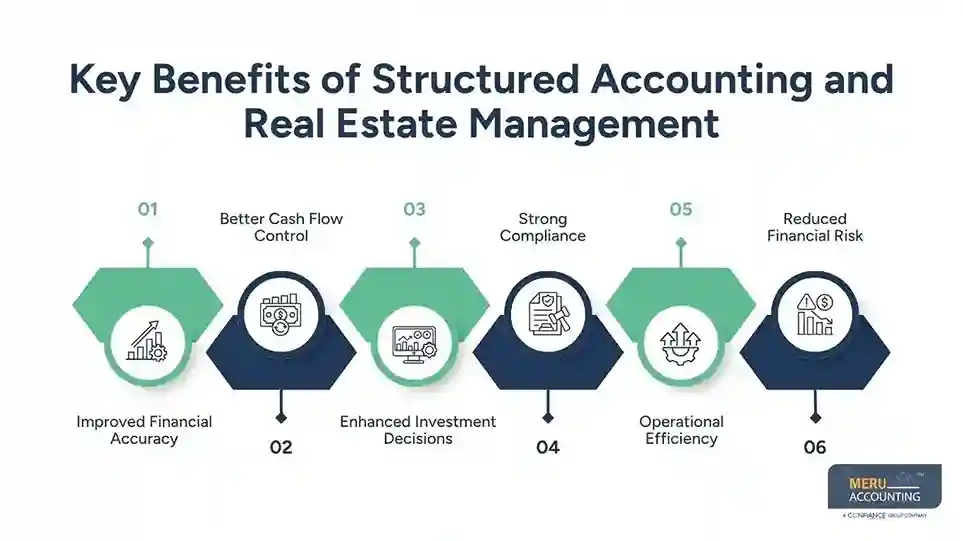
Strong Compliance: Proper systems ensure adherence to tax and reporting standards.
Operational Efficiency: Automation reduces manual workload and improves processing speed.
Reduced Financial Risk: Accurate tracking minimizes errors and strengthens financial stability.
Meru Accounting’s Real Estate Accounting Services
At Meru Accounting, we specialize in helping growing firms manage property investments with clarity and control.
Our services are designed to simplify accounting and real estate processes while ensuring accuracy and compliance. We help businesses maintain structured financial records, track property performance, and manage reporting efficiently.
We also apply reliable valuation methods for real estate to help firms assess asset value and make informed decisions.
Our services include:
- Property income and expense tracking
- Financial reporting and analysis
- Asset valuation support
- Tax planning and compliance
- Cash flow management
- Dedicated bookkeeping support
With Meru Accounting, firms gain better financial visibility and confidence in their property expansion strategies.
Our Expert Perspective
From our experience, property growth often brings more financial complexity than most firms expect at the start. What may seem like a simple investment can soon become hard to manage without clear and well-structured systems in place.
Many firms face issues with uneven records, slow updates, and a lack of clear financial insight when they manage property on their own. Over time, these gaps can reduce report accuracy and make decision-making less reliable.
A strong accounting and real estate setup, backed by steady processes and the use of proper valuation methods for real estate, helps reduce these issues in a clear way. Firms that build structured systems early are better prepared for steady growth and long-term financial strength.
Key Takeaways
- Accounting and real estate planning is essential before expanding property holdings
- Financial clarity helps reduce risk and improve decision-making
- Using valuation methods for real estate ensures accurate asset valuation
- Structured systems improve reporting and operational efficiency
- Professional support enhances accuracy and long-term financial control
FAQs
It includes tracking all property-related financial tasks such as income, costs, asset value, and tax reports in a clear and steady way.
They help find the true value of a property and support better and more informed investment decisions over time
Common issues include wrong records, poor valuation, cash flow strain, and rule risks in accounting and real estate work.
Firms can improve results by using clear systems, applying valuation methods for real estate, and keeping regular financial reviews.
Meru Accounting offers full accounting and real estate support, including tracking, reports, valuation, and rule checks for clear financial control.