


Accounting for construction contractors is more than just bookkeeping. In construction, where projects involve many moving parts, accounting plays a major role in identifying risks early, preventing cost overruns, and helping contractors make better decisions. When your financial data is organized and accurate, you can spot problems before they become big issues.
This blog explains how accounting for construction contractors supports better risk management, and how construction company accounting helps you stay on top of project costs, cash flow, and compliance.
What You Will Learn From This Blog
By the end of this blog, you will understand:
- Why accounting for construction contractors is essential for risk management
- What types of risks construction companies face
- How construction company accounting helps identify and reduce financial risks
- How job costing and budget controls prevent cost overruns
- How accurate accounting supports better decision-making
Understanding Accounting for Construction Contractors
Accounting for construction contractors is a specialized form of accounting that focuses on project-based financial tracking. Unlike regular business accounting, construction accounting requires tracking each project separately, managing multiple expenses, and monitoring cash flow for several projects simultaneously.
A construction contractor may handle multiple projects at once, each with its own timeline, budget, and payment terms. Without accurate accounting, it becomes difficult to know which projects are profitable, which ones are losing money, and where risks are hiding.
Proper accounting for construction contractors ensures that every cost is recorded correctly, payments are tracked, and project profitability is clear. This level of financial visibility directly supports better risk management.
Understanding Risk in the Construction Industry
Construction projects involve multiple risks that can affect profitability and project success. Some of the common risks faced by construction businesses include:
Cost overruns
Changes in material prices or labor costs can increase project expenses beyond the planned budget.
Delayed payments
Clients may delay payments, which can affect cash flow and project progress.
Contract disputes and claims
Disagreements over contract terms or project scope can lead to legal claims and extra costs.
Safety issues and accidents
On-site accidents can cause project delays, increased insurance costs, and legal liabilities.
Regulatory and compliance risks
Failure to meet legal or industry standards can result in penalties and project delays.
Cash flow shortages
High upfront expenses and slow payments can create cash flow gaps that affect project execution.
Supply chain disruptions
Delays in material delivery can slow down project timelines and increase costs.
These risks can significantly impact a construction company’s profits and long-term sustainability. Many of these risks are financial in nature, meaning they can be reduced through better accounting and financial tracking.
Why Risk Management Matters in Construction Projects
Risk management is essential in construction because even a small delay or unexpected cost can lead to major losses. Construction projects usually involve high investments, long timelines, and multiple subcontractors.
High project investment
Construction projects require significant capital, and any risk can result in financial losses.
Long project timelines
Longer timelines increase the chances of delays, cost changes, and other risks.
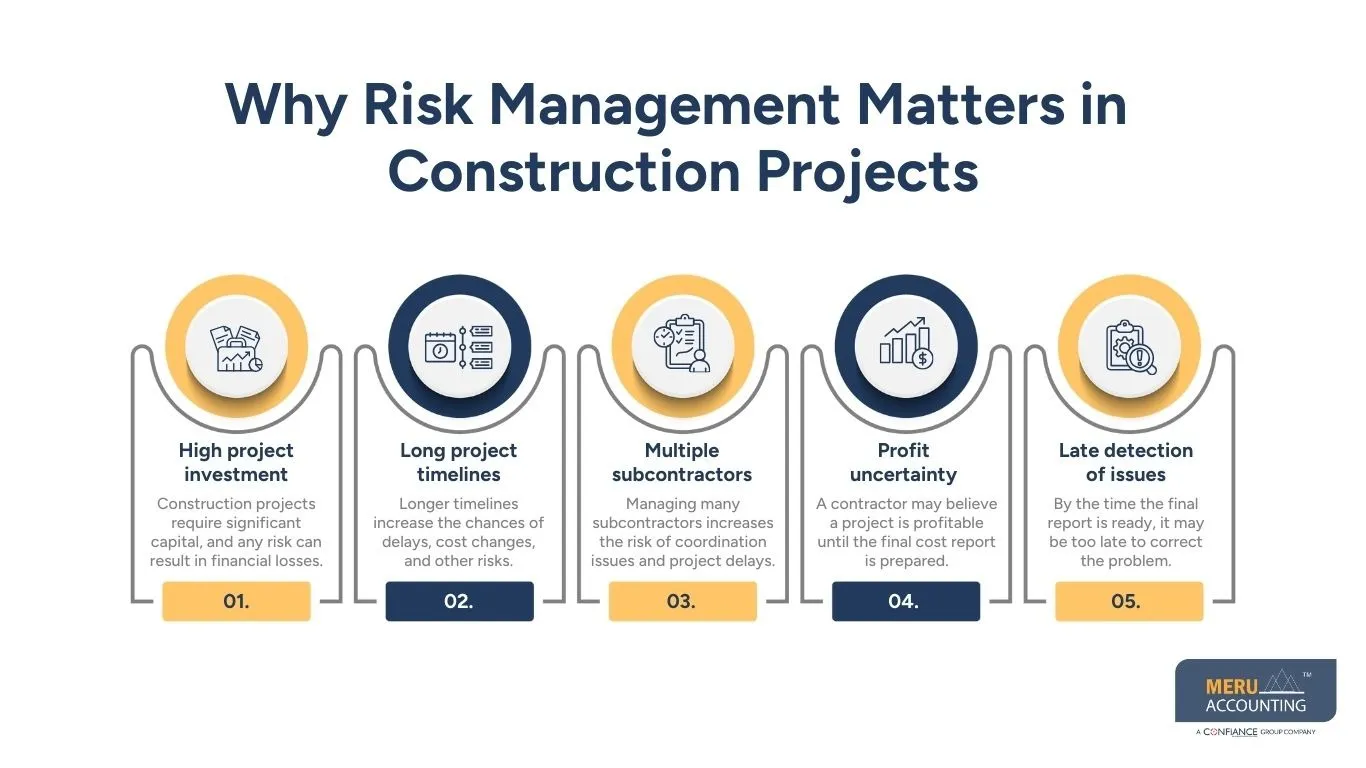
Multiple subcontractors
Managing many subcontractors increases the risk of coordination issues and project delays.
Profit uncertainty
A contractor may believe a project is profitable until the final cost report is prepared.
Late detection of issues
By the time the final report is ready, it may be too late to correct the problem.
This is why accounting for construction contractors is crucial. It helps detect risks early and enables corrective action before the risks affect the business.
Role of Construction Company Accounting in Identifying Financial Risks
Construction company accounting plays a major role in identifying financial risks. When your accounting system is set up correctly, it helps you:
- Track actual costs vs budget
- Monitor labor and material expenses
- Identify which projects are underperforming
- Spot payment delays or missed invoices
- Detect unusual cost patterns
Construction company accounting also helps you analyze financial performance by project, enabling you to make data-driven decisions. With accurate project cost data, you can identify risks early and avoid losing money on unprofitable projects.
Managing Cost Overruns Through Job Costing and Budget Controls
One of the biggest risks in construction is cost overruns. This happens when the actual cost of a project exceeds the budget. Job costing is the best tool to prevent this.
Job costing involves tracking costs for each project separately. This includes:
- Labor costs
- Material costs
- Equipment expenses
- Subcontractor costs
- Overhead allocation
When you use job costing in accounting for construction contractors, you can compare actual costs to planned costs at any time. This helps you spot cost overruns early and take corrective action, such as:
- Adjusting labor hours
- Re-negotiating material prices
- Improving project planning
- Avoiding unnecessary expenses
Budget controls help you keep spending within limits. They also help you manage change orders and keep your project on track financially. When cost overruns are controlled, your risk is reduced significantly.
Tracking Cash Flow Risks Across Multiple Construction Projects
Cash flow is the lifeline of any construction business. Construction projects often involve delayed payments, long billing cycles, and large upfront expenses.
Cash flow risk occurs when money goes out faster than it comes in. This can happen due to:
- Delayed client payments
- Late billing
- Poor invoice tracking
- Unplanned expenses
Accounting for construction contractors helps you track cash flow by project. It allows you to monitor:
- Pending invoices
- Payment due dates
- Project expenses
- Cash flow projections
With accurate cash flow tracking, you can plan for upcoming expenses, manage payroll, and ensure your business has enough funds to complete projects.
Reducing Compliance and Tax Risks in Construction Businesses
Construction businesses face strict compliance and tax rules. Failing to comply can lead to penalties, audits, and legal problems.
Construction company accounting helps you stay compliant by:
- Tracking payroll accurately
- Maintaining correct tax records
- Recording expenses properly
- Preparing financial reports correctly
- Ensuring correct tax deductions
Proper accounting also helps you prepare for tax audits by maintaining clean and organized financial records. This reduces the risk of penalties and legal issues.
Using Financial Reports to Predict and Control Project Risks
Financial reports are not just for year-end. In construction, financial reports are essential for ongoing risk management.
Key financial reports for construction include:
- Project Profit & Loss
- Cost-to-Complete Reports
- Job Cost Reports
- Cash Flow Statements
- Balance Sheets
These reports help you understand the financial health of each project and the business overall. When you review reports regularly, you can:
- Identify projects that are losing money
- Spot cash flow issues
- Adjust budgets and spending
- Manage project timelines better
This is why accounting for construction contractors is essential for risk management. It gives you the data needed to predict problems before they become severe.
How Accounting for Construction Contractors Improves Decision-Making
Accounting for construction contractors improves decision-making by providing accurate financial data and clear insights. When you have correct financial information, you can make more informed decisions related to project management and business growth.
Project selection
You can decide whether to accept a new project based on its profitability and risk level.
Bid pricing
Accurate cost data helps you set the right bid price to ensure profit margins.
Project monitoring
You can identify which projects need more attention and take corrective action early.
Subcontractor planning
You can determine the best time to hire subcontractors based on project needs and budget.
Cash flow management
You can plan cash flow more effectively by tracking expenses and payments.
Good accounting reduces guesswork and helps you make smarter decisions. It also helps you identify risks early and take action before they cause significant damage.
How Meru Accounting Helps Construction Contractors Manage Risks
At Meru Accounting, we specialize in accounting for construction contractors and help construction companies reduce financial risks. Our team understands the unique needs of the construction industry and provides services such as:
Job costing setup and tracking
Proper job costing helps track project expenses and identify cost overruns early.
Budget planning and cost controls
Effective budget planning ensures expenses stay within limits and helps prevent overspending.
Cash flow monitoring and reporting
Regular cash flow monitoring helps avoid shortages and ensures timely payments.
Project-based accounting and reporting
Project-level reporting provides clarity on profitability and risk for each project.
Tax and compliance support
Accurate accounting helps maintain compliance and reduces tax-related risks.
Monthly financial reporting for better decision-making
Monthly reports help track performance and support timely decisions.
Contact Meru Accounting to strengthen your construction financial controls and reduce project risks. Get in touch today to streamline your accounting and improve profitability across every project.
Key Takeaways
- Accounting for construction contractors helps identify financial risks early
- Construction company accounting provides clear project-level cost tracking
- Job costing and budget controls prevent cost overruns
- Cash flow tracking reduces the risk of project delays and payment issues
- Proper accounting ensures compliance and reduces tax risks
- Financial reports help predict and control project risks
FAQs
Construction accounting tracks each project separately and includes job costing, progress billing, and project-level reporting, which is not required in regular accounting.
By tracking actual project costs against budgets, it helps contractors identify overspending early and control costs before they get out of hand.
Yes, it helps track invoices, payments, and project expenses, making it easier to manage cash flow across multiple projects.
Proper accounting keeps accurate records, ensures correct payroll and tax filings, and reduces the risk of audits and penalties.
Project-based reports help contractors know which projects are profitable and which ones are losing money, helping them manage risks better.


