

Meru Accounting

Key Strategies for Effective Accounting for Construction Projects

Contents
Want to learn more?
Subscribe for business tips, tax updates, financial fundamental and more


    Key Strategies for Effective Accounting for Construction Projects

    Accounting for Construction projects is important in helping firms have control over different projects. Unlike simple retail or service operations, construction work involves long timelines, shifting site conditions, and constant changes in cost. A project may start with one plan but face new material prices, labor changes, or contract updates that impact the entire budget. 

    When you do accounting for construction projects, you can track everything involved and stay updated with accurate numbers. When you have financial data, every project can be well-managed making it more predictable and profitable. In this blog, we will see some key accounting strategies for construction projects.

    Understanding the Basics of Accounting for Construction Projects

    The nature of construction work demands a unique set of rules in accounting. Accounting for Construction must deal with unpredictable schedules, contract-based revenue, and dynamic cost patterns. This means that traditional accounting methods are not enough. Construction firms must use tools and systems that track cost from day one and follow it through each phase.

    Basics of Construction Project Accounting include:

    • Project-based cost tracking for each job


    • Handling change orders and budget updates


    • Recording progress-based revenue


    • Monitoring labor hours and productivity


    • Reviewing live financial data to guide project decisions


    Understanding these basics make accounting for construction projects more accurate and create a strong financial base for the entire project life cycle.

    Key Components of Accounting for Construction Projects

    For smooth project execution, Accounting for Construction needs various linked components that help record, track, and manage financial data. These components bring structure to the workflow and assist managers in making insightful decisions based on real numbers.

    Essential components include:

    • Job costing tools that track exact expenses

    • Budgeting systems that show planned versus actual cost

    • Construction in progress accounting to show ongoing work value

    • Cash flow tracking for daily and monthly planning

    • Invoicing systems that match project progress

    • Financial reporting tools for stakeholders

    When these components work together, project managers gain a clear and deep view of project health. This reduces financial stress and keeps both short-term and long-term goals aligned.

    Understanding Construction in Progress Accounting

    Construction in progress accounting is essential for long-term projects that take months or even years to complete. Since the project is not finished in one go, firms need a method to show the value of work done at every stage. This method helps companies track costs as they occur and recognize revenue at the right time.

    Benefits of Construction in Progress (CIP) Accounting:

    • It gives a step-by-step record of all costs added to the project


    • Helps understand how much of the project is completed


    • Supports fair and accurate financial statements


    • Prevents revenue from being misreported


    • Shows the real value of the ongoing work


    This makes construction in progress accounting one of the most trusted methods for reducing confusion and improving financial transparency across all project stages.

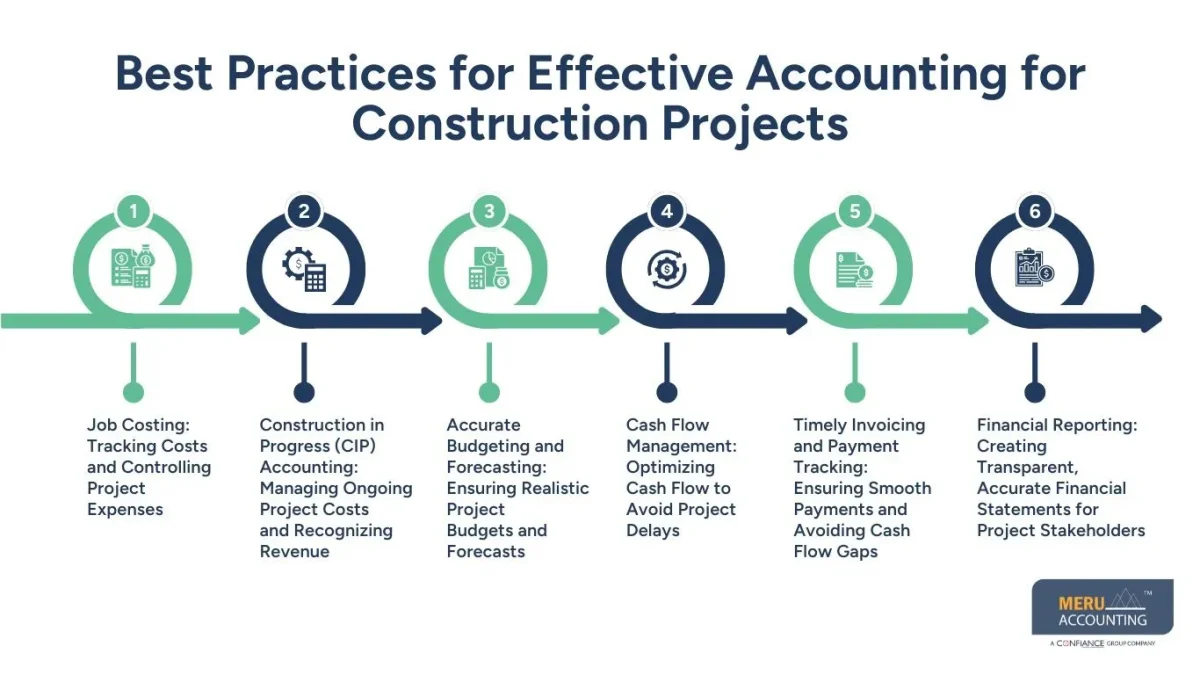
    Best Practices for Effective Accounting for Construction Projects

    Applying best practices ensures that Accounting for Construction stays accurate, structured, and ready for challenges. These practices help firms prevent loss, improve project flow, and bring discipline to financial management.

    Job Costing: Tracking Costs and Controlling Project Expenses

    Job costing breaks the project into small parts, allowing teams to watch every detail. It helps firms manage costs in a precise way and respond quickly when numbers begin to shift.

    Benefits of Job Costing:

    • It separates labor, material, overhead, and equipment charges
    • Shows which parts of the project cost more than expected
    • Helps plan better for the next project by using past data
    • Gives managers the power to control expenses early
    • Allows teams to compare planned cost with real cost instantly

    Strong job costing is a pillar of Accounting for Construction and supports better profits on every project.

    Construction in Progress (CIP) Accounting: Managing Ongoing Project Costs and Recognizing Revenue

    Construction in progress accounting captures the real financial picture of ongoing work. It helps firms maintain balance between cost spent and revenue earned.

    Advantages:

    • Helps reduce confusion when multiple projects run at the same time
    • Gives a detailed view of progress-based earnings
    • Allows clear forecasting on profit and loss
    • Reduces risk of overcharging or undercharging clients
    • Ensures that the firm’s financial statements are always accurate and dependable

    When construction in progress accounting is used with job costing, firms get deeper clarity and better control.

    Accurate Budgeting and Forecasting: Ensuring Realistic Project Budgets and Forecasts

    A budget acts as the financial plan for the entire project. Accurate forecasting helps firms stay prepared when market prices rise or new changes come in.

    Key Points:

    • Budgets must come from real site data, not guesswork
    • Forecasts should be reviewed at each project stage
    • Teams should check cost trends for future risk
    • Comparing planned and actual costs helps refine the next budget
    • Forecasting ensures that the project remains financially balanced even during sudden changes

    Accurate budgeting is the heart of good Accounting for Construction and supports stable long-term growth.
    accounting for construction

    Cash Flow Management: Optimizing Cash Flow to Avoid Project Delays

    Without cash flow, even the best-planned project cannot move forward. Cash flow must be tracked daily to avoid delays and maintain operations.

    Key Cash Flow Practices:

    • Keep a clear timeline for payment releases
    • Forecast expected cash needs for each project stage
    • Avoid late billing since it slows down cash inflow
    • Maintain clear communication with clients about payment schedules
    • Track vendor payments to avoid disputes or penalties

    A steady cash flow system helps the project run without interruptions and reduces the need for emergency borrowing.

    Timely Invoicing and Payment Tracking: Ensuring Smooth Payments and Avoiding Cash Flow Gaps

    Timely invoicing supports better cash flow and keeps the project on schedule. Payment tracking helps teams follow the exact status of each bill.

    Steps for Timely Invoicing and Payment Tracking:

    • Send invoices immediately after meeting milestones
    • Use software to automate payment reminders
    • Match invoices with job progress for accuracy
    • Track unpaid invoices to avoid long gaps in revenue
    • Maintain clear records to avoid confusion with clients

    Strong invoicing and payment tracking improve the entire Accounting for Construction process and support healthier business growth.

    Financial Reporting: Creating Transparent, Accurate Financial Statements for Project Stakeholders

    Financial reporting gives leaders insight into project progress and overall business health.

    Reporting Essentials:

    • Prepare cost-to-complete reports to assess future spending
    • Use project performance reports to spot issues early
    • Share clear summaries with investors and partners
    • Track real-time cost changes for smart decisions
    • Review financial statements regularly to maintain transparency

    Good reporting helps firms stay professional, trustworthy, and fully aware of project status.

    The Role of Construction in Progress Accounting for Accurate Financial Reporting

    Construction in progress accounting supports financial reporting by showing the real worth of unfinished work. It links cost, progress, and revenue into one clear picture.

    Expanded Role:

    • Helps firms report long-term projects in a fair manner


    • Makes balance sheets more reflective of real progress


    • Supports better planning for upcoming payments


    • Reduces mistakes in cost allocation


    • Gives a reliable view of project value for stakeholders


    This is why it remains one of the most important tools for builders and contractors.

    Meru Accounting’s Construction Project Accounting Services

    Meru Accounting offers complete accounting for construction projects. We help businesses streamline job costing, set realistic budgets, manage construction in progress accounting, track cash flow, and create clear financial reports. 

    Our team uses advanced construction accounting software and deep industry experience to simplify complex financial tasks. With Meru Accounting, you gain accurate records, steady financial control, and complete confidence in your project numbers. Need more information about how we can help with your construction project accounting needs? Contact us today!

    Key Takeaways

    • Accounting for Construction supports cost control and smooth workflow

    • Job costing gives clear insight into each cost

    • Construction in progress accounting adds accuracy to long-term projects

    • Good cash flow keeps operations running without delay

    • Timely billing and reporting reduce financial stress

    • Expert support helps firms manage money with ease

    FAQs

    It helps track costs, plan budgets, manage cash flow, and guide the entire project with accurate financial data.

    It tracks costs for ongoing work, supports accurate revenue recognition, and improves reporting.

    It shows the exact cost of each part of the project, allowing teams to fix issues early.

    It keeps the project moving, helps pay vendors on time, and prevents work interruptions.

    We manage job costing, budgeting, construction in progress accounting, invoicing, cash flow, and project reporting to keep your finances strong.