
The logistics sector plays a key role in moving goods across towns, states, and the country. Whether a business handles freight, storage, shipping, or fleet work, strong financial management is key for long-term success. Many logistics firms focus on fast delivery and great service. Still, financial strength is what helps a company grow and stay profitable. One of the best ways to boost financial results is through professional accounting for logistics company operations.
Good accounting helps owners track costs, improve cash flow, manage spending, and make smart choices. It also gives a clear view of profit across routes, clients, and services. As costs keep going up, more firms now use specialized transportation accounting services to gain better control of their finances and support steady growth.
What You Will Learn From This Blog
In this blog, you will learn:
- Why accounting is vital for logistics firms
- Common cash flow issues in transportation businesses
- How professional accounting helps improve results
- Key reports every logistics company should review
- Benefits of outsourcing accounting work
- Useful tips to improve profit and cash flow
Understanding Accounting for Logistics Company Businesses
Logistics firms work in a fast and highly competitive market. Managing money in this field takes more than basic bookkeeping. Firms must track fuel costs, fleet care, driver pay, insurance bills, route profit, and client payments.
Accounting for logistics company operations focuses on recording, sorting, and reviewing financial data tied to transportation and logistics work. It helps business owners see where money comes from, where it goes, and how day-to-day work affects profit.
Unlike many other fields, logistics firms often deal with:
- High operating costs
- Large vehicle and equipment costs
- Slow client payments
- Changing fuel prices
- More than one income source
- Complex payroll tasks
A focused accounting system helps firms handle these issues while keeping cash flow healthy.
Common Cash Flow Challenges in Logistics Operations
Cash flow is one of the most important signs of business health. Even firms that earn a profit can face financial issues if cash is not on hand when it is needed.
Some common challenges include:
Slow Customer Payments
Many transportation firms offer payment terms to clients. While a load may be delivered today, payment may not arrive for 30, 60, or even 90 days.
This gap can place stress on daily work and available cash.
Rising Fuel Costs
Fuel is often one of the highest costs for logistics firms. Sharp fuel price hikes can reduce profit margins.
Fleet Repair and Service Costs
Vehicles need routine service, repairs, and new parts. These costs can change during the year and affect available cash.
Payroll Commitments
Drivers, warehouse staff, dispatch teams, and office workers must be paid on time, even when client payments are delayed.
Seasonal Demand Changes
Many logistics firms have busy and slow times during the year. These shifts can make cash flow planning more difficult.
How Professional Accounting for Logistics Company Operations Improves Cash Flow
Professional accounting gives logistics firms the tools and insight needed to manage cash well and increase profit.
Faster Billing and Collections
Fast billing is key to healthy cash flow. Professional accountants help create smooth billing systems that reduce delays.
When invoices go out on time, firms are more likely to receive payments sooner and keep cash moving.
Accounting teams also watch unpaid invoices and follow up before they become major issues.
Better Cost Control
Tracking costs closely helps uncover waste and extra spending.
Professional accounting for logistics company operations gives a clear view of:
- Fuel costs
- Repair and service expenses
- Driver wages
- Insurance costs
- Office expenses
- Equipment costs
This data helps leaders control spending and improve margins.
Improved Cash Flow Forecasts
Cash flow forecasts help owners prepare for future needs.
By reviewing past trends, expected costs, and upcoming payments, accountants can build useful forecasts that support better planning.
Forecasting helps firms prepare for:
- Equipment purchases
- Slow work periods
- Fleet growth
- Unexpected repairs
- New growth chances
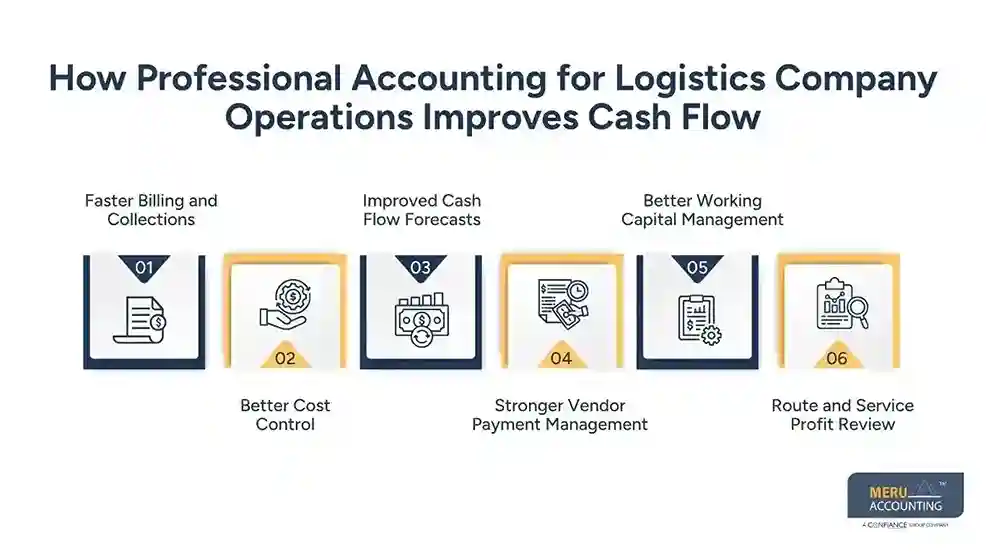
Stronger Vendor Payment Management
Paying vendors too early can reduce available cash. Paying too late may lead to fees and weaker supplier ties.
Professional accounting helps firms plan payments in a smart way while keeping strong vendor ties.
Better Working Capital Management
Working capital shows how well a company can handle short-term bills and debts.
Professional accountants track working capital and suggest ways to improve cash on hand and business strength.
Route and Service Profit Review
Not every route earns the same level of profit.
Detailed reports help firms see:
- Which routes earn the most profit
- Which clients bring the best returns
- Which services add the most value
This insight supports better business choices and stronger profits.
Key Financial Reports Every Logistics Company Should Monitor
Financial reports provide useful insight into company results. Logistics firms should review key reports on a regular basis.
Profit and Loss Report
A profit and loss report shows income, costs, and net profit during a set time frame.
It helps leaders measure overall business results and spot spending trends.
Cash Flow Report
A cash flow report tracks money coming into and leaving the business.
This report helps firms see whether daily work is creating enough cash to support growth and cover costs.
Balance Sheet
A balance sheet shows assets, debts, and owner equity.
It helps owners review financial health and long-term strength.
Accounts Receivable Aging Report
This report highlights overdue invoices and supports stronger collection efforts.
Reducing late payments often improves cash flow.
Cost Per Mile Report
Cost per mile is a key measure for transportation firms.
It tracks operating costs against miles driven and helps managers review route performance.
Fleet Performance Reports
Fleet reports track vehicle use, repair costs, fuel use, and overall fleet results.
These reports help firms make informed choices about fleet planning and replacement.
Benefits of Outsourcing Transportation Accounting Services
Many logistics firms choose to outsource accounting instead of building a full in-house team. Professional transportation accounting services offer many benefits.
Industry Knowledge
Transportation accountants understand the unique financial needs of logistics firms. Their experience helps improve report quality and financial planning.
Less Office Work
Outsourcing lets owners and managers spend more time on operations, service, and growth instead of accounting work.
Lower Costs
Hiring and training an in-house accounting team can be costly. Outsourced accounting support often provides skilled help at a lower cost.
Better Financial Accuracy
Professional accountants use proven systems and modern tools to reduce mistakes and improve record accuracy.
Advanced Reporting Tools
Many accounting firms provide reports and dashboards that help leaders track financial results in real time.
Flexible Growth Support
As logistics firms expand, accounting needs become more complex. Outsourced transportation accounting services can grow with the business and support added vehicles, sites, clients, and transactions.
Meru Accounting's Accounting for Logistics Company
At Meru Accounting, we understand the financial needs of logistics and transportation businesses. We customize our services to meet the standards of accounting for logistics company.
Our specialized transportation accounting services help firms improve cash flow, increase profit, and gain a clearer view of business performance.
Our services include:
- Bookkeeping and financial record keeping
- Accounts payable and accounts receivable support
- Cash flow tracking and forecasting
- Payroll processing and compliance support
- Financial report preparation
- Budget planning
- Cost tracking and profit review
- Tax-ready financial reports
- Cloud-based accounting support
- Custom management reports
Our skilled team works closely with logistics firms to build accounting systems that support growth and efficiency.
Whether you run a trucking business, freight company, delivery service, or logistics group, Meru Accounting provides accounting for logistics company built to fit your needs.
Our Expert Insight
One of the biggest mistakes logistics firms make is focusing only on sales growth while ignoring cash flow. A company may bring in strong revenue but still face financial stress if client payments arrive late or costs are not managed well.
Professional accounting for logistics company operations helps leaders understand the link between sales, costs, and cash flow. Firms that review these areas are usually in a stronger spot to handle market changes and take advantage of growth chances. We often find that firms that track route profit, client payments, fuel costs, and cash flow forecasts tend to perform better than those that rely on limited financial data.
Key Takeaways
- Logistics firms face unique financial issues that need specialized accounting support.
- Professional accounting for logistics company operations help improve cash flow and profit.
- Accurate reports help identify cost-saving chances and business improvements.
- Cash flow forecasting supports stronger planning and financial stability.
- Route profit analysis helps firms focus on their most profitable work.
- Outsourced transportation accounting services provide expertise, efficiency, and flexibility.
FAQs
Accounting helps logistics firms track income, manage costs, monitor cash flow, and measure profit. It also supports informed business choices and long-term growth.
Professional accounting for logistics company improves billing, collections, forecasting, cost control, and working capital management, all of which help strengthen cash flow.
Transportation firms should review profit and loss reports, cash flow reports, balance sheets, accounts receivable reports, and fleet performance reports on a regular basis.
Transportation accounting services are specialized accounting solutions built for logistics and transportation businesses. They include bookkeeping, payroll, reporting, forecasting, and profit analysis.
Many logistics firms benefit from outsourcing because it provides industry knowledge, lowers costs, improves report accuracy, and allows management to focus on growth and daily operations.