


Accounting for manufacturers is essential for production businesses that deal with high volumes of financial and operational data every day. From purchasing raw materials to paying labor and managing factory expenses, manufacturers generate large amounts of cost-related information that must be organized correctly. Without proper systems, this data remains scattered and difficult to use.
When accounting for manufacturers is done the right way, raw numbers turn into clear cost intelligence. This helps manufacturing businesses understand spending patterns, control production costs, and improve financial planning. Instead of relying on estimates, manufacturers can make decisions based on accurate and timely cost information.
What You Will Learn From This Blog
- This blog explains how manufacturers achieve clear visibility into material, labor, and overhead costs across production stages.
- It shows how raw accounting data turns into useful cost intelligence that supports clearer financial understanding.
- You will learn how manufacturing accounting software improves cost tracking accuracy and keeps financial data updated.
- The content explains how cost intelligence supports better decisions on pricing, production planning, and resource allocation.
- It highlights how proper accounting reduces financial risks by preventing errors, losses, and incomplete cost reporting.
Why Cost Intelligence Matters In Manufacturing
Rising Production Expenses
Material prices, labor rates, and utility costs continue to increase. Accounting for manufacturers helps track these expenses accurately over time. This allows manufacturers to respond quickly to cost changes.
Thin Profit Margins
Manufacturing businesses often work with limited profit margins. Even small cost errors can affect profitability. Cost intelligence helps protect margins by highlighting unnecessary expenses.
Complex Production Processes
Multiple stages of production make cost tracking difficult. Each stage adds labor and overhead costs. Structured accounting ensures every cost is recorded properly.
Inventory Management Challenges
Poor cost tracking leads to excess stock or shortages. Both situations affect cash flow and storage costs. Accurate cost data supports better inventory planning.
Need For Accurate Pricing
Incorrect pricing can result in losses or reduced sales. Cost intelligence ensures prices reflect actual production costs. This supports stable revenue and growth.
How Accounting For Manufacturers Organizes Raw Financial Data
Capturing Material Costs
Accounting for manufacturers records raw material purchases, freight charges, and handling costs. It also tracks material wastage during production. This ensures material costs are fully captured.
Tracking Labor Expenses
Labor costs include wages, overtime, and benefits. Accounting systems track labor hours spent on production. This helps calculate labor cost per unit accurately.
Allocating Overhead Costs
Overhead expenses such as rent, power, and repairs are indirect but important. Accounting allocates these costs fairly across production units. This prevents underestimating product costs.
Recording Production Output
Finished goods data is matched with total production costs. This helps measure efficiency and cost per unit. It also supports performance comparison across periods.
Maintaining Clean Financial Records
Well-organized records improve data accuracy. Clean records reduce confusion during audits and reviews. They also help management trust the reported numbers.
Transforming Raw Data Into Actionable Manufacturing Insights
Cost Per Unit Analysis
Accounting for manufacturers calculates cost per unit by combining material, labor, and overhead expenses. This analysis identifies profitable products and supports accurate pricing decisions.
Identifying Cost Leakages
Regular cost reviews reveal unexpected increases caused by waste, inefficiencies, or supplier issues. Early identification helps minimize unnecessary losses.
Budget Comparison
Actual production costs are compared with planned budgets to detect variances. Understanding these differences supports better planning and financial control.
Performance Measurement
Cost intelligence measures machine, department, and overall production performance. Managers can evaluate efficiency and improve operations continuously.
Supporting Strategic Planning
Accurate cost data enables long-term planning for capacity, production expansion, and cost reduction. Decisions become structured and informed.
Forecasting Production Costs
Analyzing historical cost trends allows manufacturers to forecast future expenses more accurately. Forecasting helps in resource allocation and cash flow management.
Evaluating Product Profitability
By combining cost data with sales revenue, manufacturers can determine which products generate the most profit.
Role Of Manufacturing Accounting Software In Cost Analysis
Automated Data Collection
Manufacturing accounting software automatically collects production and financial data daily. This process significantly reduces manual entry and potential human errors. Automation ensures consistent and reliable cost information across all operations.
Real-Time Cost Tracking
Costs are updated as transactions occur. Managers can monitor spending without delays. This allows faster corrective action when needed.
Inventory Cost Accuracy
Manufacturing accounting software ensures accurate inventory valuation. It tracks raw materials, work-in-progress, and finished goods. This improves financial reporting accuracy.
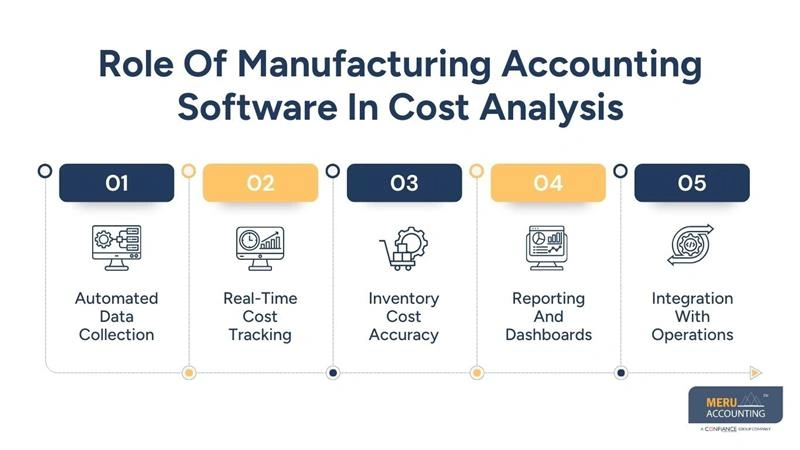
Reporting And Dashboards
Software generates clear cost reports and summaries. These reports are easy to understand for non-finance teams. Visual dashboards support quick analysis for accounting for manufacturers.
Integration With Operations
Manufacturing accounting software connects accounting data with production activities. This alignment ensures cost data reflects actual operations. It improves coordination across departments.
Using Cost Intelligence To Improve Production Efficiency
Reducing Material Waste
Cost reports generated by accounting for manufacturers highlight high wastage areas, helping businesses reduce material waste and overall production costs.
Optimizing Labor Usage
Labor cost analysis supports better workforce planning. Shifts can be adjusted to reduce overtime. This improves labor efficiency.
Improving Machine Utilization
Machine-level cost tracking shows underused assets. Maintenance schedules can be optimized. This reduces downtime and repair expenses.
Better Supplier Negotiations
Clear material cost data from manufacturing accounting software supports supplier discussions. Accounting for manufacturers can negotiate better pricing with stronger bargaining power.
Production Planning Accuracy
Cost intelligence supports realistic production planning. Manufacturers can focus on high-margin products. This improves overall profitability.
Strengthening Financial Control in Manufacturing Operations
Accurate Cost Forecasting
Accounting for manufacturers uses historical data to forecast future costs. Forecasting improves financial planning and ensures stable manufacturing operations.
Strong Internal Controls
Clear cost records help reduce errors and fraud risks. Internal reviews become easier, supporting stronger financial discipline across operations.
Improved Cash Flow Planning
Knowing production costs helps manage cash needs efficiently. Manufacturers can plan payments better, preventing unexpected cash shortages.
Audit Readiness
Well-maintained accounting records simplify audits for finance teams. Auditors can verify costs quickly, saving significant time and effort.
Regulatory Compliance
Accounting for manufacturers ensures compliance with reporting standards effectively. Accurate cost data reduces compliance risks and increases transparency.
Common Challenges Without Proper Cost Accounting
Incomplete Cost Data
Missing expenses lead to incorrect product costing. Profit figures become unreliable. This affects decision making.
Poor Inventory Valuation
Incorrect stock valuation impacts financial statements. It can also affect tax calculations. Proper accounting prevents these issues.
Pricing Errors
Without clear cost intelligence, pricing becomes uncertain. Products may be underpriced or overpriced. Both situations affect revenue.
Delayed Financial Reports
Manual accounting processes slow reporting. Delays reduce the usefulness of data. Decisions may be based on outdated information.
Lack Of Cost Control
Without reliable data, cost control becomes difficult. Managers cannot identify problem areas. This increases financial risks.
How Meru Accounting Supports Manufacturers
Meru Accounting helps manufacturers manage costs and organize financial data efficiently. Our services improve reporting accuracy, strengthen cost control, and support better business decisions.
Industry-Specific Expertise
Meru Accounting understands manufacturing cost structures. Our team knows how production expenses behave. This expertise ensures accurate cost analysis for manufacturing operations.
Structured Cost Accounting
We apply accounting for manufacturers to organize all cost elements. Material, labor, and overhead costs are clearly tracked. This process improves cost visibility and financial decision-making clarity.
Software-Based Solutions
Meru Accounting helps select suitable manufacturing accounting software. Our support ensures the software operates efficiently for accurate tracking.
Customized Reporting
We provide reports tailored to management needs. Reports focus on cost clarity and control. Customized reports support smarter and faster business decision-making processes.
Ongoing Support
Our team offers continuous support and reviews. We help manufacturers maintain accurate records. Ongoing guidance ensures long-term cost control and financial stability.
Key Takeaways
- Clear cost data helps manufacturers protect margins, control spending, and plan profits effectively.
- Accounting for manufacturers turns raw financial data into structured information, reducing confusion.
- Manufacturing accounting software reduces errors, improves tracking reliability, and speeds up reporting.
- Accurate cost intelligence supports pricing, planning, and data-based decisions to reduce financial risks.
- Professional accounting support strengthens cost control, structured processes, and long-term financial health.
- Reliable cost insights enable better inventory management, reducing waste and unnecessary storage costs.
- Using cost intelligence allows manufacturers to optimize production efficiency and improve overall operations.
FAQs
Accounting for manufacturers tracks costs like materials, labor, and overhead in production. It helps businesses understand true costs and make better pricing decisions.
It identifies waste, monitors expenses, and calculates the real cost per product. This ensures manufacturers make more informed and profitable decisions.
It automates cost tracking, provides accurate inventory valuation, and generates easy-to-read reports. This reduces errors and saves time for better decision-making.
Yes, small manufacturers can track material and labor costs and manage budgets. This helps plan production efficiently and maintain profitability.
Cost intelligence turns raw data into actionable insights for manufacturers. It supports expense monitoring, efficiency improvements, and informed decisions on pricing and production.


