




Accounting for manufacturing plays a critical role in helping businesses control costs, improve efficiency, and make better decisions across the supply chain. For manufacturing firms, understanding how accounting impacts every stage of production and distribution is essential for long-term profitability.
By using accounting for manufacturing effectively, companies can track expenses, manage resources, and identify opportunities to reduce supply chain costs without compromising quality.
It also helps businesses plan for demand fluctuations, manage inventory more effectively, and make informed decisions about procurement and production schedules. With accurate accounting data, manufacturers can strengthen supplier relationships and optimize overall operational performance.
What You Will Learn From This Blog
- How accounting for manufacturing firms helps manage production costs.
- Ways accounting insights can improve supplier and vendor management.
- How cost analysis informs decisions across the supply chain.
- The role of budgeting and forecasting in supply chain optimization.
- How Meru Accounting can support manufacturing businesses to achieve these goals.
Understanding Accounting for Manufacturing Firms
Understanding accounting for manufacturing firms begins with recognizing its core purpose: recording, analyzing, and reporting financial transactions related to production. This includes tracking raw materials, labor costs, and manufacturing overheads to determine accurate product costs.
By maintaining precise records, businesses can allocate costs correctly and set effective pricing strategies. Accounting for manufacturing firms also plays a key role in monitoring production expenses and managing inventory. It helps track work-in-progress, finished goods, and raw materials, ensuring optimal stock levels, reducing holding costs, and minimizing waste. Additionally, detailed production cost tracking highlights inefficiencies and areas for improvement, allowing manufacturers to operate more efficiently. Beyond cost control, manufacturing accounting ensures regulatory compliance and transparent financial reporting.
Proper records help businesses meet legal requirements, avoid penalties, and produce reports on production costs, gross profit, and supply chain expenses. These insights support strategic decision-making and help manufacturing firms optimize their overall operations.
How Accounting for Manufacturing Impacts Supply Chain Costs
Identifying Cost Drivers
Accounting for manufacturing allows firms to identify where money is spent across the supply chain. This helps target areas for cost reduction.
Analyzing Supplier Costs
By recording and analyzing payments to suppliers, accounting for manufacturing firms helps negotiate better pricing and terms.
Monitoring Production Efficiency
Detailed cost tracking reveals inefficiencies in production processes. Companies can adjust operations to reduce supply chain expenses.
Reducing Waste
Manufacturing accounting highlights areas of material wastage. Reducing waste directly lowers supply chain costs.
Understanding Overhead Expenses
Indirect costs like utilities, storage, and maintenance are tracked in accounting for manufacturing. Managing these reduces overall supply chain expenditure.
Decision Support for Management
Accurate accounting data allows managers to make informed decisions that optimize resource allocation across the supply chain.
The Role of Cost Analysis in Manufacturing Accounting
Direct Material Costs
Cost analysis breaks down the cost of raw materials. Accounting for manufacturing firms uses this to plan purchasing strategies.
Labor Costs
Tracking wages and benefits helps understand the total cost of production. Efficient labor allocation reduces supply chain spending.
Overhead Allocation
Cost analysis assigns overheads to products accurately. This ensures pricing reflects true production costs.
Cost Variance Analysis
Comparing planned costs to actual expenses highlights inefficiencies. Manufacturing accounting firms use this to adjust processes.
Profitability Analysis
Identifying profitable and unprofitable products helps streamline production. This ensures supply chain resources are focused on high-margin items.
Continuous Improvement
Regular cost analysis allows manufacturing firms to refine operations, reducing supply chain costs over time.
Activity-Based Costing
This method allocates costs based on actual activities and resource usage. Accounting for manufacturing firms uses it to identify high-cost processes.
Process Efficiency Analysis
Evaluating each production step helps pinpoint bottlenecks and waste. Improving efficiency lowers overall supply chain costs.
How Accounting for Manufacturing Firms Supports Vendor and Supplier Management
Evaluating Supplier Performance
Accounting for manufacturing tracks supplier pricing, delivery times, and quality. This ensures manufacturers choose reliable vendors.
Negotiating Better Terms
With clear accounting data, firms can negotiate discounts, bulk rates, and favorable payment terms.
Tracking Payments and Credit Terms
Proper manufacturing accounting ensures timely payments and avoids penalties or interest charges.
Supplier Cost Comparison
Accounting records help compare multiple suppliers to select cost-effective options.
Risk Management
Understanding supplier-related expenses helps identify financial risks in the supply chain.
Long-Term Supplier Relationships
Accurate accounting supports building trust and long-term relationships with suppliers, securing a consistent supply at optimized costs.
Contract Compliance Monitoring
Accounting for manufacturing firms helps ensure suppliers meet agreed terms. This prevents unexpected costs and disputes.
Supplier Performance Trends
Analyzing historical supplier data highlights patterns in quality and delivery. This helps plan future procurement more effectively.
Using Accounting Data to Optimize Logistics and Distribution Costs
Freight and Transportation Analysis
Manufacturing accounting tracks transportation costs for raw materials and finished goods. This helps identify cost-saving routes.
Warehouse Cost Management
Detailed accounting data highlights storage costs, leading to optimized warehouse space and inventory rotation.
Order Fulfillment Costs
Tracking the cost per order allows manufacturing firms to streamline distribution and reduce expenses.
Delivery Schedule Optimization
Accounting data helps schedule deliveries efficiently, reducing fuel, labor, and storage costs.
Returns and Damaged Goods Analysis
Recording product returns or damages identifies weaknesses in logistics. Accounting for manufacturing firms uses this to improve handling processes.
Inventory Turnover Improvement
Accounting insights allow firms to manage stock levels, reducing excess inventory and associated storage costs.
Route and Carrier Performance Analysis
Manufacturing accounting tracks different carriers and delivery routes. This identifies the most cost-efficient options.
Packaging and Handling Cost Review
Analyzing packaging and handling expenses helps reduce damage and lowers overall logistics costs.
Budgeting and Forecasting for Effective Supply Chain Planning
Production Budgeting
Accounting for manufacturing helps set realistic production budgets, aligning resources with expected demand.
Cash Flow Planning
Tracking inflows and outflows ensures manufacturers can pay suppliers and cover operational costs on time.
Forecasting Material Requirements
Budgeting data allows firms to forecast raw material needs accurately, preventing overstocking or shortages.
Labor Planning
Forecasting labor needs ensures optimal staffing without overpaying for idle hours.
Expense Forecasting
Manufacturing accounting firms use historical data to predict future supply chain costs.
Scenario Planning
Budgeting allows businesses to plan for potential disruptions, reducing financial risks in the supply chain.
Capacity Planning
Accounting for manufacturing helps predict production capacity needs. This ensures resources meet demand without unnecessary costs.
Inventory Budgeting
Forecasting inventory expenses allows firms to balance stock levels. Proper budgeting prevents excess holding costs and shortages.
Top Metrics from Accounting for Manufacturing Firms to Monitor Supply Chain Performance
Inventory Turnover Ratio
This metric measures how quickly inventory is used or sold. Manufacturing accounting firms track it to reduce excess stock and holding costs.
Cost of Goods Sold (COGS)
COGS shows total production costs for products sold. Monitoring it helps identify inefficiencies in materials, labor, and overhead.
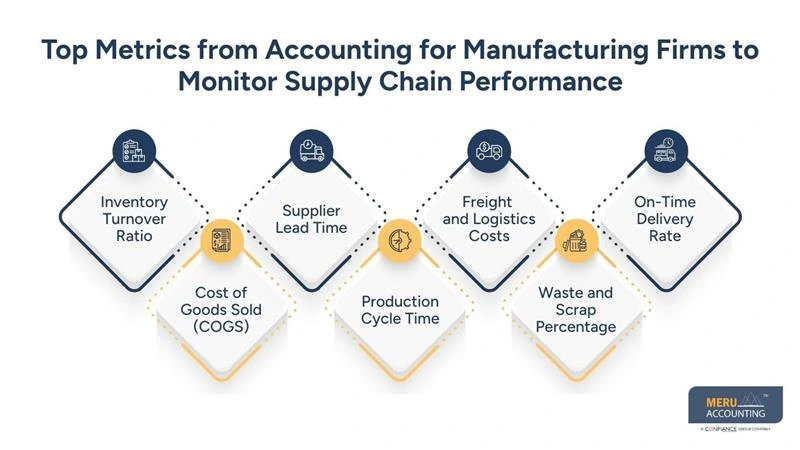
Supplier Lead Time
Tracking how long suppliers take to deliver materials ensures smoother production schedules and avoids delays in the supply chain.
Production Cycle Time
This metric measures the time to produce goods from start to finish. Manufacturing accounting helps reduce cycle times and improve efficiency.
Freight and Logistics Costs
Accounting for manufacturing firms monitors transportation and delivery costs to find opportunities for savings and optimize routes.
Waste and Scrap Percentage
This tracks materials lost during production. Reducing waste lowers costs and improves overall supply chain performance.
On-Time Delivery Rate
Measures the percentage of orders delivered on time. Accounting for manufacturing helps maintain reliability and customer satisfaction.
How Meru Accounting Supports Manufacturing Firms
Meru Accounting provides specialized support to help manufacturing firms manage costs and optimize their supply chain. With expert accounting solutions, businesses can gain clear insights, improve efficiency, and make smarter financial decisions.
Expertise in Manufacturing Accounting
Meru Accounting specializes in accounting for manufacturing firms, providing accurate cost tracking and reporting.
Custom Solutions for Supply Chain Optimization
We tailor accounting processes to match your production and distribution needs, helping reduce expenses.
Advanced Cost Analysis
Our team provides detailed cost breakdowns to identify savings opportunities in the supply chain.
Vendor and Supplier Management Support
Meru Accounting helps track supplier payments, terms, and performance for efficient vendor management.
Logistics and Distribution Insights
We analyze transportation and warehouse costs, enabling optimized logistics decisions.
Budgeting and Forecasting Assistance
Our experts create budgets and forecasts to support effective supply chain planning and cash flow management.
Key Takeaways
- Accounting for manufacturing is essential to control supply chain costs.
- Cost analysis helps identify areas for efficiency improvements.
- Accurate accounting data supports vendor negotiations and logistics planning.
- Budgeting and forecasting ensure smooth operations and resource allocation.
- Partnering with experts like Meru Accounting simplifies complex manufacturing accounting tasks.
FAQs
Accurate tracking of production, inventory, and vendor expenses identifies savings opportunities. This allows manufacturing firms to optimize spending across the supply chain.
Enhanced cost control, budgeting accuracy, and supplier management improve overall efficiency. Reliable financial insights support informed decision-making for production and distribution.
Detailed cost reports highlight areas of material or labor waste. Firms can streamline processes and reduce unnecessary supply chain expenses.
Tracking transportation, warehousing, and delivery costs helps reduce overhead. Manufacturing firms can optimize routes, inventory levels, and storage strategies.
Forecasting material, labor, and operational requirements ensures smooth production cycles. Effective budgeting minimizes shortages and prevents overspending on resources.


