
Running a healthcare practice is not only about patient care. It also involves handling income, costs, payroll, compliance, and taxes. It requires steady control and clear records every day. Hence, for the long-term financial health, accounting for medical professionals is essential.
Medical practices deal with complex billing, insurance claims, and strict rules. These systems often change and need close tracking. Without a clear system, it becomes easy to lose track of money coming in and going out. Professional accounting helps doctors, clinics, and healthcare teams stay organized and financially stable over time.
In this blog, we will explore how accounting for medical professionals improves financial reporting and tax planning, along with key benefits and common challenges in healthcare practices. We will also look at how better systems can support long-term growth.
What You Will Learn From This Blog
By reading this blog, you will learn:
- Why medical accounting is different from general accounting and why it matters
- How financial reports improve with proper systems and steady tracking
- How tax planning becomes easier and more effective for clinics and doctors
- Common money problems in medical practices and why they happen
- How to choose the right support for your clinic with more confidence
This blog will help healthcare providers make better money decisions using the right accounting approach. It also helps build more control over daily financial work.
Why Accounting for Medical Professionals Is Different from General Accounting
Medical businesses are not like normal businesses. They have special income types, rules, and billing systems. These systems are often more complex and need close attention every day.
Here are the key differences:
- Income comes from patients, insurance, and government programs, often at different times
- Payments are often delayed due to claim processing and approval steps
- Rules like healthcare compliance must be followed and updated often
- High costs for staff, tools, rent, and medical facilities must be managed carefully
Because of this, accounting for medical professionals must be more detailed than general accounting. It also needs strong tracking and regular updates.
It needs clear tracking of billing, insurance payments, and costs. Reports must stay accurate even when cash flow changes. Even small mistakes can affect cash flow and tax reports and create long-term issues if not fixed early.
Role of Accounting for Medical Professionals in Financial Reporting
Financial reporting is very important for any medical practice. It shows how money is earned, spent, and saved over time. It also helps owners understand the true financial health of their practice.
With proper accounting systems, medical practices get:
Clear Income Tracking
Accounting helps track money from all sources like patient visits, treatments, and insurance payments. It also shows which services bring the most value. This helps clinics plan better for growth.
Proper Expense Control
Medical practices have many costs such as rent, salaries, lab fees, and supplies. Accounting ensures all costs are recorded correctly. It also helps identify areas where spending can be reduced without affecting care quality.
Better Cash Flow View
Cash flow can be uneven due to slow insurance payments. Accounting helps track money in and out clearly. This makes it easier to plan for future expenses and avoid shortfalls.
Accurate Financial Reports
With strong accounting for medical professionals, clinics can prepare balance sheets, income reports, and cash flow reports with accuracy. These reports also help with audits and financial reviews.
Better Business Insights
Doctors can see which services earn more and which costs need control. This helps improve profit over time. It also supports better planning for staffing and expansion.
Tax Planning Benefits of Accounting for Medical Professionals
Tax planning is very important for healthcare practices. Without proper planning, they may pay more tax than needed. Good planning also reduces last-minute stress during tax season.
Good accounting helps tax planning in many ways:
Better Deduction Tracking
Medical practices can claim costs like equipment, rent, salaries, and supplies. Accounting makes sure nothing is missed. It also keeps records ready for review if needed.
Clean Financial Records
Clear records make tax filing easier and reduce stress during tax season. It also helps avoid errors that can lead to penalties or delays.
Year-Round Tax Planning
With proper accounting, tax planning is done all year, not just at year-end. This helps manage cash better and avoid sudden financial pressure.
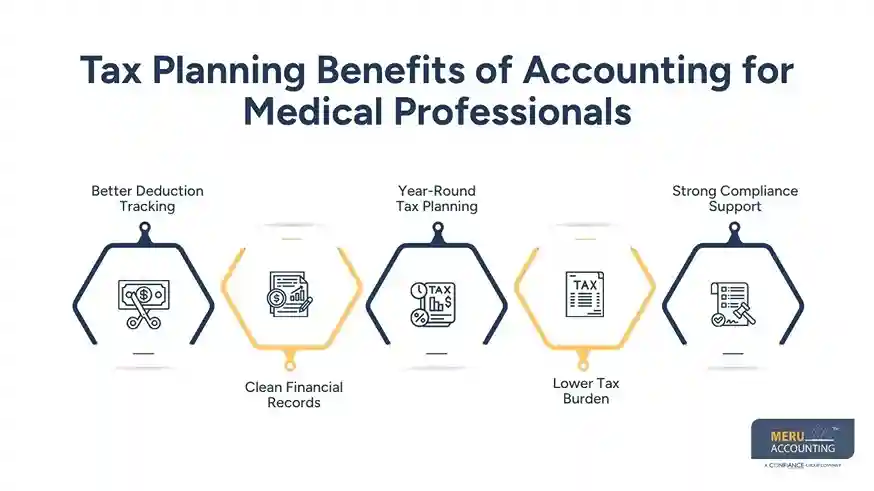
Lower Tax Burden
By tracking income and costs well, accountants can help reduce taxes in legal ways. They also help plan the timing of expenses for better tax results.
Strong Compliance Support
Healthcare tax rules change often. Medical accounting services help ensure filings are correct and on time. They also help reduce risk during audits or reviews.
Common Financial Challenges Faced by Medical Professionals
Even well-run medical practices face money problems. These issues often come from time pressure and complex systems. They can build up slowly if not reviewed on a regular basis.
Some common issues include:
Slow Insurance Payments
Insurance claims can take time, which affects cash flow. This delay can make it hard to cover daily costs on time. It can also disrupt monthly budgeting and planning.
Complex Billing Work
Different treatments and insurance rules make billing hard and time-heavy. It also increases the chance of errors if not managed properly. This often leads to delays in payment posting and follow-ups.
High Running Costs
Staff pay, rent, equipment, and supplies create constant pressure. These costs can grow quickly if not tracked closely. They may also reduce profit margins if spending is not reviewed often.
Low Financial Visibility
Many doctors focus on patients and not enough on financial tracking. This can lead to missed insights and poor planning. It also makes it harder to understand true practice performance.
Tax and Rule Confusion
Changing tax rules and healthcare laws can create stress without expert help. It can also lead to mistakes in filings. This increases the risk of penalties and last-minute corrections.
Proper accounting for medical professionals helps reduce these problems by bringing structure and clarity. It also improves daily financial control. It makes it easier to see issues early and act quickly.
Choosing the Right Medical Accounting Services for Your Practice
Picking the right financial partner is very important for smooth operations. The right support can save time and reduce stress. It can also improve long-term financial stability.
Here are key points to look for:
Industry Knowledge
Choose providers who understand medical billing and healthcare finance. This helps reduce errors and improves accuracy. It also ensures better handling of complex insurance systems.
Modern Tools
Good accounting services use software to track billing, reports, and taxes. This also improves speed and reduces manual work. It helps keep financial data updated in real time.
Custom Support
Every clinic is different, so services should fit your needs. Flexible support helps handle growth and changes. It also allows better alignment with your practice size and goals.
Compliance Awareness
Healthcare rules change often. Support must stay updated to avoid risks and penalties. This helps ensure all filings and reports stay fully compliant.
Simple Reporting
Reports should be clear and easy to understand. This helps doctors make faster and better decisions. It also improves confidence in financial planning.
Reliable medical accounting services help reduce stress and improve financial control. They also support long-term planning. They give medical professionals more time to focus on patient care.
Meru Accounting's Medical Accounting Services
At Meru Accounting, we provide focused support for healthcare professionals. Our goal is to make financial work simple and clear.
Our accounting for medical professionals includes:
- Full bookkeeping for clinics and hospitals with regular updates
- Tracking income and expenses with clear breakdowns
- Monitoring insurance claims for better payment control
- Payroll support for medical staff and teams
- Tax planning and filing help with accurate records
- Financial reports and analysis for better decisions
We focus on accuracy, clarity, and compliance so medical professionals can focus on patient care instead of money stress. We also help reduce errors and improve financial confidence.
Our system helps ensure every financial detail is recorded in the right way and used for better decisions. It also supports long-term planning and stability. With our support, healthcare providers gain more control over their practice finances.
Key Takeaways
- Accounting is key for managing medical practice finances in a clear way
- It improves financial reporting accuracy and supports better decisions
- It supports better tax planning and helps reduce tax costs legally
- Medical practices face unique money challenges that need expert handling
- Professional accounting support improves efficiency, control, and growth
FAQs
It is a special type of accounting that manages income, costs, billing, and taxes for healthcare providers like doctors and clinics. It also helps improve financial control and reporting.
It helps keep financial records clear, improves cash flow, and supports tax compliance. It also helps reduce errors and improve planning.
It tracks income and expenses properly so medical professionals can claim valid deductions and lower taxes. It also helps plan taxes throughout the year.
These are services that handle bookkeeping, payroll, billing, and tax support for healthcare businesses. They also improve accuracy and compliance.
Yes, small clinics benefit by improving money control, reducing errors, and saving time. It also helps them grow in a stable way.