



Accounting for real estate business is one of the most important foundations for long-term success in property ownership and investment. Whether you are a landlord managing rental income, a developer handling construction costs, or an investor tracking returns, accurate accounting helps you stay in control of your money.
In real estate, financial transactions are large, ongoing, and closely tied to tax and legal rules. Without proper accounting for real estate business, it becomes difficult to measure profit, manage cash flow, or meet compliance needs. This is also where real estate fund accounting becomes essential for investors and groups pooling money into property projects.
This blog explains accounting for property business in a clear and practical way for landlords, developers, and investors. It also explains how property fund accounting supports investment structures and reporting.
What You Will Learn From This Blog
In this blog, you will understand:
- Why accounting for real estate business is important for all property stakeholders
- How accounting needs differ for landlords, developers, and investors
- The role of real estate fund accounting in modern property investments
- How accounting supports tax planning, cash flow, and compliance
- When outsourcing accounting for a property business makes sense
Why Accounting for Real Estate Business Matters for Landlords, Developers, and Investors
For Landlords
Accounting for real estate business helps landlords maintain clear records of rental income and property-related expenses. It ensures rent collections are tracked on time, operating costs are recorded correctly, and profits are easy to understand.
Proper accounting for property business also supports better planning for repairs, vacancies, and property upgrades, helping landlords maintain stable income over time.
For Developers
For developers, accounting for real estate business is essential to manage project costs and budgets from start to finish. It tracks land purchases, construction expenses, labor costs, and overheads, allowing developers to measure project performance accurately.
Strong accounting for property business helps avoid cost overruns and ensures financial control throughout the development cycle.
For Investors
Investors depend on accounting for real estate business to evaluate returns, assess risks, and make informed investment decisions. Clear financial records show how each property or project is performing and whether it meets return expectations.
In group investments, real estate fund accounting ensures investor contributions, distributions, and profits are tracked and reported clearly, building trust and transparency.
Key Differences in Accounting for Real Estate Business Across Property Types
Accounting for real estate business varies depending on the type of property and how it is used. Each property category has its own income patterns, expenses, and reporting needs. Below is a clear breakdown using points and subheadings.
1. Residential Rental Properties
Accounting for real estate business in residential rentals mainly focuses on recurring income and day-to-day expenses.
Key accounting areas include:
- Rent collection and tracking
- Maintenance and repair costs
- Property management fees
- Utility and service expenses
- Security deposits and tenant charges
Accurate records help landlords understand monthly cash flow and overall profitability.
2. Commercial Properties
Commercial properties require more detailed accounting for property business due to complex lease structures.
Key accounting areas include:
- Lease income tracking
- Common area maintenance charges
- Long-term lease agreements
- Operating expense recovery
- Tenant improvement costs
These properties often involve higher values and longer commitments, making precise accounting essential.
3. Mixed-Use Properties
Mixed-use properties combine residential and commercial elements, which increases accounting complexity.
Key accounting areas include:
- Separate tracking of residential and commercial income
- Allocation of shared expenses
- Property-level financial reporting
- Clear cost distribution between units
Accounting for real estate business must be well-organized to avoid confusion and misreporting.
4. Development Projects
Development projects follow a very different accounting approach compared to rental properties.
Key accounting areas include:
- Land acquisition costs
- Construction and labor expenses
- Permit and professional fees
- Work-in-progress tracking
- Capitalization of costs until project completion
Real estate fund accounting is often used when development projects involve multiple investors.
5. Investment-Based Property Structures
When properties are owned through partnerships or funds, accounting becomes more structured.
Key accounting areas include:
- Investor capital contributions
- Profit and loss allocation
- Distribution tracking
- Investor-level reporting
Understanding these differences helps ensure accurate financial records and better planning.
Understanding Real Estate Fund Accounting and Its Role in Investment Structures
Real estate fund accounting is used when funds are pooled from multiple investors to invest in properties. This is common in syndications, private equity real estate funds, and joint ventures. It helps manage large-scale projects where individual ownership is shared among several stakeholders.
Property fund accounting focuses on tracking capital contributions, distributions, profits, and investor ownership percentages. It also records management fees, preferred returns, and carried interest where applicable. This helps the fund manager keep every financial transaction clear and correctly allocated.
It separates fund-level records from property-level accounting for real estate business. This separation ensures that each property’s performance can be evaluated independently while keeping overall fund performance visible. It also helps in comparing returns across different assets and investment strategies.
This type of accounting ensures fairness, transparency, and compliance with agreements. It supports accurate calculations for investor payouts and protects the fund from disputes. It also strengthens investor trust by providing clear financial information and timely reporting, making it easier for investors to review performance and make informed decisions.
How Real Estate Fund Accounting Supports Investor Reporting and Compliance
Real estate fund accounting is crucial for keeping investors informed and ensuring the fund follows legal and tax rules. It helps manage complex investments and provides clear financial visibility to everyone involved.
1. Provides Clear Investor Reporting
- Investors receive accurate updates on how their money is being used and how the fund is performing.
- Reports include important details such as capital contributions, distributions, and profits.
- Investors can easily see how their investment is growing and what returns they are earning.
2. Tracks Capital Balances Accurately
- Real estate fund accounting keeps a clear record of each investor’s capital balance.
- This includes money invested, withdrawals, and reinvested earnings.
- Investors can see their exact ownership share in the fund at any time.
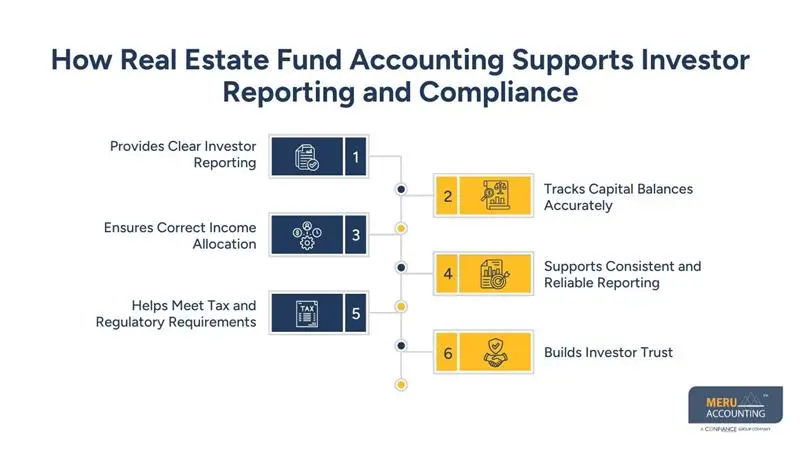
3. Ensures Correct Income Allocation
- Fund accounting allocates income fairly based on each investor’s share.
- It separates revenue, expenses, and profits for proper distribution.
- This avoids confusion and ensures every investor receives the correct amount.
4. Supports Consistent and Reliable Reporting
- Reports are generated using standard accounting rules and consistent methods.
- This reduces errors and makes the reporting process more reliable.
- Investors receive consistent financial statements each reporting period.
5. Helps Meet Tax and Regulatory Requirements
- Property fund accounting ensures income, expenses, and gains are recorded accurately.
- It supports the timely preparation of tax reports and filings.
- This helps the fund avoid penalties and maintain compliance with laws.
6. Builds Investor Trust
- Transparent reporting and accurate accounting strengthen investor confidence.
- Investors are more likely to invest again when they receive clear and consistent updates.
Real estate fund accounting creates trust by showing that funds are managed professionally.
Accounting for Real Estate Business in Development Projects
Accounting for real estate business in development projects is more complex than rental properties because costs are incurred before any income is received. Proper accounting helps track all expenses and ensures the project stays on budget.
Key Points in Development Accounting
1. Costs Are Recorded Early
- Development projects require large expenses before the property starts generating income.
- Costs such as land purchase, permits, and construction happen early in the project.
2. Tracking Development Expenses
Accounting for property business in development projects includes tracking:
- Land purchase costs
- Permits and approvals
- Construction materials
- Labor and contractor payments
- Overhead expenses (site office, utilities, insurance)
3. Capitalizing Costs
- Many development costs are recorded as assets instead of expenses.
- These costs are capitalized and shown as project value until completion.
- Once the project is finished, costs are moved to the property value.
4. Property Fund Accounting for Multiple Investors
- Real estate fund accounting is often used when a development project is funded by multiple investors.
- It ensures costs and profits are shared according to the investment agreement.
- This makes financial reporting accurate and transparent for all investors.
Accounting for Real Estate Business for Rental and Leasing Operations
Accounting for real estate business in rental operations is focused on managing steady income and regular expenses. It helps landlords stay organized and ensures clear financial performance.
Key Areas in Rental and Leasing Accounting
1. Income Tracking
- The main focus is on tracking rental income.
- This includes rent payments, late fees, and other charges.
2. Managing Ongoing Expenses
Accounting for real estate business in rental operations includes tracking:
- Security deposits
- Repairs and maintenance
- Utilities
- Property management fees
- Insurance and taxes
3. Accurate Financial Records
- Proper accounting helps landlords understand net income after expenses.
- It also helps plan for future repairs and property improvements.
4. Real Estate Fund Accounting for Investment Groups
- Real estate fund accounting is used when rental properties are owned by a group of investors.
- It ensures that income and expenses are allocated correctly among investors.
- This improves transparency and trust among partners.
Cash Flow Management Strategies in Accounting for Real Estate Business
Cash flow is the lifeline of any real estate operation. Effective cash flow management ensures that the business has enough funds to cover expenses, investments, and growth.
1. Why Cash Flow Management Matters in Real Estate
- Cash flow indicates the real financial health of the business.
- It helps avoid shortfalls that can affect operations or investments.
- Proper management supports long-term growth and stability.
2. Key Cash Flow Tracking Methods
Accounting for a real estate business helps track when money comes in and goes out. This includes:
- Tracking rent collections
- Monitoring tenant payments and due dates
- Identifying late or missing payments quickly
- Monitoring tenant payments and due dates
- Tracking expenses
- Regular maintenance and repair costs
- Utilities, insurance, and property taxes
- Loan and interest payments
- Regular maintenance and repair costs
3. Planning for Repairs and Maintenance
Good cash flow management includes planning for repairs and maintenance. This ensures unexpected costs don’t disrupt operations.
- Create a maintenance budget for each property
- Schedule regular inspections to prevent major repairs
- Plan for seasonal expenses (e.g., heating, storm repairs)
4. Setting Aside Cash Reserves
Cash reserves act as a safety net during emergencies or vacancies.
- Allocate a percentage of rental income to reserves
- Maintain separate reserve accounts for each property
- Use reserves for:
- Unexpected repairs
- Vacancy periods
- Major capital expenditures
- Unexpected repairs
5. Using Accounting Reports to Identify Patterns
Accounting reports help identify cash flow patterns and potential shortfalls.
- Monthly cash flow statements
- Rent receivable reports
- Expense trend analysis
- Budget vs. actual reports
These reports help in making proactive decisions and avoiding surprises.
6. Property Fund Accounting for Better Visibility
Property fund accounting adds visibility at the fund level, showing available cash for distributions or reinvestment.
- Tracks cash inflows and outflows at the fund level
- Helps determine funds available for:
- Investor distributions
- Reinvestment opportunities
- New acquisitions
- Investor distributions
Tax Planning and Compliance in Accounting for Real Estate Business
Tax planning is a major reason why accounting for real estate business matters. Real estate has unique tax rules related to depreciation, deductions, and capital gains.
Accurate accounting ensures expenses are recorded correctly and tax benefits are not missed. It also helps avoid penalties due to incorrect filings.
Real estate fund accounting supports tax reporting for investors by providing clear income and expense allocations needed for individual tax returns.
Accurate accounting helps maximize deductions and reduce tax liability. When expenses like repairs, property taxes, and mortgage interest are tracked correctly, real estate businesses can claim every eligible deduction. This improves cash flow and strengthens profitability.
Clean financial records and timely tax filings build trust with investors and lenders. Proper documentation reduces the risk of audits, penalties, and legal issues while providing clear financial transparency. This makes compliance easier and supports smooth investor reporting.
When to Use Real Estate Fund Accounting for Syndications and Partnerships
- Property fund accounting becomes essential when properties are owned through syndications or partnerships.
- When multiple investors contribute capital and share returns, fund accounting ensures transparency and accuracy.
- Ownership percentages, distributions, and investor balances are tracked clearly and correctly.
- Starting fund accounting early helps avoid disputes and builds trust among partners.
- Investor reporting and tax allocation for each partner become easier and more reliable.
Benefits of Outsourcing Accounting for Real Estate Business
- Outsourcing accounting for real estate business offers access to experienced professionals who understand property accounting rules.
- Accurate bookkeeping reduces errors, saves time, and ensures compliance with tax laws.
- Outsourced accounting teams help improve financial transparency and support better decision-making.
- Real estate fund accounting expertise makes outsourced teams ideal for investors and funds managing complex structures.
- Outsourcing also reduces overhead costs and provides scalable support as your portfolio grows.
Best Practices to Streamline Accounting for Real Estate Business
To improve accounting for property business, follow these best practices:
- Keep separate accounts for each property or project
- Record transactions regularly
- Use clear expense categories
- Review financial reports monthly
- Apply property fund accounting methods where needed
These steps improve accuracy and support better financial decisions.
How Meru Accounting Supports Accounting for Real Estate Business
Meru Accounting offers specialized accounting services for real estate businesses, including landlords, developers, and investors. Our expert team handles accurate bookkeeping, reporting, and compliance so you can focus on growing your portfolio.
1. Specialized Real Estate Accounting Expertise
- Meru Accounting focuses specifically on accounting for real estate businesses.
- Our team understands the unique needs of landlords, developers, and investors.
2. Customized Bookkeeping for Real Estate Operations
- We manage day-to-day bookkeeping tailored to property-based businesses.
- Accurate tracking of rent, expenses, maintenance, and property-related transactions.
3. Comprehensive Financial Reporting
- Detailed financial statements and performance reports for each property.
- Helps in evaluating profitability, cash flow, and investment performance.
4. Tax Support and Compliance
- Support for tax planning, filings, and compliance with real estate tax rules.
- Helps maximize deductions, reduce tax liability, and avoid penalties.
5. Real Estate Fund Accounting for Investors
- Expert real estate fund accounting for syndications, partnerships, and funds.
- Accurate tracking of investor capital, ownership percentages, and distributions.
6. Clear Visibility and Peace of Mind
- Reliable reporting and transparent financial records for better decision-making.
- Peace of mind knowing your accounting is handled by experienced real estate professionals.
Key Takeaways
- Accounting for real estate business is essential for financial clarity and control
- Different property types require different accounting approaches
- Real estate fund accounting supports investor reporting and compliance
- Strong accounting improves cash flow and tax planning
- Outsourcing accounting for the property business saves time and reduces risk
FAQs
It is the process of recording, managing, and reporting financial transactions related to property ownership and investment.
Investors, syndications, and partnerships with multiple contributors need property fund accounting.
Yes, landlords focus on rent and expenses, while developers track project costs and work-in-progress.
It helps manage cash flow, plan taxes, and measure true profitability.
Yes, outsourcing provides expert support and improves accuracy and compliance.


