Fuel price changes, vehicle repairs, and daily running costs make financial control difficult for transport operators. Many companies still depend on manual records, which often leads to missed entries and unclear expense tracking. This is where accounting for transportation business plays a clear role in bringing structure to cost records and improving decision clarity.
In modern transport operations, every litre of fuel and every repair bill affects profit margins. Without proper systems, it becomes hard to track where money is going. This is why structured financial management is now seen as a core part of financial control in logistics and fleet-based companies.
Outsourced professionals bring structured methods, digital records, and timely reports that reduce confusion in daily expense handling. As a result, financial tracking becomes more consistent and useful for long-term planning.
What You Will Learn From This Blog
- How fuel cost tracking becomes more accurate with structured financial systems
- Ways maintenance expenses are managed with proper records
- Common problems transport firms face without outsourcing
- How outsourced services reduce financial gaps in operations
- Practical methods to control fuel and repair spending in fleets
- Role of experts in improving transport accounting quality
Importance Of Accounting For Transportation Business
Clear Cost Visibility
Accounting for transportation business helps owners understand where money is spent across fuel, repair, tolls, and driver payments. Clear visibility allows better financial planning and reduces hidden losses.
Fuel Expense Structure
Fuel is one of the highest costs in transport operations. With structured financial systems, companies can separate fuel usage per vehicle and per route for better control.
Maintenance Planning
Repairs and servicing costs can be tracked over time. This helps in identifying vehicles that need frequent maintenance and supports better decision-making.
Cash Flow Stability
Proper financial records reduce sudden cash flow pressure. Businesses using transport accounting systems are able to predict monthly expenses more accurately.
Compliance Readiness
Accurate records support tax filing and audit readiness. This reduces the risk of errors during inspections or financial reviews.
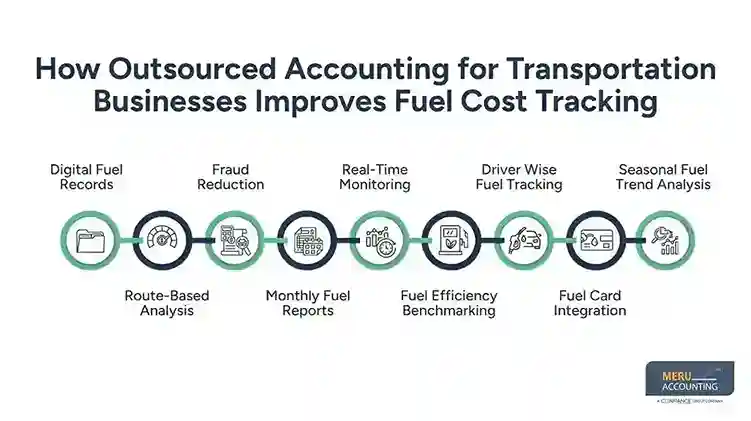
How Outsourced Accounting for Transportation Businesses Improves Fuel Cost Tracking
Digital Fuel Records
Outsourced teams maintain digital fuel logs instead of manual entries. Missing data is reduced significantly, while accuracy in accounting for transportation business improves across all vehicle records.
Route-Based Analysis
Fuel usage is linked with distance and routes. High-cost travel paths become easier to identify, improving efficiency in transport accounting systems and supporting better route planning decisions.
Fraud Reduction
Duplicate fuel claims and fake entries become easier to detect through structured reviews. Outsourced professionals apply verification checks that protect businesses from financial leakage.
Monthly Fuel Reports
Regular reporting enables owners to compare fuel usage month by month. Better control over financial operations develops through consistent review of consumption trends.
Real-Time Monitoring
Modern systems allow near real-time tracking of fuel usage. Delays in identifying unusual spending patterns have been significantly reduced, supporting faster corrective actions in financial monitoring.
Fuel Efficiency Benchmarking
Outsourced teams compare fuel usage across similar vehicles. Vehicles consuming more fuel than expected become easier to identify, allowing corrective actions within accounting for transportation business.
Driver Wise Fuel Tracking
Fuel consumption tracking across individual drivers reveals driving behavior patterns. Higher fuel usage linked to specific drivers can be addressed through training and monitoring in transport accounting systems.
Fuel Card Integration
Digital fuel cards connect directly with accounting systems. Manual entry errors are reduced, while every transaction is entered into structured records within financial systems.
Seasonal Fuel Trend Analysis
Fuel consumption patterns change across seasons and weather conditions. Better forecasting of fuel budgets becomes possible through structured analysis in financial planning systems.
Managing Maintenance Expenses Through Professional Transport Accounting
Service History Tracking
Each vehicle maintains a complete record of repairs, servicing dates, and maintenance actions. Better planning becomes possible through structured transport accounting through structured historical data for every asset.
Cost Per Vehicle Analysis
Expense tracking at the vehicle level helps identify units with higher maintenance needs. Unnecessary spending is reduced when cost patterns become visible through accounting for transportation business systems.
Spare Parts Tracking
Accurate records of spare parts usage reduce duplication and over-ordering. Operational efficiency improves as financial systems ensure proper inventory control and usage monitoring.
Scheduled Maintenance Planning
Planned servicing schedules reduce breakdown risks and limit high emergency repair costs. Regular maintenance cycles support smoother fleet performance and financial stability.
Vendor Cost Comparison
Service providers can be evaluated based on pricing, turnaround time, and quality of work. Strong vendor comparison improves financial control within financial operations.
Key Challenges In Transportation Expense Management Without Outsourcing
Missing Expense Records
Manual entry often leads to lost or incomplete data. Transport accounting accuracy weakens when supporting documents and daily entries are not recorded on time.
Fuel Bill Errors
Incorrect or duplicate fuel bills create confusion in financial reports. Discrepancies in records increase reconciliation effort and reduce clarity in accounting for transportation business.
Delayed Reporting
Without structured systems, reports are often prepared late, affecting decision speed in accounting for transportation business. Late insights reduce the ability to control rising operational costs.
Poor Cost Tracking
Expenses are not linked to specific vehicles or trips, making analysis difficult. Lack of segmentation reduces visibility into actual cost drivers within financial tracking systems.
Lack Of Financial Control
Without professional systems, companies struggle to identify cost leakages. Weak oversight increases the risk of unnoticed financial losses across operations.
Benefits of Outsourced Accounting for Transportation Businesses in Cost Control
Better Expense Organization
All costs are categorized clearly, making transport accounting more structured and useful. Clear classification of fuel, repair, and operational costs improves financial visibility across the fleet.
Reduced Manual Work
Outsourcing reduces the need for in-house data entry, lowering errors in accounting for transportation business. Less manual handling also speeds up financial processing and record updates.
Strong Cost Control
Clear reports highlight areas where spending can be reduced. Cost patterns become easier to identify, allowing better control over unnecessary operational expenses.
Improved Financial Planning
Monthly and yearly reports help in budgeting future fuel and repair costs. Accurate forecasting supports stable cash flow planning for transport operations.
Higher Accuracy in Reports
Professional teams ensure that financial statements are more reliable and consistent. Strong validation checks reduce discrepancies and improve trust in reported figures.
How Outsourced Accounting Helps Reduce Financial Leakages In Transport Operations
Duplicate Entry Detection
Outsourced systems detect repeated entries in fuel and repair records. Automated checks reduce the chance of the same expense being recorded more than once in financial records.
Expense Validation
Every transaction is verified before entry, improving transport accounting accuracy. Strong review steps ensure only approved and valid expenses enter the system.
Driver Claim Monitoring
Driver expenses are tracked carefully to avoid over-claiming. Structured review of claims helps maintain fairness and financial discipline in financial operations.
Vendor Payment Checks
Payments to service providers are reviewed to avoid overbilling. Cross-verification of invoices and agreements helps prevent unnecessary cost leakage.
Better Audit Control
Clean records make audits easier and reduce financial risks in accounting for transportation business. Organized documentation shortens audit time and improves compliance confidence.
Best Practices For Fuel And Maintenance Cost Optimization in the Transportation Business
- Regular review of fuel and repair costs helps identify waste patterns in transport accounting.
- Vehicle performance tracking based on mileage, fuel use, and repair frequency improves decision-making.
- Monthly fuel and maintenance budgets strengthen financial discipline across operations.
- Use of digital systems improves accuracy in accounting for transportation business.
- Vendor agreements with fixed pricing reduce cost fluctuations in financial operations.
Why Choose Meru Accounting?
Meru Accounting works with transport and logistics companies to simplify financial management. The focus is on improving accounting for transportation businesses through structured reporting, digital systems, and cost tracking methods. Clear financial processes help transport owners understand costs and make better decisions.
Industry Experience
Our team handles transport clients across different regions, improving transport accounting accuracy and financial clarity. Practical exposure across fleet sizes and business types strengthens reporting quality and control.
Fuel And Maintenance Tracking Systems
We design systems that track fuel usage and repair costs per vehicle, helping reduce waste. Detailed tracking highlights cost patterns that often remain hidden in manual systems.
Reporting Support
Monthly financial reports are prepared in a simple format so business owners can make faster decisions. Clear summaries help management understand key cost areas without confusion.
Compliance Support
We ensure records are ready for tax filing and audit requirements. Proper documentation reduces risk during financial checks and improves record reliability.
Cost Control Focus
Our methods are built to reduce unnecessary spending and improve financial control in accounting for transportation businesses. Strong monitoring practices support long-term cost stability across operations.
Our Expert Perspective
From our experience working with transport and logistics clients, most cost leakages in fleets come from unstructured fuel and maintenance tracking rather than actual overspending.
When accounting for transportation business is properly systemized, it becomes much easier to identify inefficiencies and improve decision-making.
Outsourced accounting brings consistency, verification, and timely insights that help businesses maintain tighter control over operating costs.
Key Takeaways
- Structured financial systems improve fuel and maintenance tracking
- Outsourcing reduces errors and missing data in transport operations
- Cost visibility helps improve profit margins
- Maintenance planning reduces breakdown expenses
- Professional support improves financial decision-making speed
- Digital systems strengthen transport accounting accuracy
FAQs
Accounting helps track fuel, repair, and operational costs in a clear and structured way. Better financial control reduces waste and improves profitability.
Fuel costs are separated per vehicle and route, making spending easier to monitor and control. Clear visibility supports better budgeting and decision-making.
Outsourced services reduce errors, identify financial gaps, and improve cost tracking systems. Strong oversight helps prevent unnecessary operational expenses.
Businesses face missing records, incorrect fuel data, and weak cost planning. Lack of structure leads to poor financial visibility and inefficiency.
Maintenance tracking helps reduce breakdowns and prevents high repair costs through planned servicing. Regular monitoring improves vehicle performance and cost stability.