
Starting a new business brings many moving parts, but financial management is one area that can shape long-term survival. Accounting services for startups help founders keep financial records clear, stay compliant with tax rules, and make informed decisions from day one. Without proper systems, startups often face reporting errors, missed filings, and unexpected tax issues that can slow growth.
Many early-stage companies focus heavily on product and sales while delaying structured financial planning. This is where accounting services for startups become important, as they bring order to financial data, reduce compliance risks, and support better planning.
In this blog, you will understand how startups can manage taxes, avoid common mistakes, and build strong financial systems using structured accounting support.
What You Will Learn From This Blog
- Why startups need structured financial systems early
- How tax rules impact new businesses in the USA
- Common accounting mistakes founders make
- How financial planning supports business growth
- Benefits of professional financial support
- How to choose the right service provider
- Practical insights on tax filings and compliance
- Role of CFO-level financial guidance in startups
Introduction To Accounting Services For Startups
Accounting services for startups play a key role in building a strong financial foundation from the very beginning. These services help maintain accurate financial records by tracking income, classifying expenses, and managing regular bank reconciliations.
When financial data is recorded in a structured way, it becomes easier for founders to avoid confusion during tax filing and financial reviews.
Startups often begin without a proper financial structure, especially in the early stages when focus is on growth and operations.
Accounting services for startups bring discipline by creating a clear chart of accounts and setting up reliable reporting systems. This structure helps founders understand where the business stands financially and supports better day-to-day decision-making.
Another important aspect is cash flow monitoring, which is critical for business survival. These services track all inflows and outflows so founders always have a clear view of liquidity. Along with this, regular reporting systems such as profit and loss statements provide consistent insights into performance.
Overall, accounting and bookkeeping services for startups also ensure strong compliance preparation, helping businesses stay ready for tax filings, audits, and investor reviews without last-minute pressure.
Why Accounting Services For Startups Are Essential In Early Growth Stages
Early Financial Control
Accounting and CFO services for startups provide strong control over spending and budgeting decisions while also offering forward-looking financial planning support.
This helps founders avoid overspending in early stages and maintain better financial discipline from the beginning.
Investor Confidence
Investors expect clean and well-maintained financial records before making funding decisions. Startups using structured accounting systems appear more reliable, transparent, and organized to potential investors.
Risk Reduction
Errors in financial reporting can lead to penalties, tax issues, and compliance problems. Accounting services for startups reduce these risks through accurate tracking and proper documentation of all transactions.
Decision Support
Founders need clear financial data to make important business decisions. Proper accounting provides useful insights into profitability, expenses, and overall business performance for better planning.
Scalability Support
As startups grow, financial complexity increases with more transactions and reporting needs. Early systems built by accounting services for startups make scaling smoother and reduce operational confusion later.
Key Financial Challenges Faced By Startups
Irregular Cash Flow
Many startups struggle with unpredictable income, especially in the early stages of business. This makes financial planning difficult without structured systems and proper forecasting tools in place.
Limited Financial Knowledge
Founders may not have strong accounting experience, which often leads to reporting errors and missed financial details. This gap can create confusion in understanding the real financial position of the business.
Tax Complexity
Understanding federal and state tax rules in the USA can be difficult for new businesses. Each requirement may vary based on structure, location, and income level, increasing compliance pressure.
Expense Tracking Issues
Without proper systems, business expenses may go unrecorded, misclassified, or forgotten over time. This reduces clarity in profit calculation and affects overall financial accuracy.
Compliance Pressure
Missing tax filings or regulatory deadlines can lead to penalties, interest charges, and legal issues. Startups often face stress when records are not properly maintained throughout the year.
Understanding Tax Obligations For Startups In The USA
Federal Tax Requirements
Startups must file income tax returns based on their business structure, such as LLC, S-Corp, or C-Corp, under federal law. These filings ensure the business reports earnings correctly and stays compliant with IRS rules.
State-Level Taxes
Each state has its own tax rules, which vary widely across the USA depending on location and business activity. Startups must understand these differences to avoid unexpected tax liabilities at the state level.
Payroll Taxes
If a startup has employees, payroll taxes must be deducted, calculated, and reported correctly on time. This includes employee withholdings as well as employer contributions required by law.
Sales Tax Compliance
Businesses selling goods or services may need to collect and remit sales tax based on state requirements. The rules depend on where the business operates and where customers are located.
Filing Deadlines
Missing deadlines can result in penalties, interest charges, and compliance issues for startups. Accounting services for startups help track all due dates and ensure timely submissions throughout the year.
How Accounting Services For Startups Help With Tax Compliance
Accurate Tax Calculation
Accounting services for startups ensure correct tax calculations based on income, expenses, and eligible deductions. This reduces the chances of errors that can lead to penalties or notices from tax authorities.
Document Preparation
They maintain proper financial records and supporting documents needed for tax filing and audit checks. Well-organized documentation helps startups respond quickly to any compliance queries.
Deadline Management
Timely filing is supported through reminders, tracking systems, and structured workflows for all tax obligations. This helps startups avoid late fees and stay consistent with compliance rules.
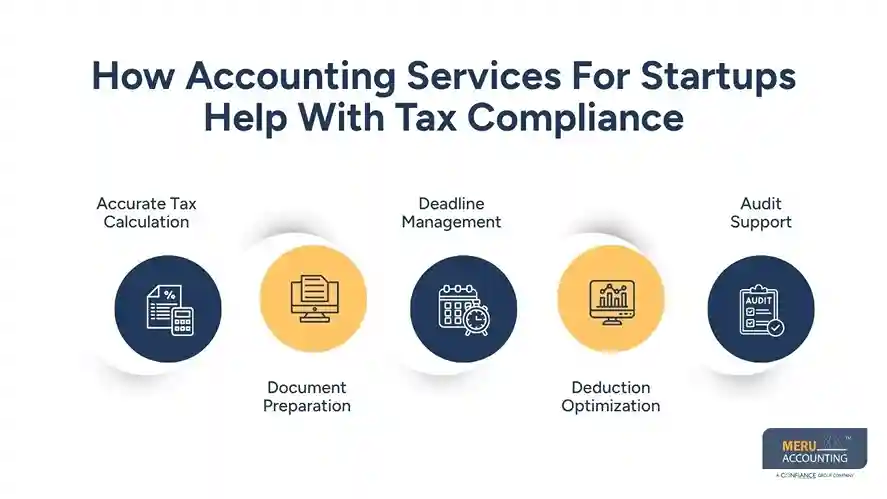
Deduction Optimization
With accounting and CFO services for startups, businesses can accurately identify eligible expenses and align tax-saving strategies with long-term financial planning. This ensures they do not miss out on legal tax savings opportunities available to them.
Audit Support
In case of audits, proper records make the entire process easier, faster, and more transparent. Accounting services for startups help ensure all financial data is ready for review without stress.
Role of Accounting and CFO Services for Startups in Financial Planning
Budget Planning
Accounting and CFO services for startups help create realistic budgets for operations and growth. This ensures spending stays controlled and aligned with business goals.
Forecasting
They provide financial forecasts to help founders plan ahead. Forecasting improves clarity on future income and expense expectations.
Investment Planning
These services guide startups in managing investor funds properly. Proper allocation helps maintain trust and financial discipline.
Profitability Analysis
They analyze which products or services are profitable. This helps focus resources on high-performing business areas.
Strategic Guidance
Financial leaders support long-term planning and decision-making. They help founders choose stable and practical growth paths.
Common Mistakes Startups Make In Accounting And Tax Management
- Mixing personal and business expenses creates confusion during tax filing and financial reporting. It also makes it difficult to track real business performance accurately.
- Ignoring bookkeeping in the early stage often leads to disorganized and incomplete financial records. This creates problems when preparing reports or filing taxes later.
- Missing tax deadlines can result in penalties, interest charges, and compliance issues. It also increases stress during financial closing periods.
- Poor expense tracking reduces overall financial clarity and affects profit calculation. Many small costs go unnoticed, which distorts true business results.
- Lack of professional support increases the chances of repeated accounting and tax mistakes. With accounting services for startups, these risks can be significantly reduced.
Benefits Of Outsourcing Accounting Services For Startups
- Cost savings are achieved by reducing the need for full-time accounting staff and related overhead expenses. This allows startups to manage finances in a more budget-friendly way.
- Accounting services for startups bring experienced professionals who handle financial tasks with accuracy and consistency. This improves the overall quality of records and reporting.
- Time efficiency improves as founders can focus more on business growth instead of daily financial management work. This helps in the better use of limited startup resources.
- Better compliance is ensured because external experts stay updated with tax rules and filing requirements. This reduces the chances of errors and penalties.
- Scalable services allow financial support to grow as the startup expands in size and operations. This makes accounting support flexible for changing business needs.
How To Choose The Right Accounting And CFO Services For Startups Providers
- Choose providers who understand early-stage business needs and common financial challenges. This ensures practical support tailored to startup conditions.
- Modern tools improve accuracy and reporting speed in financial processes. They also help reduce manual errors in accounting work.
- Accounting and CFO services for startups should adapt to business size and changing needs. Flexible support ensures smooth scaling as the business grows.
- Providers must understand the USA tax regulations and filing requirements in detail. This helps startups avoid penalties and stay fully compliant.
- Clear communication ensures better financial understanding between founders and service providers. It also helps in making faster and better decisions.
Why Choose Meru Accounting?
Meru Accounting provides structured financial support designed for early-stage businesses. Our team offers complete accounting services for startups, including bookkeeping, tax filing support, and financial reporting systems tailored to growth needs.
We also provide accounting and CFO services for startups, helping founders with budgeting, forecasting, and financial decision-making. Our goal is to simplify financial management so startups can focus on building their business.
With experience across multiple industries, Meru Accounting ensures accurate records, timely compliance, and practical financial insights for long-term stability.
Our Author Perspective
From our experience working with early-stage businesses, we often see that startups delay building a proper financial structure until issues start appearing. This delay usually makes corrections later more difficult, time-consuming, and costly.
Early use of accounting services for startups helps prevent these gaps by keeping records clean, structured, and easy to manage from the beginning. It also reduces confusion during tax time and financial reviews.
We also observe that structured financial systems go beyond basic compliance requirements. They give founders a clearer view of business performance in real terms. When supported with accounting and CFO services for startups, financial planning becomes more stable, practical, and less uncertain in daily decision-making.
Key Takeaways
- Startups need structured financial systems from the beginning
- Tax compliance in the USA involves federal and state rules
- Accounting services for startups reduce errors and improve reporting
- Outsourcing saves time and reduces operational cost
- Financial planning improves decision-making and investor trust
- CFO-level support helps with forecasting and budgeting
- Early financial discipline supports long-term growth
FAQs
Startups need accounting services to keep records accurate, manage taxes, and avoid financial mistakes that can affect growth.
They include bookkeeping, tax preparation, financial reporting, and compliance support.
Yes, they help startups plan finances better and avoid costly errors from the beginning.
They can, but a lack of experience often leads to mistakes. Professional support reduces risks.
They ensure correct calculation, timely filing, and proper documentation for tax compliance.