Many firms now use digital tools to track sales, costs, tax data, bills, cash flow, and staff pay. These tools help save time, cut manual work, and keep key data in one place. Still, not all systems fit all firms. A poor setup can slow work, lead to wrong reports, block team flow, and cause stress for staff and owners. A good accounting software service can help your firm run with less delay and more control. The right tool can help managing staff with ease while keeping daily tasks on track.
Many firms pick software based only on cost or ads. Some firms buy tools with more parts than they need. Some pick weak tools that fail once the firm grows. Both cases can hurt work flow and lead to waste, poor use, and weak reports. The best way to choose an accounting software service is to first study your firm needs, team use, task flow, and long-term goals. Firms must know what they need from the tool before they spend time and funds on setup.
Strong finance tools can help firms track cash, view costs, check gains, and plan growth. They also help firms stay ready for tax work and audit needs. At the same time, many firms still need expert bookkeeping and accounting services to make sure the data in the system stays right and up to date. Even smart tools need skilled review and care. This blog will help you learn how to choose the right accounting software service for your firm.
What You Will Learn From This Blog
In this blog, you will learn:
- What an accounting software service means for firms today
- How finance tools help with smooth work flow
- Why bookkeeping and accounting services still play a key role in firm growth
- Main points to check before you choose a finance tool
- Ways to avoid work slowdowns when new software starts
- Errors many firms make when they pick finance systems
What Is an Accounting Software Service?
An accounting software service is a digital system that helps firms track and sort finance data. It stores records, tracks cash flow, logs sales and costs, and helps teams build finance reports with less hand work.
In the past, many firms kept books with paper files or large sheets. This took more time and raised the risk of loss or wrong data. Now, firms use digital systems to speed up work and keep data safe.
A modern accounting software service may help with:
- Bill and invoice work
- Cost tracking
- Bank match tasks
- Tax data prep
- Staff pay work
- Gain and loss reports
- Cash flow review
- Client payment logs
- Budget checks
- Sales data review
Some tools work best for small firms, while some fit large firms with more staff and more work needs. The best tool is one that fits the size, task load, and goals of the firm. Cloud-based systems are now used by many firms since they let users view data from more than one place. Staff and firm heads can log in from home, office, or while on the move.
The right accounting software service can help staff work with ease and cut the time spent on repeat tasks. It could also help firms build clear reports that guide smart plans. Some firms need tools with stock tracking, while some need job cost tools or client pay links. Each firm should study what tasks matter most before they pick a tool.
The goal is not to buy the most costly system. The goal is to choose a system that fits daily work needs and helps the firm grow with less stress.
Role of Bookkeeping and Accounting Services in Business Efficiency
Many firm heads think that once they buy software, all finance work will run on its own. In real work life, firms still need expert help to keep books right and reports clear. Bookkeeping and accounting services help firms keep strong finance records while making sure the software works the right way.
Even the best accounting software service can fail if the setup is poor or if staff use the tool in the wrong way. Wrong setup may lead to bad reports, tax gaps, cash flow issues, and weak plans.
Bookkeeping and accounting services help firms:
- Keep books neat and up to date
- Track cash flow with care
- Build clear finance reports
- Lower the risk of wrong data
- Help with tax prep work
- Match bank data with firm records
- Track bills and client dues
- Help owners read finance trends
These tasks help firm heads make smart choices with more trust in the data.
Finance experts also help firms save time. Staff can focus on sales, client work, and team goals while the finance side stays in order. Many firms use bookkeeping and accounting services with cloud tools to build a full finance process that blends tech and expert skill.
This mix gives firms both speed and care. The software helps with task flow, while finance teams help with review, checks, and long-term plans. As firms grow, the need for clean books and strong reports grows as well. This is why many firms still work with trained finance teams even after they move to digital systems.
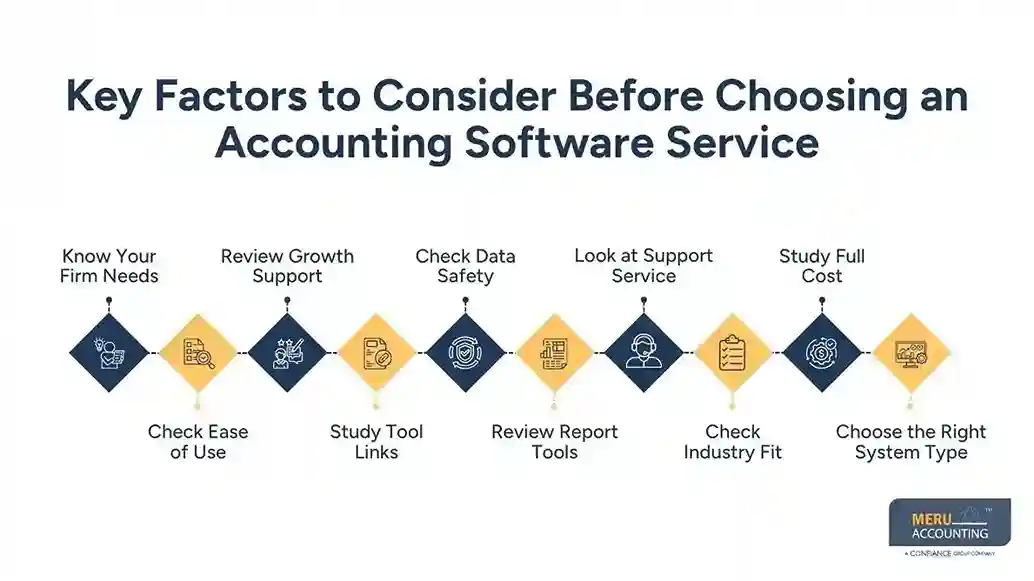
Key Factors to Consider Before Choosing an Accounting Software Service
Firms should study more than price before they buy finance tools or software. A smart choice can help the team work with ease and help the firm grow with less risk. Below are key points to review before you choose an accounting software service.
Know Your Firm Needs
Each firm runs in its own way. Some firms need stock tools, while some need staff pay links or client bill tools.
Before you choose a tool, ask:
- How much finance data do we track each month?
- Will more than one user need access?
- Do we need stock or sales links?
- Will the tool help with tax work?
- Does the firm need job cost data?
- Will the firm grow in the next few years?
Clear goals help firms pick tools that fit real work needs.
Check Ease of Use
A hard system can slow work and raise staff stress. Teams should be able to learn the tool with less delay.
A good accounting software service should have:
- Clear menus
- Fast task flow
- Easy report tools
- Clean screens
- Simple user steps
- Quick search tools
If staff find the tool hard to use, the firm may lose time and face low use rates.
Review Growth Support
Some firms buy tools that fit now but fail later once sales and task load rise.
The software should support:
- More users
- More data
- More sites or teams
- New task types
- More report needs
A tool that grows with the firm helps avoid future shift costs.
Study Tool Links
Most firms now use more than one digital tool. The finance tool should link with the systems the firm now uses.
These may include:
- Bank links
- Sales tools
- Staff pay systems
- Client data tools
- Stock systems
- Online pay links
Good links help stop repeat work and keep data in sync.
Check Data Safety
Finance data is key firm data. Loss or theft of this data may harm the firm.
The accounting software service should offer:
- Safe login steps
- User access rules
- Data lock tools
- Backup plans
- Safe cloud store
- User task logs
Strong safety steps help lower risk and build trust.
Review Report Tools
Firm heads need clear reports to guide plans.
The software should help build:
- Gain and loss reports
- Cash flow reports
- Cost reports
- Tax reports
- Budget reports
- Sales trend data
Good reports help firms spot weak points and plan growth.
Look at Support Service
Poor support may lead to long work delays when issues rise.
Before you buy software, check:
- Help desk speed
- User guides
- Staff train tools
- Setup help
- Phone or chat support
Fast support helps firms fix issues with less stress.
Check Industry Fit
Some fields need tools made for their type of work.
For example:
- Build firms may need job cost tools
- Shops may need stock links
- Health firms may need bill rules
- Service firms may need time logs
A tool made for your field may help work run with more ease.
Study Full Cost
Do not check just the base fee.
Firms must also review:
- Setup fees
- User fees
- Train costs
- Support costs
- Shift costs
- Add-on fees
A low-cost tool may cost more in the long run if it lacks key parts.
Choose the Right System Type
Many firms now pick cloud tools since they give more ease and fast access.
Cloud systems help teams:
- Work from more than one place
- Share data with ease
- View live reports
- Store data with less risk
- Get fast tool updates
The best accounting software service should fit the firm work style and help staff stay on task.
How to Implement Accounting Software Without Disrupting Daily Operations
A new system should not stop daily work. Firms need a clear setup plan that helps staff shift with less stress.
Review Current Work Flow
Before setup starts, firms should study about its current workflow.
This helps firms:
- Spot weak steps
- Cut repeat work
- Plan smart task flow
- Set clear team roles
A good review helps the new system fit real firm needs.
Shift Data in Steps
Do not move all data at one time with no checks.
Firms should test:
- Old finance files
- Client data
- Cost logs
- Tax data
- Bank records
Step-by-step data shift helps lower the risk of wrong records.
Train Staff Well
Staff should know how to use the system before full launch.
Train staff on:
- Daily tasks
- Report tools
- Data entry rules
- User roles
- Task flow steps
Good train plans help staff work with trust.
Run Old and New Systems at the Same Time
Many firms use both systems for a short time.
This helps teams:
- Check data match
- Spot issues fast
- Keep work flow safe
- Build trust in the new tool
This step may help lower risk while staff learn the new process.
Give One Team Clear Control
One team or lead should track the setup work.
This team should:
- Track setup goals
- Fix user issues
- Guide staff
- Check reports
- Work with support teams
Clear task control helps setup stay on track.
Avoid Peak Work Times
Do not launch a new accounting software service in the middle of tax time or peak sales months.
Slow work months may give staff more time to learn and test the system with less pressure.
Common Mistakes to Avoid When Selecting Accounting Software Service
Many firms face issues not because the tool is bad, but because the choice process was weak. Below are common errors firms should avoid:
Choosing Based Only on Price
- Low-cost tools may miss key parts that firms need later.
- A cheap tool that fails to support growth may lead to more costs in the future.
Ignoring Staff Use Needs
- If staff find the tool hard to use, task flow may slow down.
- Firms should test how the system feels in real work use.
Skipping Tool Link Checks
- A system that fails to link with bank, sales, or stock tools may lead to more hand work.
- This may raise the risk of wrong data.
Poor Staff Training
Some firms rush setup and fail to train teams well. This may lead to:
- Wrong data entry
- Missed tasks
- Weak reports
- Staff stress
Good train plans help staff use the tool with more skill.
Not Planning for Growth
- A firm may grow fast in a few years.
- The accounting software service should support future work needs, not just the needs of today.
Avoiding Expert Help
Some firms try to manage all setup work with no finance support.
This may lead to:
- Weak setup
- Wrong tax rules
- Poor reports
- Data gaps
- Lost time
Bookkeeping and accounting services help firms lower these risks and build better finance systems.
How Meru Accounting Supports Firms With Smart Finance Support
At Meru Accounting, we know that firms need more than basic software. They need clear finance systems that help daily work stay smooth and well managed.Our team helps firms choose the right accounting software service based on work flow, team size, task load, and growth goals.
We also provide bookkeeping and accounting services that help firms keep books neat, reports clear, and finance data up to date.
Meru Accounting helps firms:
- Choose the right finance tools
- Keep books clean and well tracked
- Build strong report systems
- Lower hand work
- Improve cash flow checks
- Support smooth software setup
- Help with bank match tasks
- Guide firms with finance best steps
We work with firms from many fields and help build finance systems that fit daily work needs.
Our goal is to help firms run with less stress, more control, and clear finance data that supports smart plans.
By using the right mix of software tools and finance support, firms can keep daily work on track while still building strong long-term growth.
Key Takeaways
- The right accounting software service helps firms work with less delay and more control.
- Firms should study work flow, team needs, and growth goals before they choose finance software.
- Ease of use, report tools, data safety, and system links are key points to review.
- Firms should not choose software based only on low cost.
- Bookkeeping and accounting services still play a key role in report checks and finance care.
- Staff training and smart setup plans help lower work delays during software shifts.
FAQs
The right accounting software service helps firms track finance data, build reports, manage cash flow, and reduce hand work while helping daily tasks stay smooth.
No. Software helps speed up tasks, but firms still need bookkeeping and accounting services to review reports, track records, and help with tax and finance tasks.
Firms can lower work delays by training staff, testing data in steps, using clear setup plans, and running old and new systems at the same time for a short term.
Firms should check ease of use, report tools, data safety, support service, growth support, and links with other business tools.
Meru Accounting helps firms choose the right accounting software service, keep books well managed, improve reports, and support smooth software setup with less stress on daily work.