




Accounting for law firms is not just about keeping records; it is about managing finances in a way that supports efficiency, profitability, and compliance. Legal practices have unique financial needs, from trust accounting to time-based billing, making standard accounting practices insufficient. With the right tools, such as Clio, QuickBooks, and Zoho, law firms can simplify billing, track expenses, and handle taxes efficiently.
This blog explores advanced accounting techniques for law firms and shows how accounting software for small law firms can transform financial management. It will guide you in choosing the right tools and processes for your legal practice.
What You Will Learn From This Blog
- Why accounting for law firms is different from general business accounting and why it matters.
- How to choose accounting software for small law firms based on features and affordability.
- Ways to automate invoicing and manage tax efficiently to save time and avoid errors.
- Integrating legal practice tools with accounting software for better financial oversight.
- Tips for improving cash flow using cloud-based solutions for small law firms.
Understanding The Fundamentals Of Accounting For Law Firms
Trust Accounting Basics
Law firms often manage client funds in trust accounts. Accounting for law firms ensures accurate tracking and compliance with legal regulations.
Proper handling of trust accounts prevents legal issues and maintains client confidence.
Billing Management
Accurate billing is essential. Accounting software for small law firms helps track billable hours and expenses easily. It also reduces disputes with clients by providing clear and detailed invoices.
Expense Tracking
Keeping an eye on expenses helps improve profitability. Software like QuickBooks can categorize expenses for better insights. Regular expense tracking helps identify unnecessary costs that can be reduced.
Revenue Reporting
Accounting for law firms allows you to generate precise reports on revenue, aiding strategic planning. These reports also help evaluate the performance of different practice areas.
Compliance Requirements
Law firms must follow strict financial regulations. Proper accounting ensures you meet all compliance standards. Staying compliant reduces the risk of audits, fines, and other legal complications.
Why Specialized Accounting Matters For Legal Practices
Unique Financial Needs
Law firms deal with client trust funds, contingency fees, and retainers, requiring specialized accounting. General accounting systems often fail to handle these unique requirements efficiently.
Avoiding Errors
Accounting for law firms reduces mistakes in billing and taxes, protecting your practice from penalties. Even small errors can lead to trust account violations or inaccurate client billing.
Better Decision-Making
Accurate financial records allow law firm partners to make informed business decisions. These insights help plan expansions, hire staff, or invest in technology wisely.
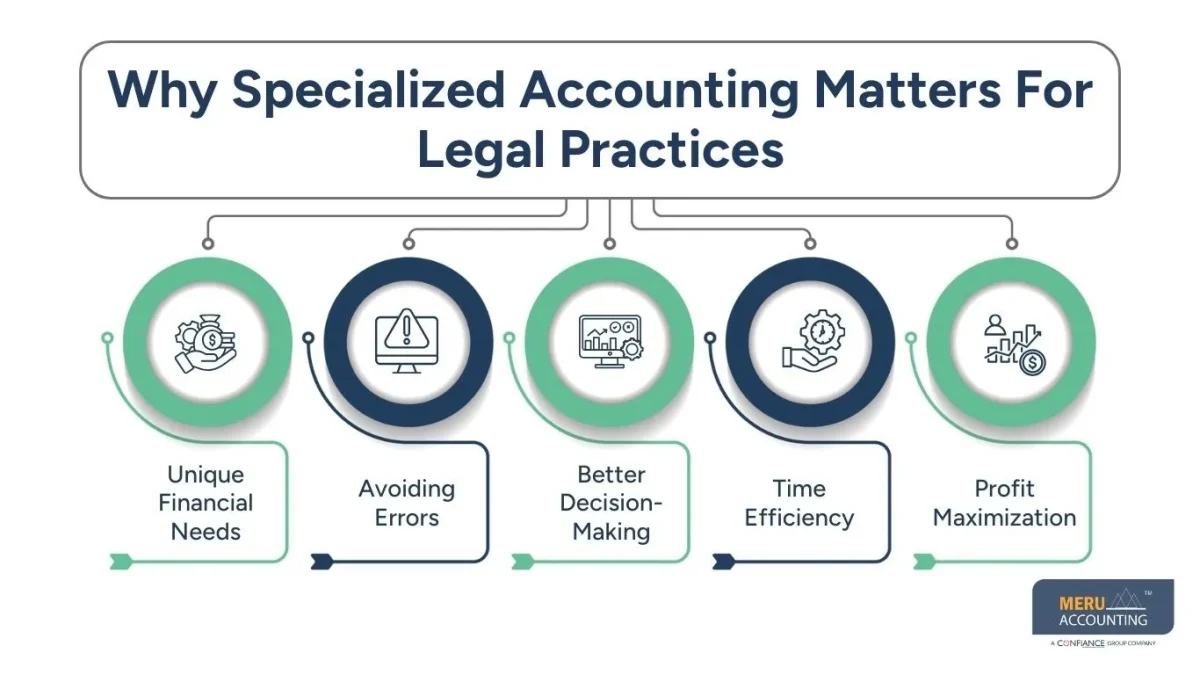
Time Efficiency
Using accounting software for small law firms saves time on manual entries and calculations. It allows lawyers and staff to focus more on client work rather than bookkeeping.
Profit Maximization
Specialized accounting helps identify areas where cost savings and revenue improvements are possible. Proper accounting can highlight underperforming cases or unbilled hours that can be recovered.
Choosing The Right Accounting Software For Small Law Firms
Clio: Legal-Specific Solutions
Clio provides law-focused accounting tools for efficient billing management. Its design ensures compliance with client funds and billing rules, making it a key choice for accounting for law firms.
QuickBooks: Versatile & Reliable
QuickBooks is widely used for law firm accounting purposes. It offers flexible reporting and integrates well with other tools, supporting seamless accounting for law firms.
Zoho Books: Affordable And Cloud-Based
Zoho Books suits small law firms seeking automated financial management. Its cloud system allows access from anywhere, anytime, making it ideal for accounting for law firms.
Features To Consider
When selecting software, look for these key features:
- When selecting software, ensure it includes important key features.
- Accurately track billable hours for all clients every day.
- Connect billing with client hours and all related expenses.
- Organize expenses properly for easier reporting and clear analysis.
- Manage client funds carefully, following all required legal regulations.
- Generate detailed reports to support smarter business and financial decisions.
Choose software that grows as your law firm expands. Scalable software handles more clients, transactions, and future requirements.
Automating Invoicing With Clio, QuickBooks, and Zoho
Time-Based Billing
Automated systems track hours and prepare invoices without manual calculations, reducing errors. Lawyers can focus on client work instead of spending hours on billing tasks.
Expense Integration
Integrating expenses into invoices ensures all costs are billed accurately to clients, a critical aspect of accurate accounting for law firms that prevents revenue loss.
Payment Tracking
Accounting software for small law firms keeps track of paid and pending invoices automatically. You can quickly identify overdue accounts and follow up with clients professionally.
Recurring Invoices
Clio, QuickBooks, and Zoho can send recurring invoices, saving time on regular clients. This ensures consistent cash flow and fewer administrative delays.
Custom Invoice Templates
These tools allow branded invoices, making your firm look professional while maintaining accuracy. Custom templates can also include detailed breakdowns of work, enhancing transparency.
Integrating Legal Practice Management Tools With Accounting Software
Centralized Data
Integration with practice management tools consolidates client information, time entries, and billing data. Centralized data reduces duplication and makes financial reporting more reliable.
Streamlined Workflow
Lawyers can focus on cases while the software handles accounting tasks automatically. This improves efficiency and reduces administrative burden on staff.
Accurate Reporting
Integrating systems ensures financial reports reflect all billable hours and expenses. Accurate reporting is a cornerstone of smart accounting for law firms, aiding budgeting and growth planning.
Reduced Errors
Manual data entry errors are minimized when systems communicate directly. Automation ensures all calculations and records are consistent and reliable.
Better Client Management
Integrated systems allow for clearer communication about billing and financial status with clients. Clients appreciate transparency and timely updates on their accounts.
Using Accounting Software For Small Law Firms To Improve Cash Flow
Real-Time Insights
Accounting for law firms provides up-to-date information on receivables and payables. Real-time insights allow for quicker decision-making on spending and collections.
Predicting Expenses
Software tools help forecast upcoming costs and manage cash accordingly. Predicting expenses prevents cash shortages and improves financial planning.
Faster Payments
Automated invoicing encourages clients to pay on time, improving cash flow. Prompt payment reduces the need for follow-ups and late-payment issues.
Monitoring Overdue Accounts
Software identifies unpaid invoices, allowing timely follow-up. This helps maintain steady cash flow and minimizes financial stress.
Budget Planning
Law firms can allocate funds more efficiently and plan growth strategies based on accurate financial data. Budgeting ensures that high-priority projects and critical expenses are always funded.
Cloud-Based Accounting Solutions For Small Law Firms
Accessibility Anywhere
Cloud accounting allows access to financial data from any location. This flexibility supports scalable and efficient accounting for law firms, especially those with multiple offices or remote staff.
Secure Data Storage
Top accounting software for small law firms ensures client data is stored securely with encryption. Cloud providers often offer backup and disaster recovery options for additional safety.
Automatic Updates
Cloud solutions like Zoho and QuickBooks are updated automatically, keeping features current. You never have to worry about installing new versions or missing improvements.
Collaboration
Multiple team members can access and work on accounts simultaneously without version conflicts, supporting collaborative and streamlined accounting for law firms.
Cost Efficiency
Cloud-based software reduces the need for physical servers and IT maintenance, lowering overhead costs. It also allows firms to pay for only the features they need.
How Meru Accounting Supports Law Firms
Managing finances in a law firm can be complex due to trust accounts, billable hours, and legal compliance requirements. Meru Accounting provides expert services to simplify accounting, improve cash flow, and ensure accurate tax management for legal practices.
Expert Accounting Services
Meru Accounting provides specialized accounting for law firms, ensuring accuracy and compliance. Our team understands the unique financial challenges of legal practices.
Software Integration
We help integrate Clio, QuickBooks, and Zoho to streamline billing, tax, and reporting. Integration eliminates manual work and reduces errors across systems.
Cash Flow Management
Our team assists small law firms in using accounting software for small law firms to optimize cash flow. We provide actionable insights to help your firm stay financially healthy.
Tax Preparation
We ensure law firms file taxes correctly, utilizing available deductions and credits. Our tax experts reduce your risk of errors and maximize allowable savings.
Ongoing Support
Meru Accounting provides continuous support, helping law firms maintain healthy financial practices. We offer advice, troubleshooting, and guidance whenever needed.
Key Takeaways
- Accounting for law firms is crucial for compliance, billing accuracy, and financial growth.
- Specialized software, like Clio, QuickBooks, and Zoho, simplifies invoicing, expense tracking, and tax management.
- Integrating legal practice management tools with accounting software improves efficiency and accuracy.
- Cloud-based solutions provide secure, accessible, and cost-effective accounting for small law firms.
- Partnering with experts like Meru Accounting ensures your law firm’s finances are handled professionally.
- Correct accounting practices help improve client satisfaction and overall profitability.
FAQs
Clio, QuickBooks, and Zoho Books are top choices for small law firms. They help with billing, trust accounts, and tax management efficiently.
Law firm accounting focuses on trust funds, billable hours, and legal compliance. Standard business accounting does not cover these specific needs.
Yes, these tools automate time tracking, expense integration, and recurring invoices. This saves time and reduces billing errors.
It tracks unpaid invoices, forecasts expenses, and sends reminders automatically. This ensures better cash flow management.
Integration syncs time entries, expenses, and billing data automatically. This reduces errors and provides accurate financial reports.


