
Agribusiness accounting is becoming essential for modern farms that deal with seasonal income, rising input costs, and unpredictable market prices. Without structured financial tracking, many farms struggle to clearly understand when money is coming in and how it should be allocated throughout the year.
Agribusiness accounting helps bring clarity to these financial movements, improving stability during off-season periods. In many cases, farms also rely on farm accounting services to manage daily records, payroll, and expense tracking, ensuring that routine financial data stays accurate and well-organized alongside broader financial systems.
Agricultural income rarely follows a fixed monthly pattern, which makes financial planning more complex for farm owners. Revenue is often concentrated around harvest cycles, while expenses continue consistently throughout the year, creating pressure on working capital if not properly managed.
Key challenges include timing gaps between early-stage costs like seeds, fertilizers, and labor, and later-stage returns from harvests. With structured accounting practices and real-time transaction tracking, farms can monitor cash flow more effectively, anticipate shortfalls in advance, and make better decisions around credit or reserve usage.
What You Will Learn From This Blog
- How agribusiness accounting works in real farm operations
- Why seasonal income creates cash flow challenges
- How farms can manage revenue gaps across seasons
- Role of planning in reducing financial stress
- How farm accounting services support daily financial tracking
- Practical ways to improve financial control in agriculture
What is Agribusiness Accounting and Why It Matters For Farms
Financial Structure in Farming Operations
Agribusiness accounting creates a structured system for recording income and expenses in farming. It ensures that every cost, from seeds to machinery, is tracked properly. Without a structured accounting system, farms often miss hidden expenses that affect profitability.
Link Between Income and Expense Tracking
Farms earn income at specific times, but expenses occur throughout the year. This system connects both sides so farmers can clearly understand real profit levels and overall financial performance.
Importance of Financial Clarity
Clear records maintained through farm accounting services reduce confusion during tax filing and loan applications. It provides accurate financial statements that banks and investors trust, improving financial credibility and supporting better decision-making.
Role in Long-Term Farm Planning
Agribusiness accounting enables farmers to identify long-term patterns in costs and revenue. This supports better planning for crop cycles, budgeting, and investment decisions while reducing reliance on guesswork.
Integration With Farm Accounting Systems
Modern farms combine structured accounting with digital tools for better accuracy. These systems ensure that records are updated correctly, reducing errors and improving reporting quality.
Understanding Seasonal Revenue Cycles in Agriculture
Nature of Seasonal Income Flow
Farms do not earn evenly throughout the year. Income depends on harvest seasons and market demand. Accounting systems help track these cycles to show when cash inflow is strong or weak.
High and Low Cash Flow Periods
During harvest, income is high, but during planting, expenses increase. These gaps become easier to identify with proper financial tracking. Supporting services ensure expenses are recorded even during low-income months.
Impact on Farm Stability
Uneven cash flow can create financial pressure. Agribusiness accounting helps prepare farms for slow months by enabling better financial planning and early awareness of cost patterns. Supporting services also help maintain accurate cost records.
Importance of Seasonal Planning
Planning helps farms avoid borrowing during low-income periods. Financial data supports better timing of purchases and improves overall budgeting decisions.
Role of Historical Data
Past records are useful for predicting future cycles. Structured accounting stores this data systematically, while regular record updates help improve seasonal forecasting accuracy.
How Agribusiness Accounting Helps Farms Manage Cash Flow And Seasonal Revenue Cycles
Cash Flow Monitoring System
Agribusiness accounting tracks money in and out of the farm on a regular basis. This helps farmers understand real-time cash positions and maintain financial stability throughout the year. Supporting systems ensure daily updates are recorded without delay.
Income Distribution Planning
Since farm income is seasonal, structured financial planning helps spread income usage across the year. This avoids financial stress during off-season months while maintaining consistency in recordkeeping.
Expense Control Mechanism
Financial tracking through farm accounting services highlights unnecessary spending areas, helping farmers reduce wasteful costs using clear data insights. Detailed expense breakdowns also improve cost control and efficiency.
Debt And Loan Management
Many farms rely on loans during planting seasons. Proper financial systems help manage repayment schedules and ensure loan-related entries are accurately maintained.
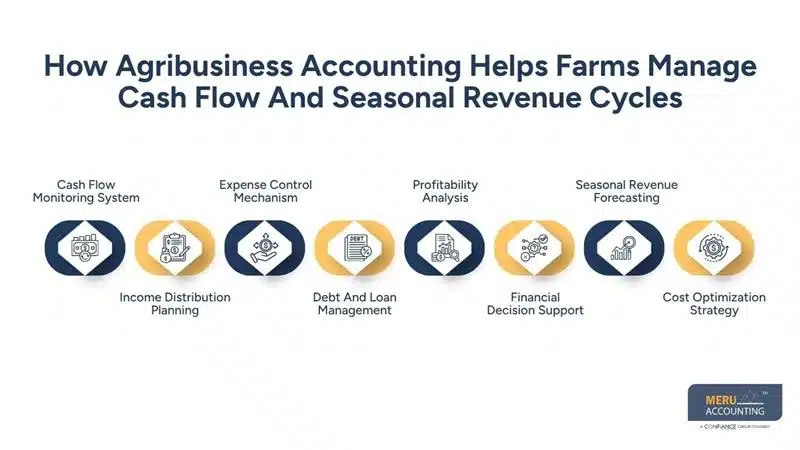
Profitability Analysis
Understanding profit per crop or season is important for long-term sustainability. Clear financial insights help identify actual profitability, while structured records ensure accurate classification of income and expenses.
Financial Decision Support
Better financial data leads to better decisions. It supports planning for crop selection, investment timing, and overall farm strategy by improving financial clarity and accuracy.
Seasonal Revenue Forecasting
Accurate financial records help predict future income patterns based on past harvest cycles. Farmers prepare more effectively for high and low revenue periods using historical performance trends.
Cost Optimization Strategy
Detailed financial tracking helps identify areas where costs can be reduced without affecting productivity. Overall farm efficiency improves while strengthening long-term profitability.
Key Financial Metrics Every Farm Should Track
Operating Cost Per Acre
This metric shows how much it costs to produce on each acre. Structured financial systems calculate this clearly, while accurate recording of all inputs ensures reliable results.
Revenue Per Harvest Cycle
Measures income generated in each cycle and helps compare seasonal performance. Financial tracking systems capture harvest-level data to support better evaluation of productivity.
Cash Flow Balance
Cash flow balance shows available money after expenses. Regular monitoring of financial inflows and outflows helps maintain stability and prevents liquidity issues.
Input Cost Ratio
Input cost ratio compares input costs with output value. Agribusiness accounting measures efficiency by organizing cost data and supporting accurate financial analysis.
Net Farm Income
Net income reflects actual profit after all deductions. Final financial summaries and accurate recordkeeping ensure reliable profit calculation and better financial clarity.
Role of Budgeting and Forecasting in Farm Financial Stability
Annual Budget Planning
Structured accounting systems help farms create yearly budgets that outline expected income and expenses. Historical financial data supports more realistic planning and improves overall cost estimation.
Seasonal Forecasting Models
Forecasting helps predict future income trends based on historical patterns. Agribusiness accounting uses past financial records to improve accuracy in seasonal projections and planning decisions.
Risk Management Planning
Budgeting reduces financial risk during uncertain seasons. Potential cost risks can be identified early, allowing farms to prepare for fluctuations in expenses and income cycles.
Resource Allocation Strategy
Proper budgeting ensures resources are distributed efficiently across farm operations. Funds can be allocated to key activities such as planting, maintenance, and harvesting with better financial control.
Financial Stability Control
Stable budgeting reduces sudden financial pressure. Planned spending and consistent tracking support long-term stability and help maintain predictable financial performance.
Common Cash Flow Mistakes Farmers Make and How to Avoid Them
Ignoring Seasonal Gaps
Many farms fail to plan for low-income months. Financial tracking helps identify these gaps early, allowing better preparation for uneven revenue cycles. Supporting data systems assist in building more effective financial plans.
Poor Expense Tracking
Unrecorded expenses, especially without farm accounting services, lead to financial confusion. Structured accounting improves tracking accuracy while ensuring no cost is missed during daily operations.
Overdependence on Credit
Excess borrowing creates repayment pressure. Proper financial planning helps manage loan usage more effectively while keeping credit exposure under control.
Lack of Budget Discipline
Without a budget, spending becomes unplanned. Agribusiness accounting enforces structured financial planning, ensuring disciplined spending and better control over financial resources. Supporting systems also maintain consistent financial records.
Weak Financial Reporting
Poor reports affect decision-making. Improved reporting clarity supports better financial visibility, while timely updates ensure more reliable insights for farm management.
Benefits of Outsourcing Farm Accounting Services For Growing Farms
- Reduced administrative workload helps farmers focus more on core farming activities while experts manage financial records efficiently.
- Better financial accuracy is achieved through professional oversight that minimizes errors and improves data consistency.
- Cost efficiency improves by eliminating the need for full-time accounting staff and using flexible service models.
- Access to expert knowledge strengthens financial management through industry-specific understanding of farming cycles and the use of agribusiness accounting.
- Scalable financial support ensures accounting processes adjust smoothly as farm operations grow.
How Meru Accounting Supports Farming Businesses
At Meru Accounting, we provide structured financial support designed for agricultural operations. Our team of certified experts works closely with farms to implement agribusiness accounting systems that match seasonal revenue patterns and operational needs. We also manage detailed record-keeping through reliable farm accounting services that ensure accuracy in daily financial data.
Our approach combines planning, reporting, and financial monitoring so farms can better understand their cash flow position. With strong experience in agribusiness accounting, we help reduce financial gaps during off-season periods. Our farm accounting services are designed to support both small and large farming operations with clear and consistent reporting.
Key Takeaways
- Agribusiness accounting helps farms manage seasonal income
- Cash flow planning is essential for financial stability
- Farm accounting services support daily record accuracy
- Budgeting reduces financial risks in farming operations
- Proper financial tracking improves long-term farm growth
- Outsourcing can reduce workload and improve accuracy
FAQs
Agribusiness accounting is a system used to track farm income, expenses, and seasonal cash flow. It helps farmers understand financial performance clearly.
Farm accounting services help manage daily financial records, reduce errors, and support accurate reporting for better decision-making.
Seasonal income creates uneven cash flow, where income is high during harvest and low during planting. Proper planning helps manage this gap.
Yes, it helps identify cost patterns, control expenses, and prepare for low-income periods, reducing financial pressure.
Yes, small farms benefit from cost savings, expert support, and better financial accuracy without hiring full-time staff.