Agriculture accounting plays an important role in managing seasonal farming income, controlling expenses, and making informed financial decisions throughout the year. Farming businesses often experience income fluctuations because earnings depend on harvest cycles, weather conditions, crop prices, and market demand, while expenses such as seeds, fertilizers, labor, fuel, equipment repairs, and maintenance continue across different seasons.
Unlike businesses with regular monthly revenue, farmers may receive payments only after harvest, creating cash flow challenges. Proper financial tracking allows farmers to record transactions, understand actual profits, monitor spending, plan future investments, and maintain accurate tax records.
Agriculture accounting practices help farmers manage the gap between income and expenses by providing better visibility into financial performance. With the growing use of technology, accounting software for agriculture businesses allows farmers to organize financial data, track costs, generate reports, and reduce dependence on manual records.
A well-managed accounting system enables farmers to make better decisions, improve financial planning, and create a stronger foundation for long-term farm success.
What You Will Learn From This Blog
- Why accurate farm records are important for profitability
- Ways agriculture accounting manages income and expenses
- How accounting software for agriculture business simplifies record keeping
- Methods to create a seasonal farm budget
- How professional accounting services support farming businesses
Why Agriculture Accounting Matters for Seasonal Farming Income Management
Farming income changes due to weather, crop production, market prices, and supply costs. Agriculture accounting provides farmers with clear financial insights for better planning and control.
Seasonal farms often receive income after harvest but continue paying expenses throughout the year. Proper accounting records help manage cash flow and prepare for future financial needs.
Managing Irregular Farm Income
Seasonal income does not remain consistent throughout the year, making regular tracking important. Agriculture accounting helps farmers monitor income cycles and understand earnings from different farming activities.
Tracking Farming Expenses Properly
Farm expenses include seeds, fertilizers, labor, fuel, repairs, and transportation costs. Recording each expense helps farmers control spending and measure actual farm profitability.
Planning For Future Farming Decisions
Past financial records show crop performance, changing costs, and profitable activities. Farmers can use this information to plan investments, production, and expansion decisions.
Preparing Accurate Tax Records
Organized income and expense records make tax reporting easier for farming businesses. Accurate financial details reduce errors and provide better support during tax preparation.
Improving Cash Flow Management
Seasonal farming requires managing expenses before income is received from harvest sales. Proper financial tracking helps farmers plan payments and maintain stable cash availability.
Understanding The Challenges Of Managing Seasonal Farm Revenue And Expenses
Managing farm finances is different from many businesses because farming involves long production cycles and changing income patterns. Farmers need proper financial systems to handle seasonal revenue and expenses effectively.
Seasonal income gaps, market changes, and multiple farming activities can create financial challenges. Organized records allow farmers to understand costs, income, and overall farm performance.
Seasonal Cash Flow Problems
Farmers often spend money on seeds, labor, and equipment before earning income from harvest sales. This gap between expenses and revenue can create cash flow pressure.
Changing Market Prices
Crop prices can change due to demand, supply, weather, and market conditions. Tracking financial records helps farmers understand how price changes affect profitability.
Managing Multiple Farming Activities
Many farms manage crops, livestock, poultry, or equipment services at the same time. Proper accounting helps separate income and expenses for each activity.
Maintaining Manual Financial Records
Manual records using notebooks or spreadsheets can become difficult as farming operations grow. Accounting software for agriculture business keeps records organized and reduces calculation errors.
Tracking Seasonal Production Costs
Farming costs can increase due to changes in fuel prices, labor rates, and input expenses. Regular expense tracking helps farmers identify cost changes and plan better.
optional anymore
on running the business
How Agriculture Accounting Helps Farmers Track Seasonal Income Effectively
Tracking farm income accurately helps farmers understand sales, expenses, and profit margins. Agriculture accounting provides clear financial information for better seasonal planning and decision-making.
Proper income tracking allows farmers to measure performance, manage costs, and identify profitable farming activities. Organized records create better visibility into overall farm finances.
Recording Income By Farming Activity
Different farming activities have different income cycles and profit levels. Tracking each activity separately helps farmers understand which areas generate better returns.
Monitoring Profit After Harvest
Revenue alone does not show actual profitability because farming includes many production costs. Comparing income with expenses helps calculate real profit after harvest.
Understanding Seasonal Financial Patterns
Farms follow specific seasonal patterns where expenses and income occur at different times. Reviewing past financial data helps farmers prepare better plans.
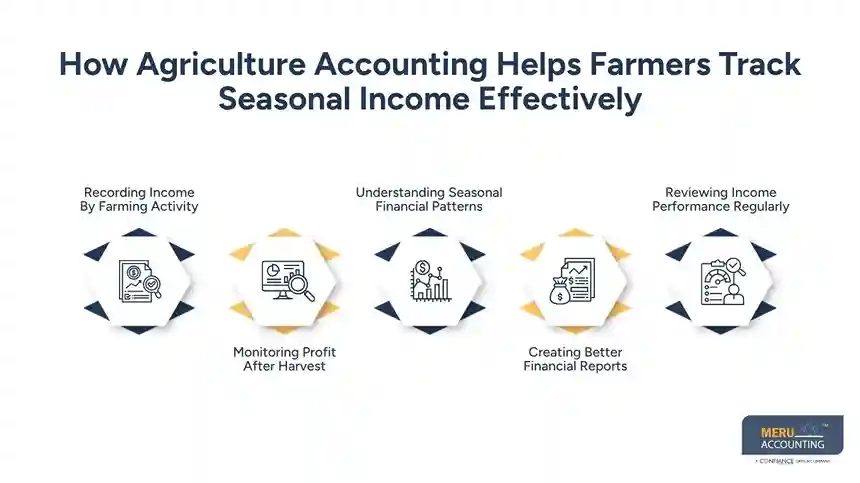
Creating Better Financial Reports
Financial reports such as income statements and cash flow summaries show farm performance clearly. Accounting software for agriculture businesses helps generate reports quickly and accurately.
Reviewing Income Performance Regularly
Regular income reviews help farmers identify changes in sales, costs, and profitability. Timely analysis supports better decisions for future farming seasons.
Best Agriculture Accounting Tips For Managing Seasonal Farming Income
Managing seasonal farming income requires proper planning, accurate records, and regular financial reviews. Agriculture accounting practices help farmers understand earnings, control expenses, and prepare for future farming cycles.
Organized financial records allow farmers to track performance, manage seasonal changes, and make better decisions. A structured approach creates stronger control over farm finances.
Maintain Separate Farm Records
Keeping farm and personal transactions separate creates clearer financial records. Separate tracking makes profit calculation, reporting, and tax preparation easier.
Track Every Farm Expense
Recording expenses such as seeds, fertilizers, fuel, repairs, and labor helps farmers understand spending patterns. Agriculture accounting allows better cost control and budget planning.
Monitor Crop-Wise Profitability
Different crops have different costs and income potential throughout the season. Tracking crop-wise performance helps farmers identify profitable farming activities.
Create Emergency Financial Plans
Unexpected events like crop damage, price changes, or equipment issues can affect income. Financial planning helps farmers prepare reserves for uncertain situations.
Review Financial Records Regularly
Regular reviews help farmers identify overspending and changes in income patterns. Monthly or seasonal checks support better financial decisions and budget adjustments.
Track Equipment and Asset Costs
Farm machinery requires major investment and regular maintenance expenses. Tracking asset costs helps farmers plan repairs, replacements, and long-term financial needs.
Using Accounting Software For Agriculture Business To Simplify Farm Financial Management
Technology has changed how farming businesses manage financial information. Accounting software for agriculture business helps farmers organize transactions, track expenses, and review reports in one place.
Manual records can become difficult when farms manage multiple crops, workers, suppliers, and sales channels. Digital financial tools create better visibility and reduce paperwork.
Automating Financial Records
Manual transaction entry takes time and increases the risk of errors. Accounting software for agriculture businesses organizes income, expenses, sales, and payments efficiently.
Managing Income and Expense Categories
Farms handle different financial categories, including crop sales, labor, feed, equipment, and maintenance costs. Software helps classify transactions for easier financial review.
Generating Financial Reports
Financial reports show farm performance through income statements, expense summaries, and cash flow details. Farmers can access important information without complex calculations.
Improving Record Accuracy
Accurate records support better financial decisions and reduce mistakes in calculations. Organized data also makes tax preparation and financial reviews easier.
Supporting Better Cash Flow Planning
Seasonal farms need proper cash flow planning because expenses and income occur at different times. Accounting software for agriculture businesses helps track expected payments and future costs.
How to Create a Seasonal Budget Using Agriculture Accounting Practices
A seasonal budget helps farmers plan expenses before planting and estimate expected income after harvest. A structured budget reduces financial uncertainty and creates better control over farm operations.
Review Previous Farming Data
Past financial records provide valuable information for future planning. Farmers can analyze previous expenses, crop earnings, and seasonal changes. Agriculture accounting records from earlier years help estimate realistic budgets for upcoming farming activities.
Estimate Seasonal Production Costs
Before starting a farming cycle, farmers should calculate expected expenses. Costs may include seeds, fertilizers, labor, machinery, irrigation, and transportation. Creating an expense estimate prevents unexpected financial pressure during the season.
Forecast Expected Revenue
Income forecasting allows farmers to understand possible earnings before harvest. Farmers should consider crop prices, expected production quantity, and market conditions.
Realistic revenue estimates create better financial decisions and reduce dependence on assumptions.
Set Spending Limits
A budget should include clear spending limits for different activities. Controlling expenses helps farmers avoid unnecessary costs.
Tracking actual spending against the planned budget allows farmers to identify areas requiring adjustment.
Update Budgets Based On Changes
Farming conditions can change during the season. Weather issues, price changes, and supply costs may require budget adjustments.
Regular budget reviews keep financial plans aligned with current farming conditions.
How Meru Accounting Supports Agriculture Businesses With Reliable Financial Management
Managing farm finances requires proper tracking of seasonal income, changing expenses, and long-term financial goals. Meru Accounting provides accounting and bookkeeping solutions designed to meet the specific needs of agriculture businesses.
Our team helps farmers maintain organized financial records, monitor expenses, and prepare accurate financial reports. We understand that farming businesses often experience irregular income cycles, so we create accounting processes that match seasonal operations.
Accurate Farm Financial Records
Meru Accounting helps agriculture businesses maintain clear records of sales, purchases, operating costs, and other financial transactions. Organized records provide better visibility into farm performance.
Seasonal Income Tracking
Farm income often changes based on harvest periods and market conditions. Our accounting experts track seasonal revenue patterns to provide a clearer understanding of cash flow movement.
Expense Management Support
From equipment repairs to labor costs, farm expenses can increase quickly. We help businesses categorize and review expenses to maintain better control over spending.
Financial Report Preparation
Regular financial reports provide important insights into profitability and business performance. Meru Accounting prepares reports that help farmers understand their current financial position.
Support With Accounting Tools
Choosing the right tools is important for efficient farm management. We assist businesses in implementing suitable accounting software for agriculture businesses to maintain accurate and accessible financial records.
Our Expert Perspective
Our experience shows that agriculture businesses need proper financial planning because income and expenses change with seasons and production cycles. Agriculture accounting helps farmers track performance, manage costs, and make informed decisions. Meru Accounting recommends maintaining regular records and using accounting software for agriculture businesses to improve financial visibility and manage farm finances more effectively.
Key Takeaways
- Agriculture accounting helps farmers manage seasonal income and expenses effectively.
- Accurate records show real farm profitability and financial performance.
- Seasonal budgeting prepares farmers for future costs and revenue changes.
- Accounting software for agriculture business organizes financial data and reduces manual work.
- Regular financial reviews support better farming decisions.
- Professional accounting services provide expert guidance for complex farm finances.
FAQs
Agriculture accounting is the process of recording farm income, expenses, and financial activities. It helps farmers understand profits, control costs, and plan better for seasonal farming needs.
Farmers can manage seasonal income by tracking expenses, creating budgets, recording sales, and reviewing financial reports regularly. Proper financial records make it easier to prepare for low-income periods.
Accounting software for agriculture business helps farmers organize financial records, track expenses, create reports, and manage seasonal cash flow. It reduces manual work and improves record accuracy.
Farmers should track expenses such as seeds, fertilizers, labor costs, fuel, equipment repairs, irrigation, transportation, and storage. Recording these costs helps calculate actual farm profitability.
Yes, agriculture accounting is useful for small farms because it provides better control over income and expenses. Small farmers can use financial records to plan budgets, reduce unnecessary costs, and make better decisions.
optional anymore
on running the business