Day-to-day bookkeeping means writing down money each day. You write what you earn and what you spend. This is also called day-to-day accounting. It helps you see your money clearly. You can track sales, bills, and payments. You should also check your bank account.
Good bookkeeping for startups helps businesses stay on track. Save every receipt. Write things down right away. This keeps your records clean. It helps you find problems fast and have a plan for the future. Every business should do this every day.
Why Daily Bookkeeping Is Important for Startups
Day-to-day bookkeeping means tracking your money each day. You write down what you earn and what you spend. It is part of day-to-day accounting. It helps you stay neat and know your money.
You write down sales, bills, and bank info. This helps you plan your money and keep track of your spending.
Use good bookkeeping principles. Save every bill. Check your notes often. This helps you find problems fast.
For new businesses, it is a smart step. It helps your business grow strong.
What Is Day-to-Day Bookkeeping for Startups?
Day-to-day accounting helps you see your cash flow. It helps you with records of your finances.
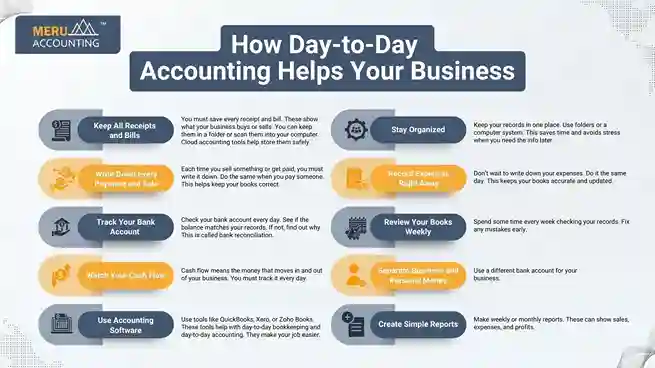
Keep All Receipts and Bills
You must save every receipt and bill. These show what your business buys or sells. You can keep them in a folder or scan them into your computer. Cloud accounting tools help store them safely.
Write Down Every Payment and Sale
Each time you sell something or get paid, you must write it down. Do the same when you pay someone. This helps keep your books correct.
Track Your Bank Account
Check your bank account every day. See if the balance matches your records. If not, find out why. This is called bank reconciliation.
Watch Your Cash Flow
Cash flow means the money that moves in and out of your business. You must track it every day.
Use Accounting Software
Use tools like QuickBooks, Xero, or Zoho Books. These tools help with day-to-day bookkeeping and day-to-day accounting. They make your job easier.
Stay Organized
Keep your records in one place. Use folders or a computer system. This saves time and avoids stress when you need the info later.
Record Expenses Right Away
Don’t wait to write down your expenses. Do it the same day. This keeps your books accurate and updated.
Review Your Books Weekly
Spend some time every week checking your records. Fix any mistakes early.
Separate Business and Personal Money
Use a different bank account for your business.
Create Simple Reports
Make weekly or monthly reports. These can show sales, expenses, and profits.
Bookkeeping Challenges Faced by Startups
Forgetting Small Expenses
Startups often miss tiny costs like snacks, taxi rides, or printer paper. These costs may seem small, but they build up over time. If you don’t write them down, your records will be wrong. Good day-to-day bookkeeping means nothing at any cost, even the small ones.
Not Checking the Bank Often
Some businesses forget to check their bank account. If you don’t check often, you might miss extra fees or bounced payments. Regular checks are part of good day-to-day accounting..
Mixing Personal and Business Money
A common mistake is using business money for personal things like clothes or dinner. Or using your own money for business items. This mixes everything up. Always keep business and personal money separate. This makes your books clear and easy to manage.
Losing Receipts and Bills
Receipts show what you spent and why. If you lose them, it’s hard to prove your costs. You might also forget what the payment was for. Keep all receipts in a safe place or take a photo of each one. It helps keep your bookkeeping principles strong.
Not Using Accounting Software
Some startups use paper or a basic spreadsheet to track money. But using accounting software for startups makes it easier. The software adds and sorts numbers for you. It helps you stay on top of your records without much work.
Why Bookkeeping Principles Matter
Record Every Transaction
Write down every time money comes in or goes out. Even small payments matter. This helps you know where your money is going and where it’s coming from.
Keep Records Updated
Don’t wait too long to write things down. If you wait, you might forget. You could miss something or write the wrong number.
Try to update your records every day. If not, do it at least once a week.
Use the Same Method Every Time
Pick one way to do your books and stick to it. For example, if you list your sales by date, always do that. Using the same method helps keep your records clean and easy to follow.
Follow the Rules Every Day
These rules are not just for tax time. They help all year long. When you follow good bookkeeping steps each day, your business stays strong. You can also avoid big problems later.
Bookkeeping Errors That Can Affect Startup Growth
1. Not Recording Small Expenses
Even small costs can affect cash flow. Missing them can lead to inaccurate records.
2. Skipping Regular Updates
Waiting too long to record transactions can cause confusion and errors.
3. No Backup of Records
Losing receipts or files can create problems during audits or tax filing.
4. Ignoring Tax Rules
Not knowing basic tax rates or deadlines can lead to penalties.
5. Overcomplicating the Process
Using too many tools or methods can make the work harder instead of easier.
Best Accounting Software for Startup Bookkeeping
1. Spreadsheets
Simple and effective for very small businesses starting out.
2. Cloud-Based Accounting Software
Gives real-time updates and easy access from anywhere.
3. Expense Tracking Apps
Helps you record costs instantly from your phone.
4. Invoicing Tools
Makes billing faster and sends automatic payment reminders.
5. Bank Integration
Syncs transactions directly into your bookkeeping system for accuracy.
How Good Bookkeeping Principles Support Business Growth
1. Better Decision Making
Clear records help you see exactly where your money is going.
2. Improved Cash Flow
Timely records help plan for payments and purchases.
3. Investor Confidence
Investors trust businesses with clear and accurate financial records.
4. Easier Loan Approvals
Banks prefer to work with businesses that have proper financial statements.
5. Stress Free Tax Filing
Accurate records make tax season simple and reduce stress.
Benefits of Maintaining Day to Day Bookkeeping
1. Clear View of Business Health
Accurate daily records give a true picture of your business.
2. Better Budget Control
You can compare spending with your budget and make changes fast.
3. Avoid Missed Payments
Daily tracking ensures bills, taxes, and supplier payments are on time.
4. Helps in Business Planning
Past data from day to day accounting supports planning and forecasts.
Role of Technology in Modern Bookkeeping Principles
1. Automation of Tasks
Software can handle routine work like invoices and payment reminders.
2. Data Security
Cloud systems keep your records safe from loss or damage.
3. Real Time Tracking
You can check business performance anytime, anywhere.
4. Integration with Other Tools
Connects with banking, payment systems, and inventory for smooth work.
How Startups Can Train Staff for Day-to-Day Accounting
1. Provide Basic Accounting Training
Teach staff to record transactions in the right way.
2. Use Easy-to-Follow Procedures
Clear steps make bookkeeping faster and error-free.
3. Assign Clear Roles
Decide who will manage cash, invoices, and reports.
4. Monitor and Review Work
Check entries often to keep records accurate.
Why Consistency is the Key in Bookkeeping Principles
1. Reduces Errors
Daily updates mean fewer mistakes than monthly updates.
2. Saves Time in the Long Run
Small daily work stops big backlogs from building up.
3. Builds Strong Habits
A fixed routine makes day-to-day bookkeeping a normal task.
4. Creates Reliable Data for Decisions
Consistent records lead to accurate and useful reports.
Effective day-to-day bookkeeping helps your startup grow. It shows you what is working and what needs to change. You avoid costly mistakes and stay ready for taxes. You save time and keep your money safe. If bookkeeping feels hard, don’t worry.
Meru Accounting offers professional services that help startups with all their day-to-day accounting and bookkeeping needs. With Meru Accounting, you can focus on growing your business while they handle the books.
FAQs
- What happens if I don’t do daily bookkeeping?
You may miss bills, forget payments, and lose money. You may also find it hard to pay taxes or plan your budget. - Is bookkeeping only needed at tax time?
No. You need to do bookkeeping every day. It keeps your records right and helps you see problems early. - Can I use paper instead of software?
Yes, but software makes things easier and faster. It also stores your data safely in the cloud. - Should I hire someone to do my bookkeeping?
If you are too busy or unsure, yes. Services like Meru Accounting help startups manage their books professionally. - How long should I keep records?
You should keep your business records for at least 5 to 7 years. They are needed for audits and tax purposes.