




Bookkeeping for a construction company is more than just managing invoices and receipts. It is a crucial tool that helps construction businesses stay organized, control costs, and ensure projects are completed on time.
Proper bookkeeping can directly influence the success of a construction project, helping managers make informed decisions, track expenses accurately, and maintain smooth cash flow.
In this blog, we explore how bookkeeping for a construction company can transform project management and provide practical construction bookkeeping tips to streamline your financial operations.
What You Will Learn From This Blog
- Bookkeeping for a construction company tracks income, expenses, and project costs accurately.
- Accurate financial records improve decision-making and prevent costly mistakes in projects.
- Proper bookkeeping ensures resources are used efficiently and budgets remain on track.
- Construction bookkeeping tips save time, reduce errors, and simplify financial reporting.
- Bookkeeping helps monitor payments from clients and to subcontractors promptly.
- Maintaining accurate records keeps your company compliant with tax and legal regulations.
- Financial tracking highlights risks early, allowing managers to take corrective actions.
- Organized bookkeeping supports planning, forecasting, and the successful completion of construction projects.
Why Accurate Bookkeeping Is Critical In Construction Management
Keeps Track Of Project Costs
Accurate bookkeeping allows managers to track costs for labor, materials, and subcontractors. This helps prevent overspending and identifies areas for cost savings.
Prevents Budget Overruns
Without proper bookkeeping, a construction project can quickly exceed its budget. Keeping detailed records ensures funds are used wisely.
Improves Payment Management
Proper bookkeeping ensures invoices are sent on time, and payments from clients are tracked. It also helps in timely payments to suppliers and workers.
Helps Identify Financial Risks
Bookkeeping for a construction company highlights trends in spending and revenue. This enables managers to take preventive measures before problems escalate.
Enhances Decision-Making
Managers with accurate financial data can make better decisions regarding project scope, hiring, and procurement. This reduces errors and project delays.
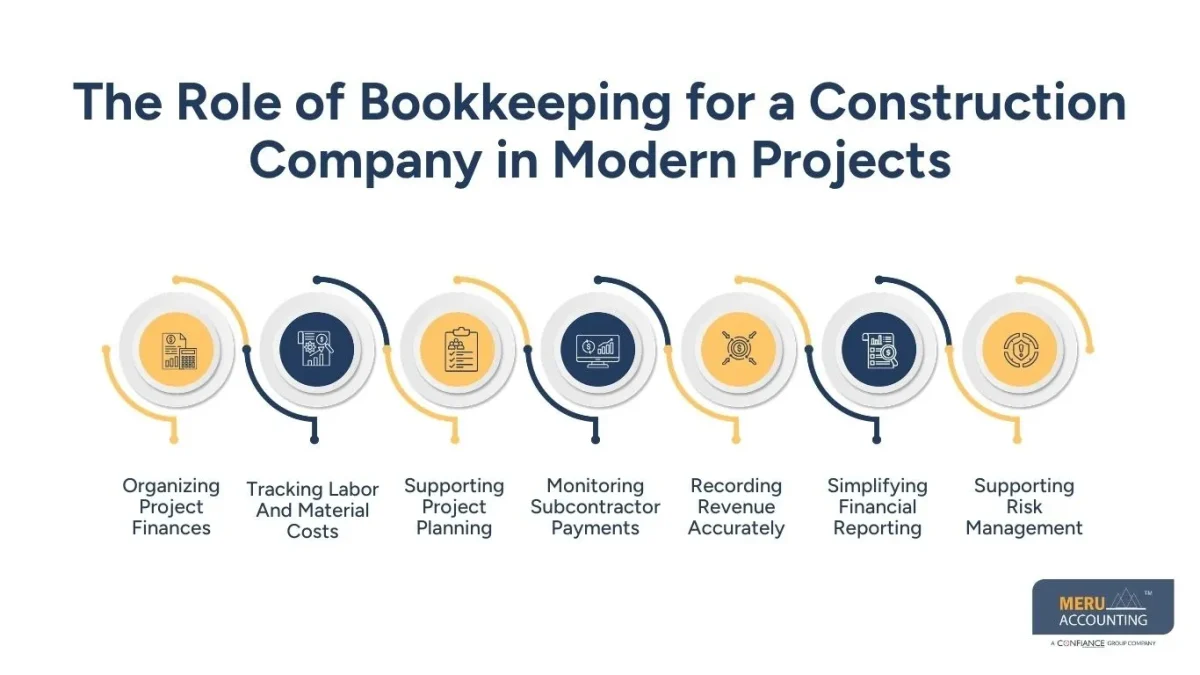
The Role of Bookkeeping for a Construction Company in Modern Projects
Organizing Project Finances
Bookkeeping for a construction company organizes all project-related financial data, making it easier to manage multiple projects simultaneously.
Tracking Labor And Material Costs
It records labor hours and material expenses for each project, giving clear insight into profitability and efficiency.
Supporting Project Planning
Construction bookkeeping tips include forecasting costs and planning budgets for upcoming projects. This ensures resources are allocated correctly.
Monitoring Subcontractor Payments
Bookkeeping tracks payments and contracts with subcontractors, reducing the risk of disputes or missed payments.
Recording Revenue Accurately
Proper bookkeeping ensures all revenue from clients is recorded and reconciled, preventing gaps in income tracking.
Simplifying Financial Reporting
Bookkeeping compiles financial data into clear reports, making project performance easy to evaluate.
Supporting Risk Management
Accurate records help identify potential financial risks early, allowing managers to take action.
Key Challenges Construction Companies Face Without Proper Bookkeeping
Uncontrolled Costs
Without bookkeeping for a construction company, costs can spiral out of control, leading to project losses.
Missed Payments And Delays
Without bookkeeping for a construction company, businesses risk delayed client payments or unpaid supplier invoices, affecting cash flow and relationships.
Inaccurate Budget Forecasts
Managers cannot predict project costs accurately without proper financial records, which can cause overruns.
Compliance Issues
Construction businesses may face fines or legal penalties for incorrect tax filings or missing reports.
Poor Decision-Making
Without accurate bookkeeping, project managers make decisions based on assumptions rather than actual data.
Lack Of Project Profit Visibility
Without proper bookkeeping, companies struggle to measure actual project profitability. This makes it difficult to identify which projects are performing well or causing losses.
Top Construction Bookkeeping Tips to Streamline Your Financial Processes
Separate Project Accounts
One of the most effective construction bookkeeping tips is to maintain separate accounts for each project to track income and expenses clearly.
Record Expenses Promptly
One of the most practical construction bookkeeping tips is updating financial records regularly to avoid errors and missed entries.
Use Job Costing
Among essential construction bookkeeping tips, allocating costs for materials, labor, and subcontractors to each job improves cost visibility.
Track Receivables And Payables
Monitor outstanding invoices and bills to maintain healthy cash flow and avoid late fees.
Automate Repetitive Tasks
Use construction bookkeeping software to automate recurring entries and calculations, saving time and reducing mistakes.
Regularly Reconcile Accounts
Regular reconciliation is one of the construction bookkeeping tips that helps identify discrepancies early by comparing financial records with bank statements.
Keep Documentation Organized
Maintain invoices, receipts, contracts, and purchase orders systematically for easy access during audits or project reviews.
How Bookkeeping Enhances Budgeting and Cost Control in Construction Projects
Detailed Budget Tracking
Bookkeeping for a construction company allows managers to track project budgets accurately, ensuring they do not exceed limits.
Early Identification Of Overruns
Regular financial monitoring highlights areas where costs are higher than planned, enabling quick corrective actions.
Accurate Cost Allocation
Assign expenses to the correct project or category, preventing cross-charges and maintaining financial clarity.
Better Resource Management
With proper bookkeeping, managers can identify resource inefficiencies and optimize labor or material usage.
Helps Plan Future Projects
Historical financial data from past projects informs budget planning for new projects, reducing surprises.
Improves Cost Forecasting
Bookkeeping helps estimate future project costs using past financial records. This supports more realistic budgets and spending plans.
Strengthens Budget Accountability
Clear financial records make teams accountable for staying within approved budgets. This reduces unnecessary spending across project phases.
The Impact of Construction Bookkeeping on Cash Flow Management
Predicting Cash Needs
Bookkeeping for a construction company helps forecast cash inflows and outflows for each project, preventing unexpected shortfalls.
Avoiding Payment Bottlenecks
Timely tracking of receivables ensures the company has funds to pay suppliers and staff without delays.
Managing Overheads Efficiently
Monitoring overhead costs ensures that funds are not unnecessarily tied up, improving liquidity.
Improving Client Billing
Bookkeeping for a construction company enables timely and accurate invoicing, speeding up client payments.
Strengthening Financial Stability
Proper cash flow management reduces stress on operations and ensures smooth project execution.
How Construction Bookkeeping Supports Compliance and Reporting
Accurate Tax Filings
Bookkeeping ensures all income, expenses, and deductions are recorded correctly for tax purposes.
Preparing Financial Statements
Financial reports, such as profit and loss statements and balance sheets, become accurate and reliable.
Meeting Legal Requirements
Proper record-keeping ensures compliance with local labor laws, tax regulations, and industry standards.
Simplifying Audits
Organized bookkeeping makes audits faster and less stressful, with all supporting documents readily available.
Maintaining Transparency
Clear financial records enhance trust with clients, partners, and investors, showing professional management.
Supporting Timely Regulatory Reporting
Bookkeeping helps prepare and submit required reports within deadlines. This reduces the risk of penalties and compliance-related delays.
Why Choose Meru Accounting for Construction Bookkeeping Services
Managing construction finances requires accurate tracking and industry-specific understanding. The right bookkeeping partner helps construction companies control costs, manage projects efficiently, and maintain financial clarity. Meru Accounting provides focused bookkeeping services tailored to construction businesses.
Expertise in Construction Accounting
Meru Accounting specializes in bookkeeping for a construction company, understanding industry-specific challenges.
Customized Solutions
Our team provides tailored services, addressing your unique project and financial requirements.
Timely Financial Reporting
We ensure you have up-to-date reports to make informed project management decisions.
Compliance Assurance
Meru Accounting keeps your records compliant with all regulations, reducing the risk of fines or penalties.
Efficient Cash Flow Management
We help construction companies maintain healthy cash flow for smooth project operations.
Experienced Professionals
Our accountants have years of experience in construction bookkeeping, providing reliable and accurate services.
Contact Meru Accounting today to get expert bookkeeping support that keeps your projects on track and your finances clear.
Key Takeaways
- Bookkeeping for a construction company is essential for project success, cost control, and cash flow management.
- Accurate bookkeeping prevents budget overruns, improves decision-making, and reduces financial risks.
- Implementing construction bookkeeping tips like job costing, separate project accounts, and regular reconciliations ensures smooth financial operations.
- Proper bookkeeping supports compliance, accurate reporting, and transparency for clients and investors.
- Partnering with Meru Accounting provides expert guidance and practical solutions for managing construction finances effectively.
FAQs
Bookkeeping for a construction company tracks job costs, labor, and materials accurately. This helps managers control budgets, avoid delays, and complete projects on time.
Construction companies often struggle with job cost tracking and cash flow gaps. Poor bookkeeping can also cause billing errors and budget overruns.
Job costing shows the true cost of each construction project. It helps measure profit, control expenses, and improve future project planning.
Construction bookkeeping tips include recording expenses regularly and separating job accounts. These steps help prevent overspending and improve cost visibility.
Yes, proper bookkeeping helps track costs and income for each project separately. It allows construction companies to manage several projects without financial confusion.


