



Running a construction business is not only about building homes, offices, or commercial spaces. It is also about managing money, tracking costs, and knowing where every dollar is going. Many builders focus heavily on project execution but overlook financial records. This is where bookkeeping for builders becomes critical. Construction work involves multiple projects, long timelines, changing costs, subcontractors, and material purchases. Without proper bookkeeping, profits can disappear without warning. Poor records lead to cash flow problems, tax stress, and delayed decisions.
Strong bookkeeping for builders gives clarity. It shows which projects make money and which ones do not. It helps builders plan better, control costs, and grow with confidence. When bookkeeping is done right, the entire construction business becomes more stable and predictable.
This blog explains how bookkeeping for builders can improve construction businesses in real and practical ways.
What You Will Learn From This Blog
- Why builders face unique financial challenges
- Common bookkeeping mistakes in construction
- Best practices for bookkeeping for builders
- How accounting for builders improves cost control
- Tools that simplify bookkeeping for builders
- How professional support can save time and money
By the end, you will see how organized bookkeeping directly improves profits, planning, and peace of mind.
Common Bookkeeping Challenges Builders Face
Bookkeeping for builders is different from bookkeeping for other businesses. Construction has its own set of financial problems that must be handled carefully. Projects run for long periods and involve many moving parts, which increases the risk of financial errors. Without proper systems, small issues can turn into major losses over time.
Multiple Projects at the Same Time
Builders often manage several projects together. Each project has different budgets, timelines, and expenses. Without proper bookkeeping, costs get mixed up. This makes it hard to know which project is profitable.
When expenses are combined, builders may underprice future work or repeat costly mistakes. Clear project wise tracking helps compare performance across jobs and supports better planning.
Accounting must track income and expenses by project. When this is not done, builders rely on guesswork instead of real numbers. This lack of clarity often leads to poor financial decisions and delayed corrective action.
Irregular Cash Flow
Construction cash flow is uneven. Payments come in stages while expenses happen daily. Poor bookkeeping makes cash shortages worse. Builders may not know when money is coming in or going out.
Delayed invoices and untracked expenses add to cash pressure. This can affect payroll, supplier payments, and ongoing work.
Strong accounting helps forecast cash flow and avoid sudden shortages. It also helps builders plan for slow periods and maintain enough working capital to keep projects moving.
Tracking Labor and Subcontractor Costs
Labor is one of the biggest costs in construction. Builders often work with subcontractors, daily wage workers, and long term staff. Without accurate bookkeeping, labor costs increase without control.
Overtime, rework, and unrecorded hours can quietly reduce profits. Labor disputes also become harder to resolve without proper records.
Accounting helps track labor by job, by phase, and by time period. This allows builders to identify inefficiencies and improve workforce planning for future projects.
Managing Material Costs
Material prices change often. Cement, steel, wood, and other supplies can increase suddenly. If bookkeeping is not updated regularly, cost overruns happen quietly.
Unused materials, theft, or wastage may go unnoticed without proper tracking. This directly impacts project margins.
Good accounting shows material usage and price changes clearly. It also helps builders negotiate better rates and plan purchases more effectively.
Tax and Compliance Pressure
Builders deal with multiple taxes, permits, and compliance rules. Missing records lead to penalties. Weak bookkeeping creates stress during tax filing.
Last minute data collection increases the risk of errors and missed deadlines. This can also affect the builder’s reputation and credibility.
Accounting ensures records are ready and accurate when needed. Proper documentation makes audits easier and reduces the risk of legal or financial trouble.
Best Practices to Improve Bookkeeping for Builders
Improving bookkeeping for builders does not mean making things complex. It means creating simple systems that work every day.
Separate Business and Personal Finances
Many builders mix personal and business spending. This creates confusion and errors. Bookkeeping for builders must start with separate bank accounts.
Accounting becomes cleaner when personal expenses are not mixed with project costs.
Track Costs by Project
Each project must have its own records. Bookkeeping should track materials, labor, permits, and overheads separately for every job.
This practice helps builders understand real profit margins and make better pricing decisions.
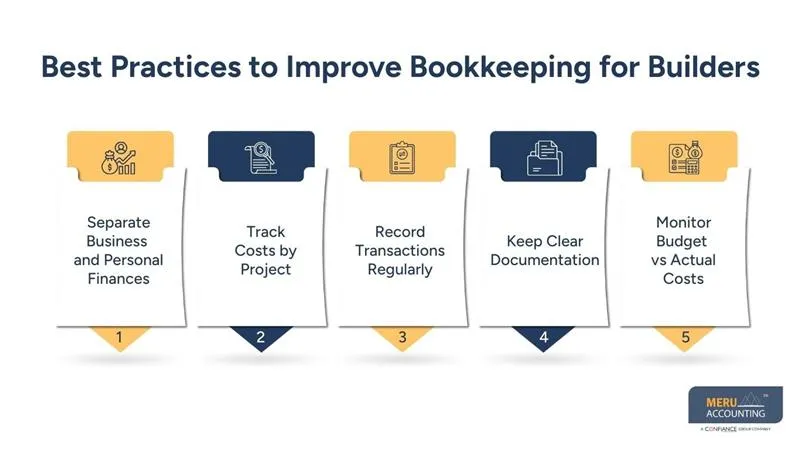
Record Transactions Regularly
Delays cause mistakes. Bookkeeping should be updated weekly or even daily. Waiting until month end increases errors.
Accounting works best when data is current and accurate.
Keep Clear Documentation
Invoices, receipts, contracts, and payment proofs must be saved. Bookkeeping depends on good documentation.
Accounting becomes audit ready when records are organized and easy to find.
Monitor Budget vs Actual Costs
Budgets are only useful if compared with actual spending. Bookkeeping should include budget tracking.
Accounting highlights cost overruns early so builders can take action.
Tips for Streamlining Accounting for Builders
Accounting for builders does not need to consume all your time. With the right approach, it can become simple and efficient.
Standardize Expense Categories
Create clear categories for labor, materials, equipment, and overhead. Bookkeeping becomes easier when expenses are consistent.
Accounting benefits from standard reports and formats.
Automate Where Possible
Automation reduces errors. Accounting improves when bank feeds, invoice uploads, and payment tracking are automated.
Bookkeeping becomes faster and more reliable with automation.
Review Financial Reports Monthly
Builders should review profit and loss reports, cash flow statements, and job cost reports every month. Bookkeeping is only useful when reviewed.
Accounting supports smarter decisions when reports are understood.
Work With Construction Accounting Experts
Construction accounting is specialized. Working with professionals who understand accounting for builders reduces mistakes.
Bookkeeping improves when handled by experts familiar with construction workflows.
Top Software Solutions for Bookkeeping for Builders
Technology has transformed bookkeeping for builders. The right software simplifies tracking and reporting.
QuickBooks for Builders
QuickBooks is widely used for bookkeeping for builders. It supports job costing, expense tracking, and reporting.
Accounting becomes easier with real time financial data.
Xero for Construction Businesses
Xero offers cloud based bookkeeping. It allows access from anywhere and supports integrations.
Accounting for builders benefits from automated bank feeds and reports.
Buildertrend
Buildertrend focuses on construction project management with financial tracking. It supports bookkeeping for builders by linking costs to jobs.
Accounting for builders improves with project level visibility.
Sage Construction Accounting
Sage is designed for construction accounting for builders. It handles complex job costing and payroll needs.
Bookkeeping for builders becomes more accurate with industry specific tools.
FreshBooks for Small Builders
FreshBooks works well for small construction businesses. It simplifies invoicing and expense tracking.
Accounting for builders stays simple and user friendly.
How Meru Accounting Supports Bookkeeping for Builders
At Meru Accounting, we understand that builders face unique financial challenges. Our bookkeeping for builders services are designed specifically for construction businesses.
We help builders track project costs accurately. Our team manages daily records, reconciles accounts, and prepares clear reports. With our bookkeeping support, you always know where your money stands.
Our accounting services for builders focus on cash flow, job costing, and compliance. We work with your software or help you choose the right tools.
Meru Accounting becomes an extension of your team. We reduce your workload so you can focus on building projects, not spreadsheets. With our bookkeeping services, builders gain clarity, control, and confidence.
Key Takeaways
- Bookkeeping for builders is essential for profitability and growth
- Construction businesses face unique accounting challenges
- Accurate accounting for builders improves cost control
- Project based bookkeeping helps identify profitable jobs
- Software tools simplify bookkeeping for builders
- Professional support saves time and reduces errors
FAQs
Bookkeeping for them involves job costing, long project timelines, and complex expenses. It must track costs by project, not just by month.
For builders, bookkeeping should be updated at least weekly. Regular updates improve accuracy and decision making.
Yes. Even small builders gain better cash flow control and tax compliance with professional accounting for builders.
For builders, job cost reports, cash flow statements, and profit and loss reports are critical in bookkeeping.
Outsourcing bookkeeping for builders saves time, reduces errors, and ensures compliance. It allows builders to focus on construction work instead of paperwork.


