



Bookkeeping for construction industry businesses is different from retail or service sectors. Projects often span months or years and involve multiple costs like labor, materials, equipment, and subcontractors. Without accurate records, even profitable projects can appear weak, causing confusion for owners and managers.
Many issues, such as delayed payments and unclear job costs, arise from weak bookkeeping rather than poor performance. Modern construction bookkeeping uses digital tools and professional services to track job costs, billing, and cash flow.
Accurate records give contractors clear insights into project performance and support smarter financial decisions. Implementing proper systems ensures better control, reduces risks, and enables stable, long-term growth.
What You Will Learn From This Blog
- Basics of bookkeeping for construction industry
- Why standard bookkeeping methods fail in construction
- How job-based bookkeeping works in real construction projects
- Common bookkeeping mistakes contractors make
- How these mistakes impact cash flow and taxes
- Ways to avoid weak bids and poor job planning
- Real examples of better control and higher profit
Key Principles of Bookkeeping for Construction Industry
Bookkeeping for construction industry businesses is built around job-based tracking instead of simple income and expense logs. Each project has its own budget, timeline, and cost structure. Bookkeeping must match this level of detail to provide useful insights.
Job Costing and Project Tracking
Job costing is a key part of bookkeeping for construction industry operations, tracking labor, materials, equipment, and subcontractor fees.
Linking each cost to the correct job allows contractors to compare estimates with actual spending. Professional bookkeeping ensures accurate, regularly reviewed records to correct issues early.
Revenue Recognition Methods
Construction businesses often recognize revenue over time using methods like percentage of completion or completed contract.
Consistent revenue recognition ensures financial reports reflect true project progress. A reliable construction bookkeeping service applies the correct method and aligns records with contracts.
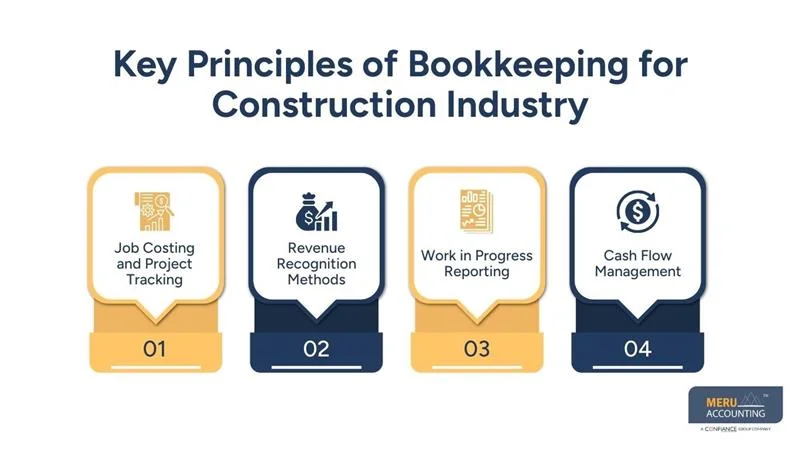
Work in Progress Reporting
Work in progress reports compare costs incurred, revenue recognized, and invoices sent, helping identify overbilling or underbilling early.
These reports are essential for strong cash flow planning. Construction accounting services review them regularly to avoid surprises.
Cash Flow Management
Construction projects often face cash pressure as costs precede payments. Bookkeeping for construction industry tracks receivables, payables, and retainage to plan payroll, vendor payments, and taxes.
Professional services provide a clear view of inflows and outflows, helping contractors avoid cash gaps.
Common Bookkeeping Mistakes Construction Companies Make
Many construction businesses struggle financially due to simple bookkeeping mistakes. These issues often stay hidden until cash flow or tax problems appear. Knowing these risks helps improve bookkeeping for construction industry operations.
Poor Job Cost Tracking
One common mistake is failing to track costs by job. When expenses are not assigned correctly, contractors cannot identify problem areas. This leads to inaccurate bids and reduced profit.
Bookkeeping for construction industry requires job-level detail at all times. A construction bookkeeping service helps assign every cost to the correct project and category.
Mixing Business and Personal Finances
Some contractors mix personal and business expenses. This creates unclear records and makes tax reporting more difficult. It also hides the true financial performance of the business.
Strong bookkeeping for construction industry keeps accounts separate and clean. A professional construction bookkeeping and accounting service sets clear systems to avoid confusion.
Delayed Invoicing and Billing Errors
Late or incorrect invoices slow down cash flow and damage client trust. Many contractors struggle with progress billing and change orders. These delays reduce available cash and increase stress.
A construction bookkeeping service helps schedule billing accurately and reduce errors. Timely invoicing supports steady cash flow and better planning.
Ignoring Work in Progress Reports
Some contractors do not review work-in-progress reports regularly. This causes billing gaps that hurt cash flow. Problems often grow before they are noticed.
Construction industry bookkeeping depends on frequent review of work-in-progress data. Early checks support better control and lower financial risk.
Best Practices for Smarter Financial Decisions in Construction
Strong bookkeeping habits help construction businesses make confident financial decisions. These practices improve accuracy, trust, and long-term stability.
Use Project-Based Bookkeeping Systems
Project-based bookkeeping links financial data directly to job activity. It allows contractors to see profit by project and task. This view improves job pricing and planning.
Bookkeeping for construction industry works best with systems designed for contractors. A construction bookkeeping service helps set up and manage these systems effectively.
Review Financial Reports Regularly
Regular review of financial reports helps spot trends and issues early. Contractors should review income statements, balance sheets, and work-in-progress reports monthly. This habit builds strong financial discipline.
Bookkeeping provides value only when reports guide action. A construction bookkeeping service prepares reports that are easy to understand and use.
Improve Budgeting and Forecasting
Clear budgets support smart decisions throughout the job lifecycle. Forecasting helps plan labor, materials, and cash needs. This reduces stress and surprise costs.
Using historical data from bookkeeping for construction industry improves forecast accuracy. A construction accounting service uses past records to support better planning.
Maintain Strong Compliance Practices
Construction businesses face complex tax and labor regulations. Payroll taxes, sales taxes, and contractor rules must be handled correctly. Errors can result in penalties.
Professional bookkeeping for construction industry supports compliance at every stage. A construction bookkeeping service ensures accurate records and timely filings.
Case Studies: Construction Companies That Improved Finances with Better Bookkeeping
Case Study 1: Residential Contractor Improves Job Profit
A mid-sized residential contractor struggled with unclear job costs and shrinking margins. They hired a construction accounting service to improve job cost tracking. All expenses were linked to specific projects and compared with estimates.
With improved bookkeeping for construction industry practices, management identified cost overruns early. Corrections were made before job completion. Profit margins improved within one year.
Case Study 2: Commercial Builder Improves Cash Flow
A commercial builder faced frequent cash shortages due to late billing. They worked with a construction bookkeeping service to improve progress billing. Invoices were sent on time with proper documentation.
Bookkeeping became consistent and reliable. Cash flow stabilized, and vendor payments improved. The business gained stronger financial control.
Case Study 3: Specialty Contractor Gains Better Reports
A specialty trade contractor lacked clear financial reports. Decisions were made based on guesswork rather than data. After improving bookkeeping for construction business systems, reports became accurate and timely.
Management gained clear insight into job performance. Hiring and spending decisions improved as a result.
Meru Accounting’s Construction Bookkeeping Service
Meru Accounting provides expert bookkeeping for construction industry businesses that need clarity and control. We understand construction-specific needs such as job costing, work in progress tracking, and cash flow management. Our construction bookkeeping service supports smarter decisions at every growth stage.
Our construction bookkeeping and accounting service includes:
- Job costing and project expense tracking
- Work in progress reporting and review
- Progress billing and invoice management
- Cash flow tracking and planning support
- Setup and management of construction bookkeeping systems
- Payroll processing for construction teams
- Contractor tax planning and compliance support
- Financial reports for owners and managers
- Budget setup and job cost forecasting
- Year-end support with audit-ready records
Our team sets up and manages systems based on your business needs. We keep job costs, billing, and reports accurate and easy to review. This gives real-time insight into project performance.
Streamline your construction finances and gain real-time insight into every project. Let professional bookkeeping handle the numbers so you can focus on building. Contact Meru Accounting for expert construction bookkeeping tailored to your business needs.
Key Takeaways
Bookkeeping for construction industry businesses works best with job-based systems and clear tracking. Strong bookkeeping supports profit, cash flow, and steady growth.
- Job-based bookkeeping is essential for construction companies
- Standard bookkeeping does not fit construction work
- Job costing shows true project profit
- Work in progress reports protect cash flow
- Avoiding common errors saves time and money
- A construction bookkeeping service improves accuracy and speed
- Clear data supports smarter financial decisions
- Expert support builds long-term trust and stability
FAQs
Bookkeeping for construction tracks long-term projects, job costs, and progress billing. Each job has unique budgets and risks, requiring job-based systems instead of standard bookkeeping.
A construction bookkeeping and accounting service manages job costing, billing, payroll, reporting, and compliance. Accurate records support better cash flow, planning, and project control.
Job costing highlights real project profits and cost issues early. It improves bidding accuracy, planning, and overall financial control.
Small contractors benefit from construction bookkeeping services by improving cash control and tax accuracy. It also supports growth without hiring full-time staff.
Meru Accounting manages bookkeeping systems, reports, and compliance for construction businesses. Our services help contractors make smarter financial decisions and stay on track.


