



Managing multiple construction projects can be complex, and the financial side often becomes overwhelming without proper systems in place. Bookkeeping for home builders is a critical part of keeping projects on track, staying within budget, and ensuring profitability.
Choosing the right approach not only helps track expenses and revenue but also ensures compliance with tax regulations. In this blog, we will guide you through understanding bookkeeping for home builders and selecting the best method of accounting for builders to manage multiple projects effectively.
What You Will Learn From This Blog
- Importance of accurate bookkeeping for home builders.
- Differences between various methods of accounting for builders.
- Key factors to consider when choosing a method of accounting.
- Best practices to maintain clear and accurate financial records.
- Common mistakes to avoid in construction bookkeeping.
By the end of this blog, home builders will have a clear understanding of how to maintain financial records that support smooth project execution and business growth.
Understanding Bookkeeping for Home Builders
Bookkeeping for home builders involves recording all financial transactions related to construction projects. This includes labor costs, material purchases, subcontractor payments, and project revenues. Accurate bookkeeping ensures builders have clear insights into cash flow and project profitability.
Importance of Organized Records
Proper bookkeeping allows home builders to organize project costs, track expenses, and reconcile accounts efficiently. It provides a clear financial picture for each project and the business as a whole.
Tracking Multiple Projects
Home builders often manage several projects simultaneously. Bookkeeping for home builders helps track costs and revenues individually for each project, preventing overspending and improving decision-making.
Financial Statements for Builders
Bookkeeping provides the basis for financial statements like balance sheets, income statements, and cash flow reports. These documents help builders understand the financial health of their projects.
Budgeting and Forecasting
By maintaining accurate bookkeeping for residential builders, businesses can forecast future expenses, create budgets, and plan resources more effectively.
Why Accurate Bookkeeping is Critical for Home Builders
Avoiding Cash Flow Issues
Accurate bookkeeping for home builders ensures all payables and receivables are tracked, preventing cash shortages that could stall projects.
Tax Compliance
Bookkeeping helps home builders maintain records needed for taxes. It ensures compliance with federal, state, and local tax regulations, reducing the risk of penalties.
Tracking Profitability
With accurate bookkeeping, home builders can measure profitability for each project and make adjustments to improve margins.
Managing Project Costs
Bookkeeping for home builders allows businesses to identify areas where costs are high and find ways to reduce unnecessary spending.
Supporting Business Growth
Clear and organized financial records give builders insights into successful projects, helping them make informed decisions for future growth.
Understanding Different Methods of Accounting for Builders
Cash Method Accounting
In this method, income and expenses are recorded when money is received or paid. It’s simpler but may not give a complete financial picture for larger projects.
Accrual Method Accounting
Revenue and expenses are recorded when they are earned or incurred, not when money changes hands. This method of accounting for builders provides a more accurate view of financial performance over time.
Percentage-of-Completion Method
Commonly used in construction, this method of accounting for builders records revenue and expenses based on project completion. It is especially useful for long-term contracts.
Completed-Contract Method
Revenue and expenses are recorded only when a project is finished. This method is simpler but may delay understanding profitability until project completion.
Hybrid Approaches
Some home builders combine methods based on project needs. Choosing the right Accounting method for construction businesses ensures accuracy and compliance with financial regulations.
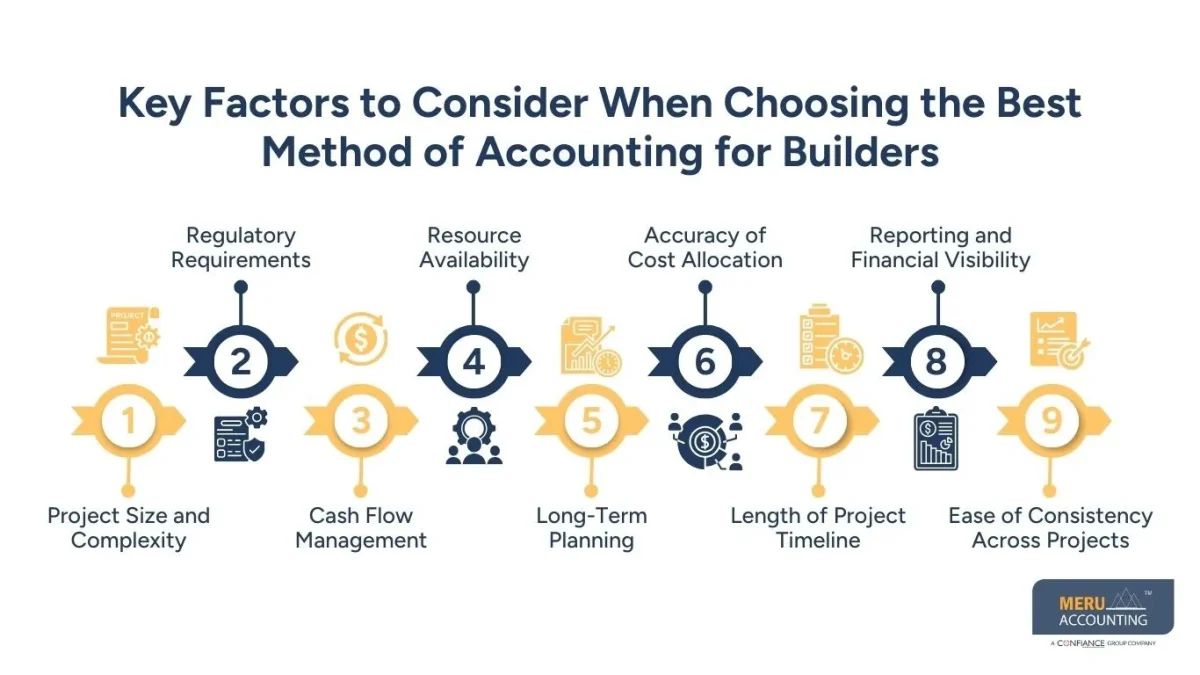
Key Factors to Consider When Choosing the Best Method of Accounting for Builders
Project Size and Complexity
Larger, multi-phase projects often benefit from the accrual or percentage-of-completion methods, while smaller projects may be suited to cash-based bookkeeping.
Regulatory Requirements
Certain methods of accounting for builders are required for tax purposes. Builders must ensure their chosen method complies with local tax rules.
Cash Flow Management
Builders need a method that allows them to track and manage cash flow effectively to avoid shortages that could affect project timelines.
Resource Availability
The accounting method should match the skills and resources available in-house or through an outsourced provider.
Long-Term Planning
A good method of accounting for builders should support financial forecasting, budget planning, and project profitability analysis.
Accuracy of Cost Allocation
The right accounting method for construction businesses should allow costs to be assigned correctly to each project. This helps builders understand true project expenses and avoid cost overruns.
Length of Project Timeline
Long-term construction projects often require accounting methods that spread income and expenses over time. Short-term projects may not need the same level of tracking.
Reporting and Financial Visibility
Builders should choose a method that provides clear and timely financial reports. Better visibility makes it easier to review project performance and make adjustments.
Ease of Consistency Across Projects
Using a method of accounting for builders that can be applied consistently across all projects reduces confusion. Consistency also makes financial reviews and comparisons easier.
Popular Bookkeeping Methods for Home Builders
Manual Bookkeeping
This traditional method uses spreadsheets or ledgers. While simple, it is time-consuming and prone to errors for builders managing multiple projects.
Software-Based Bookkeeping
Software solutions designed for construction accounting automate tasks like invoicing, expense tracking, and reporting, making bookkeeping for home builders more accurate.
Cloud-Based Solutions
Cloud accounting allows real-time updates, multi-project tracking, and easy collaboration with accountants or project managers.
Outsourced Bookkeeping Services
Hiring a professional team ensures accurate records and compliance with accounting standards. Outsourced services often use advanced software to manage bookkeeping for home builders efficiently.
Integrated Project Accounting
Some systems integrate project management with bookkeeping, offering a comprehensive view of financial and operational performance.
Best Practices in Bookkeeping for Home Builders
Maintain Detailed Records
Track all receipts, invoices, and project costs. Detailed records make audits and tax filing easier.
Separate Project Accounts
Use separate accounts for each project to track income and expenses accurately. This improves financial visibility and reduces errors.
Reconcile Accounts Regularly
Regular reconciliation ensures that project and business accounts are accurate and up-to-date.
Monitor Cash Flow
Keep a close eye on cash inflows and outflows to prevent project delays caused by funding issues.
Review Financial Reports Monthly
Monthly financial reviews help identify issues early, allowing builders to take corrective action before problems escalate.
How the Right Method of Accounting for Builders Improves Project Profitability
Accurate Cost Tracking
Choosing the right method of accounting for builders ensures that every expense is recorded correctly, helping builders manage budgets efficiently.
Better Decision Making
Accurate financial data enables informed decisions on resource allocation, material purchases, and subcontractor management.
Timely Billing and Collections
With proper bookkeeping, builders can invoice clients promptly and track payments to maintain steady cash flow.
Enhanced Financial Visibility
A clear view of project finances allows builders to identify profitable projects and allocate resources to maximize returns.
Risk Management
The right accounting method helps identify potential financial risks early, allowing builders to address them before they affect project profitability.
Common Mistakes Home Builders Make in Bookkeeping and How to Avoid Them
Mixing Personal and Business Expenses
Separating personal and project accounts prevents confusion and simplifies financial reporting.
Ignoring Project-Specific Costs
Track costs for each project individually. Ignoring this can lead to inaccurate profitability calculations.
Delaying Record Updates
Update records regularly to ensure data accuracy. Delays can result in missed expenses or incorrect reporting.
Overlooking Tax Obligations
Proper bookkeeping for home builders includes setting aside funds for taxes and maintaining compliance with tax regulations.
Using Inadequate Accounting Methods
Choosing the wrong accounting method for construction businesses can result in inaccurate financial data, affecting decision-making and profitability.
Why Choose Meru Accounting for Bookkeeping for Home Builders
Choosing the right bookkeeping partner is essential for home builders managing multiple projects and detailed financial records. Meru Accounting provides dedicated bookkeeping for home builders, helping ensure accuracy, clarity, and better financial control across every project stage.
Expertise in Construction Accounting
Meru Accounting specializes in bookkeeping for home builders, ensuring that each project’s finances are accurately recorded.
Customized Solutions
We tailor our services to match the scale and complexity of your projects, selecting the right method of accounting for builders for your needs.
Experienced Professionals
Our team of certified accountants has extensive experience in managing multi-project bookkeeping and financial reporting.
Software Integration
We use advanced construction accounting software to streamline bookkeeping for residential builders, improving accuracy and efficiency.
Support for Compliance
Meru Accounting ensures your financial records comply with all tax regulations, reducing risk and helping you focus on project execution.
Contact Meru Accounting to simplify bookkeeping for home builders and gain better control over project finances. Get started today to maintain accurate records, improve financial visibility, and support consistent project performance.
Key Takeaways
- Accurate bookkeeping for home builders is essential for managing multiple projects effectively.
- Choosing the right method of accounting for builders improves cost control, cash flow management, and profitability.
- Regular record-keeping, account reconciliation, and financial reporting are best practices every home builder should follow.
- Meru Accounting provides expert services to simplify bookkeeping, enhance financial visibility, and support business growth.
FAQs
The best option depends on project size and duration. Many builders choose accrual or percentage-based methods for better project tracking.
Bookkeeping for home builders helps track project-wise costs, monitor cash flow, avoid overspending, and understand which projects are profitable.
For long-term projects, the percentage-based accounting method for construction businesses is often suitable because it records income and expenses based on project progress.
Proper bookkeeping for home builders allows clear tracking of labor, materials, and subcontractor costs for each project, making it easier to control budgets and reduce losses.
Yes, professional services can guide home builders in selecting the right method of accounting for builders based on project volume, tax needs, and business goals.


