




Trust accounting for law firms plays a central role in protecting client money and maintaining professional responsibility. Law firms regularly handle retainers, settlements, and advance payments that legally belong to clients, not the firm. If these funds are not handled correctly, even small errors can lead to penalties, audits, or loss of client confidence.
This is why trust accounting for law firms is not optional. It is a required practice that supports compliance, accuracy, and transparency. Using the right processes and tools, including legal trust accounting software, helps law firms meet their obligations while keeping client funds safe.
What You Will Learn From This Blog
- Understand why trust accounting for law firms exists and how it helps prevent errors, misuse of client funds, and compliance issues.
- Learn how law firms protect client money by using proper trust accounting methods and clear record-keeping practices.
- See how regulatory rules and professional guidelines affect trust accounting for law firms and why following them is important.
- Discover how legal trust accounting software helps improve accuracy, reporting, and overall control of client funds.
- Learn how professional accounting support helps law firms maintain compliance and manage trust accounting responsibilities with confidence.
Understanding Trust Accounting For Law Firms
Trust accounting for law firms is one of the most sensitive areas of legal financial management. Law firms regularly handle client money that must be recorded, tracked, and reported with complete accuracy.
Strict rules govern how these funds are received, held, and disbursed, making trust accounting for law firms a critical compliance responsibility rather than a routine bookkeeping task.
Mistakes in trust accounting for law firms often occur due to manual record keeping, limited oversight, or poor reconciliation practices. Even small errors can lead to regulatory action and harm a firm’s professional standing.
Using clear systems, proper internal controls, and legal trust accounting software helps reduce these risks and supports consistent compliance with trust account rules.
At its core, law firm trust accounting focuses on managing money that belongs to clients, not the firm. Client funds must always remain separate from operating accounts, with every transaction clearly documented and easy to trace.
Regular reviews and accurate records help ensure ongoing monitoring and audit readiness, allowing law firms to respond quickly and confidently when reviews or inspections occur.
Why Protecting Client Funds Is Critical For Law Firms
Client trust is the foundation of any legal practice. Trust accounting for law firms protects both clients and the firm itself.
Ethical Responsibility
Lawyers have an ethical duty to protect client funds. Proper handling of trust money reflects professional responsibility standards.
Regulatory Expectations
Bar associations closely monitor law firm trust account activities. Failure to follow rules can result in penalties or disciplinary action.
Risk Reduction
Proper trust accounting for law firms reduces financial disputes. Accurate records help prevent errors and client-related conflicts.
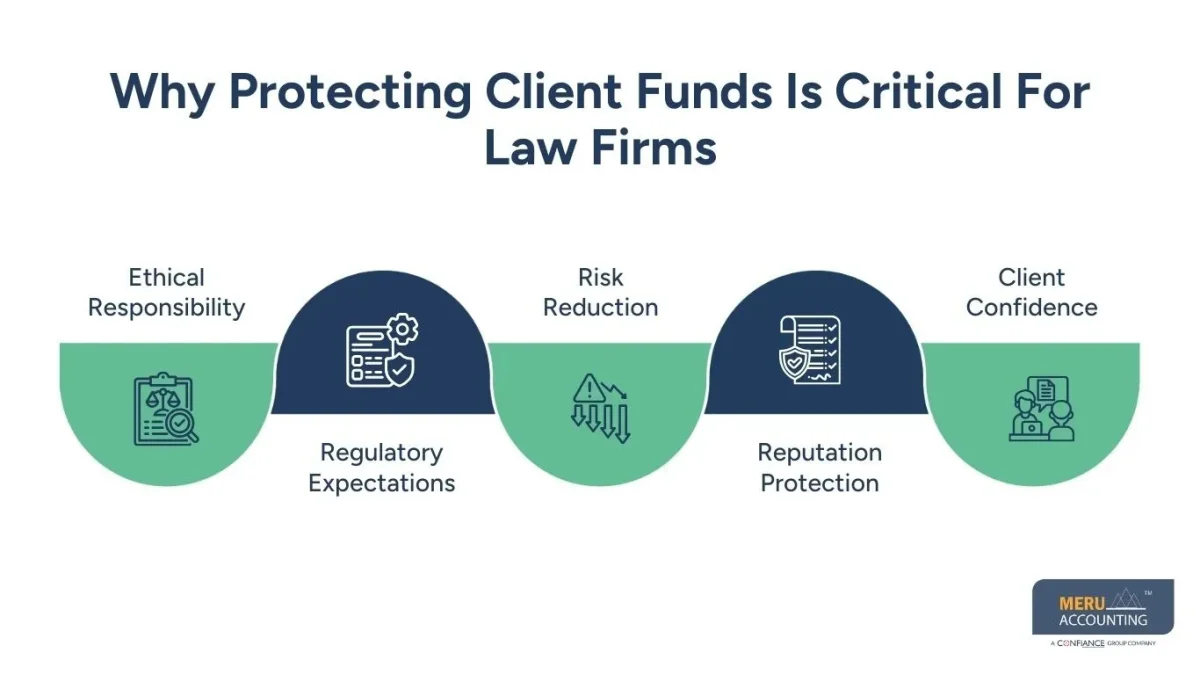
Reputation Protection
Mishandling client funds seriously harms long-term firm credibility. Strong trust practices help maintain a positive professional image.
Client Confidence
Transparent trust fund handling builds strong and lasting client confidence. Clients feel secure when their funds are managed responsibly.
Difference Between Operating Accounts And Trust Accounts
Understanding the difference between these accounts is essential for trust accounting for law firms.
Aspect | Operating Accounts | Trust Accounts |
Purpose | Used for firm expenses such as rent and payroll | Hold money received on behalf of clients |
Ownership Of Funds | Funds belong to the law firm | Funds legally belong to clients |
Fund Separation | Can only contain firm operating money | Trust accounting for law firms requires strict separation |
Withdrawals | Funds are withdrawn for daily business expenses | Funds move only when legally allowed |
Documentation | Records support internal firm operations | Each account serves a specific compliance purpose |
Regulatory Requirements Governing Client Funds
Trust accounting for law firms is governed by strict professional rules.
Bar Association Rules
Local bar councils define strict standards for trust fund handling. Law firms must follow these rules to maintain compliance.
Record Retention Rules
Firms must store trust accounting records for the required periods. Proper storage helps support audits and regulatory reviews.
Regular Reconciliations
Monthly reconciliations are often required for trust accounts. These checks help identify errors and maintain accurate balances.
Client Ledger Maintenance
Individual client balances must be tracked separately and accurately. Clear ledgers support transparency in Law firm trust accounting
Audit Cooperation
Firms must provide trust records when regulators request them. Timely cooperation helps reduce audit-related compliance issues.
The Role Of Trust Accounting For Law Firms In Client Fund Protection
Trust accounting for law firms acts as a safeguard system for client money.
Transaction Tracking
Each client’s deposit and payment are recorded clearly. Detailed tracking helps maintain accuracy in trust accounting records.
Error Prevention
Proper internal controls help reduce common accounting mistakes. Regular reviews prevent small issues from becoming major problems.
Transparency Support
Clients can review how their trust funds are handled. Clear records improve openness in trust accounting for law firms.
Compliance Support
Law firm trust accounting aligns with the required legal rules. Consistent processes help firms meet regulatory expectations effectively.
Financial Clarity
Accurate trust records support better financial decision-making. Clear information helps firms manage client funds responsibly.
Key Challenges Law Firms Face In Managing Trust Accounts
Managing trust accounts can be complex without proper systems.
Manual Errors
Using spreadsheets and manual records increases the risk of mistakes. Small errors can lead to serious compliance and accounting problems.
Time Constraints
Staff may not have sufficient time for detailed account reviews. Delays in review can create gaps in trust fund management.
Changing Regulations
Rules for trust accounts can vary across different jurisdictions. Firms must stay updated to ensure ongoing regulatory compliance.
Limited Visibility
Without proper tools, tracking client balances becomes very difficult. Lack of clear visibility can lead to accounting inconsistencies.
Reconciliation Issues
Missed or late reconciliations create gaps in compliance records. Regular reconciliation ensures trust accounts remain accurate and accountable.
How Legal Trust Accounting Software Improves Compliance
Legal trust accounting software supports trust accounting for law firms by improving accuracy and consistency.
Automated Record Keeping
Automated systems reduce manual data entry errors significantly. This improves accuracy across trust accounting for law firms.
Client Ledger Tracking
Client ledgers track balances for each client separately. Separate tracking supports transparency in trust accounting processes.
Built-In Compliance Checks
Built in compliance checks flag unusual or risky transactions. Early alerts help prevent trust accounting violations issues.
Easy Reconciliation
Automated reconciliation simplifies the monthly trust account review processes. Consistent reconciliation supports compliance and accurate client balances.
Audit-Ready Reports
Audit-ready reports provide clear and organized compliance documentation. These reports help law firms respond confidently to audits.
Essential Features To Look For In Legal Trust Accounting Software
Choosing the right legal trust accounting software is important.
Separate Client Ledgers
Separate client ledgers support accurate trust accounting for law firms. They prevent mixing client funds with operating accounts.
Automated Reconciliations
Automated reconciliations save time and reduce common accounting errors. They ensure trust balances remain accurate and up to date.
Access Controls
Access controls limit who can handle sensitive trust funds. This reduces the risk of misuse or unauthorized transactions.
Clear Reporting Tools
Clear reporting tools help meet legal and regulatory requirements. They support transparency in Law firm trust accounting
Integration Support
Integration support allows software to work with existing systems. This improves efficiency without disrupting current accounting processes.
How Professional Accounting Support Helps Law Firms Stay Compliant
Expert guidance strengthens trust accounting for law firms.
Policy Setup Support
Policy setup support helps define clear trust handling procedures. Well-defined policies reduce confusion and compliance risks.
Ongoing Monitoring
Ongoing monitoring reviews trust transactions regularly for accuracy. Regular oversight helps detect issues before they escalate.
Reconciliation Assistance
Reconciliation assistance ensures trust balances match recorded transactions. Accurate reconciliations support compliance with trust accounting rules.
Compliance Reviews
Compliance reviews identify gaps before audits or regulatory inspections. Early identification helps law firms correct issues promptly.
Software Guidance
Software guidance helps firms use Trust accounting software for law firms correctly. Proper use improves accuracy and long-term compliance outcomes.
Why Law Firms Choose Meru Accounting For Trust Accounting Support
Choosing the right accounting partner is essential for managing client trust funds accurately. Law firms need experienced support to meet trust accounting requirements while avoiding compliance risks. Meru Accounting offers dedicated trust accounting services designed specifically for law firms.
Law Firm Focused Expertise
Deep understanding of trust accounting rules and legal compliance needs. Specialized accounting services are designed specifically for law firms.
Accurate Trust Record Management
Clear and reliable trust accounting records are maintained consistently. Accurate documentation helps law firms meet regulatory requirements confidently.
Legal Trust Accounting Software Support
Guidance is provided for selecting legal trust accounting software. Systems are managed correctly to improve accuracy and efficiency.
Compliance-First Approach
Accounting processes align fully with regulatory trust accounting standards. Compliance remains a priority across all trust accounting services.
Ongoing Advisory Support
Continuous advisory support is available as rules and needs change. Ongoing guidance helps law firms adapt without compliance risks.
Key Takeaways
- Trust accounting for law firms protects client money and firm credibility
- Clear separation of trust and operating accounts is required
- Regulatory compliance depends on accurate records
- Legal trust accounting software improves accuracy and control
- Professional accounting support reduces compliance risks
FAQs
Law firm trust accounting is the process of recording and managing client funds separately from business income. It is required to protect client money and to follow the bar association rules.
If trust accounting for law firms is not done correctly, the firm may face audits, penalties, or disciplinary action. In serious cases, it can also lead to loss of license.
Trust accounting software for law firms helps law firms track client balances, record transactions accurately, and prepare reports needed for compliance and audits.
A trust account holds client funds, while an operating account is used for firm expenses. Law firm trust accounting requires these accounts to stay completely separate.
Yes, even small law firms must follow trust accounting for law firms rules. Legal trust accounting software helps small firms reduce errors and manage compliance more easily.


