A $5 latte might seem like a good sale, but how much of that $5 does a coffee shop actually keep? Between beans, milk, cups, labor, rent, and other costs, the profit on each order may be much smaller than it looks. That’s why coffee shop accounting needs to go beyond counting daily sales.
For cafe owners, the real value of good accounting lies in knowing which drinks make money, where costs are rising, and how much cash is left after the bills are paid. A closer look at these numbers can help you set better menu prices, cut waste, and make smarter choices as your business grows.
This blog covers the key parts of coffee shop finances, from daily records and expense tracking to profit margins and financial reports.
What You Will Learn From This Blog
- Why coffee shop accounting matters for daily business and long-term growth.
- How accounting for cafes works and which records you need to keep.
- How to track sales, stock, payroll, and day-to-day costs.
- Which financial reports can help you judge how your shop is doing.
- How to work out profit margins and break-even sales.
- When outsourced accounting may be the right choice for your cafe.
What Is Coffee Shop Accounting and Why Does It Matter?
Coffee shop accounting is the process of tracking, sorting, and reviewing all the money that moves through your business. It covers sales, costs, payroll, bills, taxes, assets, and debt. It gives you a clear view of what your shop earns, what it spends, and how much profit it keeps.
For example, a shop may bring in strong sales each day but still earn little profit. High milk costs, food waste, staff hours, rent, and card fees can eat into its earnings. Without proper records, these costs may go unnoticed.
A sound system helps you:
- Track income: Record cash, card, gift card, and online orders.
- Control costs: Spot waste, price hikes, and high labor costs.
- Plan cash flow: Know when money is due and when bills must be paid.
- Stay tax-ready: Keep clear records for tax returns and other filings.
- Make better choices: Use real figures to set prices, plan staff hours, and grow your shop.
Good records also help you judge if a new menu item, deal, or second site makes sound business sense.
How Does Accounting for Cafes Work?
Accounting for cafes follows the same core steps as other small businesses, but it must also account for daily sales, stock use, food waste, tips, and staff shifts.
The process starts when you record each sale and expense. Your point-of-sale (POS) system can track orders, payment types, discounts, and refunds. These figures should then be checked against bank deposits and card payouts.
Next, sort each entry into the right account. For example, coffee beans and milk fall under the cost of goods sold (COGS), while rent and power bills are operating costs. Staff wages are recorded as labor costs.
At the end of each week or month, review your books and match bank activity with your records. Then prepare reports to see how the business is doing.
A simple monthly process may look like this:
- Record all sales and refunds.
- Enter bills, supplier costs, and other expenses.
- Match bank and card records with your books.
- Review stock use, waste, and labor costs.
- Prepare and check key financial reports.
- Set aside funds for tax and upcoming bills.
This gives you a clear view of your shop’s finances and helps you catch errors before they grow.
Key Financial Records Every Coffee Shop Should Maintain
Good records are the base of sound financial control. Keep the following records up to date:
- Daily sales records: Track sales by cash, card, online order, gift card, and other payment types.
- Expense records: Keep bills for rent, power, water, repairs, supplies, and marketing.
- Supplier records: Save invoices, payment dates, credit notes, and order details.
- Payroll records: Track staff hours, wages, overtime, tips, payroll taxes, and benefits.
- Inventory records: Note stock bought, stock used, spoilage, waste, and stock left on hand.
- Tax records: Keep sales tax filings, payroll tax records, tax payments, and related documents.
- Bank records: Save bank statements, card fees, loan details, and deposit records.
Keep digital copies of bills and receipts where you can. Use clear file names and sort them by month or type. This makes it easier to find proof of a cost when you need it.
optional anymore
on running the business
How to Manage the Main Areas of Coffee Shop Accounting
Each part of your shop affects its profit. Here are the main areas to track and review.
1. Track Daily Sales and Payment Transactions
Your POS system can show how much you sell each day and which items bring in the most money. But the total on the POS report may not match the cash that reaches your bank.
Card fees, refunds, tips, and payout delays can cause gaps. Check each day’s POS report against cash on hand and card deposits. Record any gap and find its cause.
You should also track sales by item. This helps you see which drinks and food items sell well and which may need a price or menu change.
2. Manage Inventory and Cost of Goods Sold
Stock is one of the highest costs for a coffee shop. Beans, milk, tea, syrups, cups, lids, and food items all add to your cost of goods sold.
To work out COGS, use this formula:
Opening Stock + Purchases − Closing Stock = COGS
For example, if your shop starts the month with $2,000 in stock, buys $3,000 more, and ends with $1,500 in stock, its COGS is $3,500.
Count stock on a set day each week or month. Compare stock use with sales to spot waste, theft, or poor portion control.
3. Calculate Food and Beverage Costs
Each menu item has a cost. For a latte, this may include coffee beans, milk, a cup, a lid, and a sleeve.
If these items cost $1.20 to make and you sell the drink for $4.00, its gross profit is $2.80 before labor and other costs.
Use recipe cards to set the right portion size and track the cost of each item. Update these costs when supplier prices change. This helps you set fair prices and protect your profit.
4. Handle Payroll, Tips, and Staff Costs
Labor costs include hourly wages, overtime, paid leave, payroll taxes, and staff benefits. In a coffee shop, these costs can change with busy and slow hours.
Track staff hours and match them with sales trends. For example, if sales drop each weekday after lunch, you may need fewer staff during that time.
Keep clear tip records and follow the tax and pay rules that apply to your location. Use payroll records to check that staff are paid correctly and on time.
5. Manage Rent and Other Operating Expenses
Rent, power, water, internet, repairs, cleaning, and marketing all affect your profit. Some costs stay much the same each month, while others rise and fall with sales.
Review these costs each month. Check for price hikes, unused services, and bills that seem too high. A small cut in regular costs can make a real difference over a year.
6. Monitor Cash Flow and Accounts Payable
Profit and cash flow are not the same. A shop may show a profit on paper but still lack cash to pay a supplier or meet payroll.
Track when money comes in and when bills are due. Keep a list of unpaid supplier bills, rent, loan payments, and tax dues. Plan for slow months and keep enough cash to cover key costs.
Key Financial Reports Every Cafe Owner Should Review
Financial reports turn your records into useful business facts. Cafe owners should review these reports at least once a month.
1. Profit and Loss Statement
A profit and loss (P&L) statement shows sales, COGS, operating costs, and net profit over a set time. It helps you see if your shop is earning more than it spends.
2. Balance Sheet
A balance sheet shows what your business owns, what it owes, and the owner’s equity at a set date. It can help you judge debt, cash, stock, and other assets.
3. Cash Flow Statement
This report shows how cash moves in and out of your business. It helps you plan bill payments, payroll, stock orders, and future needs.
4. Inventory and Cost Reports
These reports show stock levels, stock use, waste, and COGS. Use them to spot items that cost more than they should or sell too slowly.
5. Sales and Labor Cost Reports
These reports show sales by item, day, or time, along with staff costs. Compare labor costs with sales to plan shifts and avoid paying for more staff hours than you need.
How to Calculate Coffee Shop Profit Margins and Break-Even Points
Knowing your sales is not enough. You also need to know how much profit you keep and how much you must sell to cover your costs.
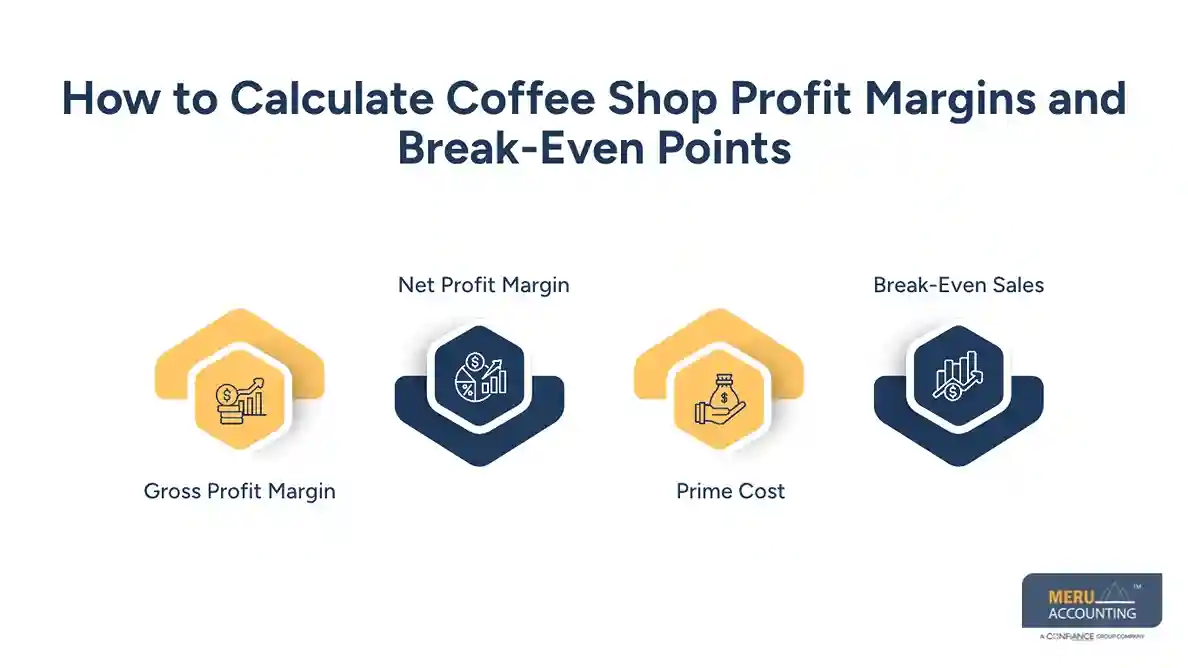
Gross Profit Margin
Gross profit margin shows how much is left after you deduct COGS from sales.
Gross Profit Margin = (Sales − COGS) ÷ Sales × 100
For example, if monthly sales are $20,000 and COGS is $6,000, your gross profit is $14,000. Your gross profit margin is 70%.
Net Profit Margin
Net profit margin shows how much of each sales dollar remains after all costs are paid.
Net Profit Margin = Net Profit ÷ Sales × 100
If your shop earns $2,000 in net profit on $20,000 in sales, your net profit margin is 10%.
Prime Cost
Prime cost is the total of COGS and labor costs. These are two key costs that cafe owners should watch.
If COGS is $6,000 and labor is $7,000, prime cost is $13,000. Compare this figure with sales each month to see if these costs are rising too fast.
Break-Even Sales
Your break-even point is the sales level at which your income covers all costs. At this point, you make no profit or loss.
Break-Even Sales = Fixed Costs ÷ Contribution Margin Ratio
For example, if fixed costs are $8,000 and your contribution margin ratio is 60%, you need about $13,333 in sales to break even.
Use this figure to set sales goals and plan for slow months.
Common Coffee Shop Accounting Mistakes and How to Avoid Them
Small errors can lead to poor business choices and cash flow issues. Watch out for these common mistakes:
- Mixing personal and business costs: Use a separate bank account and card for your shop.
- Skipping stock counts: Count stock on a set schedule and record waste.
- Ignoring small costs: Track card fees, repairs, cleaning supplies, and other small bills.
- Not matching POS and bank records: Check sales reports against actual payouts.
- Setting prices without checking costs: Review recipe costs and supplier prices before changing menu prices.
- Leaving books until tax time: Update records each week and review reports each month.
- Not planning for tax: Set aside funds for tax dues as sales come in.
A set process for daily, weekly, and monthly checks can help prevent these issues.
When Should You Consider Outsourced Accounting for Your Coffee Shop?
Handling your own books may work when your shop is small and has few daily transactions. But as sales grow, the work can take more time and needs more care.
You may want outside help when:
- You run more than one coffee shop.
- You have a high number of daily sales and supplier bills.
- Stock costs and waste are hard to track.
- Payroll takes too much time.
- Your books fall behind each month.
- You need clear reports to plan growth.
- You spend more time on accounts than on running the shop.
An outside accounting team can help with bookkeeping, bank matching, payroll, bill tracking, and monthly reports. This gives you more time to focus on staff, service, and sales.
Accounting for Cafes by Meru Accounting
A coffee shop’s sales report tells you how much customers spent, but it doesn’t show the full cost of serving them. Supplier price changes, milk and food waste, card processing fees, staff hours, and unpaid bills all affect what your cafe takes home. Meru Accounting helps cafe owners keep these numbers organized and their financial records up to date.
Our accounting for cafes covers the financial tasks that keep your business on track:
- POS and sales reconciliation: Match daily POS reports with cash receipts, card payments, refunds, and bank deposits.
- Bookkeeping and expense tracking: Record coffee bean purchases, dairy and food supplies, packaging, rent, utilities, and other operating costs.
- Inventory and COGS tracking: Maintain purchase and stock records to help monitor ingredient costs and spot unusual changes in stock use.
- Payroll accounting: Manage wage records, staff costs, overtime, and payroll entries.
- Accounts payable: Track supplier invoices, payment dates, and outstanding bills.
- Financial reporting: Prepare profit and loss statements, balance sheets, and cash flow reports to help you review business performance.
- Catch-up and cleanup bookkeeping: Organize overdue records and correct bookkeeping gaps so you can work with more reliable financial data.
Whether you operate an independent coffee shop or manage several cafe locations, Meru Accounting can help you keep your books accurate, understand your costs, and make business decisions with greater confidence.
Our Expert Insight
One thing cafe owners should consider is how seasonality affects financial planning. A coffee shop may see strong sales during summer due to iced drinks, while hot beverages may drive more revenue during colder months. If the owner uses the same sales forecast throughout the year, they may end up with excess stock, higher carrying costs, or cash shortages during slower periods.
We recommend using past sales data to plan for seasonal changes in demand. This helps owners set realistic budgets, time supplier orders, and prepare for months when revenue may dip. A good financial plan should reflect how customers actually spend throughout the year, not assume every month will perform the same way.
Key Takeaways
- Coffee shop accounting helps you track sales, costs, cash, and profit.
- Keep clear records of sales, bills, payroll, stock, and tax.
- Match POS sales with bank deposits and card payouts.
- Review COGS, labor, and waste to keep costs in check.
- Use P&L, balance sheet, and cash flow reports to guide business choices.
- Work out profit margins and break-even sales to set sound goals.
- Consider outside help when bookkeeping takes time away from daily work.
FAQs
Use accounting software that tracks sales, expenses, payroll, and cash flow. Reconcile POS sales with bank deposits and review financial reports each month.
Check sales and cash daily, inventory and expenses weekly, and financial reports monthly. Regular reviews help catch issues early.
Track coffee beans, milk, food supplies, packaging, wages, rent, utilities, card fees, insurance, repairs, and marketing costs.
Add the cost of ingredients used in a menu item, divide it by the selling price, and multiply by 100 to get the food cost percentage.
Yes. Small coffee shops can outsource bookkeeping, payroll, bank reconciliation, and financial reporting to save time and keep their books up to date.
optional anymore
on running the business