
Law Office Bookkeeping is no longer just about recording numbers. For modern, growing law firms, it is about control, clarity, and compliance. From managing trust accounts to tracking billable hours, Law firm bookkeeping plays a direct role in financial health, ethical safety, and steady growth. Many firms today also rely on online bookkeeping for small law firm needs to reduce errors and stay organized.
In this blog, you will understand how Law Office Bookkeeping works, why it matters, and how modern firms can use better systems to stay profitable and stress-free.
What You Will Learn From This Blog
- Understand the clear meaning of Law Office Bookkeeping, including what activities are part of it and what tasks fall outside its scope.
- Learn how Law Firm Bookkeeping is different from bookkeeping used in other types of businesses and why legal firms need special handling.
- Identify common mistakes in Law Firm Bookkeeping that growing firms often make and discover simple ways to avoid them.
- See how online bookkeeping for small law firm operations helps improve accuracy, record keeping, and daily financial control.
- Get practical and easy steps to build better financial habits and improve Law firm bookkeeping from the very beginning.
What Is Law Office Bookkeeping And Why It Matters
Law Office Bookkeeping is the process of recording, organizing, and reviewing all financial activities of a law firm. It focuses on accuracy, compliance, and clarity, especially when handling client funds. Proper Law firm bookkeeping helps law firms stay financially healthy while meeting legal and ethical rules.
Below are the key areas that explain why Law Office Bookkeeping matters so much for law firms:
Daily Financial Recording
Daily financial recording is the foundation of Law firm bookkeeping. It ensures that every transaction is captured on time and in the correct account.
Law firm bookkeeping tracks income, expenses, and client funds every day. Regular updates help avoid missing entries and reduce confusion during reviews or audits.
Trust Account Management
Trust account management is one of the most important parts of Law firm bookkeeping. Law firms are required to keep client money separate from business funds.
Client money must be handled separately, which is a key part of Law firm bookkeeping. Proper tracking protects client interests and helps firms follow bar association rules.
Billing And Payments
Billing and payment tracking ensures that the firm gets paid correctly and on time. Clean records support accurate invoices and clear client communication.
Accurate billing depends on clean bookkeeping records. Law firm bookkeeping helps match billed amounts with received payments and outstanding balances.
Ethical And Legal Safety
Law firms must follow strict financial rules, and Law firm bookkeeping supports this responsibility. Errors can lead to penalties or disciplinary action.
Law Office Bookkeeping helps firms meet bar rules and audits. Well-maintained records make audits easier and reduce legal risks.
Better Decision Support
Good financial data helps firm owners make informed decisions. Law firm bookkeeping turns numbers into useful insights.
Clear numbers help firm owners plan staffing and expenses. It also supports pricing decisions, growth planning, and long-term financial stability.
Key Differences Between Law Firm Accounting And Standard Bookkeeping
Aspect | Law Firm Accounting (Law Office Bookkeeping) | Standard Bookkeeping |
Client Trust Accounts | Law Office Bookkeeping requires careful tracking of client trust funds and separate handling from business money. | Most businesses do not manage client trust accounts or segregated funds. |
Strict Compliance Rules | Legal bookkeeping must follow bar association rules and ethical requirements. | Standard bookkeeping follows general accounting rules with fewer restrictions. |
Matter-Based Tracking | Income and expenses are tracked by case or matter, not just by client. | Transactions are usually tracked by customer or department only. |
Complex Billing Structures | Law firm bookkeeping supports hourly, flat, and contingency fee billing methods. | Billing is usually simple and based on fixed prices or invoices. |
Use Of Online Systems | Many firms rely on online bookkeeping for small law firm workflows to handle complexity and compliance. | Online tools are used, but compliance needs are usually less strict. |
Core Components Of Effective Law Office Bookkeeping
Trust Account Reconciliation
Matching trust balances with bank records is critical. This process ensures that client funds are safe and correctly recorded at all times.
Regular trust account checks help avoid compliance issues and protect the firm’s license under Law firm bookkeeping rules.
Expense Categorization
Every cost must be recorded under the right account. Clear expense categories help law firms understand where money is spent.
Accurate categorization also makes tax filing and financial reviews easier in Law Office Bookkeeping.
Income Tracking
Law firm bookkeeping tracks earned and unearned income separately. This separation is important to follow legal rules and avoid using client money incorrectly. It also helps firms see actual earnings versus pending revenue.
Bank Reconciliation
Monthly checks help catch errors early. Bank reconciliation confirms that internal records match bank statements. This step improves accuracy and builds trust in Law firm bookkeeping reports.
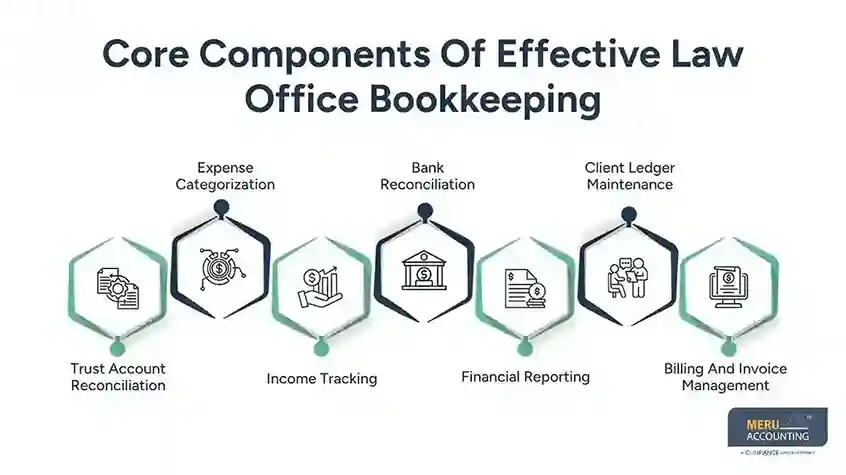
Financial Reporting
Reports show firm performance and cash position. Regular reports help owners understand profit, expenses, and available funds.
Good reporting supports better planning and stronger Law firm bookkeeping decisions.
Client Ledger Maintenance
Each client or matter should have a separate ledger. This helps track payments, fees, and trust balances clearly. Client ledgers are a key part of organized Law firm bookkeeping.
Billing And Invoice Management
Accurate billing depends on clean financial records. Law Office Bookkeeping ensures invoices reflect correct hours and expenses. Timely billing improves cash flow and reduces payment delays.
Common Law Office Bookkeeping Mistakes Growing Firms Must Avoid
Mixing Personal And Firm Funds
This creates compliance risks and weakens financial control. It also complicates audits and damages the law firm’s bookkeeping accuracy.
Ignoring Trust Account Rules
Improper trust handling can cause audits, penalties, and license issues. Law firm bookkeeping requires strict separation of client-held funds.
Delayed Record Updates
Late financial entries create confusion and increase reporting mistakes. Delayed updates reduce accuracy in Law firm bookkeeping records.
Poor Use Of Software
Wrong software choices make Law firm bookkeeping slower and less accurate. Poor tools increase manual work and data entry mistakes.
Not Using Online Support
Avoiding online bookkeeping for small law firm limits growth efficiency. Online bookkeeping for small law firm improves accuracy and time management.
Law Office Bookkeeping Best Practices For New-Era Firms
Use Separate Accounts
Always separate operating and trust accounts for compliance. This protects client funds and improves Law Office Bookkeeping control.
Update Records Weekly
Regular updates keep books accurate and well-organized. Weekly reviews reduce errors in Law firm bookkeeping records.
Use Legal-Specific Tools
Choose software made specifically for Law firm bookkeeping needs. Legal tools support trust accounting and matter-based tracking.
Review Reports Monthly
Monthly reviews help catch problems early and quickly. Reports strengthen planning through better Law firm bookkeeping insights.
Consider Online Services
Online bookkeeping for small law firm setups saves time. Online bookkeeping for small law firm improves accuracy and workflow efficiency.
Train Staff On Financial Procedures
Proper training ensures consistent Law firm bookkeeping practices firmwide. Clear procedures reduce mistakes and improve daily financial handling.
Work With Experienced Bookkeeping Professionals
Experienced professionals understand Law firm bookkeeping rules and compliance. Expert support reduces risk and strengthens financial record accuracy.
Benefits Of Online Bookkeeping For Small Law Firm Operations
Real-Time Access To Data
Online systems allow quick access to financial records. This improves monitoring, reporting, and decision-making accuracy overall.
Lower Risk Of Errors
Automation reduces manual mistakes during daily bookkeeping tasks. Fewer errors improve trust, compliance, and reporting reliability.
Better Collaboration
Staff and bookkeepers can work together easily online. Shared access improves coordination and speeds up issue resolution.
Cost Control
Online bookkeeping for small law firm costs less overall. Lower overhead helps firms manage budgets more effectively.
Scalable Support
Services grow smoothly as firm workload and clients increase. Online bookkeeping for small law firm adapts without disruptions.
How Meru Accounting Supports Law Office Bookkeeping
Legal-Focused Expertise
Meru Accounting understands Law Office Bookkeeping rules and compliance needs. Our services align strictly with legal and bar compliance standards.
Trust Account Accuracy
We ensure proper handling and reconciliation of client funds. Accurate trust account services reduce compliance risks for firms.
Online Support Model
Our online bookkeeping for small law firm services offer easy access. Clients receive timely reports and updated financial records.
Customized Processes
We adapt systems based on firm size and practice area. Tailored bookkeeping services improve accuracy and operational consistency.
Ongoing Bookkeeping Services
Meru Accounting provides continuous Law firm bookkeeping services. Regular service delivery ensures consistent, accurate financial records.
Key Takeaways
- Law Office Bookkeeping is a core business function for law firms.
- Accurate bookkeeping is essential for compliance and financial clarity.
- Legal rules make Law firm bookkeeping different from standard businesses.
- Even small bookkeeping errors can lead to serious legal issues.
- Online bookkeeping for small law firm operations improves control and accuracy.
- Online systems help firms manage growth without increasing internal workload.
- Professional bookkeeping services strengthen Law Office Bookkeeping results.
FAQs
Law Office Bookkeeping is the process of recording and managing all financial transactions of a law firm. It helps firms stay compliant, handle client funds properly, and clearly understand their financial position.
Law Firm Bookkeeping is different because it includes trust account management, client fund tracking, and compliance with bar rules. Regular businesses do not usually have these strict requirements.
Yes, online bookkeeping for small law firm operations is very helpful. It allows small firms to manage records remotely, reduce errors, and save time without hiring full-time staff.
Common mistakes include mixing client funds with firm money, not reconciling trust accounts, delaying record updates, and not using proper bookkeeping systems.
Law Office Bookkeeping should be reviewed weekly for entries and monthly for reports. Regular reviews help law firms catch errors early and maintain accurate financial records.