Property management firms handle rent collection, lease payments, maintenance expenses, vendor invoices, and tax reporting every day. Due to these responsibilities, compliance in real estate has become a critical part of property operations.
Missing records, reporting mistakes, or delayed filings can result in penalties, tenant disputes, and financial issues. Many firms face challenges when bookkeeping is managed manually or without proper review systems, leading to inaccurate records and reporting gaps.
Real estate accounting creates a structured process for tracking transactions, preparing financial reports, and maintaining financial transparency across properties. Accurate accounting records also support audits, tax filing, and regulatory compliance.
By outsourcing accounting services, property management firms gain access to trained professionals who understand industry reporting standards and compliance requirements. This creates more reliable financial records, reduces accounting errors, and allows firms to maintain accuracy without increasing internal workload.
What You Will Learn From This Blog
- Why compliance in real estate matters for property management firms
- Common financial and reporting problems faced by property managers
- Major compliance risks linked with inaccurate bookkeeping
- The role of real estate accounting in financial reporting
- How outsourced accounting creates more accurate records
- Ways accounting systems reduce reporting delays and errors
- Why professional bookkeeping is important during audits
- How property firms maintain regulatory standards through proper accounting
- The benefits of working with outsourced accounting experts
- How accurate financial reports support long-term property management growth
Introduction To The Real Estate Accounting
Many property owners and managers often ask what is real estate accounting because it plays a major role in managing rental income, expenses, and financial reporting. Property management firms handle rental income, maintenance expenses, utility bills, vendor payments, and lease transactions regularly, making accurate accounting essential for smooth operations.
Proper recording of property income and expenses creates clear financial statements, reduces reporting confusion, and supports compliance in real estate requirements.
Lease payment tracking and monthly bank reconciliation are also important parts of real estate accounting. Firms must monitor rent due dates, payment collections, and account balances to maintain accurate cash flow records.
Bank reconciliation helps identify duplicate entries, missing transactions, or incorrect records, ensuring that financial statements remain aligned with bank reports.
Tax reporting and financial statement preparation are equally important for property management firms. Understanding what is real estate accounting also helps firms improve tax reporting accuracy and expense tracking. Well-prepared financial statements also give property owners and managers a better understanding of operating costs, property performance, and overall financial health.
Common Compliance Risks In Real Estate Operations
Incomplete Financial Records
Many firms researching what is real estate accounting discover that incomplete financial records are one of the biggest compliance risks. Authorities often require detailed documentation during reviews.
Incorrect Security Deposit Tracking
Security deposits must be recorded separately in many regions. Errors in deposit handling can create legal disputes.
Tax Filing Mistakes
Incorrect tax calculations or missed deadlines may lead to penalties. Compliance in real estate requires timely and accurate filings.
Unrecorded Vendor Payments
Vendor transactions without proper records reduce financial transparency. This also affects expense reporting accuracy.
Lease Documentation Issues
Lease records must match financial entries. Differences between lease agreements and accounting reports create compliance risks.
Weak Audit Preparation
Firms without organized records often struggle during audits. Poor documentation increases review time and financial uncertainty.
Role of Accurate Bookkeeping in Real Estate Compliance
Clear Financial Visibility
Understanding what is real estate accounting helps property managers maintain organized bookkeeping and stronger financial visibility. Better visibility supports accurate reporting and planning.
Reduced Reporting Errors
Consistent bookkeeping reduces duplicate entries and missing transactions. This creates more reliable financial reports.
Better Audit Readiness
Accurate records make audits easier to manage. Auditors can review financial transactions without delays caused by missing documents.
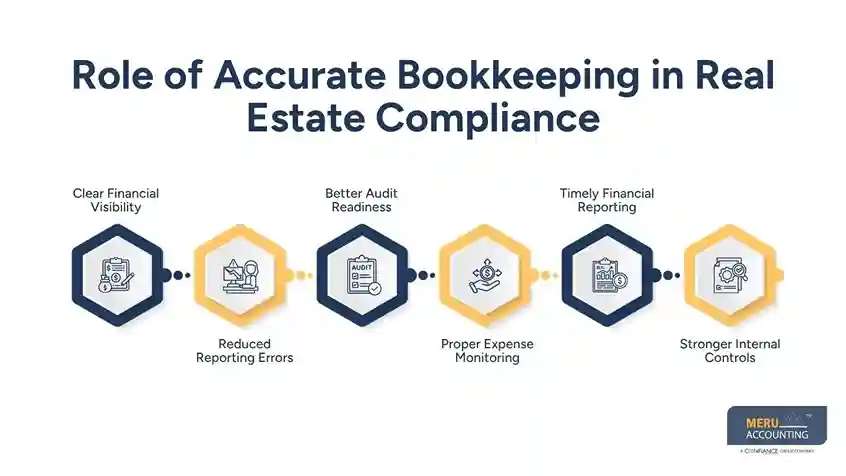
Proper Expense Monitoring
Bookkeeping systems track operational costs in a structured manner, which supports better financial control and compliance in real estate standards. This reduces the risk of inaccurate expense reporting.
Timely Financial Reporting
Updated records allow firms to prepare reports on time. Delayed reporting often affects compliance processes.
Stronger Internal Controls
Regular bookkeeping reviews help identify unusual transactions early. This creates better financial control across properties.
How Outsourcing Accounting Improves Financial Accuracy
Access To Skilled Professionals
Firms searching for what is real estate accounting often choose outsourced professionals for better compliance support and reporting accuracy. Their experience reduces bookkeeping mistakes and reporting inconsistencies.
Regular Financial Reviews
Professional accountants review transactions and reconciliations frequently to strengthen compliance in real estate accounting processes. This process identifies errors before reports are finalized.
Better Use Of Accounting Software
Outsourced firms often work with advanced accounting systems. Automated tracking reduces manual data entry mistakes.
Consistent Reporting Standards
Property management firms receive standardized reports across all properties. Consistency creates better financial comparison and analysis.
Reduced Internal Workload
Outsourcing allows property managers to focus on operations and tenant management. Accounting experts handle financial tracking separately.
Improved Record Maintenance
Accounting professionals maintain organized financial records throughout the year. This reduces stress during tax filing and audits.
How Real Estate Accounting Helps Maintain Regulatory Compliance
Organized Documentation
Financial reports, invoices, tax records, and payment details remain properly stored to support compliance in real estate management. Organized records are important for compliance in real estate.
Accurate Tax Calculations
Professional accounting systems calculate property-related taxes correctly. This reduces the chance of underpayment or overpayment.
Compliance With Reporting Standards
For firms wondering what is real estate accounting, it mainly involves maintaining structured financial records that support tax reporting and regulatory compliance. Accurate reports create trust with regulators and property owners.
Proper Tracking Of Escrow Accounts
Escrow and security deposit accounts require separate monitoring. Accounting systems maintain accurate balances and records.
Better Financial Transparency
Property owners expect clear financial information about property performance, especially when maintaining compliance in real estate operations. Transparent records create stronger business relationships.
Easier Regulatory Reviews
Regulators and auditors often request financial evidence during inspections. Organized accounting records reduce delays during reviews.
Why Many Property Management Firms Choose Outsourced Accounting
Cost Control
Hiring and training internal accounting staff increases operational costs. Outsourcing provides professional accounting support at a controlled cost.
Flexible Service Structure
Accounting services can be adjusted based on the number of managed properties. This flexibility supports growing firms.
Reduced Technology Burden
Companies exploring what is real estate accounting often adopt professional accounting systems to simplify reporting processes. Property firms avoid additional software management costs.
Better Data Accuracy
Dedicated accounting teams focus only on financial records and reporting, improving compliance in real estate documentation. This creates more reliable financial data.
Faster Report Preparation
Monthly reports, reconciliations, and financial summaries are prepared more efficiently. Faster reporting supports timely decision-making.
Stronger Compliance Management
Experienced accountants understand changing tax and reporting rules. This reduces compliance risks for property management firms.
Best Practices for Maintaining Compliance in Real Estate Management
Maintain Accurate Financial Records
Every transaction related to rent, maintenance, taxes, and vendor payments should be recorded properly. Accurate records reduce reporting errors and create better financial transparency.
Conduct Regular Bank Reconciliation
Monthly bank reconciliation helps identify missing transactions and incorrect entries quickly. This process keeps financial statements aligned with actual account balances.
Review Lease Agreements Carefully
Lease terms, payment schedules, and tenant obligations must match accounting records. Regular review reduces disputes and reporting inconsistencies.
Track Tax Deadlines Properly
Property management firms should monitor tax filing dates and payment schedules closely. Delayed filings may result in penalties and compliance issues.
Use Standard Accounting Procedures
Using the same accounting process across all managed properties creates reporting consistency and improves compliance in real estate practices. Standard procedures also reduce confusion during audits and financial reviews.
Maintain Proper Document Storage
Invoices, receipts, tax records, lease agreements, and vendor contracts should remain organized and accessible. Businesses learning what is real estate accounting also recognize the importance of organized document storage for compliance reviews.
Why Choose Meru Accounting?
Industry-Specific Accounting Knowledge
Meru Accounting understands the financial structure of property management businesses. Our team manages accounting processes based on industry reporting standards.
Accurate Bookkeeping Services
We maintain organized records for rental income, expenses, vendor payments, and reconciliations. Proper bookkeeping creates reliable financial reports.
Compliance-Focused Reporting
Our accounting process supports compliance in real estate by maintaining structured documentation and timely reporting practices.
Customized Financial Reports
Different property firms require different reporting formats. We prepare reports based on business requirements and management needs.
Support For Multiple Properties
Managing accounting for multiple properties becomes easier with centralized reporting systems. Our team maintains consistent records across all units.
Reliable Accounting Processes
Meru Accounting uses proven accounting systems and review methods to reduce reporting mistakes and maintain financial clarity. We ensure end-to-end financial visibility that helps property managers make faster, data-driven decisions.
Our Expert Perspective on Real Estate Compliance
Many property management firms are shifting from manual bookkeeping to outsourced accounting because financial reporting standards continue to become stricter. Accurate recordkeeping and timely reporting help improve compliance in real estate and reduce operational risks.
At Meru Accounting, we have seen that organized documentation, regular reconciliations, and consistent financial reporting help property management firms stay prepared for audits, tax reviews, and regulatory requirements. Proper financial management also supports better operational planning and decision-making.
Key Takeaways
- Compliance in real estate depends heavily on accurate financial reporting
- Property management firms handle large volumes of financial transactions daily
- Poor bookkeeping increases the risk of penalties and reporting errors
- Real estate accounting creates organized systems for financial management
- Outsourced accounting reduces manual work and reporting inconsistencies
- Professional accountants maintain better financial accuracy and documentation
- Accurate records make audits and tax filing easier to manage
- Consistent reporting improves property performance visibility
- Organized accounting systems create stronger financial transparency
- Outsourcing accounting allows property managers to focus on operations and tenant service
FAQs
Compliance in real estate means following financial, tax, and legal rules related to property operations and management.
Real estate accounting keeps financial records organized and accurate. It also supports tax filing, audits, and financial reporting.
Outsourced accounting teams use structured systems and regular reviews to reduce mistakes in bookkeeping and reporting.
Yes, inaccurate records may lead to tax issues, audit problems, and financial reporting penalties.
Many firms outsource accounting to reduce workload, maintain accurate records, and manage compliance requirements more effectively.