




Keeping track of warranty and after-sales costs is one of the most overlooked parts of running a construction business. Many companies focus on project delivery, but warranty claims and post-completion repairs can quietly eat into profits if not tracked properly. This is where construction company bookkeeping becomes essential.
With the right accounting setup, you can monitor warranty liabilities, reduce unnecessary spending, and protect your bottom line.
What You Will Learn From This Blog
In this blog, you will learn:
- Why warranty and after-sales costs are critical for construction businesses
- The common types of warranty expenses
- The challenges construction companies face in tracking these costs
- How construction company bookkeeping can solve these challenges
- Best practices for tracking warranty and after-sales costs
- How to separate warranty costs from regular project expenses
- The role of software in managing warranty costs
- How construction company bookkeeping can help you report warranty costs for better profitability
Understanding Construction Company Bookkeeping
Construction company bookkeeping is the process of recording, organizing, and managing financial transactions specific to construction projects. It includes tracking costs, labor, materials, subcontractor payments, and more.
When it comes to warranty and after-sales costs, bookkeeping becomes even more important because these expenses are often delayed and hard to attribute to a specific project unless you track them properly.
In simple terms, construction company bookkeeping helps you record every financial event accurately so you can understand how much a project really costs, including what happens after it is completed.
Why Warranty and After-Sales Costs Matter in the Construction Business
Warranty and after-sales costs matter because they directly affect your profit margins and reputation, making construction company bookkeeping a critical part of your financial system.
When a construction company completes a project, it is still responsible for fixing defects that arise within the warranty period.
If these costs are not tracked properly, you may face:
- Unplanned spending
- Reduced profit margins
- Negative cash flow
- Loss of customer trust
- Legal disputes
This is why construction company bookkeeping is crucial. It helps you plan for these costs and manage them effectively.
Common Warranty and After-Sales Expenses in Construction Projects
Warranty and after-sales costs can come in many forms. Some of the most common include:
- Repair Labor Costs
- Replacement of Materials
- Rework Charges
- Subcontractor Costs
- Inspection and Testing Costs
- Transport and Logistics Costs
- Warranty Claim Administration Costs
- Customer Support Costs
Without construction company bookkeeping, these expenses can get mixed with regular project costs, making it hard to know the real impact of warranty claims.
Challenges in Tracking Warranty and After-Sales Costs
Tracking warranty costs is not easy because:
- Warranty claims can happen months after project completion. Delayed claims make budgeting and forecasting difficult.
- Costs are often scattered across multiple teams. Different departments record expenses in different ways.
- Records are scattered and not organized for warranty tracking, which is why bookkeeping for construction must be structured and centralized.
- Labor and materials are not linked to warranty claims. This makes it hard to know the real repair costs.
- It is hard to identify which project a warranty cost belongs to. Project attribution errors cause wrong profitability analysis.
This is where bookkeeping for construction becomes vital. It provides a structured system to record and track these costs accurately.
How Construction Company Bookkeeping Helps Track Warranty Costs
Construction company bookkeeping helps track warranty costs in these ways:
Creating Warranty Cost Accounts
By setting up separate accounts for warranty expenses, you can easily track and review them.
Linking Warranty Costs to Projects
Bookkeeping allows you to link each warranty claim to a specific project, making it easier to evaluate project performance.
Monitoring Warranty Trends
With proper bookkeeping, you can identify recurring issues and address them early.
Improving Cost Estimates
When you know your warranty expenses, construction company bookkeeping helps you include them in future project budgets.
Better Financial Reporting
Proper bookkeeping helps generate accurate financial reports showing warranty liabilities and expenses.
Best Practices for Bookkeeping for Construction Warranty Tracking
Here are some best practices to track warranty costs effectively:
Create Separate Warranty Cost Categories
Use specific categories such as warranty labor, warranty materials, and warranty subcontractors.
Maintain Detailed Records
Record every warranty claim with details like date, cost, project, and description.
Use Job Codes
Assign job codes to each project and link warranty costs to those codes using bookkeeping for construction.
Set Warranty Reserves
Allocate a portion of project revenue to warranty reserves to prepare for future costs.
Conduct Regular Reviews
Review warranty costs monthly to track trends and identify problems early.
These practices help your bookkeeping for construction become more organized and accurate.
Setting Up Warranty Cost Accounts in Your Construction Ledger
To track warranty costs properly, construction company bookkeeping requires dedicated warranty accounts in your ledger.
Warranty Labor
All labor costs for warranty repairs are tracked here. Worker hours and labor expenses become easier to monitor.
Warranty Materials
All materials used for warranty fixes are recorded here. Material trends and frequent issues become easy to identify.
Warranty Subcontractors
Subcontractor charges for warranty work are logged here. Vendor performance and repair costs become simpler to evaluate.
Warranty Repairs
Repair expenses related to warranty claims are listed here. Total costs per warranty case become easier to calculate.
Warranty Testing and Inspection
Inspection and testing costs for warranty checks go here. Coverage and compliance are easier to verify with records.
By doing this, construction company bookkeeping becomes easier and more accurate because you can quickly find the warranty costs without digging through multiple accounts.
How to Separate Warranty Costs from Regular Project Costs
Separating warranty costs from regular project costs is crucial. Here’s how you can do it:
Create a Warranty Project Code
Assign a unique code for all warranty work tasks. This code helps track warranty work separately from projects.
Use Separate Expense Categories
Track warranty expenses separately from regular project expenses. Separate categories prevent mixing warranty costs with project costs.
Maintain Warranty Claims Records
Record each warranty claim in detail and link it. Detailed records help review costs and track claim history.
Review Costs Monthly
Check the warranty costs each month to make sure they are correctly recorded.
This ensures your construction company bookkeeping accurately reflects real project performance and warranty costs.
The Role of Software in Bookkeeping for Construction Warranty Management
Software plays a major role in tracking warranty and after-sales costs. With the right system, you can:
- Assign warranty costs to specific projects
- Track warranty claims and invoices
- Generate reports on warranty spending
- Manage warranty reserves
- Improve accuracy and reduce manual errors
Using software in bookkeeping for construction saves time and improves accuracy.
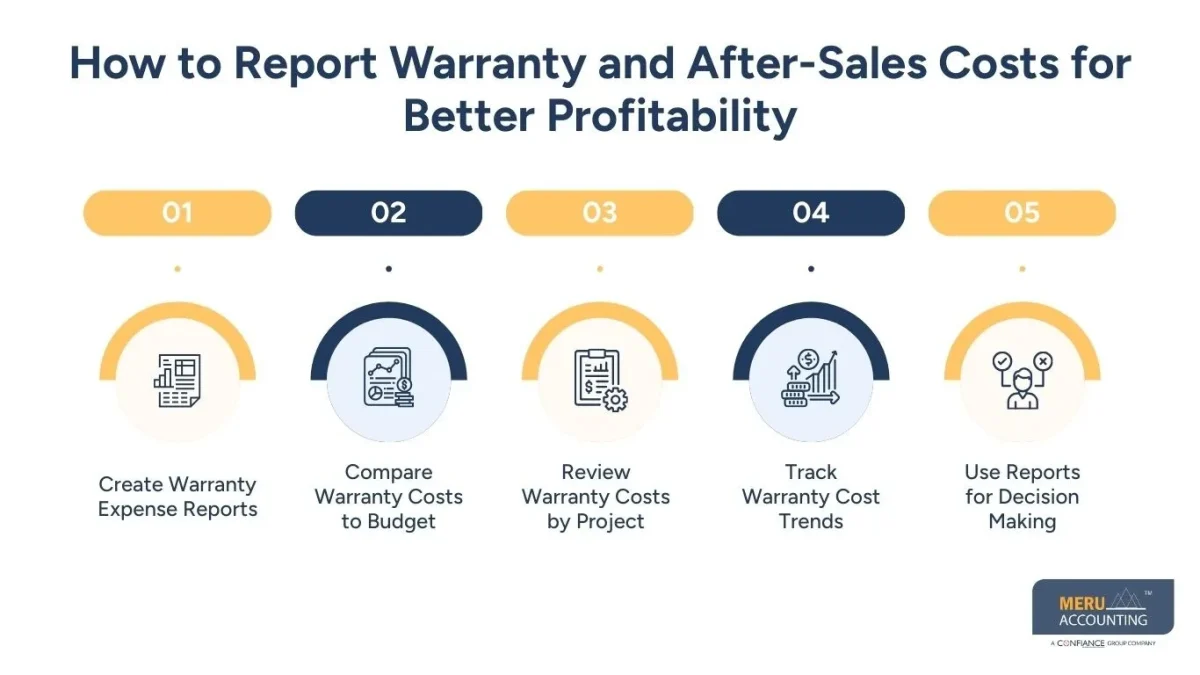
How to Report Warranty and After-Sales Costs for Better Profitability
Reporting warranty costs is essential for profitability. Here’s how to do it:
Create Warranty Expense Reports
Prepare monthly reports showing total warranty costs and breakdowns. Include labor, materials, subcontractor, and testing expenses.
Compare Warranty Costs to Budget
Check whether warranty spending is higher than expected. Identify reasons for any cost variances and document them.
Review Warranty Costs by Project
Identify which projects have higher warranty expenses. Use this data to improve future project planning.
Track Warranty Cost Trends
Identify patterns like frequent issues or recurring defects. Track recurring defects to prevent them in future projects.
Use Reports for Decision Making
Use warranty data to improve project planning and reduce future costs. Adjust estimates and warranty reserves based on past performance.
This reporting process helps your construction company bookkeeping become more strategic and valuable.
Why Choose Meru Accounting for Your Construction Company Bookkeeping
At Meru Accounting, we specialize in providing accurate and reliable construction company bookkeeping services. We understand the unique challenges construction businesses face, especially when it comes to warranty and after-sales costs.
Track warranty expenses accurately
All warranty costs are recorded and assigned correctly. This ensures no warranty expense is missed or overlooked.
Set up proper accounts and cost categories
Dedicated warranty accounts are created in your ledger. Tracking and reporting warranty costs becomes easier and clearer.
Generate clear financial reports
Reports show warranty costs broken down by project. This helps you evaluate profitability and cost performance.
Improve cash flow and profitability
Warranty reserves and cost forecasts are planned accurately. This prevents surprise expenses and supports steady cash flow.
Reduce financial errors and risks
Organized records and correct cost allocation are maintained. This lowers the chance of mistakes and audit issues.
With Meru Accounting, you get bookkeeping support tailored specifically for construction companies, ensuring you stay organized and financially stable.
Ready to improve warranty tracking and protect your profits? Contact Meru Accounting today for expert construction bookkeeping support.
Key Takeaways
- Warranty and after-sales costs can reduce profit if not tracked properly
- Construction company bookkeeping helps you track warranty costs accurately
- Setting up separate warranty accounts is essential
- Regular reviews and reporting help control warranty expenses
- Using software improves accuracy and saves time
FAQs
Warranty cost tracking is recording all expenses related to repairs or replacements after project completion.
Bookkeeping helps you record warranty costs correctly, so you know the true cost of each project.
Use separate warranty accounts and assign a warranty job code to each repair.
Yes, software can link warranty costs to projects and generate reports automatically.
If not tracked, warranty costs can reduce profits, cause cash flow issues, and lead to incorrect financial reporting.


