


Construction firms face unique challenges when it comes to financial management, compliance, and risk mitigation. One effective solution many companies are turning to is construction outsourced accounting. By partnering with expert accounting firms, construction companies can ensure accurate financial reporting, maintain compliance with regulations, and reduce risks that could impact their projects or profitability.
In this blog, we will explore how construction outsourced accounting supports compliance and risk management, the role of a construction accounting program, and why firms like Meru Accounting are trusted partners for these services.
What You Will Learn From This Blog
- Learn how outsourcing accounting services helps construction firms stay organized and compliant with financial regulations while improving efficiency.
- Understand the major compliance and reporting rules construction firms need to follow, from tax regulations to labor laws.
- Explore how accounting solutions, including a construction accounting program, can identify risks, reduce errors, and prevent financial losses.
- Explore the advantages of outsourcing accounting, including access to expert knowledge, cost savings, and timely reporting.
- See why construction firms rely on Meru Accounting for accounting services that ensure both compliance and risk management.
Understanding Construction Outsourced Accounting
Definition and Scope
Construction outsourced accounting refers to hiring an external firm or team to handle financial activities specific to construction projects. This includes bookkeeping, payroll, tax preparation, and reporting.
Difference From Traditional Accounting
Unlike in-house accounting, outsourced services provide specialized expertise for construction, allowing firms to focus on project delivery rather than managing financial tasks.
Focus on Accuracy
Outsourced accounting ensures that every invoice, payment, and financial report is accurate, reducing errors that could lead to compliance issues.
Project-Specific Financial Management
Construction projects often have multiple contracts and budgets. Outsourced accounting tracks each project individually, helping avoid cost overruns.
Scalability
As construction firms take on more projects, outsourced accounting scales according to business needs, offering flexibility without the overhead of hiring full-time staff.
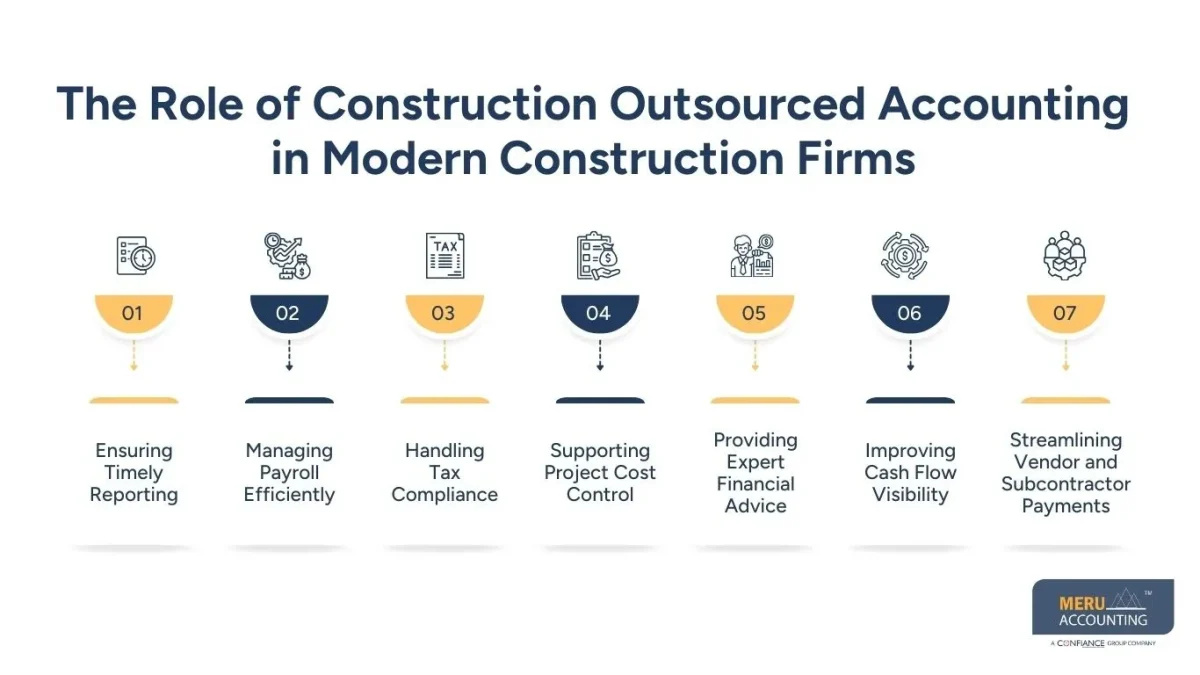
The Role of Construction Outsourced Accounting in Modern Construction Firms
Ensuring Timely Reporting
Outsourced accounting ensures all financial statements and reports are prepared on time, supporting regulatory and internal compliance requirements.
Managing Payroll Efficiently
Payroll in construction is complex due to varying pay rates, subcontractors, and labor regulations. Outsourced accounting ensures accurate payroll management.
Handling Tax Compliance
From income tax to GST, construction outsourced accounting services manage tax filings and compliance, reducing the risk of penalties.
Supporting Project Cost Control
By tracking project expenses, outsourced accounting helps prevent overspending and ensures budget adherence.
Providing Expert Financial Advice
Firms gain access to professional advice on cost management, cash flow, and financial planning through construction outsourced accounting, without hiring in-house experts.
Improving Cash Flow Visibility
Outsourced accounting provides real-time insights into cash flow, helping construction firms plan payments, manage receivables, and maintain financial stability.
Streamlining Vendor and Subcontractor Payments
By managing payments efficiently, outsourced accounting ensures timely settlements with vendors and subcontractors, reducing disputes and maintaining strong business relationships.
Key Compliance Requirements in the Construction Industry
Tax Reporting
Construction firms must comply with tax laws, including income tax, GST, and labor-related taxes. Accurate records are essential for audits.
Labor Regulations
Construction projects involve many workers, including contractors and subcontractors. Compliance with wage laws and safety regulations is critical.
Contractual Obligations
Firms must maintain detailed records for client contracts, change orders, and subcontractor agreements.
Environmental and Safety Regulations
Certain construction projects require reporting on safety measures and environmental compliance, which must be documented accurately.
Financial Reporting Standards
Construction companies are required to follow accounting standards for revenue recognition, cost allocation, and project accounting.
Insurance Compliance
Construction firms must maintain proper insurance coverage for workers, equipment, and projects, and ensure all policies meet legal requirements.
Permits and Licensing
Obtaining and maintaining the necessary permits and licenses for construction projects is essential to avoid legal penalties and project delays.
Subcontractor Compliance
Firms need to ensure subcontractors follow labor laws, safety standards, and contract terms to prevent liability issues.
Record Retention Requirements
Construction companies must retain financial, legal, and project-related records for a specified period to comply with regulations and support audits.
How Construction Outsourced Accounting Ensures Compliance
Accurate Bookkeeping
Outsourced accounting maintains detailed records of income, expenses, and project costs, ensuring accurate reporting. This helps construction firms avoid errors that could lead to penalties or disputes.
Timely Tax Filings
Professional accountants handle deadlines for tax submissions, avoiding fines and penalties. They also ensure that all deductions and credits are correctly applied to maximize savings.
Audit Preparedness
By keeping thorough records, outsourced accounting ensures firms are always ready for internal or external audits. This makes the audit process smoother and less stressful for management.
Monitoring Subcontractor Payments
Construction outsourced accounting verifies payments to subcontractors, ensuring compliance with contract terms and labor laws, preventing overpayments and maintaining strong vendor relationships.
Documenting Regulatory Compliance
Accountants maintain records for safety, environmental, and labor regulations, reducing legal risks. This ensures that firms can demonstrate compliance whenever required by authorities.
Role of a Construction Accounting Program in Risk Mitigation
Project Cost Tracking
A construction accounting software tracks costs in real-time, helping managers identify potential overruns early.
Cash Flow Management
The program ensures funds are available for project milestones, preventing delays due to cash shortages.
Fraud Prevention
Automated systems reduce the risk of fraud by monitoring transactions and flagging anomalies.
Financial Forecasting
By analyzing past and current financial data, the program helps predict cash flow needs and project costs.
Compliance Monitoring
Many programs include built-in checks for tax compliance, labor regulations, and reporting requirements.
Budget Variance Analysis
A construction accounting program helps compare actual costs with budgeted costs, highlighting variances early so corrective actions can be taken.
Resource Allocation Management
The program tracks labor, materials, and equipment usage, ensuring resources are used efficiently and reducing the risk of project delays or overspending.
Benefits of Combining Construction Outsourced Accounting with a Construction Accounting Program
Enhanced Accuracy
Outsourced accountants combined with a reliable construction accounting program ensure precise financial tracking. This reduces errors in reporting and prevents costly mistakes in project budgets.
Time Savings
Automation and expert handling reduce the time managers spend on bookkeeping and compliance tasks. Teams can focus more on project planning and execution rather than financial paperwork.
Reduced Risk of Penalties
With accurate reports, tax compliance, and monitoring, firms minimize the risk of regulatory penalties. This also provides peace of mind during audits or inspections.
Better Decision-Making
Detailed financial data helps management make informed decisions about project investments and budgeting. Real-time insights allow firms to adjust strategies quickly when needed.
Cost Efficiency
Firms save money by outsourcing accounting services while using a construction accounting program for automation. It reduces the need for additional in-house staff and software expenses.
Why Choose Meru Accounting for Construction Outsourced Accounting
Choosing the right partner for financial management is crucial for construction firms aiming to stay compliant and reduce risks. Meru Accounting offers specialized services in construction outsourced accounting to help firms manage their finances efficiently.
With expertise, customized solutions, and seamless integration with accounting programs, Meru Accounting ensures your projects run smoothly and within budget.
Expertise in Construction Accounting
Meru Accounting specializes in construction outsourced accounting, offering services tailored for construction firms of all sizes.
Customized Solutions
We design accounting solutions that align with your projects, whether it’s payroll management, tax filing, or project cost tracking.
Integration With Accounting Programs
Our services work seamlessly with leading construction accounting software, providing accurate reporting and compliance.
Focus on Compliance and Risk
Meru Accounting ensures your firm meets all legal, tax, and regulatory requirements, reducing the risk of fines or project delays.
Global and Local Experience
With experience serving clients locally and globally, Meru Accounting brings expertise to manage complex construction accounting challenges.
Take control of your construction finances today with Meru Accounting’s expert outsourced accounting services. Contact us now to ensure compliance, reduce risks, and keep your projects on budget.
Key Takeaways
- Construction outsourced accounting ensures accurate records, timely tax filings, and proper reporting to meet regulatory requirements.
- Outsourced accounting identifies financial risks, prevents errors, and improves cash flow management.
- Construction accounting programs automate financial tracking, forecasting, and compliance monitoring, reducing workload and human error.
- Using a construction accounting program with outsourced accounting creates a system of checks and balances for improved compliance and financial oversight.
- Meru Accounting offers tailored services, expertise, and integration with accounting programs, supporting construction firms in achieving financial stability and compliance.
FAQs
Construction outsourced accounting is when an external team handles bookkeeping, payroll, and project finances. It helps firms stay organized and compliant.
It ensures accurate financial records, timely tax filings, and proper documentation of labor and safety regulations. This keeps firms aligned with legal requirements.
A construction accounting software is software that tracks costs, cash flow, and compliance. It helps prevent overspending and reduces financial risks.
This combination provides expert financial oversight and automated tracking. It helps identify errors and potential risks before they cause problems.
Yes, it tracks expenses and monitors budgets closely. This helps construction firms manage costs effectively and avoid overruns.


