
Real estate operations in large organizations have become more complex due to multiple properties, stricter compliance requirements, and increasing reporting demands. In such a situation, real estate outsourcing plays an important role in helping companies maintain structure, accuracy, and cost control across property portfolios. Many organizations also rely on corporate real estate management systems to track assets, manage risks, and support long-term planning.
In the modern business environment, businesses across the US, UK, and global markets focus on reducing internal workload and improving financial clarity through structured systems and external support.
At the same time, teams responsible for property management can concentrate more on strategic planning instead of routine operational tasks. This balance helps organizations maintain efficiency while staying compliant and financially stable.
What You Will Learn From This Blog
- How real estate outsourcing supports property operations in large companies
- Why corporate real estate management depends on structured financial systems
- Benefits of outsourcing in cost control and reporting accuracy
- How data improves decisions in property portfolios
- Common challenges solved through external support
- Role of outsourcing in scaling property operations
How Corporate Real Estate Management Handles Portfolio, Risk, and Planning
Property Portfolio Structure
Corporate real estate management focuses on building a structured system to handle multiple properties such as offices, warehouses, and leased spaces under one unified framework.
This approach improves visibility across assets, reduces tracking errors, and strengthens overall planning and decision-making.
Financial Oversight Needs
Strong financial oversight is essential to track rent collections, maintenance expenses, and tax obligations.
Without structured processes, reporting becomes slower, less accurate, and harder to manage effectively.
Risk And Compliance Control
Risk and compliance control ensures that all properties follow legal regulations, lease agreements, and tax requirements.
Any gaps in compliance can result in financial penalties and operational disruptions.
Strategic Asset Planning
Long-term asset planning supports informed decisions related to property expansion, leasing strategies, and asset disposal.
Data-driven insights help organizations align real estate decisions with overall business growth.
Operational Complexity
As property portfolios expand, operational complexity increases significantly. This is where external support becomes valuable, helping organizations manage repetitive tasks and improve internal efficiency.
Role of Real Estate Outsourcing in Streamlining Property Operations
Daily Accounting Tasks
Real estate outsourcing helps manage bookkeeping, invoice tracking, and expense recording in a structured manner. This reduces pressure on internal teams and improves overall financial accuracy and efficiency.
Vendor And Lease Tracking
Tracking vendors and lease agreements is essential in property operations for maintaining smooth workflows. Timely updates and accurate records help avoid disputes and improve operational control.
Maintenance Expense Management
Property maintenance costs can vary widely depending on asset type and usage. Clear tracking systems help identify expenses early and prevent hidden financial leakages.
Rent And Billing Support
Rent collection and billing processes require consistent accuracy and timely execution. Proper systems help reduce delays and ensure smooth cash flow management.
Data Organization Systems
Clean and structured data systems are important for accurate reporting and decision-making. Well-organized data supports better insights and improves performance in corporate real estate management teams.
How Real Estate Outsourcing Supports Corporate Real Estate Management Efficiency
Better Time Allocation
Internal teams shift their focus toward strategic planning instead of handling repetitive data entry tasks. This improves productivity and allows more attention to high-value decision-making activities.
Improved Reporting Speed
Financial reports are prepared faster through structured outsourcing processes and streamlined workflows. Faster reporting strengthens decision-making and enhances overall operational responsiveness.
Reduced Internal Workload
Repetitive administrative responsibilities are minimized for in-house teams across departments. This creates a more balanced workload and improves overall team efficiency.
Strong Financial Accuracy
Accurate recordkeeping reduces errors in financial reporting and improves transparency across operations. Better accuracy leads to more reliable insights for corporate real estate management decisions.
Consistent Data Flow
Structured systems ensure uninterrupted and uniform data movement across platforms and departments. This helps maintain clarity and avoids confusion in reporting and analysis.
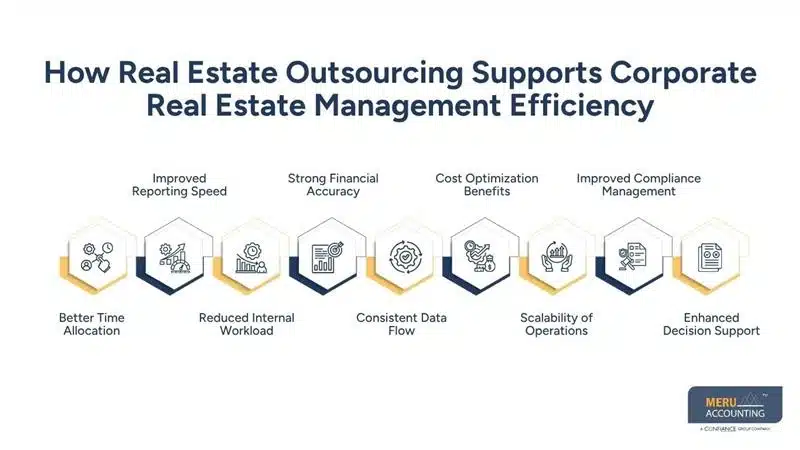
Cost Optimization Benefits
Operational expenses are controlled through improved efficiency and reduced resource duplication. Organizations achieve better financial management and improved cost effectiveness.
Scalability of Operations
Outsourced systems adjust easily to growing property portfolios without internal restructuring challenges. This supports smooth expansion and long-term operational flexibility.
Improved Compliance Management
Updated records and structured processes help meet legal and regulatory requirements consistently. This reduces compliance risks and supports smoother audit processes.
Enhanced Decision Support
Accurate and timely data strengthens forecasting and strategic planning across real estate assets. Better insights enable more confident and informed investment decisions.
Key Benefits of Outsourcing in Corporate Property Portfolio Management
Cost Control Improvement
Companies reduce internal hiring and operational costs by utilizing external support systems. This improves overall financial efficiency and helps maintain better budget control.
Centralized Record Keeping
Centralized systems ensure all property-related data is stored and managed in one place. This improves tracking accuracy and supports better decision-making processes.
Vendor Payment Accuracy
Timely and accurate payments help reduce disputes and maintain strong vendor relationships. Proper tracking systems ensure financial consistency and operational smoothness.
Better Cash Flow Tracking
Improved visibility of income and expenses supports stronger financial planning and forecasting. This allows better monitoring of liquidity across property portfolios.
Reduced Operational Errors
Structured systems significantly reduce manual mistakes in financial and property data handling. This increases reliability and improves overall reporting quality.
Scalable Portfolio Management
Corporate real estate management becomes easier as portfolios expand across regions and asset types. Standardized processes support smooth growth without operational disruption.
Improved Compliance Handling
Outsourced systems help maintain updated records aligned with regulatory and tax requirements. This reduces compliance risks and supports smoother audit readiness.
Enhanced Financial Visibility
Clear reporting structures improve transparency across all property-related transactions. Better visibility supports stronger financial decision-making at every level.
What Impact Does Real Estate Outsourcing Have on Financial Reporting and Compliance
Accurate Financial Statements
Accurate transaction recording improves the quality and reliability of financial statements across property operations.
This strengthens reporting accuracy and supports better financial transparency for management teams.
Audit Readiness
Structured financial data makes audit preparation more organized and easier to manage during inspections.
Corporate real estate management teams benefit from smoother verification and reduced documentation issues.
Tax Compliance Support
Property-related tax regulations often involve detailed reporting and documentation requirements. External support helps maintain organized records and supports timely compliance processes.
Regulatory Alignment
Organizations must consistently follow property regulations, lease obligations, and reporting standards.
External operational support improves compliance control and reduces the risk of legal complications.
Transparent Reporting Systems
Clear reporting structures improve confidence in operational and financial data across departments.
This transparency strengthens accountability and improves long-term reporting reliability.
Improved Documentation Control
Well-organized documentation systems reduce missing records and improve accessibility during reviews.
This helps maintain consistency in audits, reporting, and compliance-related activities.
Why Data-Driven Decision Making Depends on Real Estate Outsourcing Support
Clean Data Availability
Accurate decision-making depends on clean, organized, and regularly updated business data. Real estate outsourcing helps maintain reliable records that improve operational visibility and reporting quality.
Performance Tracking
Property performance is measured through structured financial and operational reporting systems. Corporate real estate management teams use these insights to evaluate efficiency and asset performance.
Market Comparison Analysis
Organizations compare property expenses and operational costs with current market conditions regularly. Well-structured outsourced data improves comparison accuracy and supports better benchmarking.
Forecasting Support
Long-term planning requires reliable historical and financial information for accurate forecasting. Outsourced financial processes improve forecasting quality by maintaining consistent and organized records.
Investment Decision Support
Clear financial insights help businesses make informed property investment and expansion decisions. Corporate real estate management depends on accurate data for strategic planning and risk evaluation.
Improved Reporting Accuracy
Structured reporting systems reduce inconsistencies and improve the reliability of financial information. This supports stronger analysis and helps management teams make confident business decisions.
What Challenges are Solved by Real Estate Outsourcing in Large Corporations
Data Inconsistency Issues
Inconsistent records create confusion and reduce reporting accuracy across property operations in corporate real estate management.
Real estate outsourcing solves this challenge through structured systems and organized data management.
High Administrative Load
Internal teams often face excessive workload due to repetitive operational responsibilities.
External support systems reduce administrative pressure and improve overall work efficiency.
Delayed Reporting
Reporting delays often occur when workflows and documentation systems are not properly organized.
Corporate real estate management improves through streamlined reporting and better operational coordination.
Compliance Gaps
Missing documentation and incomplete records can create serious legal and regulatory concerns.
Proper compliance processes help maintain organized records and reduce audit-related risks.
Cost Mismanagement
Untracked operational expenses frequently result in budgeting issues and financial inefficiencies.
Better monitoring systems improve expense visibility and strengthen overall financial control.
How Corporate Real Estate Management Gains Scalability Through Outsourcing
Expansion Support
As companies grow, property portfolios and operational responsibilities increase significantly over time. Expansion can be managed smoothly without disrupting workflows.
Flexible Operations
Operational processes become more adaptable through structured external support and streamlined systems. This flexibility helps businesses respond faster to changing property management requirements.
Reduced Internal Hiring Pressure
Growing organizations often face challenges in managing large internal operational teams. External support reduces hiring pressure and improves overall resource management efficiency.
Improved System Integration
Well-structured workflows in corporate real estate management help different operational and financial systems function more effectively together. Improved coordination strengthens reporting accuracy and supports smoother business operations.
Scalable Reporting Systems
Large property portfolios require reporting systems that can grow with business expansion needs. Corporate real estate management becomes easier to scale through organized outsourcing support systems.
Why Choose Meru Accounting?
Meru Accounting helps real estate firms manage financial clarity through structured bookkeeping and reporting systems. With experience in global accounting standards, we support companies using real estate outsourcing models for property management.
Our team assists in expense tracking, vendor reconciliation, and financial reporting aligned with corporate real estate management requirements. Businesses also gain better control over cash flow and compliance through accurate data handling.
By integrating accounting systems with property workflows, Meru Accounting provides structured accounting and bookkeeping services that help reduce reporting errors and improve decision-making quality in property management processes.
Key Takeaways
- Real estate outsourcing improves financial control and reporting accuracy
- Corporate real estate management becomes more efficient with structured data
- Outsourcing reduces operational workload and improves scalability
- Better compliance and audit readiness are key advantages
- Data quality improves decision-making in property portfolios
- Firms like Meru Accounting support structured financial systems
FAQs
Outsourcing helps property systems by improving accuracy, reducing workload, and organizing financial records in a structured way for better control.
Large companies use external support because it reduces operational burden, improves reporting accuracy, and helps manage multiple properties efficiently with better financial control.
External accounting support manages financial records, vendor payments, and expense tracking to ensure smooth operations and consistent reporting across property assets.
External support improves financial reporting by maintaining clean data, reducing errors, and ensuring timely reports that support better financial decisions in corporate real estate management.
Yes, external support improves cost control by tracking expenses properly, reducing unnecessary spending, and supporting better budget management across properties through structured financial support.