


Cost accounting is an essential tool for businesses aiming to optimize their finances and improve operational efficiency. By systematically analyzing costs, companies can make informed decisions that impact both financial and managerial accounting practices.
This blog explores key cost accounting strategies that not only enhance cost control but also improve decision-making, budgeting, and overall business performance.
Implementing these strategies helps organizations identify cost-saving opportunities, allocate resources more effectively, and maintain a competitive edge in their industry. By understanding and managing costs, businesses can achieve long-term financial stability and operational success.
What You Will Learn From This Blog
- How cost accounting supports both financial and managerial accounting.
- Strategies to optimize business performance through cost control.
- Methods to use cost management accounting insights for better budgeting and forecasting.
- How cost management accounting improves efficiency and reduces wastage.
- Practical steps to integrate cost management accounting with financial reporting.
Introduction To Cost Accounting And Its Role In Modern Businesses
Cost accounting is the process of recording, analyzing, and controlling all expenses related to producing goods or providing services. It allows businesses to track spending, determine the cost of products or services, and set prices that ensure profitability.
By examining every financial aspect of operations, cost management accounting gives managers a clear understanding of where money is being spent and how resources are utilized.
The main purpose of cost accounting is to provide detailed insights into both direct costs, such as materials and labor, and indirect costs, like overheads. It also differentiates between fixed and variable costs, helping businesses allocate resources effectively and make informed financial decisions.
Monitoring these costs not only aids in budgeting but also highlights areas where efficiency can be improved. Beyond cost tracking, cost management accounting plays a crucial role in decision-making. Managers use cost data to determine pricing strategies, plan production levels, and evaluate investment opportunities.
By providing accurate and reliable information, cost management accounting strengthens both financial and managerial accounting practices, enabling businesses to maintain stability and achieve long-term growth.
Understanding The Link Between Cost Accounting And Financial And Managerial Accounting
Supporting Financial Statements
Cost management accounting provides accurate data that feeds into financial accounting, ensuring financial statements reflect the true cost of operations.
Improving Managerial Decisions
Managers rely on cost accounting insights to make strategic decisions about production, staffing, and resource allocation.
Tracking Profitability
Cost management accounting identifies which products or services are profitable, helping businesses focus on high-margin areas.
Budget Preparation
Data from cost management accounting helps in preparing realistic budgets that align with both financial and managerial goals.
Identifying Cost Drivers
Understanding what drives costs allows managers to control expenses, reduce wastage, and improve financial reporting accuracy.
Improving Cost Control And Compliance
Cost management accounting helps businesses monitor expenses closely, ensuring spending stays within approved limits. This supports better internal control and improves accuracy in financial and managerial accounting records.
Key Cost Accounting Strategies To Optimize Business Performance
Standard Costing
Standard costing sets predetermined costs for products or services. Comparing actual costs to these standards helps identify variances and inefficiencies.
Activity-Based Costing
This strategy allocates overhead costs based on activities that generate expenses, providing a clearer picture of product or service costs.
Marginal Costing
Marginal costing focuses on variable costs, allowing businesses to understand how additional production affects overall profitability.
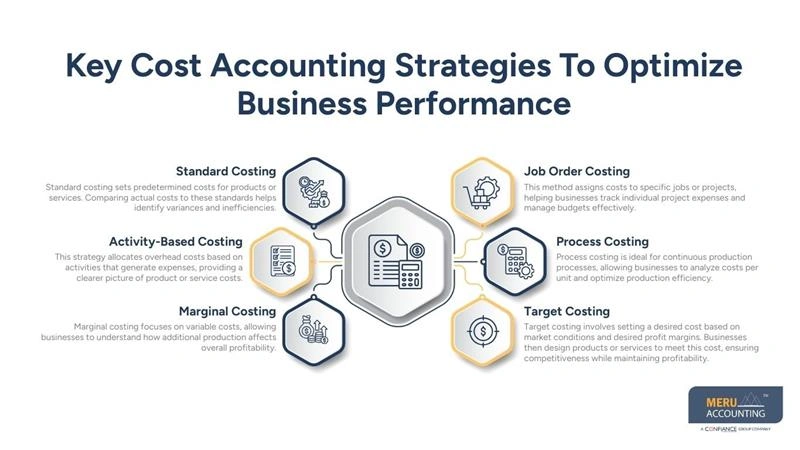
Job Order Costing
This method assigns costs to specific jobs or projects, helping businesses track individual project expenses and manage budgets effectively.
Process Costing
Process costing is ideal for continuous production processes, allowing businesses to analyze costs per unit and optimize production efficiency.
Target Costing
Target costing involves setting a desired cost based on market conditions and desired profit margins. Businesses then design products or services to meet this cost, ensuring competitiveness while maintaining profitability.
How Cost Accounting Enhances Decision-Making In Financial And Managerial Accounting
Analyzing Profit Margins
Cost accounting helps managers understand profit margins for each product or service, aiding pricing and sales decisions.
Evaluating Cost Efficiency
By regularly reviewing cost reports, businesses can identify inefficiencies and take corrective action.
Supporting Investment Decisions
Cost management accounting provides insights into which projects or products offer the best returns, improving capital allocation.
Enhancing Risk Management
Identifying high-cost areas allows managers to minimize financial risks and make informed business decisions.
Aligning With Financial Goals
Cost management accounting ensures operational decisions align with the company’s financial objectives, improving overall financial health.
Budgeting And Forecasting Using Cost Accounting Insights
Preparing Realistic Budgets
Cost management accounting data allows businesses to forecast expenses accurately, reducing the risk of overspending. It also helps managers set practical limits for each department based on historical spending patterns.
Predicting Future Costs
Historical cost data helps estimate future costs and plan resource allocation effectively. This insight ensures businesses are prepared for cost fluctuations and unexpected expenses.
Monitoring Budget Performance
Regular comparison of actual costs to budgeted costs helps businesses stay on track and make necessary adjustments. It also highlights areas where spending is higher than expected, enabling timely corrective action.
Supporting Cash Flow Planning
Cost accounting provides insights into expected expenses, assisting in cash flow management and planning. This allows businesses to maintain sufficient liquidity for daily operations and upcoming investments.
Planning Strategic Investments
By understanding cost structures, businesses can plan investments that improve efficiency and profitability. It ensures that funds are allocated to projects that offer the highest returns and long-term benefits.
Reducing Wastage And Improving Efficiency Through Cost Accounting Practices
Identifying Waste
Cost management accounting highlights areas where resources are underutilized or wasted, allowing managers to take corrective action.
Streamlining Production
Analyzing production costs helps businesses optimize processes and reduce unnecessary expenses.
Improving Resource Allocation
Cost accounting ensures that materials, labor, and overhead are used efficiently, minimizing waste.
Controlling Operational Costs
Regular cost monitoring helps identify areas of overspending, enabling better control of operational costs.
Encouraging Accountability
Detailed cost reports hold managers accountable for expenses and encourage more responsible financial decisions.
Optimizing Supply Chain Efficiency
Cost management accounting helps identify inefficiencies in the supply chain, from procurement to delivery. By analyzing these costs, businesses can reduce delays, lower expenses, and improve overall operational efficiency.
Integrating Cost Accounting With Financial Reporting For Accurate Analysis
Linking Cost Data With Financial Statements
Cost accounting information supports accurate financial reporting, reflecting the true cost of goods and services.
Enhancing Reporting Accuracy
By integrating cost management accounting into financial systems, businesses ensure reports are precise and reliable.
Supporting Compliance
Accurate cost data helps meet regulatory requirements and maintain transparency in reporting.
Improving Stakeholder Insights
Investors, lenders, and management benefit from clear insights into costs and profitability.
Facilitating Strategic Planning
Integration allows businesses to align cost data with long-term financial strategies, improving decision-making.
Enabling Timely Management Reviews
Integrating cost management accounting with financial reporting allows managers to review financial performance regularly. Timely insights help in making quick adjustments, improving both operational efficiency and decision-making accuracy.
Optimize Your Costs with Meru Accounting’s Professional Cost Accounting Solutions
Effective cost management is essential for businesses to maintain profitability and make informed financial decisions. Meru Accounting provides specialized cost accounting services that give companies clear insights into their expenses and improve both financial and managerial accounting practices.
Expertise In Cost Accounting
Meru Accounting offers professional cost management accounting services that help businesses understand and control their costs effectively.
Tailored Solutions
We provide customized cost management accounting strategies that align with your business model and financial goals.
Support Across Industries
Our team has experience across various sectors, ensuring relevant and practical cost accounting advice.
Technology Integration
Meru Accounting uses advanced tools to integrate cost management accounting with financial reporting and managerial accounting systems.
Continuous Improvement
We monitor and refine cost management accounting practices to help your business reduce wastage, improve efficiency, and maximize profitability.
Key Takeaways
- Cost management accounting is essential for accurate financial and managerial accounting.
- Implementing strategies like standard costing and activity-based costing improves efficiency.
- Cost accounting data supports budgeting, forecasting, and strategic decision-making.
- Integrating cost management accounting with financial reporting enhances accuracy and transparency.
- Meru Accounting provides tailored support to help businesses optimize cost management accounting practices.
FAQs
Businesses can use strategies like standard costing, activity-based costing, and job order costing to track expenses, control costs, and improve efficiency.
Cost accounting provides detailed cost data that helps prepare accurate financial statements and supports managers in making better decisions.
Integration ensures that cost data reflects true business expenses, making financial statements more accurate and helping managers plan budgets effectively.
By identifying cost drivers and inefficiencies, cost management accounting helps businesses allocate resources wisely and eliminate unnecessary expenses.
Cost management accounting provides insights into past and current expenses, allowing businesses to create accurate budgets, predict future costs, and plan resources effectively.


